Do not stop taking medications two weeks prior — gather information instead
Do not change your treatment for the sake of the massage. Prepare a list of medications and supplements, especially those affecting blood clotting, blood pressure, sensation, skin or heat response. If you are unsure whether a preparation is relevant, ask your doctor or pharmacist instead of stopping it yourself. The appointment can be rescheduled; treatment safety must not be subordinated to the salon calendar. Bring the list to your visit, even if you have already provided the information by phone.
Also, note any illnesses and events that may change your qualification: sensory disorders, vascular problems, a thrombotic episode, unstable blood pressure, skin diseases, recent surgery, active oncological treatment, injury or infection. You do not need to decide for yourself what excludes you from the massage. Your task is to provide an accurate picture. The practitioner should assess whether the heat and pressure are appropriate, whether to avoid an area or to reschedule the visit entirely.
Check the interval from other procedures two weeks prior
If you are planning a sauna, intense training, hair removal, an exfoliating treatment or another heat procedure for the same week, organise the sequence in advance. Layering stimuli makes it difficult to assess irritation later and increases skin stress. Herbal stamp massage does not require special preparation through other treatments. The calmer the starting point, the easier it is to choose the temperature and recognise whether a potential reaction is related to the herbs, oil, friction or a previous procedure.
Check how your body perceives temperature one week prior
If the salon suggests skipping the heat or the entire treatment after this information, do not treat it as an exaggeration. The stamp works through fabric, but it still transfers temperature to the skin. The practitioner does not feel it with your receptors. With impaired sensation, control must be particularly careful, and sometimes it does not provide a sufficient safety margin. An alternative may be a regular massage without a heat stimulus, provided you are qualified for it.
Determine the composition of the stamps and the significance of the scent one week prior
- Allergies and plant sensitivity. If you have contact allergies, asthma, migraines triggered by scent or do not tolerate specific plants well, ask for the blend's composition. The term "natural herbs" is not enough. Plant and aromatic substances can also cause allergies or exacerbate symptoms.
- Additional oil. Ask if an additional oil is used and if you can know its composition.
- Previous reactions. Write down the names of products that have previously caused itching, hives, shortness of breath or headaches.
Do not try to prepare your skin with a home test using a random blend with a similar name. The composition and concentration may be different, and an informal test does not rule out a reaction. Honest information and the salon's decision on whether the treatment makes sense are most important. If the aroma is merely unpleasant to you, rather than allergenic, say so as well. The session lasts a long time in a closed room, and a scent that seems mild at first may become dominant later.
Do not add hair removal or exfoliation two days prior
Also, refrain from testing new lotions, essential oils and strongly scented products. If a rash appears after the session, several new exposures will make it difficult to identify the possible factor. Stick to your known, gentle skin care. The massage does not require smooth skin or a specially moisturised epidermis. The practitioner will use the medium necessary for the technique and should be able to assess the skin without a layer of self-tanner or warming ointment.
Examine areas you do not usually see one day prior
- Examine hard-to-reach places. Check your back, calves and the back of your arms using a mirror. Look for scratches, active lesions, bruising, insect bites, painful veins, rashes and abrasions.
- Pay attention to your calf. Watch for new unilateral swelling, heat and calf pain. Such a symptom is not a problem to be massaged away; it requires urgent assessment in accordance with medical recommendations.
- Give yourself time to contact the salon. Noticing a change early allows you to contact the salon without rushing. It also helps avoid the "we'll see when you get here" approach.
If you have a fever, infection, severe cough, feel unwell, have an active cold sore or a fresh injury, change your plans. Heat will not safely "sweat out" an illness, and a massage is no substitute for injury diagnosis. Do not hide a symptom for fear of losing your appointment. A responsible salon should help you decide whether to reschedule without pressure to perform the service. With sudden pain, you first need the cause, then the decision about touch.
Do not test your body with training, alcohol or a sauna one day prior
Normal activity is fine, but a new, very heavy workout can leave tenderness and micro-injuries that are difficult to distinguish from a reaction to pressure. Alcohol impairs your assessment of stimuli and your well-being the next day; a massage does not speed up sobering up. A sauna or a very hot bath adds a heat stimulus even before the stamps. Choose a calm routine that allows you to arrive with your body in a known state, not after an endurance test.
Sleep as much as you usually need and drink normally according to your thirst and your own requirements. There is no need to force excessive amounts of water for a detox. Lack of sleep can increase sensitivity to scent, pain and temperature, so inform us of any exceptionally poor well-being before starting. The practitioner may reduce the intensity or suggest another date. The treatment plan should not be more important than your current ability to assess stimuli.
On the day of your visit, choose a normal meal and do not arrive in a rush
A full stomach makes it difficult to lie comfortably, and a long fast can lead to weakness. Eat a familiar, light meal with as much lead time as usually suits you. You do not need a special diet. Arrive early so that your breathing and temperature perception return to normal after a brisk walk, freezing cold or heat. Testing a stamp on skin that is already heavily overheated or chilled can give a misleading signal.
Take a shower for your own comfort, but do not scrub your skin. Do not apply perfumed lotion, self-tanner or warming ointment. Choose loose clothing that does not press on you after the massage and that you do not mind getting a trace of oil on. Tight leggings worn over still-warm, oiled skin can increase friction and make it difficult to assess the cause of any subsequent redness. Simple cotton layers are more practical. Remove jewellery that interferes with work on your neck, wrists or ankles. Leave hard hair clips in your bag so they do not dig into your head while lying down.
Before starting, describe your goal and areas excluded from work
One specific sentence is better than a general "the whole body, please". Say, for example, that you want calm heat and comfort for your tense shoulders, not intense sports work. Indicate places you do not want massaged, regardless of the reason. Point out varicose veins, moles irritated by touch, fresh scars, bruises and areas after other procedures. Consent to a massage is not consent to every area and every intensity.
Discuss pregnancy, breastfeeding, recent treatments, injuries, medications, allergies and heat reactions. This procedure is not performed during pregnancy, so do not hide it in the hope of a lower temperature. Ask for the name of the blend and the product used for glide. Also, establish signals: "too hot", "lighter" and "stop". You do not need to wait for pain to ask for a change. The first application is a test, not the start of a mandatory sequence.
The first application checks three things at once
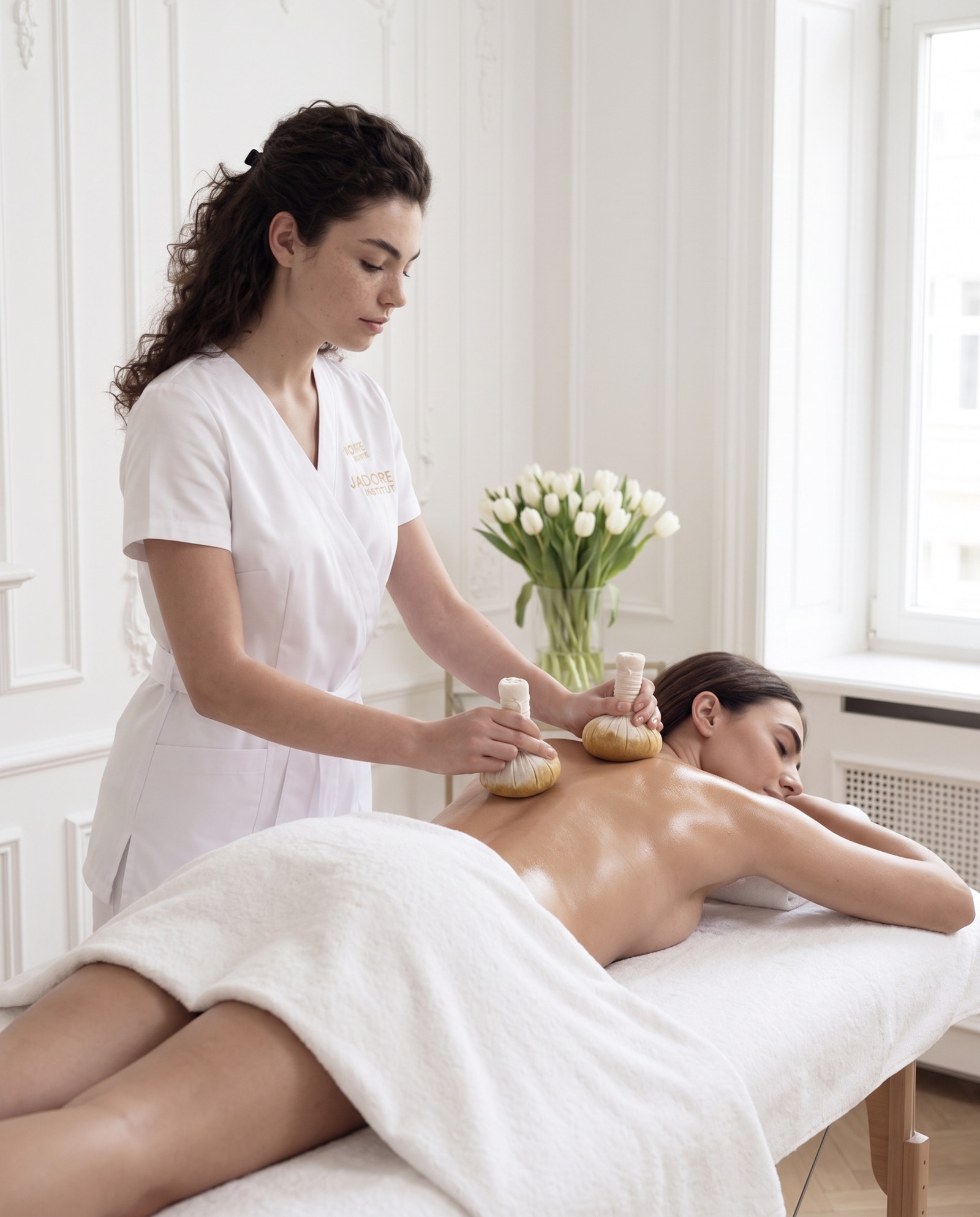
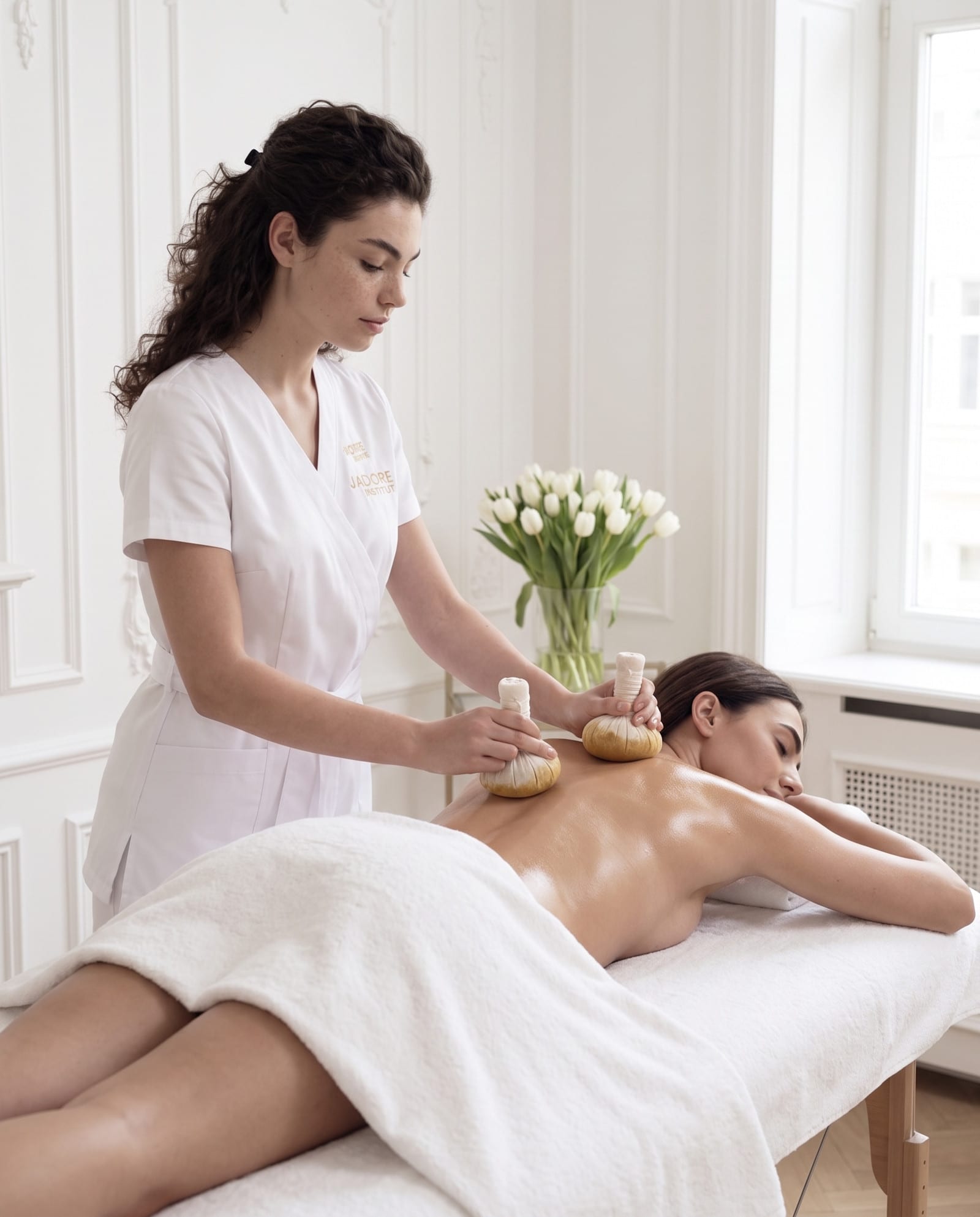
Assess the temperature, pressure and scent. Heat can build up over a few seconds, so do not automatically answer "fine" at the moment of the first touch. Imagine the first application to your shoulder blade: initially, you only feel soft fabric; after a moment, the heat becomes more distinct, and the aroma only reaches you after a few breaths. Only then can you reliably say whether all three stimuli are comfortable. Ask for a moment and check if your body remains relaxed. If you instinctively pull back, hold your breath or your skin stings, stop the contact. The practitioner should cool the stamp, shorten the application, reduce the pressure or change the plan. You do not need to justify your own feeling.
The temperature of the pack changes, as does the sensitivity of individual body parts. Just because the first application on your back was comfortable does not mean the identical technique suits your calf or arm. Communicate differences throughout the session. In case of numbness, radiating pain, nausea, dizziness or increasing stinging, the treatment must be stopped. Preparation does not end in the changing room; it includes being ready to update your consent during the session.
In Warsaw, choose the correct address and time for a full interview
J'adore operates at ul. Żelazna 59 and ul. Mińska 29A/46. Żelazna is open from Monday to Saturday from 8:00 to 21:00 and on Sunday from 11:00 to 19:00; Mińska from Monday to Saturday from 9:00 to 21:00. You can check the current description and availability on the herbal stamp massage in Warsaw page. When booking for the first time, choose a time without rushing and mention any issues that may change your qualification over the phone.
A full interview takes place before the session, but prior information saves an unnecessary trip. Ask what part of the booking covers the conversation and changing, and what part covers the stamp work. Also, leave a margin after the visit to calmly assess your skin's reaction. Do not plan a sauna, swimming pool, intense training or another heat procedure immediately. If you feel well, you will return to your normal day without a special ritual.
In case of swelling, varicose veins or impaired sensation, the stamp does not work according to a fixed scheme
When a leg is visibly swelling, unilateral warmth appears, the calf is painful or the skin feels suddenly tight, a herbal stamp massage is not the time to "loosen up" the problem. The cosmetologist will not heat the area then and will not try to massage the swelling. Such a symptom first requires a medical explanation, especially if it occurred recently or looks different than usual.
After surgery, injury or with impaired sensation, modification does not just mean a cooler stamp. The cosmetologist may completely exclude a scar, an area with altered sensitivity or an entire body part. They check the temperature before each subsequent area, observe redness and ask about the feeling of heat instead of assuming the reaction will be the same as on the other side of the body.
If the scope of safe work becomes too small or the information from the interview raises doubts, the appropriate modification is sometimes to forgo the herbal stamp massage. This is not an unsuccessful visit, but a decision based on the fact that a hot, herbal compress and pressure should not cover up symptoms whose cause has not been established.
Being ready to calmly reschedule your visit is part of the preparation
- the skin should be calm, without fresh wounds, burns or active infection
- the salon must know about your medications, illnesses, allergies and sensory disorders
- the composition of the blend and the method of temperature control should be clear
- the first application is a test and can end the procedure
- pregnancy, fever, acute inflammation or suspected thrombosis require resignation and proper assessment
The best preparation does not consist of performing more actions, but of removing unnecessary stimuli and gathering data. Do not irritate your skin, do not change medications, do not hide symptoms and do not arrive after alcohol, a sauna or a record-breaking workout. Bring your goal, a list of information and a readiness to say "too hot". If the interview reveals a contraindication, rescheduling the treatment is the correct result of the qualification, not a wasted visit.
Before leaving, write down the salon's number and ask for the name of the blend and glide product used. If a rash, stinging or point-specific pain appears after you return, note the time it started and take a photo before applying new cosmetics. This set of information will facilitate conversation with the salon, and if necessary, also a medical assessment. Do not plan to repeat the heat at home on a site that is reacting atypically.