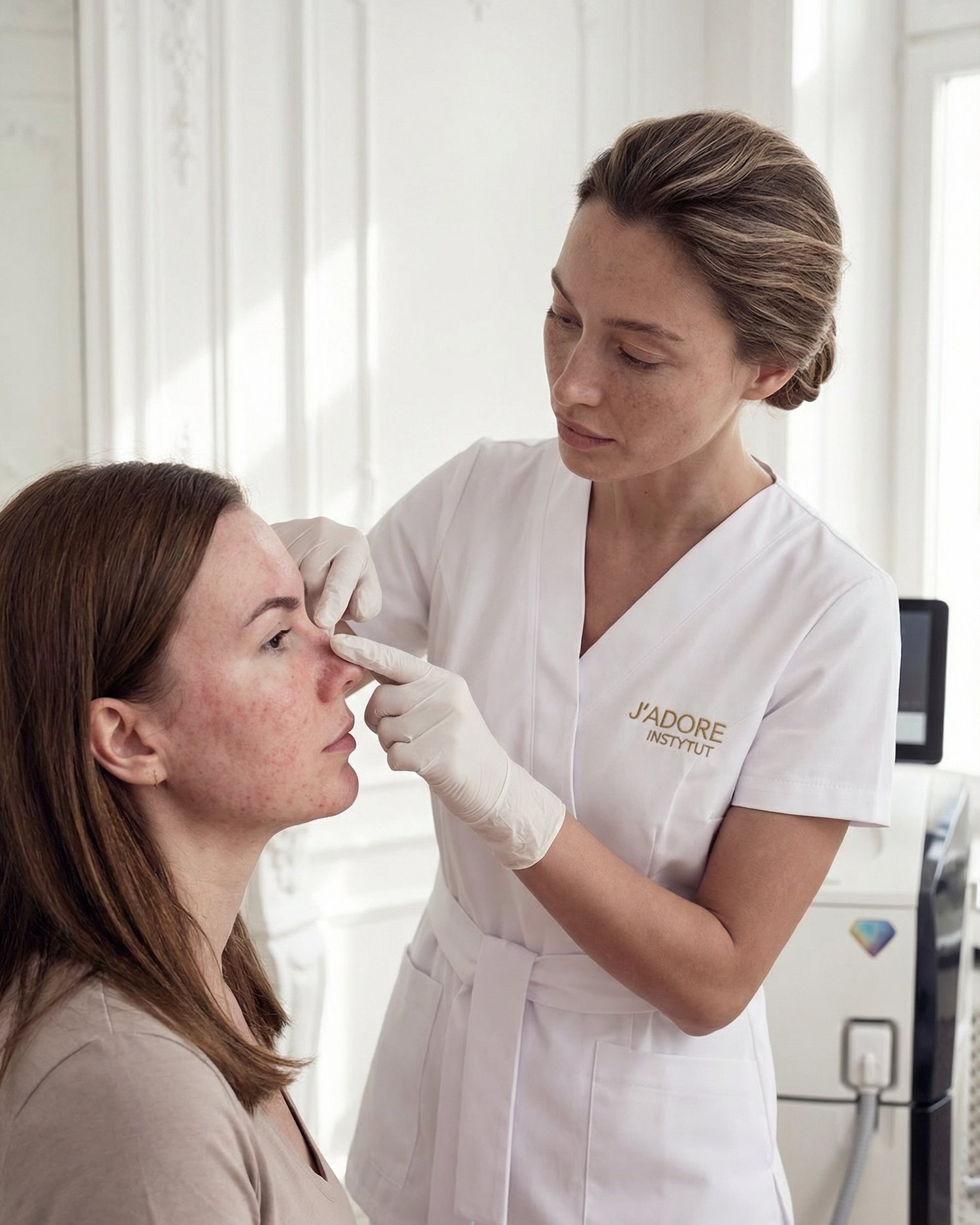
First, you must confirm that the lesion is vascular.
A red dot, a brown spot, a raised cherry angioma, and a visible vessel thread may all be grouped together by a client. For the person performing the qualification, these are different images. A vascular laser is not a tool for every red or dark lesion. If the appearance raises doubts, the first step should be a medical or dermatological assessment, not an impulse.
- A single, shallow facial vessel — usually has a limited area and a clear path.
- Diffuse redness — covers a larger surface and requires an assessment of the entire redness pattern, not counting individual threads.
- Deeper vessels on the legs — may require different technology and, in the case of extensive lesions, prior medical consultation.
- A raised or ambiguous lesion — should not be automatically priced like a standard vessel.
DYE-VL and Nd:YAG solve different cost tasks.
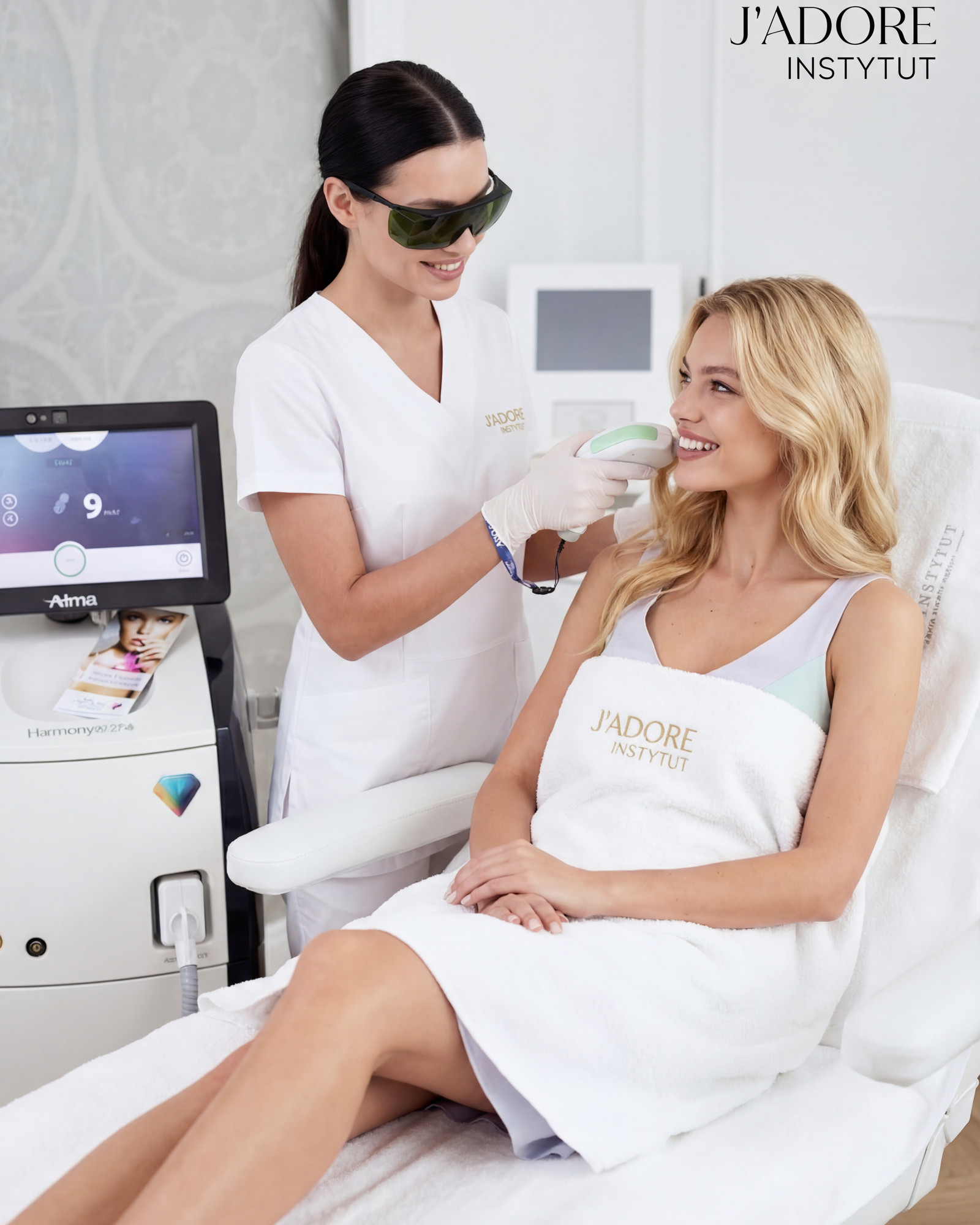
DYE-VL on the Harmony XL Pro platform uses filtered pulsed light and is used for, among other things, superficial vascular lesions and diffuse redness. The long-pulsed Nd:YAG with a wavelength of 1064 nm reaches deeper and may be chosen for deeper vessels, for example on the legs. This is not a ranking of a better or worse machine. It is matching the tool to the goal.
DYE-VL
superficial redness and fine vessels
- diffuse vascular component of the face
- fine telangiectasia of the cheeks and nose
- treating a larger but shallow surface
- plan dependent on skin phototype and current sun exposure
Nd:YAG
target located deeper
- thicker or deeper visible vessels
- vascular lesions of the limbs after proper qualification
- precise work on selected structures
- different profile of sensations and reactions than with pulsed light
A salon may have several technologies, but the mere presence of a device does not justify the price. Ask why the proposed tool fits the colour, diameter, depth, and location of your lesion. The answer should refer to the skin image, not to the slogan "the most powerful laser".
A small dot, an entire zone, and redness are three ways of calculating the scope.
Price lists may charge for a single lesion, a small area, or a specific zone. Each model is clear if you know what it covers. The problem arises when a client compares the price of one vessel with treating the entire cheeks or thinks that the nose automatically includes the adjacent redness.
The most honest offer does not have to have the shortest price list. It must allow you to predict what will be done and what will incur an additional charge.
Skin phototype, tan, and season can shift the expense in time.
For light and laser treatments, the current skin colour and sun exposure are important for qualification. A fresh tan is not a detail that can be compensated for by a lower parameter without assessment. It may mean the necessity to postpone the date. In such a case, a good salon does not start a series just to maintain a sale.
- 01
Assessment of skin phototype and sun exposure before starting
The specialist asks about tanning, self-tanner, planned holidays, and skin reactions to radiation.
- 02
Scheduling dates outside the risky window
A series must take into account not only free slots in the schedule but also the real possibility of protecting the skin.
- 03
Photoprotection between visits
Sun protection is not a cosmetic extra sold after the treatment, but part of a safe plan.
- 04
Re-qualification after a change in conditions
A holiday, a new medication, irritation, or an unusual reaction may change the decision before the next session.
The full budget includes assessment after the lesion has been absorbed.
A vessel reacts to energy during the treatment, but the body needs time to clear the closed structure. Therefore, the result is not assessed when leaving the salon. The next session is planned after an appropriate time and after observing the reaction, not because the client bought a fixed number of visits in advance.
Price of a single session
cost of the given day
- qualification and selection of technology
- treating the established area
- protection, cooling, and documentation
- aftercare
Price of solving a visible problem
process dependent on the reaction
- Follow-up after the time needed for assessment.
- Further sessions only where an indication remains.
- Possible combination of tools for different depths.
- Subsequent touch-ups for new lesions, should they appear.
Do not ask for a guarantee of a specific number of sessions based on a message. Ask for the criteria: when the follow-up occurs, how the specialist determines the effect is sufficient, and when to change the method. Such an answer manages your budget better than a package with an attractive name.
You should not save on safety by shortening the qualification process.
The cost of the treatment covers the knowledge of a person who knows how to say no. The consultation should cover, among other things, current medications and cosmetics that may sensitise the skin, pregnancy, active infections, recent treatments, and sun exposure. Protective goggles for the client and the practitioner are not an option dependent on the size of the vessel.
A red flag is a "quick" offer without examining the lesion, especially when it concerns a leg, freshly tanned skin, or a lesion with an unusual shape. A discount does not change the indications.
Cheaper technology is not a saving if the goal lies deeper.
The cost is sometimes lowered by using an available device instead of the best-suited one. It is difficult for a client to recognise this by the name. Therefore, instead of asking "which laser is the best", ask: "why does this wavelength or filtered light correspond to this specific lesion?".
- The answer should distinguish between superficial and deeper vessels.
- It should treat the face and legs as different areas, not one protocol.
- It must refer to the skin phototype and current skin condition.
- It cannot be based solely on the statement that the device is new, powerful, or universal.
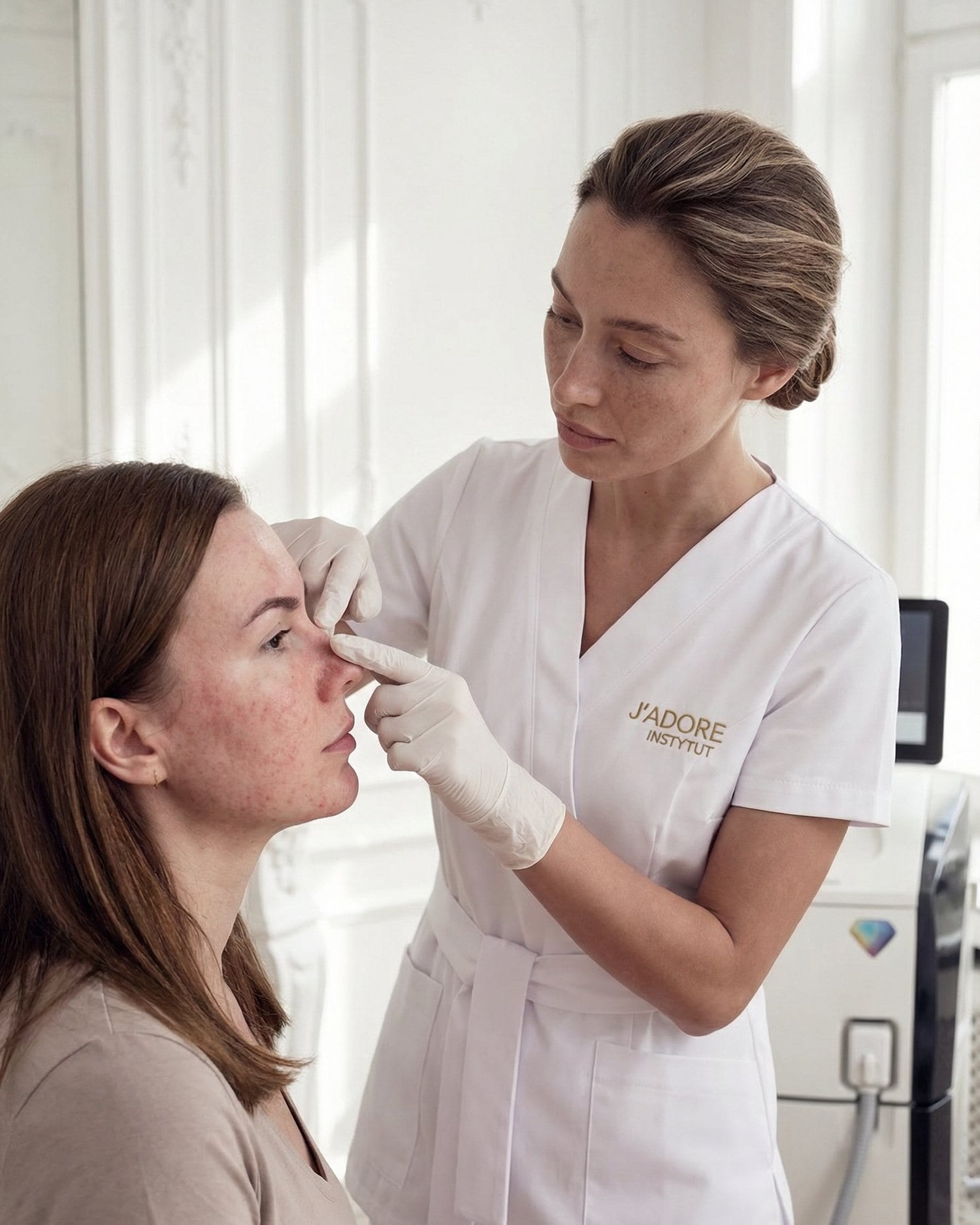
The number of visible threads does not translate directly into the number of pulses.
A client may count a few clear vessels, but the specialist also assesses their course, diameter, colour, position, and skin background. One branched vessel on the nasal wing is a different task than many small, evenly scattered lesions. Therefore, a "per piece" price list only makes sense if the salon precisely defines what it considers one lesion.
- Branches may belong to one system visible on a larger surface.
- Red and bluish colour may suggest a different target depth and change the choice of tool.
- Erythema background requires a separate assessment, even when individual clear threads are visible above it.
- The nose, cheek, and leg area differ in anatomy, reaction, and the way the handpiece is guided.
- Repeat treatment should not be planned before the skin and vessel have passed the period needed for assessment.
Ask for the area to be marked before the treatment and confirmation that the quoted price covers exactly this map. This is simpler and more honest than settling unexpected "additional threads" only after starting work.
The cost of time after the treatment depends on the technology and skin reaction.
The budget should include not only visits but also a realistic calendar. Redness, swelling, or purpura may affect the date of an important meeting, photo session, or trip. The scope and time of the reaction are variable, so the salon should discuss the possible course instead of promising a lack of any traces.
Choosing a date just before an important event may create a cost that is not visible in the price list: the need to mask traces, changing plans, or stress related to a normal skin reaction. A reasonable salon helps select a date to suit the client's life, not just the device's free window.
Closing a vessel does not remove the tendency for new lesions.
A laser or light can effectively close the treated vessel, but it does not change the genetic tendency, the influence of the sun, temperature fluctuations, or the background of rosacea. New lesions may appear over time. The treatment reduces the visible symptom; it is not a guarantee that the skin will never show another vessel.
It is therefore not worth buying a "once and for all" promise. With diffuse erythema or suspected disease, a plan broader than just the device is needed, sometimes also dermatological care. For lesions on the legs, the cosmetic goal should not overshadow the need to assess circulation when the image or symptoms require it.
Warsaw: two locations and current price list.
In Warsaw, J'ADORE INSTYTUT operates at ul. Żelazna 59, 00-848 Warsaw during Mon–Sat 8–21 · Sun 11–19 and at ul. Mińska 29A/46, 03-808 Warsaw during Mon–Sat 9–21. Confirm the availability of a specific technology for the chosen location when booking a consultation.
You will find current variants, information, and prices on the website Vessel removal in Warsaw — Nd:YAG and DYE-VL. During the consultation, show all areas you want to treat and tell us about the sun, medications, and previous reactions.
A good price has an assigned goal, area, and follow-up moment.
Before payment, establish five things: what exactly is the lesion, what area the service covers, why DYE-VL or Nd:YAG was chosen, when the assessment will take place, and what may change the further plan. Without this, you are comparing numbers without a common unit.
The cheapest session loses its sense when it works on the wrong target. The most expensive one does not become better because of the device name. A reasonable cost is one that can be broken down into the decisions your skin needs — and not one more. If the valuation does not distinguish between a vessel, erythema, and the area, ask for a re-description before starting work. Only a full description allows you to honestly compare the offer with another salon, without guessing the scope after the fact and without surprises at payment.