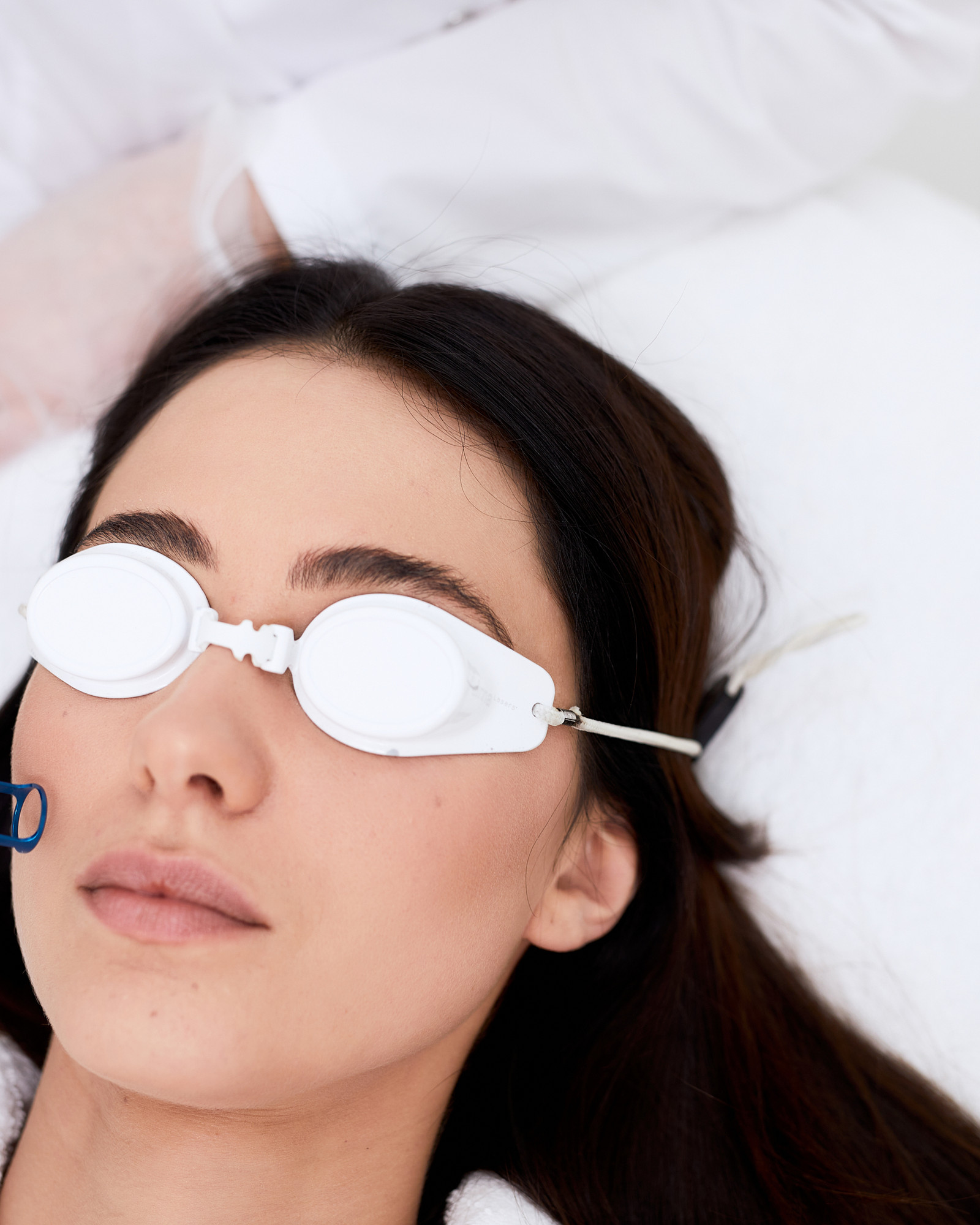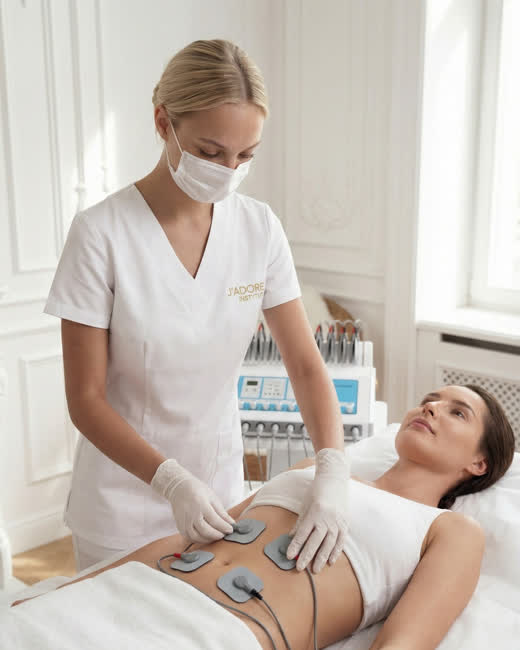
Before leaving, confirm the goal and parameters set by the recommendations
The name of the device is not enough to reconstruct the course of the treatment. ClearLift is a Q-switched Nd:YAG module that can work with various tips, depths and settings. The manufacturer's official documentation describes applications related to photoageing, fine lines and pigmentary changes, among others, but the plan for your specific skin is determined during the consultation.
Alma Lasers materials describe ClearLift as a 1064 nm Q-switched Nd:YAG laser with the capability for non-ablative fractional work. "Non-ablative" means it does not remove the skin surface like an ablative laser. It does not promise zero reaction, nor does it exempt you from post-treatment protection.
The first few hours: observe redness and heat, but do not mask them
Immediately after the session, you may experience temporary redness, a feeling of warmth, slight stinging or mild swelling. The extent depends on the settings and your skin's reactivity. Take a photo in daylight without a filter. This will allow you to compare the direction of changes if the redness is stronger in the evening or if a spot reaction appears.
- Do not rub your skin and do not check its temperature with your hand every few minutes.
- Do not apply ice directly; use cooling only in the form recommended by the clinic.
- Do not apply alcohol, essential oils or any random soothing ointment.
- Do not cover a developing change with heavy make-up before taking a photo.
- Do not evaluate the rejuvenation effect while your skin is freshly pink or slightly swollen.
The first evening: cleansing should remove impurities, not exfoliate
Wash your skin at the time indicated by the practitioner. Use lukewarm water, clean hands and a mild product you already know. Dry by patting, without rubbing. You do not need a brush, sponge, exfoliating cloth or hot steam.
The minimum that helps with observation
few variables
- gentle cleansing
- a known barrier cream
- a clean pillowcase
- no rubbing
- sun protection according to recommendations
Excess that obscures the picture
several possible sources of irritation
- a new active mask
- an acid toner
- a retinoid
- mechanical peeling
- a heavily perfumed cosmetic
If a regular cream suddenly stings intensely, wash it off gently and contact the clinic if the stinging does not subside. Do not try to balance one irritating product with another. The simplest skin care makes it easier to determine whether your skin is reacting to the laser, the cosmetic or a combination of both.
The first 24 hours: radiation is more important than whether the skin is peeling
After the treatment, do not wait for visible exfoliation to start protecting your skin. Protection against radiation is particularly important if the goal was pigmentation or if your skin is prone to post-inflammatory hyperpigmentation. Use the preparation recommended by the clinic and reapply it according to the product instructions and exposure conditions.
ClearLift may be chosen due to a milder downtime than intensive ablative procedures, but your skin has still received energy. The absence of scabs does not give you a licence to go to the beach the next day. The risk after exposure depends on your skin phototype, the indication, the parameters and your post-treatment behaviour.
The second 24 hours: make-up and active ingredients return at different times
Make-up can be considered only when the recommendations allow it and the skin has no damage, oozing or increased irritation. Use clean brushes or a sponge. Do not try to cover a blister, a sharply defined change or increasing redness — show them to the clinic first.
- Introduce cosmetics one by one to identify the source of any stinging.
- Do not return to retinoids automatically just because one night has passed.
- Acids, enzymatic peels and strongly exfoliating preparations must wait until the skin has calmed down.
- Do not perform waxing or any other irritating procedure on the treated area.
- Do not test a brightening cosmetic that your skin has not known before.
The second and third 24 hours: sweat, heat and friction can renew redness
Even if your face looks calm in the morning, intense exercise, a sauna, a hot bath or a swimming pool can trigger redness and discomfort again. Return to these activities only when advised by the clinic. A casual walk and daily tasks affect your skin differently than interval training, a heated gym or long exposure to chlorinated water.
- Physical activity
Start with gentle activity
If the redness does not return and your aftercare allows it, increase the intensity gradually rather than starting with your heaviest workout.
- Temperature
Do not test your skin with hot steam
A sauna, steam room or very hot shower are not ways to check if the reaction has passed.
- Friction
Put away massages and devices
Rollers, gua sha, brushes and intense facial massages should only be resumed after approval from the person who performed your laser treatment.
- Swimming pool
Your skin must be calm
Chlorine, warm water and shared surfaces do not help a freshly irritated area.
If redness is temporary and fades quickly when you return to activity, describe this at your follow-up. If it increases, stings, hurts or is accompanied by swelling, take a photo and contact us sooner. Do not try to soothe the reaction with increasingly intense cooling.
Days three and four: a spot is not necessarily an effect or a complication without context
When working on pigmentation, a lesion may temporarily look darker, but the protocol used and the clinic's instructions are what matter. Do not scratch, do not lighten spots individually and do not photograph them under increasingly harsh light in search of a difference. Mechanical damage increases the risk of prolonged healing and an unwanted mark.
Your message should include the date of the treatment, the time the symptom appeared, its progression and a list of cosmetics used. A filtered photo does not help. If the pain is severe or the reaction is developing quickly, a phone call and an urgent assessment take priority over waiting for a response on social media.
Days five to seven: return to your routine only after the skin has settled
By the end of the week, the trend is what counts. Redness should fade, the feeling of heat should weaken, and your daily skincare should not provoke new symptoms. If your skin is still clearly irritated, do not introduce active substances just because the calendar shows the seventh day.
Returning in the right direction
the reaction is calming down
- less redness
- no new pain
- the skin tolerates gentle cleansing
- no blisters are appearing
- the colour is becoming more even
Reason for a follow-up
the reaction is not heading towards improvement
- increasing tenderness
- new weeping
- expanding redness
- persistent, strong stinging
- a new, distinct pigment change
Discuss returning to retinoids, acids, peels and other procedures with the clinic. Sometimes a reasonable interval will be longer than a week. Do not rush it before your next session just because you want your skin to look "more actively treated". A series requires repeatable conditions, not an increasingly intense routine.
The first week is not for assessing remodelling or writing off the treatment
Early radiance may come from post-treatment cosmetics, lighting or a temporary reaction. Conversely, a lack of a spectacular difference after a few days does not mean the procedure did not work. Assessment dates depend on the goal and protocol and should be set before the series.
- Compare photos in the same light, at the same distance and without makeup.
- Do not assess pigmentation based on photos with automatic phone correction.
- Do not increase the intensity of the next session solely because of a subtle first effect.
- Do not combine ClearLift with a peel or another laser between visits on your own.
- Do not expect a gentle protocol to replace ablative resurfacing for deep scars.
Cold sores, rashes and acne flare-ups should not be treated blindly
A new lesion after treatment is not always a result of the laser itself. It may coincide with a cold sore, a reaction to a cosmetic, a flare-up of a skin condition or an infection. The appearance of the first pimple or vesicle can be non-specific, so applying several medications on your own makes later assessment difficult. Take a photo before applying anything and describe previous episodes.
If you received a management plan from a doctor for cold sore recurrences before the treatment, stick to that plan. Do not use someone else's medication or dosage. In the case of a rapidly spreading reaction, eye pain, vision changes, increased facial swelling or general symptoms, an urgent assessment is needed, not guessing via correspondence.
During the first week, also postpone other treatments on the same area unless they were consciously planned by a specialist. Cleansing, needling, peels, hair removal, intense massage or further energy are not neutral additions. The skin needs one clear process so that both safety and the reaction to ClearLift can be assessed.
ClearLift in Krakow — take your aftercare home from Karmelicka
The Krakow J'ADORE INSTYTUT is located at ul. Karmelicka 45/2B, 31-128 Krakow and is open from Monday to Saturday, 8:00–20:00. You can find information about the service on our website ClearLift in Krakow.
Before you leave, ask for a written plan for cleansing, sun protection, returning to active skincare, and contact details in case of a reaction. If you notice a blister, increasing pain, oozing, or rapidly spreading redness at home, report it with a photo and a precise description of the timing.
Good healing after ClearLift is calm, not perfect.
On the first day, cleanse gently and protect your skin. In the following days, do not reintroduce several active products at once. Observe the direction of your skin's reaction throughout the week. Sun exposure, heat, and friction may only return according to the timeline appropriate for your specific protocol.
A non-ablative treatment does not require you to set up a home emergency ward, but it should not be forgotten once you leave. The best aftercare is boring: few products, high consistency, unfiltered photos, and quick contact if redness, pain, or skin colour stop subsiding. The week ends with a review of the progress and a calm plan for further sessions, not a hunt for an immediate result.