What we are really looking for in opinions about spider vein removal
Reviews most often try to answer several different questions at once: was the service attentive, was the treatment comfortable, does the skin look better, and does the effect justify the money spent? The problem is that these questions do not have the same diagnostic value. A pleasant atmosphere is important, but it says nothing about the correct diagnosis of the lesion. Conversely, the lack of an immediate effect does not have to mean an unsuccessful treatment, as the appearance of the treated vessel can change gradually.
The most useful "opinion" is therefore not someone else's verdict, but the answer to the question: does the clinic operate according to a process that limits randomness. Was the lesion examined before the treatment, and were you asked about your skin condition, tanning, medications, and previous reactions? Was it explained what result is realistic for your specific type of vessel? Was the possible skin reaction discussed, along with how to get in touch if something caused concern? These are elements you can assess regardless of whether someone else gave five stars.
Information that helps
specifics that can be verified
- A description of what the pre-treatment qualification looked like
- Information on whether limitations and possible reactions were discussed
- An explanation of when and according to what the result was assessed
- A mention of clear aftercare instructions and contact options
Information that does not decide much
an impression without context
- A simple statement that the treatment "works" or "does not work"
- Comparing two people with different types of lesions
- Assessing the result without stating the observation time
- A promise of an identical result for every skin type
Realistic expectations: the result does not always appear on the day of the visit
Spider vein removal is not a treatment whose quality can always be assessed in the mirror right after getting off the chair. The skin may be temporarily red, warmer, or more reactive. Some vessels change appearance quickly, while others need time before the area calms down and you can honestly compare the initial state with the effect. Therefore, a responsible person should not announce the final result immediately after the treatment.
It is equally important to distinguish between closing a visible lesion and the skin's tendency to create new vessels. The treatment can improve the appearance of a selected area, but it does not change your predisposition, skin reactivity, or all the factors that favour the appearance of new lesions over time. This is not a flaw of the procedure. It is a boundary that an honest clinic talks about before starting the plan.
- 01
Before the treatment
A reference point is established: an assessment of the type and location of the lesion, the condition of the skin, and factors affecting safety.
- 02
Immediately after
The skin's reaction is observed, but no final conclusion about the result is drawn. The appearance at this moment is not yet the full "after".
- 03
After the skin calms down
Only then is the same area compared in similar light to assess what has actually changed.
- 04
During plan review
The specialist decides whether the result is sufficient, whether other lesions remain, and whether further action is justified.
The most common disappointments — and why they do not always indicate a mistake
Disappointment often begins even before the visit, when expectations were built on an advertising photo or a single comment without context. If someone expects an even skin tone immediately after one procedure, even a correctly performed treatment may seem insufficient. It is worth knowing in advance which situations require a conversation, but are not automatically proof of poorly performed work.
- The vessel does not disappear immediately. An assessment made too early may overlook the natural time needed for the treated area to calm down and remodel.
- Some lesions remain visible. Diffuse redness, individual vessels, and deeper lesions do not behave identically. One plan does not have to solve everything at once.
- The skin reacts more strongly than expected. Redness or a temporary change in colour may be part of the reaction, but their expected nature should be discussed before the treatment.
- New vessels appear after some time. The procedure concerns the lesions treated during the visit; it does not remove the skin's individual predisposition.
- Redness decreases but does not disappear completely. Extensive redness can have a complex background. A cosmetic treatment is not a promise to cure rosacea or a substitute for a dermatological diagnosis.
Good qualification starts with questions, not with a device
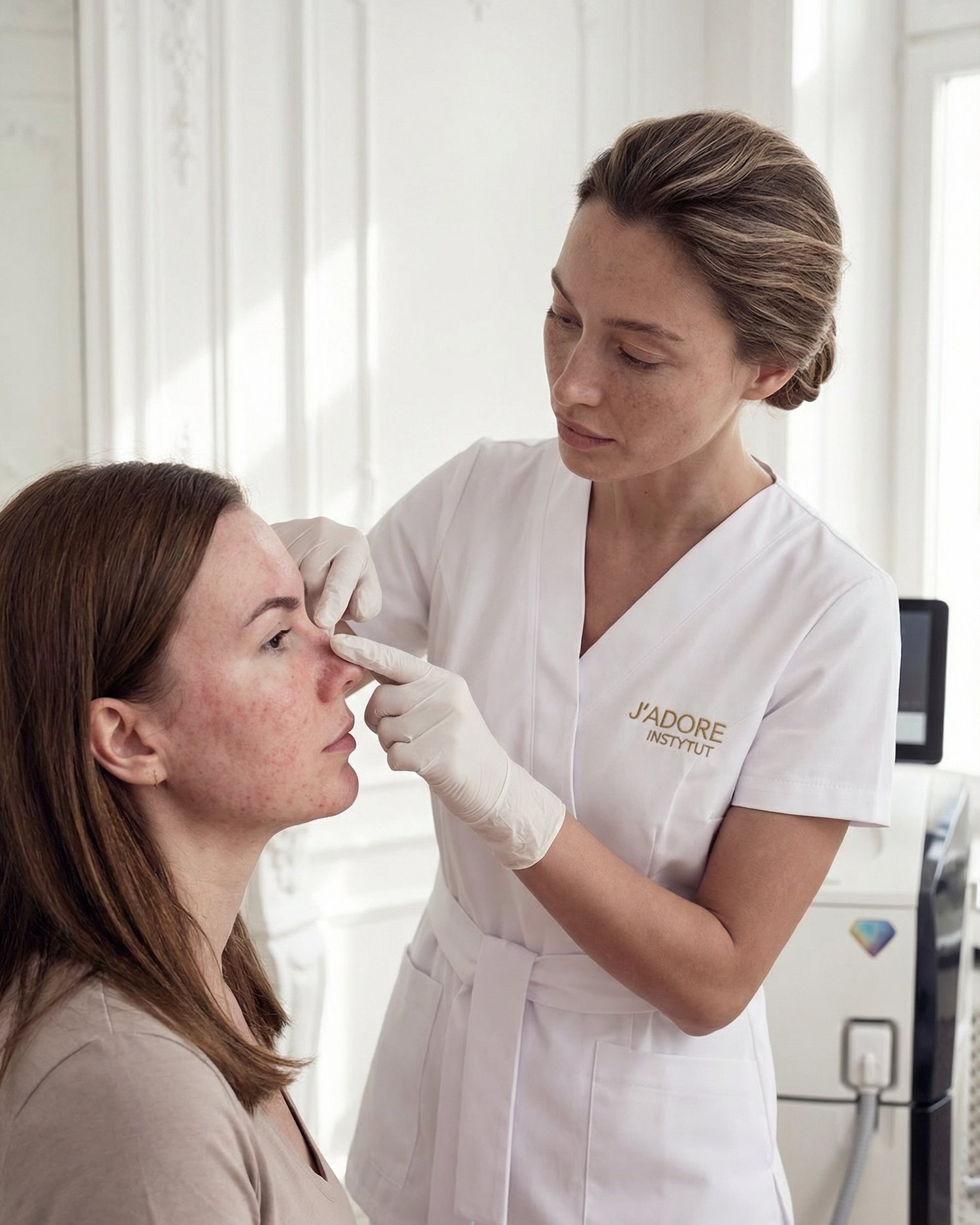
Technology matters, but it does not replace qualification. A visible red or purple lesion does not have to be a vessel suitable for treatment automatically. The specialist should assess its appearance, location, extent, depth, and the condition of the surrounding skin. If the nature of the lesion is ambiguous, a prior dermatological consultation is a safer choice than testing a device.
The interview should include questions about a fresh tan, reactions to light, active infections, medications and preparations used, previous procedures in this area, and a tendency for unusual healing. This is not about a form filled out for formality. The answers may decide to postpone the visit, change the plan, or refer you to a doctor.
How to recognise reliable performance and aftercare
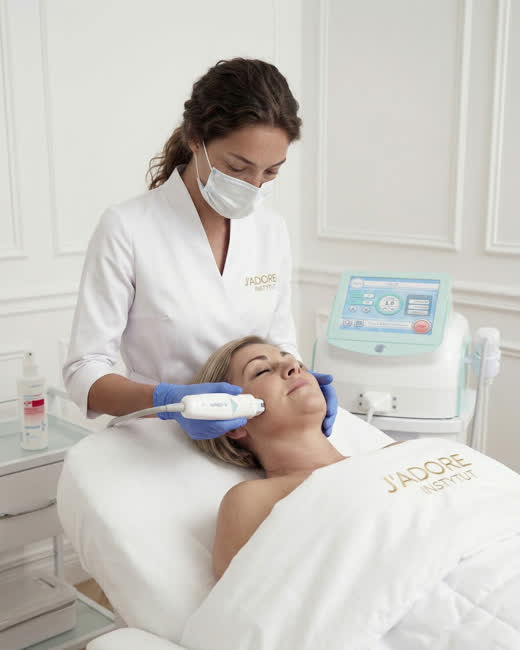
A person undergoing a treatment does not need to know the device parameters or distinguish between all technology names. However, they can assess the team's behaviour. Reliable performance is calm, methodical, and based on observing the skin's reaction. It includes eye protection, working only on the qualified area, and stopping or changing the procedure if the skin reacts differently than assumed.
- The scope of the treatment is confirmed before starting, not determined randomly during the process.
- The specialist names the method used and can briefly justify its choice.
- Eye protection and hygiene rules are treated as a standard, not an extra.
- We monitor your skin's reaction in real time. We never ignore any signals of discomfort.
- After your visit, you receive specific aftercare instructions tailored to the method used. We also provide information on when to contact the salon.
- We do not sell the next step in advance as a mandatory requirement. It follows from an assessment of your skin after an appropriate period.
When to avoid a treatment or postpone it reasonably
A good qualification sometimes ends with a "not today" decision. This is not a failed visit. It is part of a safe procedure. Your skin condition and health information can change. Therefore, a form filled out several months ago does not replace an up-to-date conversation.
- Fresh tan or intense sun exposure. Your skin may require time before light or laser technology is applied.
- Active infection, cold sore, injury or severe irritation at the treatment site. You must first restore your skin to a calm state.
- Medicines and preparations that increase light sensitivity. Do not stop taking them on your own. Provide a full list. Leave the decision on how to proceed to the specialist and, if necessary, your doctor.
- Pregnancy, breastfeeding or a significant change in health status. These require disclosure before your visit and may mean the procedure must be postponed.
- Unclear nature of the lesion. If it is not known whether it is a capillary, a medical or dermatological assessment is needed first.
- Inability to follow aftercare instructions. A holiday in intense sun, an event requiring a flawless appearance the next day, or a plan for other procedures in the same area may be reasons to change the date.
How to form your own opinion after a treatment
The most honest assessment is not made the moment you leave the salon. It is worth returning to the same set of criteria once your skin has calmed down: were the scope and limitations clear, did the reaction correspond to what was discussed, were the instructions feasible, and did the team respond to your questions? Only then should you assess the visible change in similar light and taking into account your starting point.
Such an assessment is less impressive than a short "I recommend", but it protects you much better against a misguided decision. It also helps to separate three things: the quality of service, the correctness of the process, and the individual response of your skin. Only their combination gives a full picture of the experience.
Capillary removal in Krakow — where to check the treatment
In Krakow, the capillary removal treatment is available at J'ADORE INSTYTUT at Karmelicka 45/2B, 31-128 Krakow. The salon is open from Monday to Saturday between 8:00 and 20:00. You can find the current service description and information for this location on the capillary removal in Krakow page.
When booking, it is worth describing whether it concerns a single visible lesion, a larger area, or diffuse redness. However, the final qualification takes place on-site, after examining your skin and taking an up-to-date interview. If the lesion is unusual or ambiguous, the treatment may require a prior dermatological assessment.
Summary: a good opinion starts before the treatment
If you are looking for opinions on capillary removal in Krakow, treat them as the beginning of checking a place, not a final verdict. The most important things are the qualification, the way of talking about limitations, a reasonable moment to assess the result, and the readiness to postpone the treatment when the skin is not prepared for it. A reliable salon does not promise an identical result to every person. Instead, it provides a clear process that can be understood and assessed.