What exactly can be removed
Before asking whether something can be removed, it helps to know what's actually involved. There's no single type of skin lesion — several types exist, differing in appearance, location and removal method.
- Viral warts — hard, rough, often on the hands, feet or face. They don't disappear on their own.
- Soft skin tags — small, dangling growths on the neck, under the arms, along the collar line. Often caused by friction.
- Pigmented moles — if assessed as benign, they can be removed with laser or surgery. The decision always follows assessment by a dermatologist or doctor.
- Sebaceous cysts — lumps under the skin, often on the head or back. They can grow and become inflamed — worth dealing with early.
- Seborrhoeic keratoses — brown, waxy lesions that appear with age. They have nothing to do with cancer, but they can irritate or simply get in the way.
- Angiomas and spider veins — red spots or thread-like veins, often on the face and torso.
Why laser, not "it'll go away on its own"
In adult men, viral warts rarely disappear on their own — the immune system has learnt to tolerate them, not fight them. Skin tags grow slowly, but after a few years you can have a dozen on your neck. A cyst that "doesn't bother you" tends to flare up at the worst possible moment — before an important flight, in the middle of a demanding project. Laser removal solves the problem once and precisely — no scalpel, no stitches, minimal disruption to surrounding skin.
Laser removal
how it works
- precise action on the lesion, without damaging the surrounding skin
- fast healing, often with no visible scar
- one session solves the problem
- back to your normal day the same day
Home / pharmacy methods
what the "no-salon market" offers
- patches, acids, home freezing kits — available over the counter
What to expect — step by step
This is one of the questions men ask most often — not "does it hurt", but "how long, and will I look normal afterwards". The answer is reassuring.
- 01
Consultation
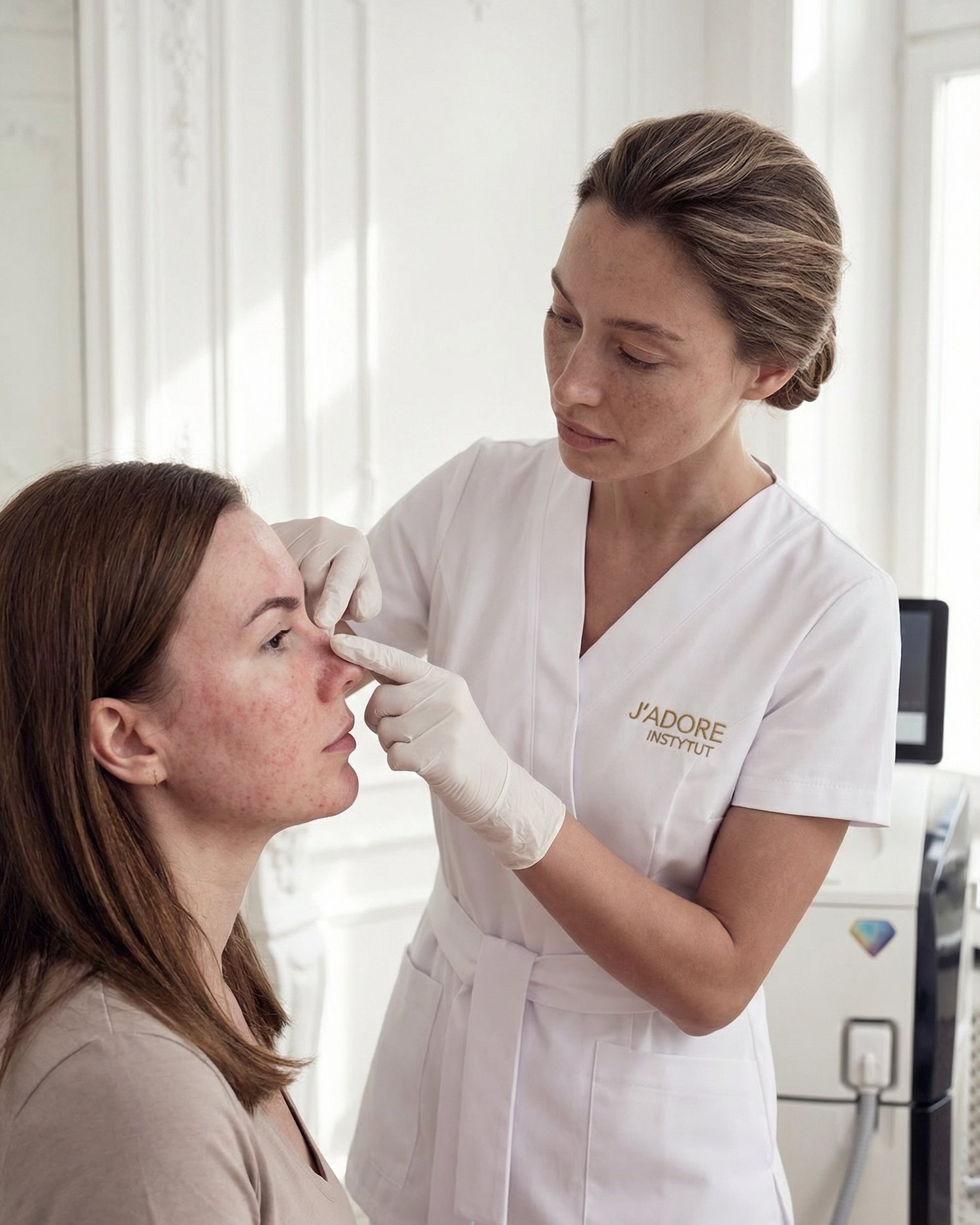
A specialist assesses your skin lesions — dermoscopy if needed. This decides which lesions qualify for laser removal. Not every visit ends with same-day treatment — it depends on the number and nature of the lesions.
- 02
Local anaesthesia
Numbing cream or a local anaesthetic injection — the treatment is pain-free. The anaesthetic works quickly.
- 03
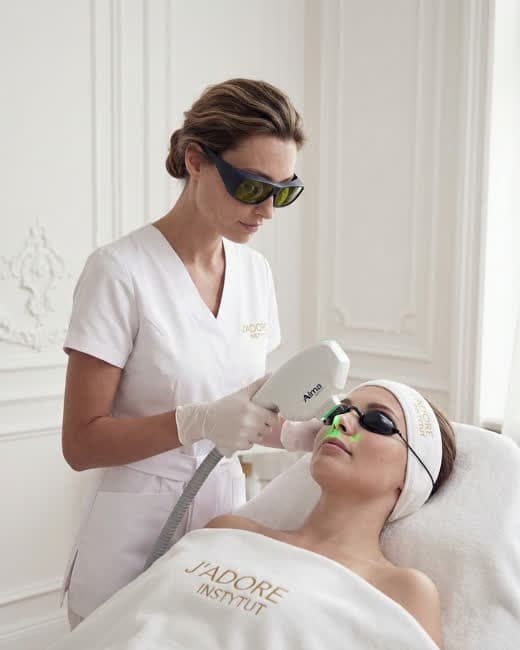
Laser removal
Precise treatment of each lesion. With several warts or skin tags, each one takes just a few moments.
- 04
Dressing and instructions
A small scab or dressing forms at the treatment site — it disappears within a few days to around two weeks, depending on how deep the lesion was. You'll get clear instructions: what to cleanse with, how to protect the area from the sun.
- 05
Follow-up
After healing, a short follow-up visit checks the result and assesses your skin. With proper aftercare, most lesions heal without a trace.
You can go back to work the same day. There's no restriction on driving, and you don't need to tell anyone you've "been to the salon". The scab is a small, discreet mark — most people won't even notice.
Areas men don't like to discuss
- Face and neck — moles, warts near the collar, skin tags. Visible every day, often noticed while shaving.
- Scalp — sebaceous cysts, seborrhoeic keratoses. Exposed with short hair or hair loss.
- Armpits and groin — skin tags in areas of friction. They irritate during activity and grow larger over time.
- Chest and back — seborrhoeic keratoses, moles. At the pool, the gym, or on a beach holiday, they stop being a private matter.
- Feet and hands — viral warts. Painful under pressure, embarrassing, and contagious to a partner.
Healing and getting back to life
Healing after laser removal is far less dramatic than after surgical excision. A small scab often forms where the lesion was removed — it falls off on its own, without needing to be picked. The skin underneath is pink and smooth. Full healing and colour normalisation can take from a few days to a few weeks, depending on how deep the lesion was and where it's located.
- For a few days, avoid intense physical exertion and heavy sweating around the treated area.
- Protect the healing area from the sun — apply SPF, cover it if you can. UV slows healing and can cause discolouration.
- Don't scratch or pick at the scab — it will disappear on its own.
- Use the recommended aftercare product (you'll either receive one or be advised which to choose).
- Avoid the sauna and swimming pool until fully healed.
Any scar left after laser removal — if it appears at all — is often less visible than the lesion we removed. That's one of the biggest differences between laser and classic scalpel excision: laser works layer by layer, while surgery ends in stitches. Around the face and neck, laser wins on healing aesthetics.

Combining with other treatments — yes or no
Many men coming in to have a few lesions removed ask about other niggling issues at the same time — facial veins, sun-related discolouration, acne scars. It's natural to raise several concerns in one visit. Not everything can be done at once, though — your doctor or specialist will decide what can be combined in one session and what's better handled separately.
Lesion removal + laser vein closure
Spider veins on the face and torso can often be treated in the same session as warts and skin tags — one visit, several problems solved.
Lesion removal + laser pigmentation treatment
Sun spots and hyperpigmentation on the face or back can often be treated together — an assessment at the salon will show whether your skin is ready for both procedures at once.
Lesion removal + scalp dermatological consultation
Men with short hair or hair loss often have several lesions on the scalp. While you're there, it's worth having a full preventive check of the scalp.
One treatment — less to think about day to day
Men who come in for the first time to have a lesion removed often say the same thing on their way out: "why did I wait so long". Not because the treatment is dramatic — but because it removes something that was taking up space in their head. A small irritation while shaving, a skin tag catching under a backpack strap, a scab on your foot that puts you off the pool with friends — these are small things, but they're daily ones. And you can simply cross them off the list.
Book a consultation — a specialist will assess your lesions and explain the method and number of sessions needed. There's no obligation to have treatment on the same visit. No pressure. You leave knowing what can be done and how — the decision is yours.