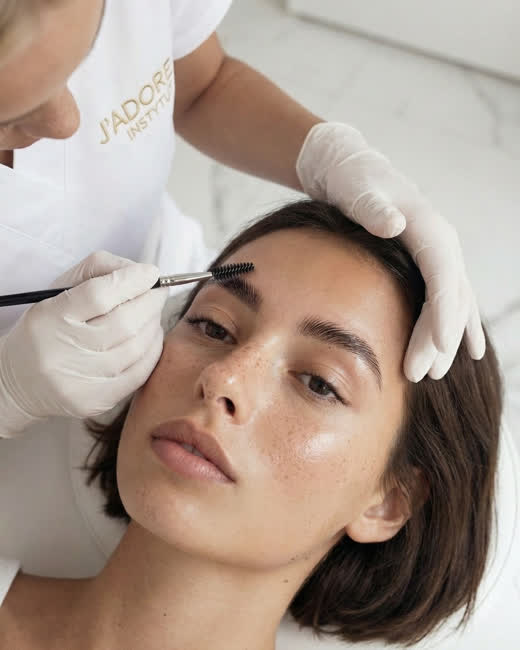
A treatment room at J'adore
HAIR REMOVAL
Grey, fair or red hairs on the neck or chin. Facial hair that returns with PCOS or menopause.
A few stubborn hairs left after a laser series. These are all situations where laser stops being enough — because it needs melanin to work, and a hair without pigment is invisible to it. Electrolysis works differently: it destroys the hair papilla with an electric current, directly in the follicle, regardless of hair colour. It's the only method the FDA recognises as permanent hair removal — used for over 140 years. At J'adore Instytut, the treatment is performed by an experienced cosmetologist (electrologist). Below you'll find everything worth knowing before your first visit.
series — upper lip approx. 8–15 sessions every 2–3 weeks, larger zones get an individual plan
How it works
Electrolysis works electrically, not with light — and that's the whole secret of its effectiveness. A sterile, single-use needle (thickness matched to the follicle) is gently inserted along the hair channel, down to the hair papilla — the growth point. A short electrical pulse destroys the papilla, and the cosmetologist removes the weakened hair with tweezers, without pulling — the follicle is already inactive and won't regenerate.
Because we destroy the follicle with electric current rather than heat absorbed by pigment, hair colour makes no difference. It's the only method the FDA recognises as permanent, and the only one that works on hair without melanin — grey, fair and red — which laser simply "can't see". We work with precision: one follicle at a time.
Ideal for
Women's zones and men's zones
Electrolysis in women most often involves work on small, visible areas of the face and on hair growth with a hormonal basis. Here, precision down to a single hair and gentleness are what matter — the areas around the lips and the chin are sensitive.
What we work with
Electrolysis for men comes in where laser is too aggressive or powerless: precise beard zones and hairs that have lost their pigment. After the age of 35, hair is often mixed — dark plus grey — and that is when we combine both methods.
What we work with
Fun fact: why doesn't laser work on grey hair, but electrolysis does? Laser acts like a pigment tracker — its light is absorbed by melanin and converted into heat, which destroys the follicle. Grey or fair hair has no melanin, so it's "invisible" to laser. Electrolysis doesn't need colour at all — it destroys the papilla with electric current, so it works on every hair, even completely white ones.
Safety
Electrolysis involves breaking the skin barrier and passing an electric current, so the result and safety depend on things worth asking about at any salon:
This is a precise, time-consuming treatment — at J'adore it's carried out by an experienced cosmetologist (electrologist), who chooses the method (thermolysis, electrolysis, blend) and needle thickness for your follicle.
A new, single-use, sterile needle for every person — this is non-negotiable. No risk of infection transmission.
We ask about hormones, medication, pacemakers and previous hair removal. Without this information, a safe plan can't be put together — that's why the consultation is mandatory.
Red flag: electrolysis on someone with a pacemaker or without a consultation · Electrolysis conducts electric current, so a pacemaker or other implanted electronic device is an absolute contraindication — no reputable salon will perform the treatment without a prior consultation. Also steer clear of promises like "we'll remove everything in one session, forever": electrolysis is permanent, but it requires a series, and with hormonal hair growth, follow-up sessions too. Anyone promising a one-time miracle isn't being honest.
Contraindications
Some contraindications are permanent, others temporary — in that case, we simply postpone the treatment until the situation passes. Because electrolysis breaks the skin barrier and passes an electric current, this list matters more than usual.
From the cosmetologist's chair
The thing most often overlooked is cold sores — clients think, "I only get them on my lips, and we're treating my neck, so it's not a problem." But it is: an active virus is a risk regardless of location, since the treatment breaks the skin barrier and can spread it. It's better to postpone by a few days and do it safely.
This isn't a complete list — we'll go through your medication, health conditions (especially hormonal ones) and previous treatments individually at a free consultation.

The visit
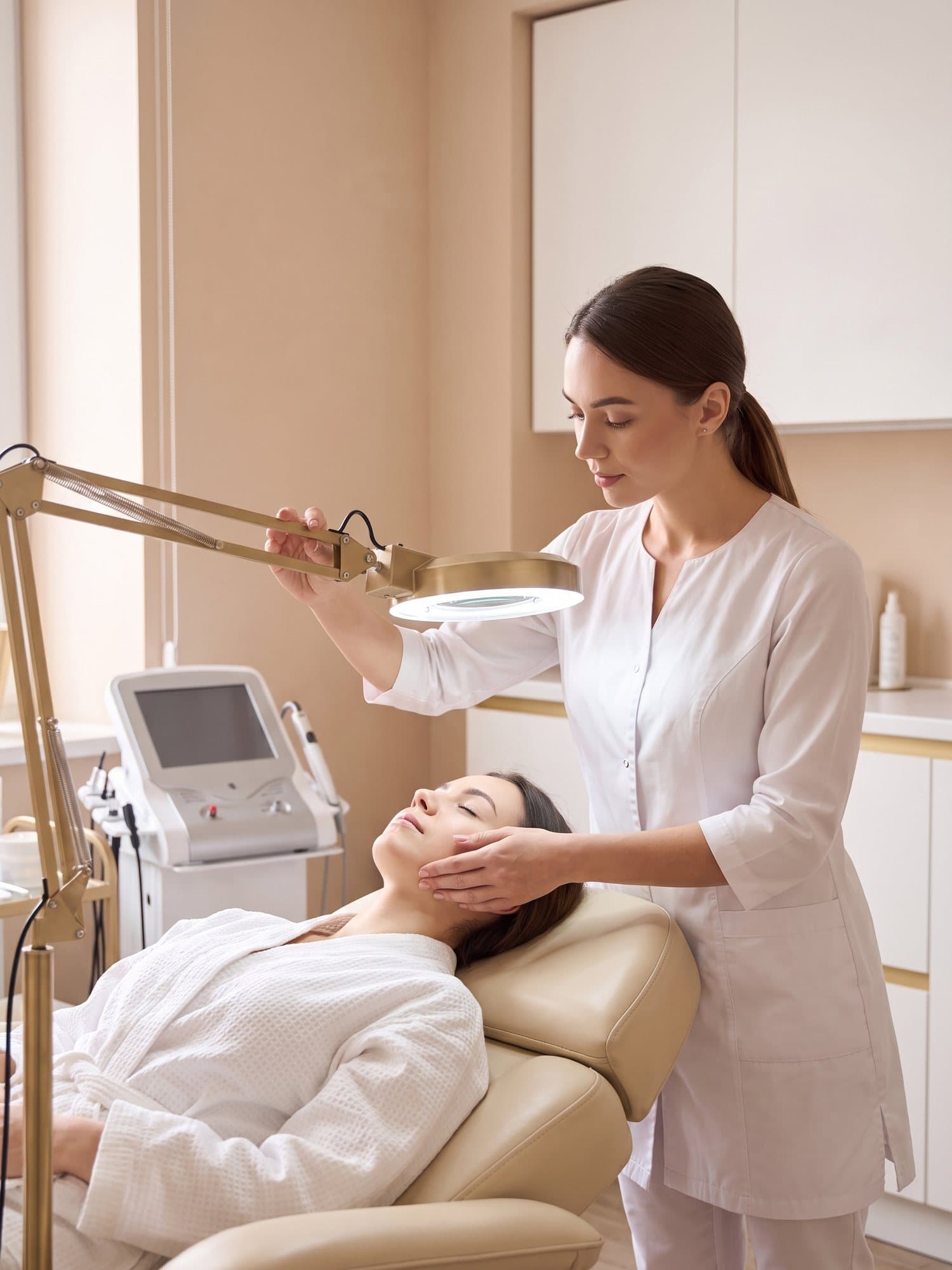
Consultation and plan
the cosmetologist assesses the zone, hair colour and density, asks about hormones and previous treatments, rules out contraindications and selects the method (thermolysis/electrolysis/blend).
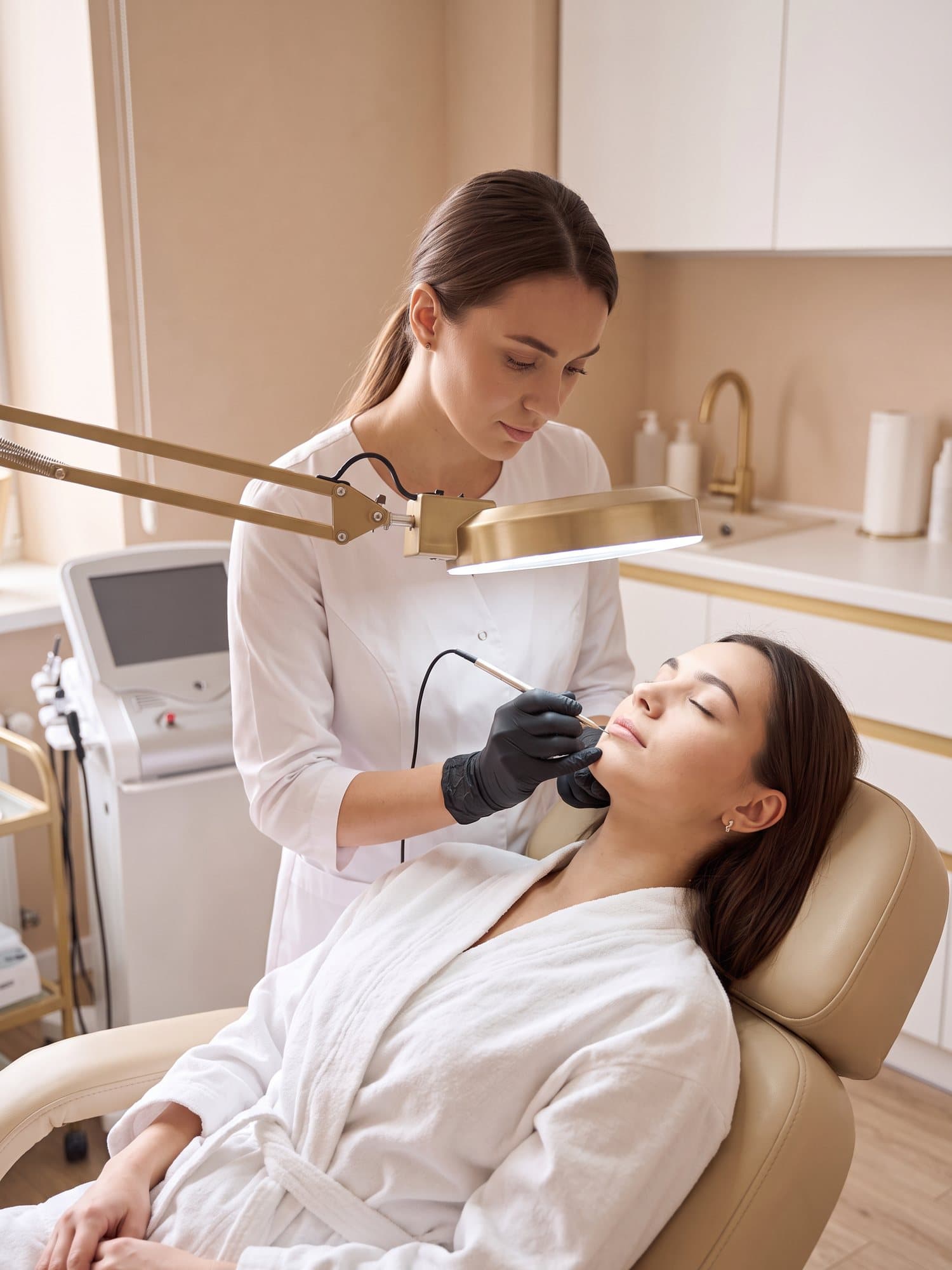
Disinfecting the zone
skin needs to be clean: no cream, makeup or sweat. We prepare the equipment and choose a sterile needle to match the follicle thickness.

Pulse in the follicle
the needle slides along the hair channel, and a short pulse destroys the papilla. Each follicle is treated individually; you'll feel a slight warmth or pinch.
Removing the hair
the cosmetologist lifts out the weakened hair with tweezers, without pulling, since the follicle is already inactive.
Soothing and guidance
a calming product, cooling the zone, and advice for the following days. Redness usually settles within 24–48 hours.
What to expect
Most important: this is a series, not a single treatment. Hair grows in different phases, and the needle can only affect a follicle that's currently active — so we repeat sessions every 2–3 weeks until we've covered them all. Hair reduction builds up session by session.
There's one thing I repeat most often: between sessions, don't pluck or wax hair in the treated zone. A plucked hair disappears from view, but the follicle stays — and I need to see it to target it with the needle. Shaving is fine, since it leaves the root in place. Patience during the series pays off with results that are genuinely permanent.
Portfolio
A record of the work in our salons — the place where we publish treatment frames and, after photo sessions, results.
A record of results — in preparation. We publish photographs of our clients only with their consent.
Let's be honest about how lasting this is: a properly destroyed follicle doesn't regrow. With hormonal hair growth (PCOS, menopause), however, new hormonal fluctuations can create new follicles — so in those cases we talk about lasting hair control, not a one-off removal for good.
Electrolysis and your lifestyle
The skin is gently disrupted after the treatment, so for the first hours and days we protect it from irritation, heat and sun. Nothing complicated — just a few simple rules.
Disrupted skin is prone to discolouration. Skip tanning and sunbeds, and when the zone is exposed, protect it with SPF 50+.
High temperatures dilate blood vessels and intensify redness. Sauna, hammam, hot baths — best left until two days have passed.
Chlorinated water irritates freshly treated skin. Go for a swim once the redness has settled.
After treatment on the underarms, hold off on antiperspirant and alcohol-based products for a day — they sting and irritate. Use a gentle soothing gel instead.
Heavy sweating in a freshly treated zone can cause irritation. A calm day off is enough.
Between sessions, shaving is fine — it leaves the root in place. Don't pluck or wax in the treated zone: the follicle needs to be visible to the needle at your next visit.
Electrolysis (needle, permanent)
These methods do different things and often complement each other rather than compete. Honestly, there's no single "best" method — there's the best one for your hair and your zone.
permanent reduction — every colour
won't quickly cover a large, dense zone — it's follicle-by-follicle work, done in a series
permanent reduction on dark hair
doesn't work on hair without pigment (grey, fair, red) and can be risky on darker skin tones
temporary, immediate result
doesn't remove the follicle — hair always grows back; can worsen ingrown hairs
Combine with
Electrolysis works well alongside other methods and skincare. The cosmetologist decides on the order and gaps during the consultation, but the logic stays consistent:
The most sensible approach for a large, mixed zone is laser as the base, electrolysis to finish. Laser quickly reduces dark hair, and I use electrolysis to finish off what it can't reach — grey, fair and stubborn single follicles. Combining both gives a result neither method achieves alone.
Products included
Under the term "electrolysis" are three techniques for destroying the papilla — the cosmetologist selects the right one for the zone, hair thickness and your history. Alongside them, a few products genuinely make the series easier.
Heat generated by alternating current destroys the hair papilla. Faster, and good for finer hair and a higher number of follicles.
Dla kogoFine, numerous hairs — such as on the upper lip or cheeks.
Direct current triggers a chemical reaction in the follicle that destroys the papilla. Slower, but very precise.
Dla kogoThick, stubborn, deformed follicles.
Combines the advantages of both methods — the most effective option, especially for hormonal hair growth (PCOS, menopause).
Dla kogoHormonal hair growth and stubborn follicles left after laser.
Smooths and clears follicle openings, reducing bumps and inflammation in zones prone to ingrown hairs.
Dla kogoNeck, jawline, bikini line between sessions.
Gentle, grain-free exfoliation — helps hairs surface without irritating disrupted skin.
Dla kogoCare between sessions (not on the day of the treatment).
Allantoin/panthenol calm the skin after the session; SPF 50+ protects the treated zone from discolouration.
Dla kogoThe first few days after the treatment and exposed zones.
Fact: Which technique is right for me? You don't choose it off a shelf — the cosmetologist selects it based on hair colour, thickness and depth, and the cause of the hair growth. Within a single zone, we often combine techniques, since not every follicle is the same. What matters is skill and experience, not the name of the method.
Price list
Checking free hours…
From the magazine
Editorial pieces on how this treatment works in practice — what happens during the session, how to prepare, where the limits are and what the first days after look like.
See also
The result lastspermanent reduction (a destroyed follicle does not regrow)J’adore Instytut
Please note. Electrolysis is a cosmetology and grooming treatment (hair removal); it is not a medical treatment and does not replace a dermatology consultation in cases of skin conditions or hormonal disorders. The text above is for information only and does not constitute medical advice. Indications, method selection and contraindications are assessed by an experienced cosmetologist during an individual consultation.
Home care
Cosmetics matched to what your skin needs after a treatment — so the clinic effect lasts longer.
 soothing body skinDiego Dalla PalmaSENSITIVE Lipid-Balancing Body Cream 350 mlView in the shop(opens in a new tab)
 body sun protectionSkeyndorBody protective b-phase SPF 50 – Age Photo DefenseView in the shop(opens in a new tab)
 soothing body skinestGenLive Balancing BalmView in the shop(opens in a new tab)
 body sun protectionCell Fusion CAquatica Sun Spray SPF50+ PA++++View in the shop(opens in a new tab)
 soothing body skinPeel MissionAsiatic Face and Body Mist 150 mlView in the shop(opens in a new tab)
 soothing body skinDiego Dalla PalmaSENSITIVE Delicate Cleansing Oil for Body 350 mlView in the shop(opens in a new tab)
 soothing body skinestGenLipid ReconstructionView in the shop(opens in a new tab)
 body sun protectionSelvert ThermalSUN CARE SPORT MIST SPF50 SPRAY 200MLView in the shop(opens in a new tab)