Why mental stress stays in the body
Mental work loads the body differently to physical work, but the load is real. The tension you carry through eight hours of desk work, meetings, calls and decisions settles into the neck, shoulders and lower back. Breathing gets shallower. Circulation in the shoulder girdle slows down. And in the evening, instead of shifting into rest mode, the body stays "wound up" — cortisol and muscle tension don't switch off at 6pm along with your laptop.
This is exactly where abhyanga starts. Warm oil combined with rhythmic, deep pressure reaches a layer of tension that stretching or an ordinary shower can't touch. Working with heat and touch sends the nervous system a different signal than any workout: it's time to leave survival mode.
Warm oil — not "skincare", a carrier for the signal
The biggest misunderstanding around abhyanga is the word "oil". To a man, it sounds like something off a cosmetics shelf — not his world. In Ayurveda, oil is a carrier: it penetrates the tissues, carries heat deep into the body, and changes tension in the fascia (the connective tissue wrapping the muscles), while calming the nervous system through skin receptors. It isn't about hydration — it's a medium that allows work on layers deeper than dry hands can reach.
The type of oil is matched to your body's current state and the season, not to aesthetic preference. Sesame oil (warming, heavier) or coconut oil (lighter, cooling) are the classic choices — in practice, a good salon makes the choice before the treatment, after a short conversation. You don't need to know Ayurveda to feel the effect.
Classic dry massage
what works, and what's missing
- good contact with the muscle, works with tension
- firm techniques — a noticeable physical effect
- no heat — the nervous system stays in active mode
Abhyanga (oil + heat)
what makes the mechanism different
- the heat of the oil penetrates the fascia — muscles release faster
- the rhythm and symmetry of the treatment calm the nervous system during the session
- comprehensive coverage of the body — no area is left out
What the treatment involves — no fuss
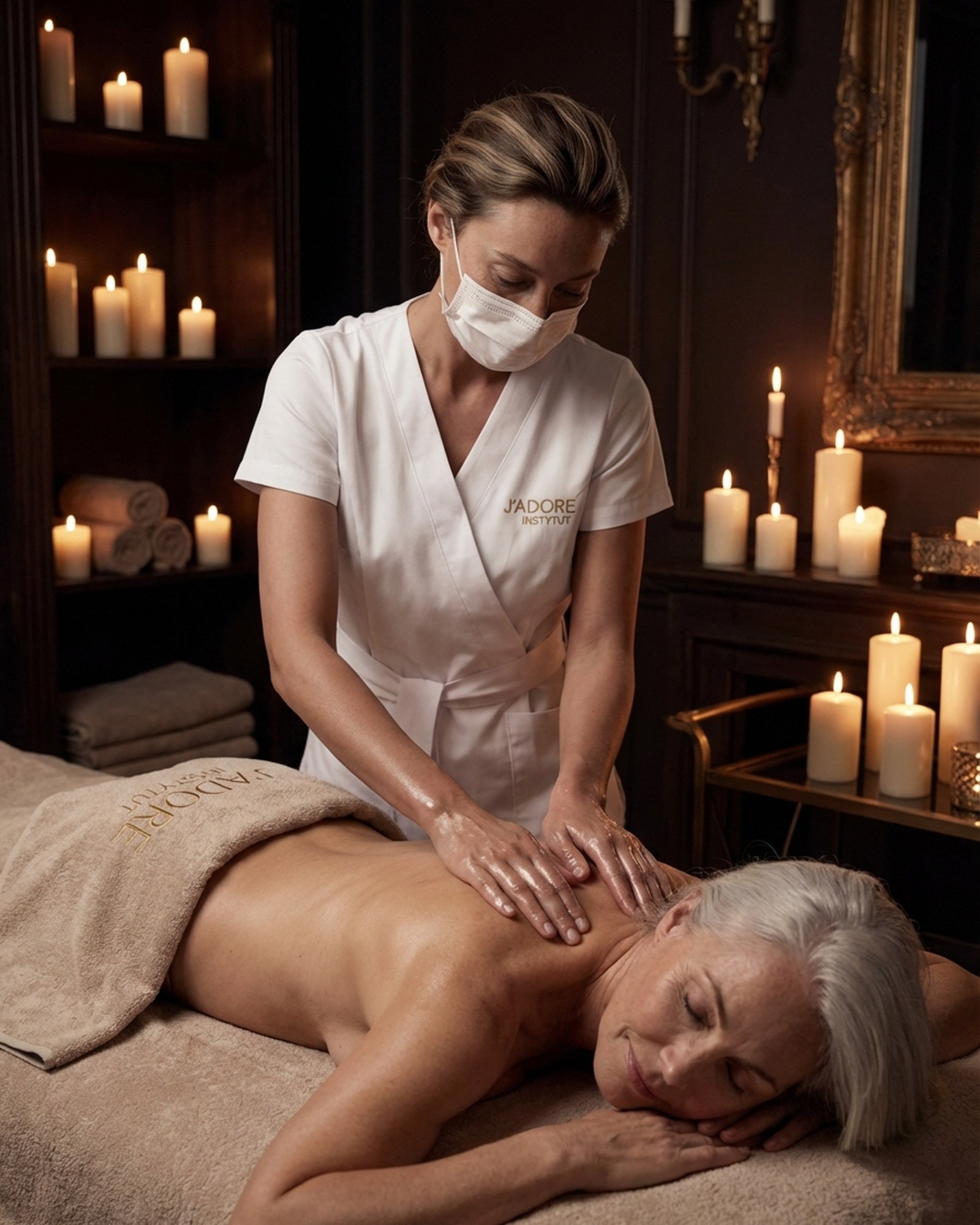
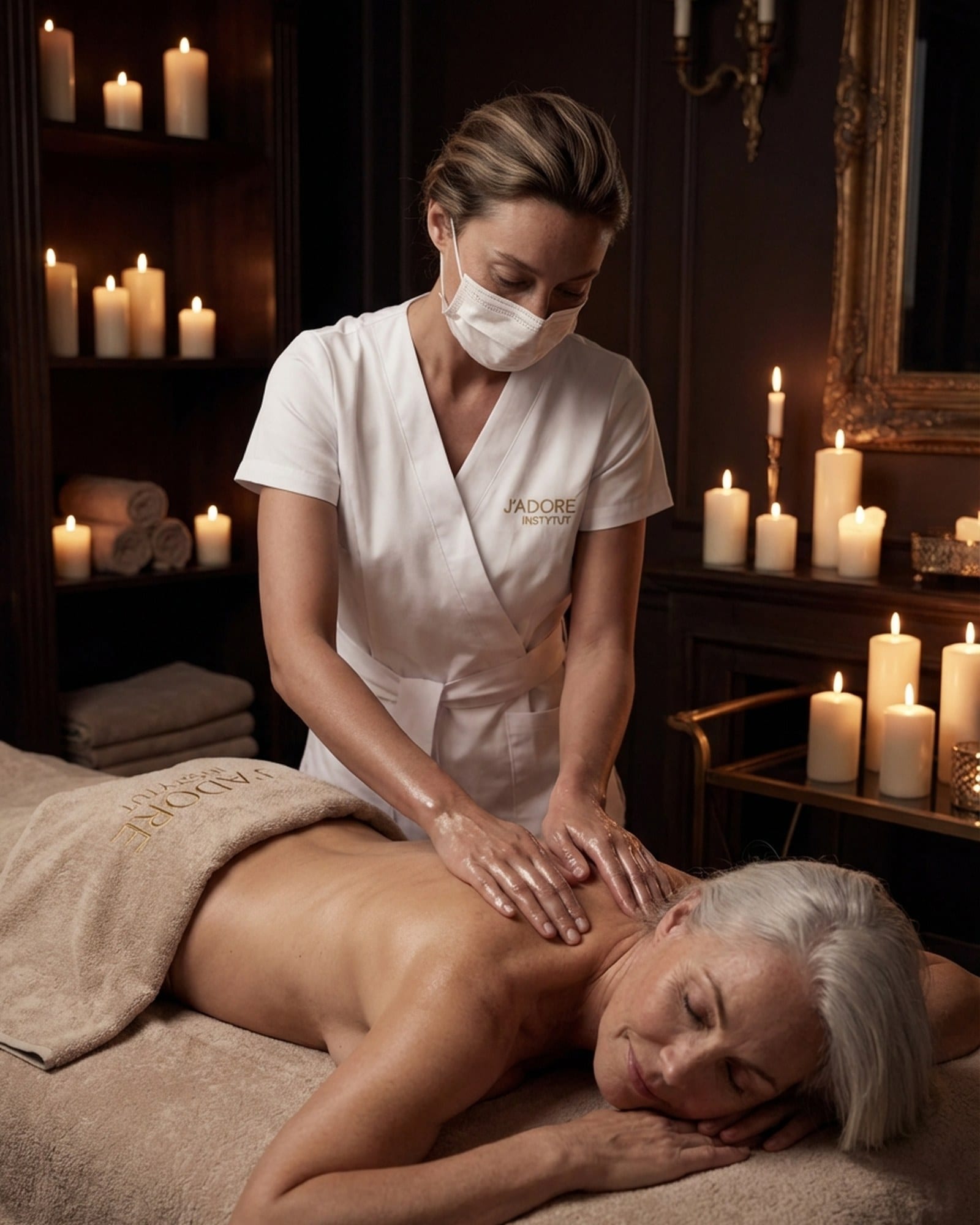
You come in and talk briefly with the therapist — a short conversation about sleep, stress, what hurts, what you drink day to day. This isn't small talk — it calibrates the treatment. Then you lie on the table, warm oil is applied, and the specialist works rhythmically from feet to head, covering the whole body — limbs, back, chest, abdomen, face and head.
- 01
Consultation and oil selection
A few questions about your body's condition, sleep and tension level — these determine the oil and intensity used.
- 02
Warming up and legs
The treatment starts at the feet — oiling, long rhythmic movements along the limbs. Your nervous system starts registering the signal "safe environment".
- 03
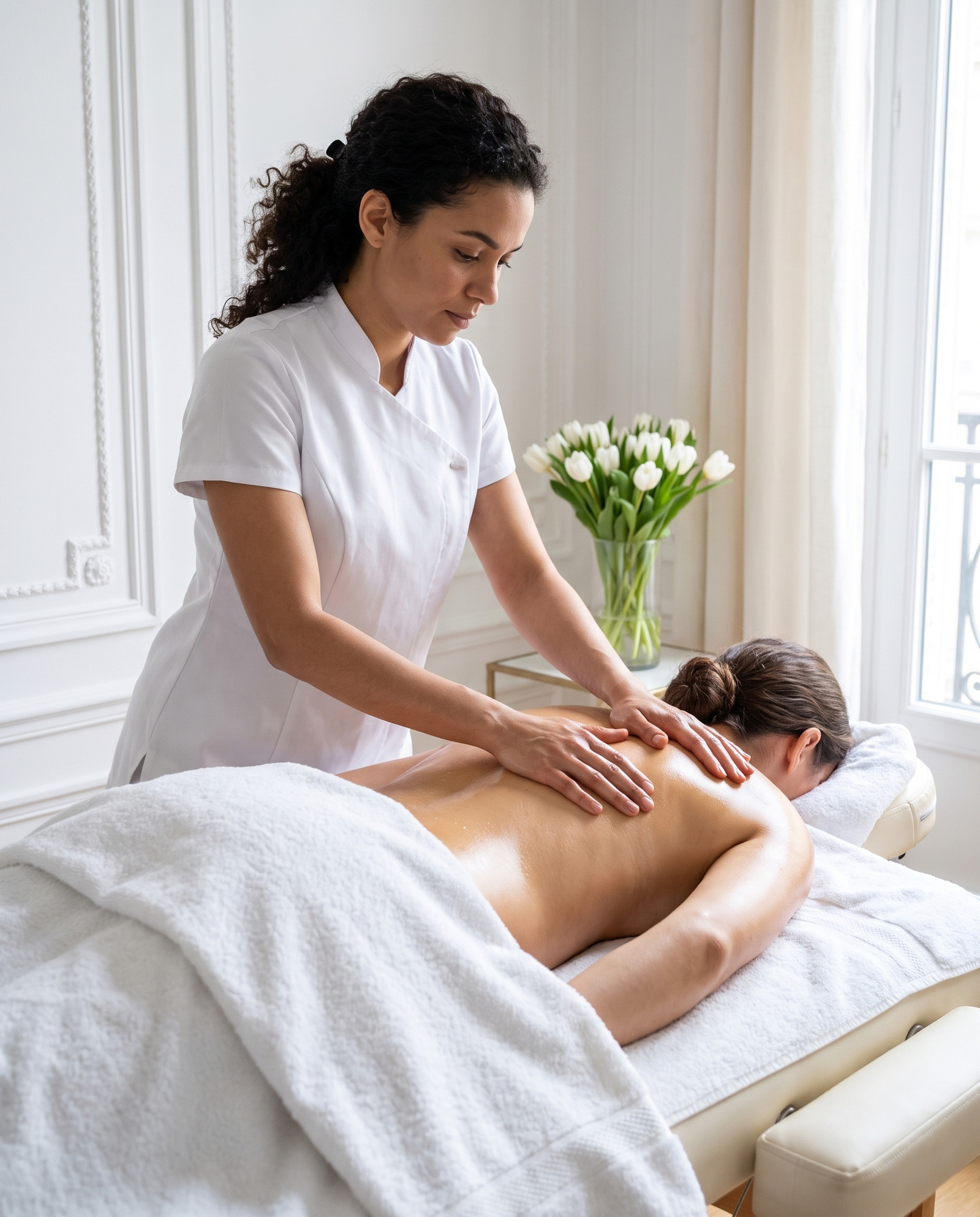
Back and shoulder girdle
Work on the back and shoulders — usually the tightest area for men who work at a desk. This is where oil and heat make a difference: tension releases differently than with a dry massage.
- 04
Chest and abdomen
Areas rarely worked in standard massages, yet ones that collect breathing and digestive tension. Gentle but distinct work.
- 05
Head, face, neck
The final stage — a head massage with oil (shiroabhyanga). The neck and scalp are where many men carry chronic tension without realising it.
After the treatment, you get a quiet moment, followed by a warm shower to rinse off the excess oil. The result: skin feels warm, muscles are relaxed, and your mind — unexpectedly quiet. Not "foggy", just less noisy.
Who benefits most — and when it makes sense
Abhyanga isn't for a man looking for deep work on one specific muscle after an injury. Sports massage or physiotherapy cover that. Abhyanga does what those don't: it resets the whole body at once, with particular focus on the nervous system. That's why its use case is different:
- Working under heavy stress — decision-making, responsibility, multitasking over long periods without real rest.
- Sleep problems — waking during the night, shallow sleep, trouble switching off your thoughts. Often the result of chronic nervous system overload.
- Tension that won't release — neck and shoulders that stay tight despite stretching, chronic tension headaches, a feeling of "lead" in the shoulders after a day at the desk.
- Tiredness without effort — you wake up tired despite sleeping. The body hasn't recovered overnight, because recovery can't happen in alert mode.
- Preventively, on a regular basis — as part of maintaining psychophysical shape, not a reaction to crisis.
Combining with other treatments — does it make sense
It depends on your goal. If you want a deeper effect at the level of the nervous system, abhyanga works better as a standalone ritual, with space before and after. If you want to address several things in one visit, the following combinations make sense for many men:
Abhyanga + head massage (shiroabhyanga)
A classic combination within one session — the head is an area that gathers a disproportionate amount of tension from mental work. A scalp massage with oil can noticeably reduce the intensity of tension headaches for many people.
Abhyanga + a heat ritual (steam room or sauna)
Heat before the treatment helps the oil penetrate and lets muscles release tension faster. If the salon offers this option, ask about the sequence.
Abhyanga as an introduction to a series of massages
A good strategy for chronic tension is to start with abhyanga (working on the whole body and nervous system), then use following visits for deep massage of specific areas — the effect builds up over time.
In practice — what to know before your first visit
No special preparation is needed. A few things will still make the treatment and its effects easier:
- Don't come after an intense workout — the body is then in physical repair mode and won't release tension as easily.
- Eat lightly — a full stomach and an abdominal massage don't mix well.
- Set aside time afterwards — after abhyanga, the body is in recovery mode. Jumping straight back into full speed defeats the purpose. Even an hour of quiet time makes a difference.
- Oily hair is normal — a head massage with oil means your hair may still feel slightly greasy after your post-treatment shower. This clears up after normal washing.
- Tell us what hurts and when — you don't need to know Ayurveda. The therapist just needs simple information: where the tension is, when it gets worse, what hasn't worked.