
Where stress lands when you don't feel it
Under stress, the autonomic nervous system tightens the muscles — an evolutionary readiness mechanism. The problem is that the body doesn't distinguish between a board meeting and a predator attack. It tenses the same way either time, and it only lets go once you consciously allow it to. In men, stress tends to settle in the neck, shoulders and lower back — three areas that work all day long, whether you're at a desk, driving, or lifting anything physical.
The effects of accumulated tension are often dismissed, because they build up slowly: a stiff neck in the morning that eases after a few minutes isn't "just one of those things" — it's a signal. Headaches at the back of the head that pain relief clears up are often muscular, not neurological. Trouble falling asleep despite being exhausted means your nervous system simply can't wind down. Relaxation massage works on all these layers at once: it loosens the muscles, lowers nervous system tension, and gives your body a clear signal that it's safe to let go.
Massage for men — not the same as for women
This isn't a question of bias — it's physiology. Male muscle tissue is denser and more substantial, particularly around the neck, trapezius and back. Commonly used "surface" techniques can be too light to genuinely reach tense structures underneath. That's why a good massage for a man usually means deeper pressure and a more precise choice of technique than a standard relaxation session.
General massage
standard relaxation session
- surface techniques (effleurage, petrissage)
- even pressure across the whole body
- aim: general relaxation, stress reduction
Massage tailored to men
deep tissue work
- deeper techniques focused on the trapezius, neck, lower back
- precise work on trigger points
- aim: releasing tension accumulated in specific areas
That's why the initial conversation with your therapist matters. Where it hurts, where the tension is constant, whether your work is mostly sedentary or physical — this isn't a formality. It's information that makes the session precise rather than random.
What actually happens — no mystique
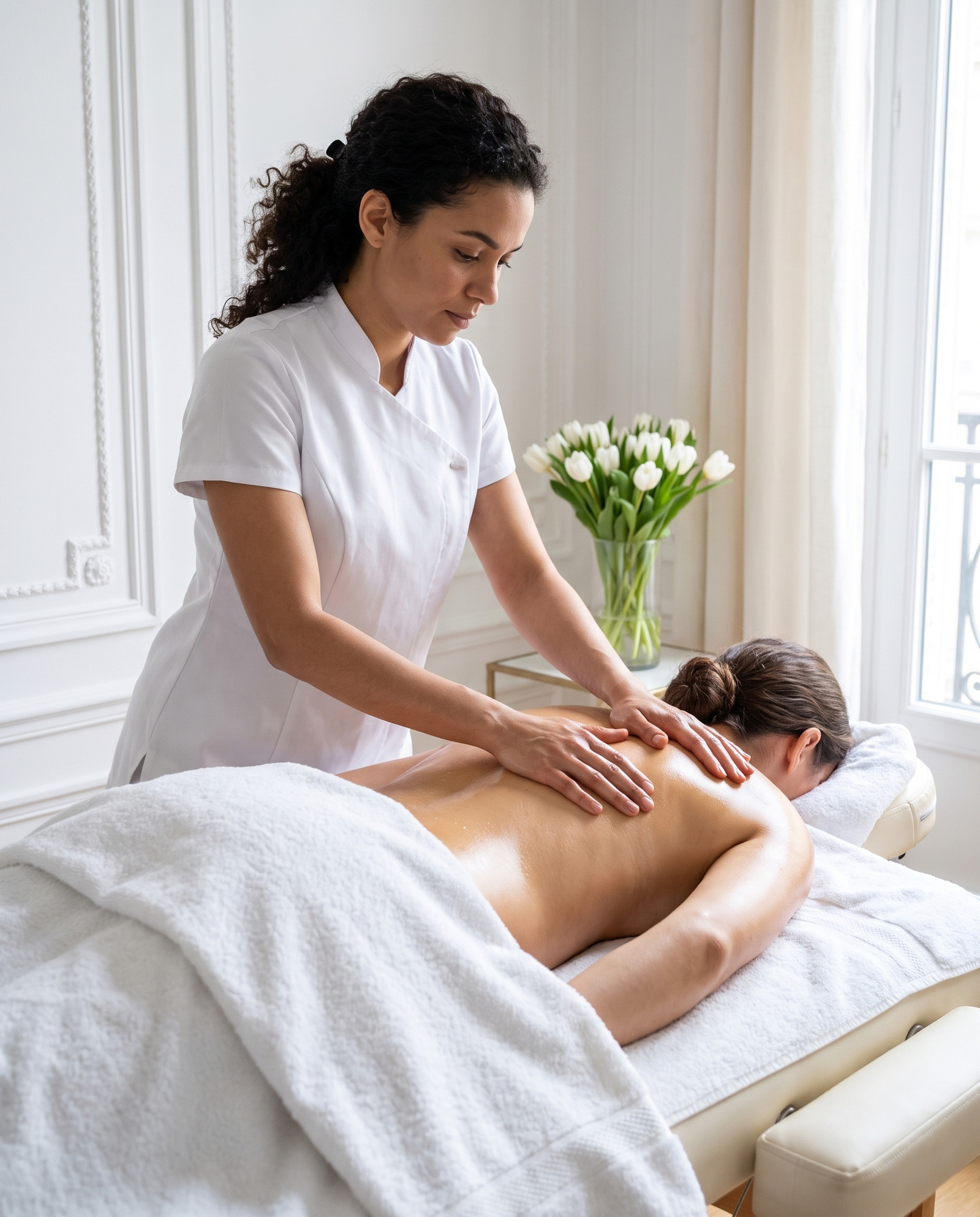
Relaxation massage is a physical intervention with a specific mechanism of action. Pressure on the muscle causes mechanical loosening of the fibres and activates receptors that send a "relax" signal to the nervous system. At the same time, local circulation improves — tissues receive more oxygen, and stress metabolites are cleared more quickly.
- 01
Consultation and settling in
A brief conversation about where the tension is greatest and what you want from the session. You lie on the table in a comfortable position — there's nothing you need to do.
- 02
Warming the tissues
The therapist starts with surface work — warming the muscles and improving circulation. This is preparation, not the main part.
- 03
Deep work
Focus on areas of tension — neck, trapezius, shoulders, lower back. Deeper, precise techniques. It may feel intense, but not painful.
- 04
Winding down
Final slowing techniques signal to your nervous system that the session is coming to an end. Many men fall asleep at exactly this point.
- 05
After the session
You may feel heavy for a while — that's normal. Drink water. For many people, the relaxation effect lasts noticeably for several days.
When to book — and why not just once
One massage isn't a course of treatment — it's more of a reset, and it works better the more often you do it. The first session often deals with the "debt" you've built up over months. Later sessions work on progressively fresher ground — and that's when you start to genuinely feel the difference in how you feel between sessions.
- After an intensive project or a business trip — muscle tension often peaks right after a professional sprint, not during it.
- Regularly, every 2–4 weeks — as prevention, to stop tension from building up. Cheaper, in health terms, than dealing with the consequences.
- Before an important event — a few days before a key conversation, presentation or trip, to keep your head clear and your body untensed.
- When your neck starts to hurt or you get headaches at the back of the head — before it ends up being managed with medication.

Massage and other treatments — what to combine it with
Relaxation massage can stand alone or be part of a broader plan for looking after your body. If you regularly go to the gym, run, or do other physical activity, massage can support recovery and reduce muscle soreness. For a fully sedentary lifestyle, it mainly works on postural tension and stress.
Massage + facial care for men
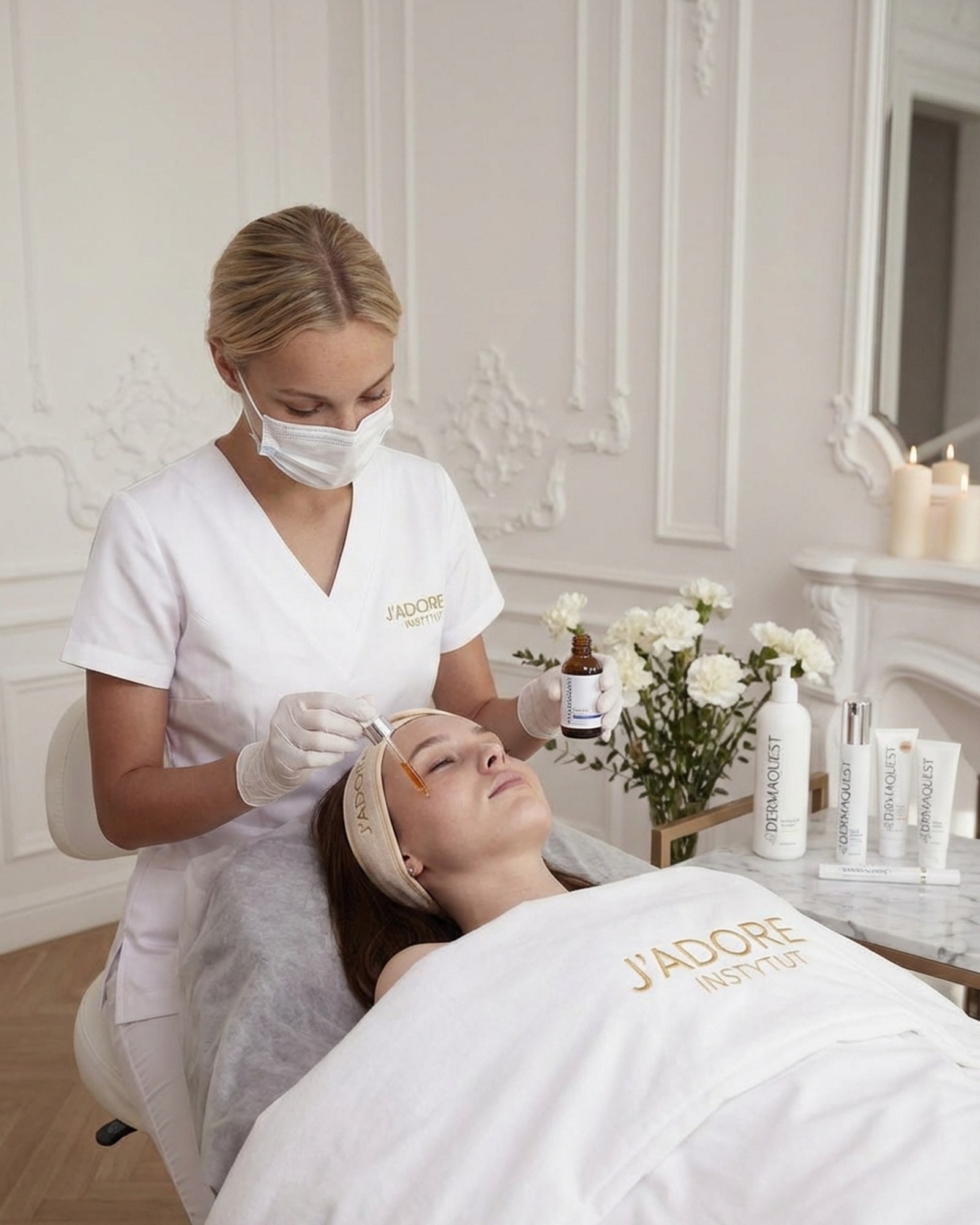
Combine both in a single visit — body and face at the same time. A good choice when you want to fit more into a limited window.
Massage + back treatment
Back skin is often neglected — and with an intensive lifestyle, it may need separate attention. Massage plus a cleansing treatment makes for a complete session.
Deep (sports) massage instead of relaxation massage
If you're physically active and your tension comes more from exertion than from stress, sports massage may be more targeted. It's worth discussing with your therapist.
No need to worry — this isn't a treatment "not for men"
Relaxation massage is still sometimes associated with "pampering yourself" or treated as something you do on holiday by the pool. Yet in many cultures and professional environments — from Asian work culture to elite sport — regular work with a therapist is part of performance hygiene, not a luxury. Your muscle tension isn't a sign of hard work — it's a bill that needs settling.
For many men, the biggest barrier is simply not knowing what to expect. The session is comfortable, the environment is professional, and there's nothing "odd" about having a tight neck after a week of meetings and a project sprint. Your therapist has seen it a thousand times — and knows exactly what to do about it.