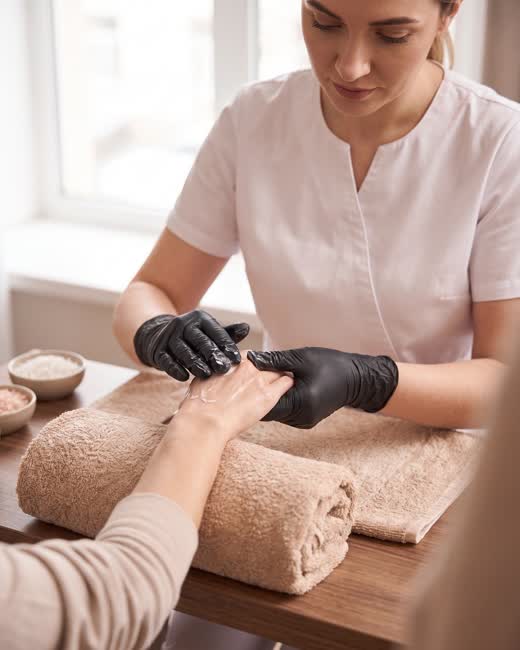
What cupping does to your muscles
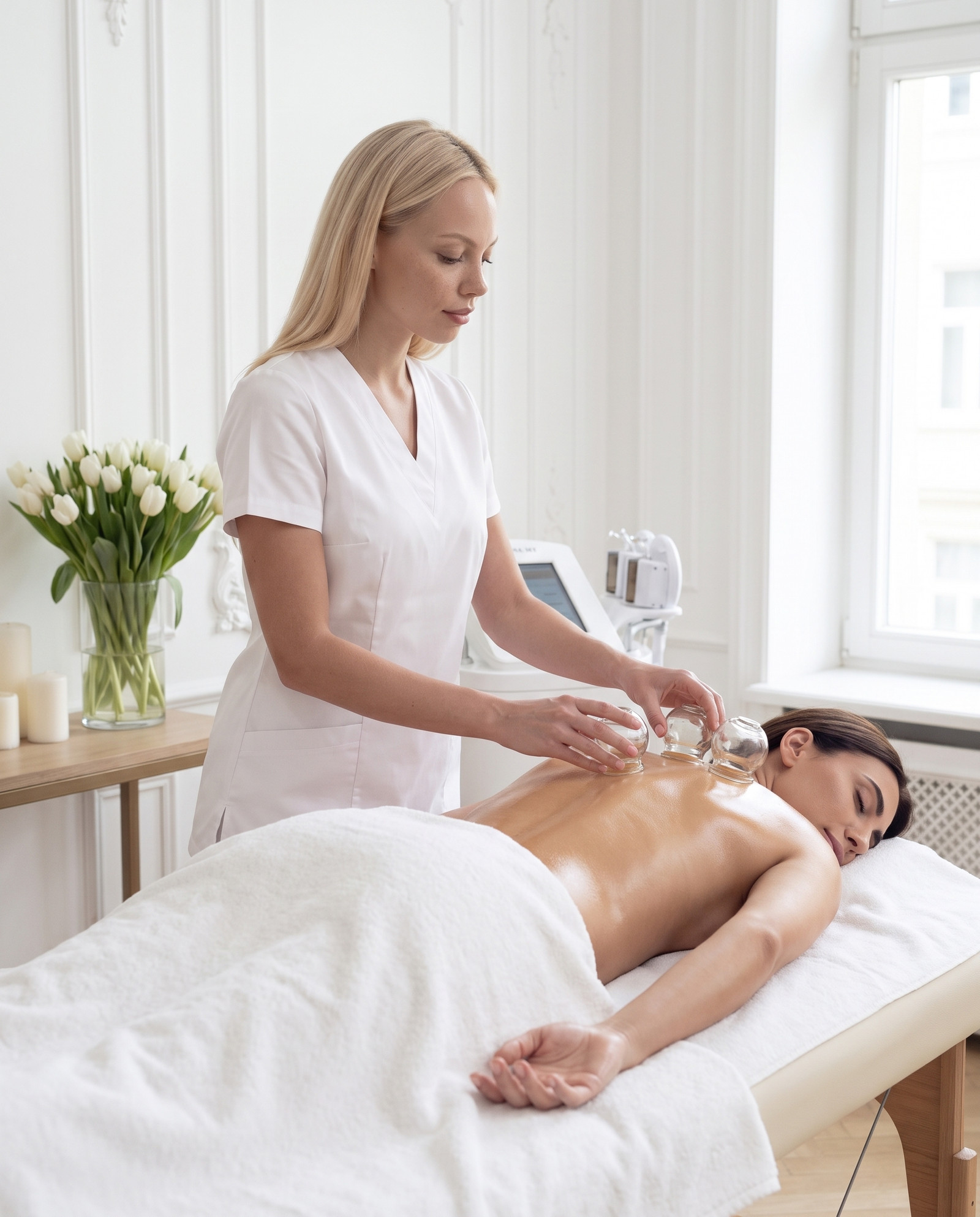
A standard massage works on the muscle through pressure — pushing deep into the tissue. Cupping works the opposite way: it creates negative pressure that lifts the skin and fascia (the deep connective-tissue layer) upward. The effect is different from kneading — it's closer to loosening stitched fabric than squeezing it.
This matters because muscle tension and overload often sit in the fascia — the tissue that surrounds muscles, tendons and organs. After intense training, a sedentary lifestyle or an injury, fascia can "stick together", creating restrictions in movement, pain and a heaviness that ordinary stretching won't release. Cupping reaches where a traditional massage has limited access.
Cups can be static (placed in one spot) or gliding (moved across oiled skin). For working with tense backs and legs after training, gliding cups are used more often — the effect goes deeper, and the technique allows work along the entire muscle band, not just a single point.
A back that won't cooperate — specific cases
Three problems men most often come to cupping therapy for — and ones this method genuinely addresses:
- Lower back and glutes. A desk job combined with a computer is a combination that, over time, literally shortens the iliopsoas muscle and overtightens the paraspinal muscles. The result: lower back pain at L4–L5 that won't ease even with stretching. Cupping works the tense bands in the lower back and glutes, changing the state of the tissue — not just easing the symptom.
- Shoulder and upper trapezius. The classic result of hours at a computer with the head pushed forward: a tight trapezius, stiff neck, pain radiating into the neck. Gliding cups along the upper trapezius and shoulder blade area bring relief that a classic Swedish massage often doesn't.
- Legs after training — fatigue, heaviness, delayed recovery. Intense strength training or running leaves metabolites and micro-damage in the muscles. Cupping on the thighs and calves can support drainage and circulation in those areas — for many athletes, it shortens the subjective feeling of "soreness" and heaviness.
What the treatment looks like — no mystery
Before their first session, men usually ask two things: does it hurt, and how long does it take. Both answers depend on the area and the state of the tissue, but a few things can be said upfront.
- 01
Consultation and tissue assessment
The specialist asks where it hurts and what your day looks like — desk work, training, how you rest. There are no questions here about "skincare" — this is purely functional.
- 02
Oiling and cup selection
The skin is oiled so the cup can move freely. The strength of the suction is adjusted — lighter at first, then based on how the tissue responds.
- 03
Working specific areas
The cup glides along muscle bands or is held over points of greatest tension. This can be intense — it doesn't sting like a needle, but it "pulls". You can ask to adjust the pressure.
- 04
Smoothing and finish
Some protocols end with a short massage or stretching to lock in the release effect.
After the treatment, you may have the marks mentioned earlier on your skin — for people with very tight tissue, they can be more intense. This isn't a problem; they'll fade. What may last a few hours is mild tenderness in the areas the cup worked — similar to after a deeper massage. Full release effects often appear the day after the treatment, not immediately.
Cupping vs other options — what to choose when
Not every kind of tension calls for cupping. And not every cupping session answers every problem. A quick comparison to help you decide:
Cupping therapy
when it works best
- chronic fascial tension
- overloaded muscles after training
- back stiffness from sitting
- heavy legs, poor recovery
Classic massage
when to choose instead
- general relaxation and stress reduction
- working with surface-level tension
- sensitive skin (low tolerance for marks)
- first visit — getting used to massage
The best result comes from combining cupping with massage — cupping breaks down fascial restrictions, and massage then works the loosened tissue. For many men, this protocol works better than cupping or massage alone, especially with chronic back problems.
Classic massage
Cupping opens the tissue — massage then works deeper in the loosened ground. A combined session gives you more than the sum of two separate treatments.
Sports massage
For physically active men: cupping on specific overloaded areas plus sports massage to reset the whole muscle-fascial system. A regular protocol improves recovery and reduces the risk of injury.
Hot stone massage
The stone warms the tissue from outside, cupping mobilises it from within. For men with chronic tension in the neck and upper trapezius, this combination brings clear relief.
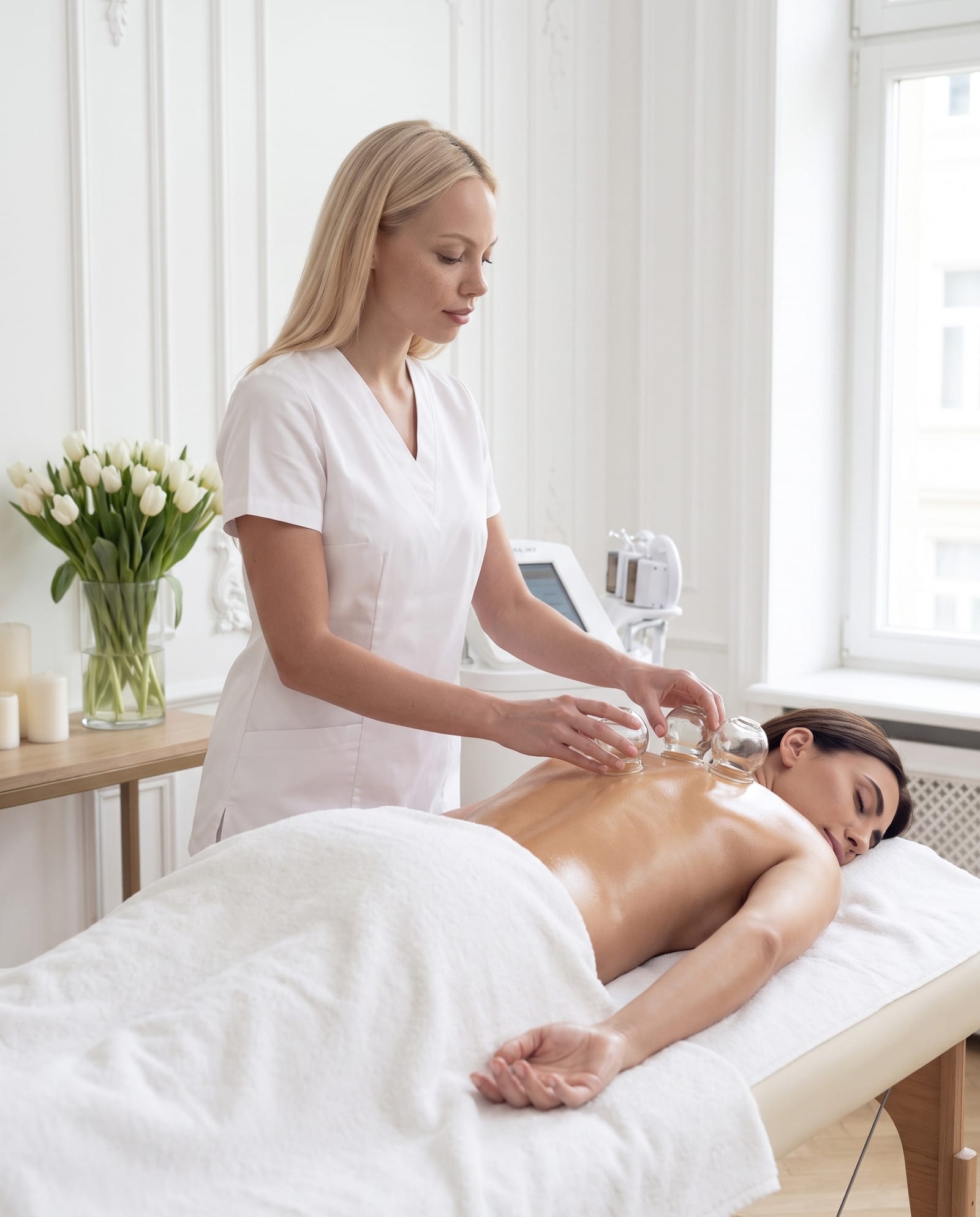
Consistency, not a one-off fix
This isn't a suggestion that cupping therapy "only works after a series". The first session often brings noticeable relief. The point is that tissue builds up its condition over weeks and months — fascial tension doesn't appear overnight and doesn't disappear after one hour. For most men who work at a desk or train intensively, the optimal rhythm is once every two to three weeks, as a standing part of recovery. You don't need to wait until "something hurts unbearably".
Who shouldn't have it — no sugar-coating
Cupping is safe for healthy people, but there are situations where we don't perform it:
- Inflammation and skin conditions — active inflammation, burns, skin damage in the treatment area.
- Clotting disorders and anticoagulant medication — cupping increases local circulation, which can be risky for anyone prone to bleeding.
- Varicose veins and haemangiomas — working directly with cups over varicose veins is contraindicated.
- Cancer — no massage treatments in the treatment area without a doctor's consultation.
- Acute pain with neurological symptoms — numbness, radiation into the limbs, loss of sensation. That's a case for a doctor, not a beauty salon.