

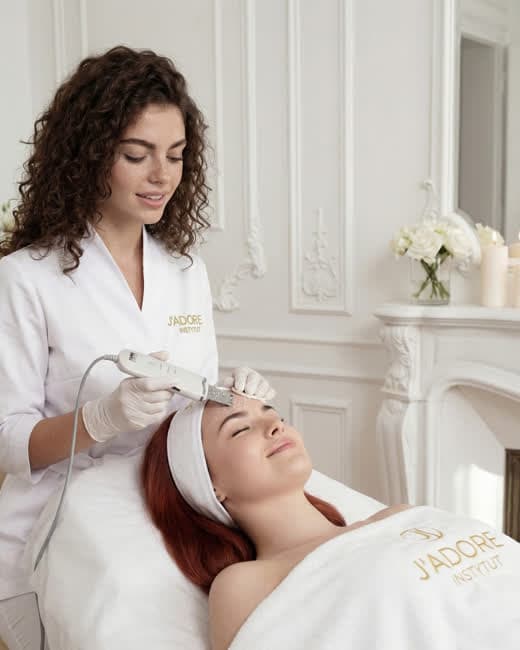
When are treatments appropriate — and when aren't they?
The key factor for any treatment is your current skin condition. Not the condition itself, but the phase you're in right now.
- Remission (no active flare-ups) — treatments are fine, chosen carefully
- Mild active flare-ups — only very safe options, such as LED or intensive hydration
- Active flare — no salon treatments
Safe treatments for atopic dermatitis
Treatments to avoid with atopic dermatitis
Some popular treatments can significantly worsen atopic skin — even when they're recommended for other skin concerns.
- Chemical peels — especially high-strength AHA/BHA formulas irritate skin and disrupt the barrier
- Microdermabrasion — aggressive exfoliation breaks down the skin barrier
- Mechanical peels (crystal, scrub) — a similar effect to microdermabrasion
- Ablative lasers (CO₂, Er:YAG) — absolutely contraindicated during an active flare
- Intensive RF during active inflammatory flare-ups
- Treatments with alcohol-based products (toners, aftershaves)
- Hot paraffin baths — higher temperatures can intensify itching
- Essential oils — many ingredients can trigger allergic reactions
Home care for atopic dermatitis
Salon treatments only make sense when your home care routine is right. Regular emollient use isn't a luxury with atopic dermatitis — it's a necessity.
Ingredients that are safe for atopic dermatitis: ceramides (barrier repair), colloidal oatmeal (anti-inflammatory and anti-itch), niacinamide 4–5% (barrier support, use higher concentrations with caution), panthenol (soothing and regeneration), glycerin (a safe humectant).
- Avoid essential oils in the ingredient list — any of them
- Avoid perfumes and fragrance additives
- Avoid high concentrations of SD alcohol/alcohol denat
- Be cautious with propylene glycol — some people react with irritation
- Be careful with preservatives: MIT and parabens can be problematic
Bathing with atopic dermatitis — the rules
- Lukewarm water (below 32°C) — never hot
- Short baths, 5–10 minutes — no longer
- Bath oil (such as Balneum or Oilatum) — enriches the water and minimises drying
- Dry gently — pat with a towel, don't rub
When you must see a dermatologist
Beauty treatments support atopic skin, but they don't replace treatment. In some situations, a dermatology consultation is essential.
- Bacterial superinfection (Staphylococcus aureus) — yellow crusting, oozing
- Eczema herpeticum — a rash following contact with the herpes virus
- No response to emollients after 2–3 weeks
- A flare-up requiring topical steroids or biologic treatment


