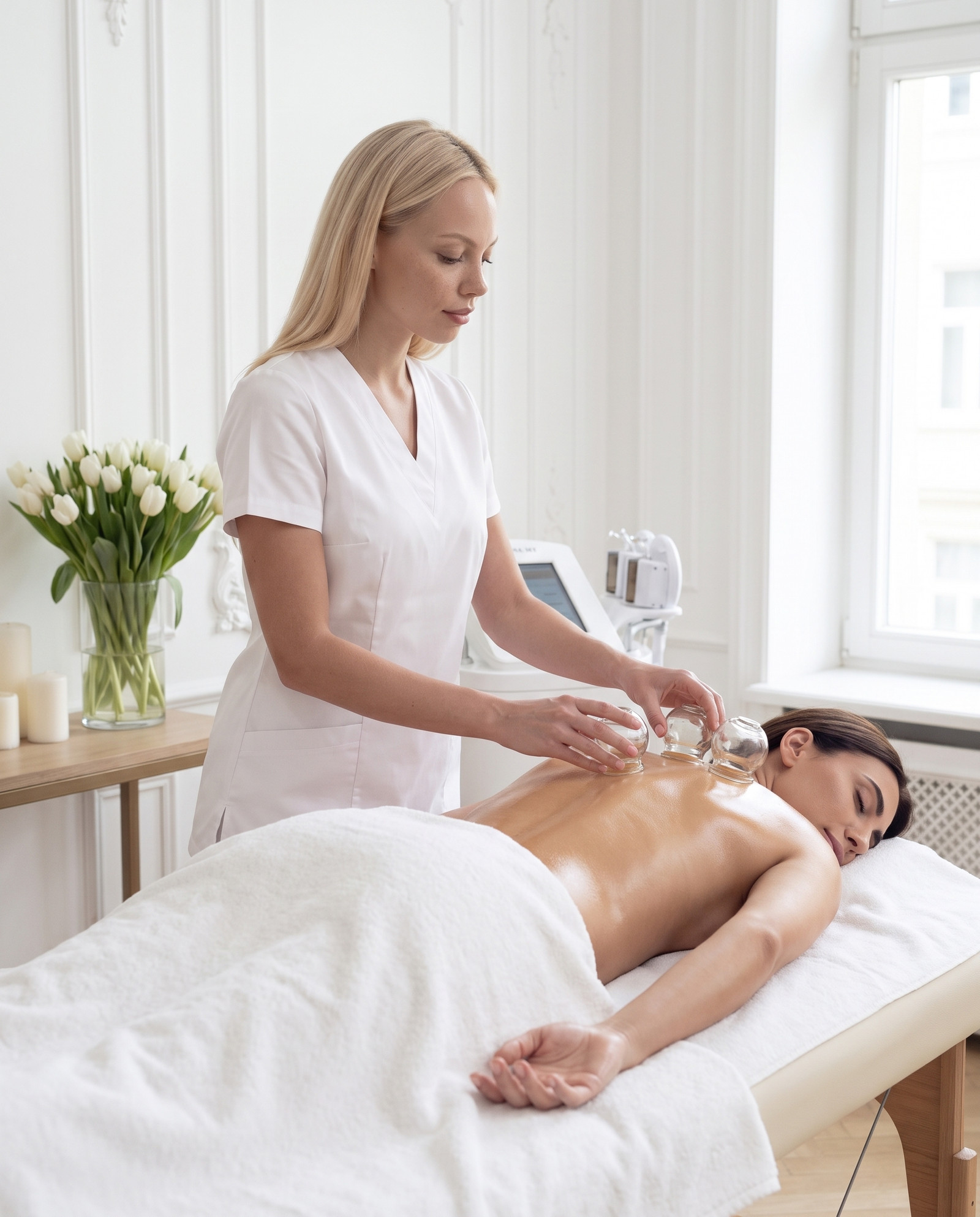
Thrombosis cannot be "massaged away" with cups
The most important red flag does not look like a cosmetic problem. Unilateral limb swelling, new calf pain, noticeable warmth, redness, or bruising require stopping the massage and contacting a healthcare professional. If deep vein thrombosis is suspected, compressing and suctioning the leg is inappropriate. The same applies to a recently diagnosed thrombosis and any period during which a doctor has not yet cleared you for manual work. It is not enough to avoid the most painful point. The problem may involve a vessel running deeper, not just the spot visible on the surface.
Varicose veins are not the same as thrombosis, but bulging, painful, or inflamed veins should also not be treated with cups. A specialist may modify the treatment area, use a different technique, or refuse the treatment until you have consulted a doctor. Sudden swelling after a long journey, immobilisation, surgery, childbirth, or starting hormonal treatment requires special attention. Massage does not diagnose the cause of swelling. If you also experience shortness of breath, chest pain, fainting, or a cough with blood, you need urgent medical help, not a call to the salon asking for a lighter suction setting.
Anticoagulants change your reaction to suction
Similar caution is justified by clotting disorders, thrombocytopenia, unexplained frequent bruising, recent bleeding, and liver diseases affecting haemostasis. It is also worth mentioning any supplements and over-the-counter medicines if you notice you bruise more easily after taking them. The intensity of the mark is not a competition. Repeating strokes until the skin turns dark purple increases tissue trauma but does not prove a better effect on cellulite. In a person with a higher bleeding risk, it may end in an extensive haematoma and pain lasting longer than the intended effect of the treatment.
The skin must be intact, calm, and capable of regeneration
- Skin damage and weeping lesions. Cups should not be used over a fresh wound, abrasion, blister, sunburn, or weeping lesion. An active bacterial, fungal, or viral infection in the treatment area means the visit must be rescheduled.
- Risk of irritation and spreading discharge. Suction and oil can spread discharge over a larger area, irritate the edges of a lesion, and make it difficult to assess its development.
- Skin requiring healing. A fresh tattoo, recent hair removal causing folliculitis, and skin after an intensive peel also need healing, not another mechanical stimulus.
With psoriasis and eczema, the issue is not whether the lesion is "small". The American NCCIH notes the possibility of these conditions worsening after cupping. Active lesions are not treated, and in the case of extensive or unstable skin disease, the feasibility of the work should be discussed with a doctor. Caution is also required for very thin skin, skin treated chronically with steroids, or skin that tears easily. Cupping will not repair a damaged barrier. Instead, it can turn minor irritation into a larger area of burning, ecchymosis, or erosions.
Fever, infection, and fatigue are reasons to change the date
- Allergic rhinitis vs. infection. Allergic rhinitis without feeling unwell does not necessarily mean the same as an infection. The situation should be assessed differently when symptoms of illness appear.
- Symptoms excluding massage on a given day. Fever, chills, muscle pain of an infectious nature, severe cough, vomiting, or diarrhoea exclude massage. Your body does not need intensive tissue stimulation or additional discomfort at such times.
- Safety of others. Protecting the person performing the treatment and subsequent clients is also important. In the case of a fresh infection, it is worth rescheduling your visit until acute symptoms have subsided and you have regained your usual energy levels.
Do not try to resolve the matter while already on the treatment couch. Call in advance, describe your symptoms, and the date they began. If the cause of your fatigue is a recent hospitalisation, an exacerbation of a chronic illness, or a new medication, a doctor's approval may be necessary. Cupping therapy does not "draw out an infection" through the skin and does not shorten an illness by leaving darker circles. This appearance comes from the vessels' reaction to suction, not from the removal of toxins. Performing a strong massage during a fever can add dizziness, nausea, and dehydration to your existing ailments.
Pregnancy does not have one answer for all areas
The postpartum period also requires context. The puerperium, a caesarean section, wound healing, greater blood loss, breastfeeding, and anticoagulant treatment change the plan. Cupping is not performed over a fresh scar or in an area that is painful, hot, or swollen. The desire to work quickly on the appearance of your abdomen should not take precedence over the healing of the abdominal wall and an assessment of diastasis recti. Cupping will not mechanically bring the linea alba together, will not reverse a hernia, and will not replace uro-gynaecological physiotherapy. It may be considered later as part of tissue care, but not as a shortcut through postpartum physiology.
Cancer, surgery, and radiotherapy require the approval of your medical team
- Oncological diagnosis vs. touch. An oncological diagnosis does not mean that every form of touch is forbidden forever. It does mean, however, that a standard anti-cellulite protocol is not an appropriate starting point.
- Areas excluded from massage. We do not massage the area of a tumour, bone metastases, a fresh surgical field, drains, ports, catheters, or skin damaged by radiotherapy.
- Lymphoedema. Lymphoedema requires specialised management; cosmetic cupping is not a substitute for anti-oedema therapy.
- Additional risk factors. Thrombocytopenia, anaemia, neuropathy, and fatigue after treatment can further increase the risk of injury.
If your oncologist or physiotherapist allows massage, the scope and pressure must correspond to your current condition, not just the name of a disease from years ago. In remission after finished treatment, it is still worth disclosing removed lymph nodes, past irradiation, and a tendency to swelling. The therapist should be able to indicate which places they will not touch and why. A lack of questions about your treatment is a warning sign. Similarly, the promise that suction will "stimulate the lymph" without assessing the lymphatic system sounds attractive but may be a dangerous simplification.
Neuropathy and sensory impairment remove an important alarm system
Diabetes requires an assessment not only of sensation but also of healing, circulation, and skin condition. A well-managed disease is not an automatic ban on every massage, but active ulceration, infection, ischaemia, or unstable glycaemia shift the priority from an aesthetic treatment to medical care. Osteoporosis, a fresh fracture, acute muscle injury, and unexplained bone pain also do not fit with strong suction. Cupping does not set bones, does not heal tears, and should not mask a symptom whose cause has not yet been identified.
Proper qualification includes questions, skin examination, and a test
Before the first stroke, the specialist should ask about medications, vascular diseases, a tendency to bruise, pregnancy, surgeries, active infections, cancer, sensory disorders, and previous reactions to cupping. Then, they examine your skin in good light. A form signed at reception is not enough. If a new mole, unexplained lump, clearly hot area, or asymmetric swelling appears, the treatment in that area should not begin.
A sensible first session also serves to learn how your tissues react. We use suction levels where the cup moves smoothly, the skin is not tugged, and the sensation remains controllable. A dark mark is not the goal. If you feel sharp burning, numbness, throbbing pain, nausea, or dizziness, you must say so immediately. At J’ADORE INSTYTUT in Krakow, the question about contraindications should be asked before choosing the intensity, as the parameter is not determined solely by your pain threshold.
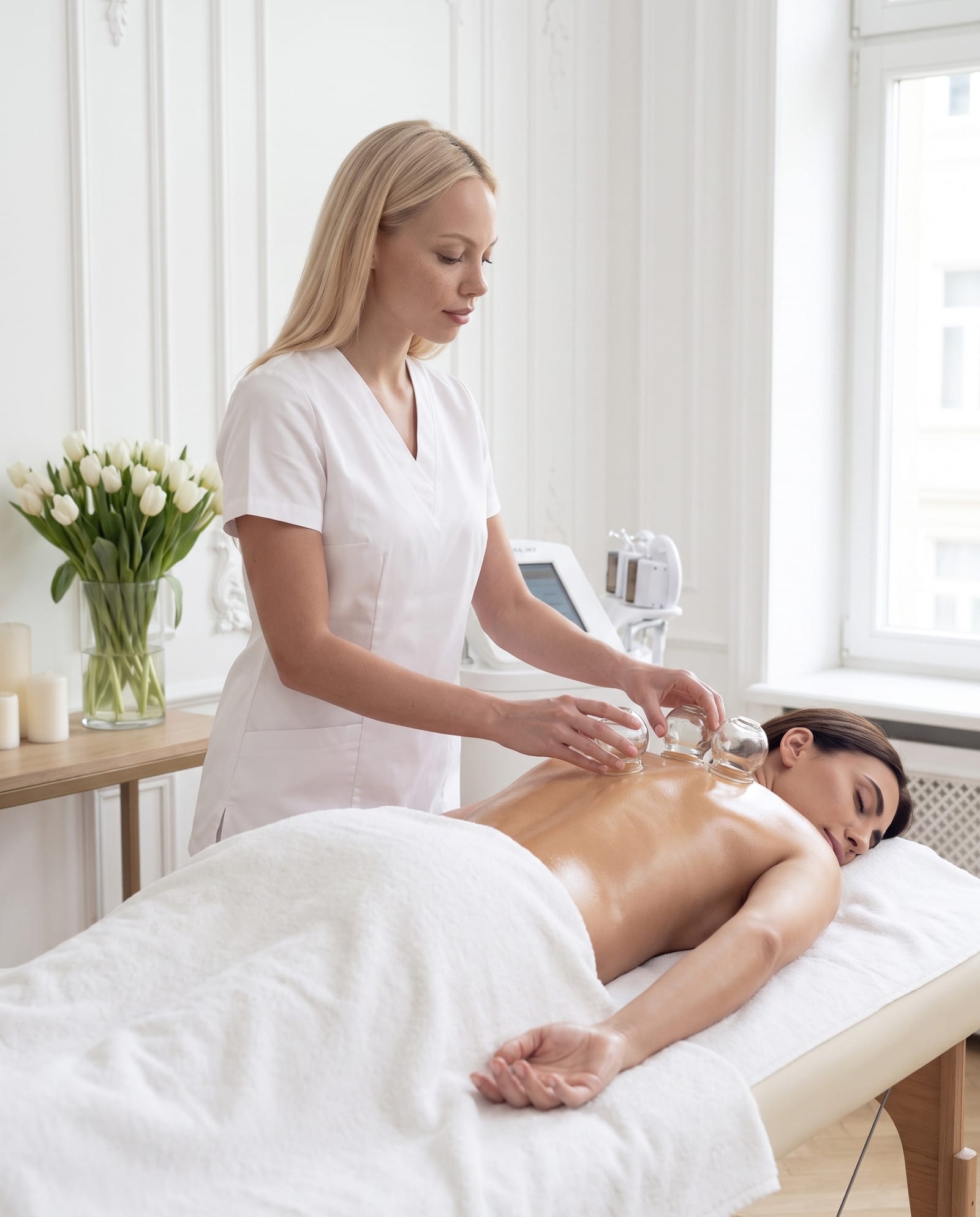
After the treatment, a normal mark must be distinguished from an alarm symptom
Round redness, tenderness resembling a bruise, and a temporary change in colour may be part of the expected reaction. However, they should gradually fade, and the skin should remain intact. A blister, burn, weeping, rapidly increasing swelling, severe pain, extensive warmth, or red streaks are not a trophy after a "strong" massage. They require contact with the salon and, depending on the severity, also a medical consultation. The NCCIH lists burns, infections, scars, and permanent discolouration among the possible side effects of cupping.
Take a photo of the lesion in neutral light and note the time of the treatment and the moment the symptom appeared. Do not puncture a blister, do not scrub the area, and do not try to heat it with another procedure. If you experience shortness of breath, chest pain, fainting, neurological symptoms, or a rapidly progressing allergic reaction, seek urgent help. The most important thing to remember is not very spectacular: a good treatment does not need maximum suction. It needs the right person, healthy tissue, and the decision that sometimes the best move is to reschedule the visit.
The most common half-truths during qualification
"I only have a few spider veins, so cupping will strengthen them" — this is not safe reasoning. Fragile, superficial vessels can react with further ecchymoses, and dilated veins do not become more efficient from mechanical suction. "I have been taking the medication for years, my body is used to it" also does not solve the issue: constant anticoagulant treatment still affects bruising. Another shortcut is "since athletes use cups, they will also help with a fresh injury". The sporting image of the method does not replace a diagnosis of a tear, haematoma, or fracture. A common mistake is treating the absence of acute pain as tissue consent. Some contraindications only hurt after being overloaded, and some — like sensory impairment — are precisely what removes the warning pain.
Equally misleading is the phrase "it's just a silicone cup, not a fire one". The lack of a flame removes the specific risk of burns while creating a vacuum, but it does not remove the effect of suction on the skin and vessels. "I had cups as a child" also does not determine your tolerance for sliding massage on the thighs. The static technique on the back, wet cupping involving breaking the skin, and a cosmetic cup used over oil are different procedures. Before your visit, you need to name what will actually be performed. If the salon offers skin-breaking procedures, medical requirements, sterility, and the risk of blood contact come into play; simple disinfection of a silicone accessory is not enough as a safety description.
Body map: areas not covered by a routine stroke
We do not use cups on the front of the neck, eyes, mucous membranes, or directly over the spine as if it were a flat muscle strip. We avoid fresh scars, hernias, undiagnosed lumps, protruding skin lesions, moles susceptible to injury, and areas with an implanted device. In the vicinity of a joint, the assessment is changed by swelling, high temperature, and fresh injury. The abdomen requires caution during pregnancy, after surgery, in the case of a hernia, acute pain, and inflammatory diseases. This is not a catalogue of points that you can simply avoid by a finger's width. Sometimes the presence of one symptom changes the meaning of the treatment for the entire area, because the cause does not end at the border of the redness.
The breasts and the axillary area require explicit consent, a proper goal, and knowledge of any surgeries and the state of your lymph nodes. After a mastectomy, reconstruction, sentinel node biopsy, or lymphadenectomy, we do not use the standard "drainage" scheme from the internet. Similarly, an abdomen after liposuction or another procedure should not be suctioned without the approval of the person managing your healing. Tissue after a surgical procedure may have pockets of fluid, adhesions, sensory impairment, and delicate vessels. Manual work can be helpful then, but it requires post-operative competence, a specific timing, and direction. A cosmetic cup used too early does not reasonably accelerate regeneration; it can add bleeding, seroma, or skin damage.
What to prepare before talking to your therapist
Write down the names of your medications, not just terms like "for the heart" or "for the blood". Remember the date of your last surgery, injection, vaccination, acute infection, and treatment in that area. If you have a doctor's approval for massage, make sure what it refers to: delicate relaxation work or intensive suction. Show photos of any unusual reaction after a previous session. Tell us about a tendency to keloids, post-inflammatory hyperpigmentation, and long-lasting haematomas. Do not assume that the therapist will see varicose veins in the groin or a plaster after an injection through your clothes. Qualification is good when the information changes the decision, not when the form is put away without being read.
If the goal is pain, prepare an answer to questions about its onset, character, and aggravating factors. Pain after a specific injury, night pain, loss of strength, numbness, fever, unexplained weight loss, or problems with sphincter control do not fall within the scope of a trial massage. If the goal is cellulite, discuss your expectations honestly: cupping can temporarily change the appearance and sensation of tissues, but it does not remove the anatomical structure of fibrous septa once and for all. Thanks to this, the therapist does not have to increase the force to chase an unrealistic result. A precise goal protects against overtraining the skin just as effectively as a list of contraindications.
The decision after consultation may be: not today
- Refusal does not downplay your goal. Sometimes it means that someone has noticed a new skin lesion, swelling, or bleeding risk and does not want to hide it under an extensive cupping mark.
- The alternative depends on the cause. It may be a calm massage of another area, a physiotherapy consultation, a visit to a dermatologist, vascular diagnostics, or simply rescheduling after an infection.
- Not every obstacle is permanent. A sunburn will heal, antibiotic therapy will end, and a doctor can explain whether a stable condition allows for modified work.
- The decision requires a lack of pressure. You should not use a paid reservation at all costs.
If you do not know if your condition is stable, prepare a short question for your doctor: whether dry suction and the possibility of a haematoma are safe in a given area. General approval for relaxation massage may not include intensive cupping. Ask for an answer regarding a specific limb, scar, or stage of treatment. Such precision removes guesswork from the salon and allows the therapist to plan an alternative before you are already lying on the table. The most important safety tool is not the strongest cup or the most extensive form. It is the ability to stop the procedure without pressure when new information changes the risk assessment.
In Krakow, the qualification takes place before we select the suction strength.
You can find our current range on the cupping massage page in Krakow. J'adore Instytut is located at Karmelicka 45/2B, 31-128 Krakow and is open from Monday to Saturday, 8:00–20:00. When booking, please disclose any blood-thinning medication, recent injuries, vascular lesions, pregnancy or unusual reactions to previous cupping. This ensures we discuss Contraindications before you are on the treatment table.