Impaired sensation removes the ability to report overheating
Diabetic neuropathy, nerve damage, numbness after surgery and some neurological conditions can cause temperature to be felt with a delay or unevenly. You might say the stone is barely warm, even though your skin is already heavily reddened. The therapist cannot base safety solely on asking about your comfort. They should observe your skin, shorten contact and know areas with impaired sensation.
With significant sensory impairment, it is wiser to forgo hot stones. A standard massage also requires modifications, but it removes the thermal risk. Placing a stone on a towel does not help if you cannot reliably assess rising heat. The material slows down temperature transfer, but it does not stop it. A stone left statically can still create a local injury without a sharp pain signal.
Diabetes requires a discussion about circulation, skin and disease management
- The name of the diabetes itself does not describe the risk. What matters are neuropathy, limb ischaemia, slow-healing wounds, current glycaemia and skin condition.
- The foot requires special assessment. A foot with a crack, a callus with bruising or loss of sensation is not a place for a heated stone.
- Calf swelling must be explained first. A calf with unexplained swelling should not be massaged until a vascular problem is ruled out.
Do not come for a treatment on an empty stomach if you usually eat at that time or take medication requiring a meal. Tell us about your insulin pump, sensor and injection site; we do not place stones on them or perform massage over them. Symptoms of hypoglycaemia, such as sweating, shaking, confusion or sudden weakness, can be mistaken for a reaction to relaxation. The salon should stop the procedure and follow an established medical plan, rather than covering you with another blanket.
Vascular diseases do not like the accidental combination of heat and pressure
Arterial diseases and a tendency to faint with heat are also important. When blood flow to a limb is impaired, the skin may react and regenerate worse after an injury. With very low blood pressure, long heating, a warm room and standing up quickly from the couch can cause dizziness. The therapist should ask about your reaction to a sauna and a hot bath, allow you to sit up after the session and not treat paleness or nausea as a desired "release".
Fever and inflammation do not need extra temperature
Rescheduling is also needed for an active skin infection, cold sores in the work area, purulent folliculitis or a weeping lesion. Stones come into contact with your skin and the lubricant, so hygiene does not end with wiping them with a towel. They must be cleaned and disinfected according to the material and procedure, and the water in the heater cannot circulate all day as a shared bath for uncleaned tools.
Sunburn and fresh skin treatments are an obvious stop
Stones are not applied to open wounds, blisters, abrasions, active eczema and exacerbated psoriatic lesions. Very thin skin in the elderly and skin weakened by chronic steroid use require caution. Hot stone massage will not rebuild the barrier or accelerate wound healing. In this situation, pleasant heat easily shifts towards burning, and the oil can trap moisture and irritating ingredients against a surface that requires rest.
Pregnancy changes heat tolerance and position on the table
- Heat tolerance and swelling. In pregnancy, swelling, blood pressure fluctuations and poorer tolerance to overheating occur more frequently. Hot stones are not placed on the abdomen, and massaging the legs requires explaining any sudden or unilateral swelling.
- How the treatment is performed. The person performing the treatment should have prenatal experience, ensure a safe side-lying position and use a milder temperature.
- When a doctor's consent may be needed. A doctor's consent may be needed for a high-risk pregnancy, bleeding, hypertension, risk of premature birth or other complications.
After childbirth, you do not automatically return to the full protocol. A fresh wound after a caesarean section, the postpartum period, anticoagulant treatment, anaemia and difficulties with temperature regulation influence the decision. Stones do not accelerate uterine contraction or scar healing. If the goal is relief for the neck, shorter work on a safe area can be considered, but only after assessing your condition and with the possibility of quickly changing position. Relaxation should not compete with wound pain or the need for rest after birth.
Oncological treatment requires modified touch, not an automatic spa
Stones are not placed on a tumour, an area of bone metastases, a fresh surgical field, skin undergoing radiotherapy or near a port, drain or dressing. Neuropathy after chemotherapy can impair temperature sensation, and thrombocytopenia increases the tendency to bruise. Lymphoedema requires specialist therapy and is not an indication for a strong, warming massage of the entire limb.
After treatment ends, massage may be possible and valuable, but consent and scope are determined with your medical team and an oncology therapist. The word "remission" does not yet say where nodes were removed, which bones are weakened and how your sensation behaves. Instead of asking only "is cancer a contraindication", you need to determine current limitations. A safe version may mean a gentle hand or foot massage without heat, a shorter session or total postponement during poor results and infections.
A good salon controls stones with a thermometer and their own hand
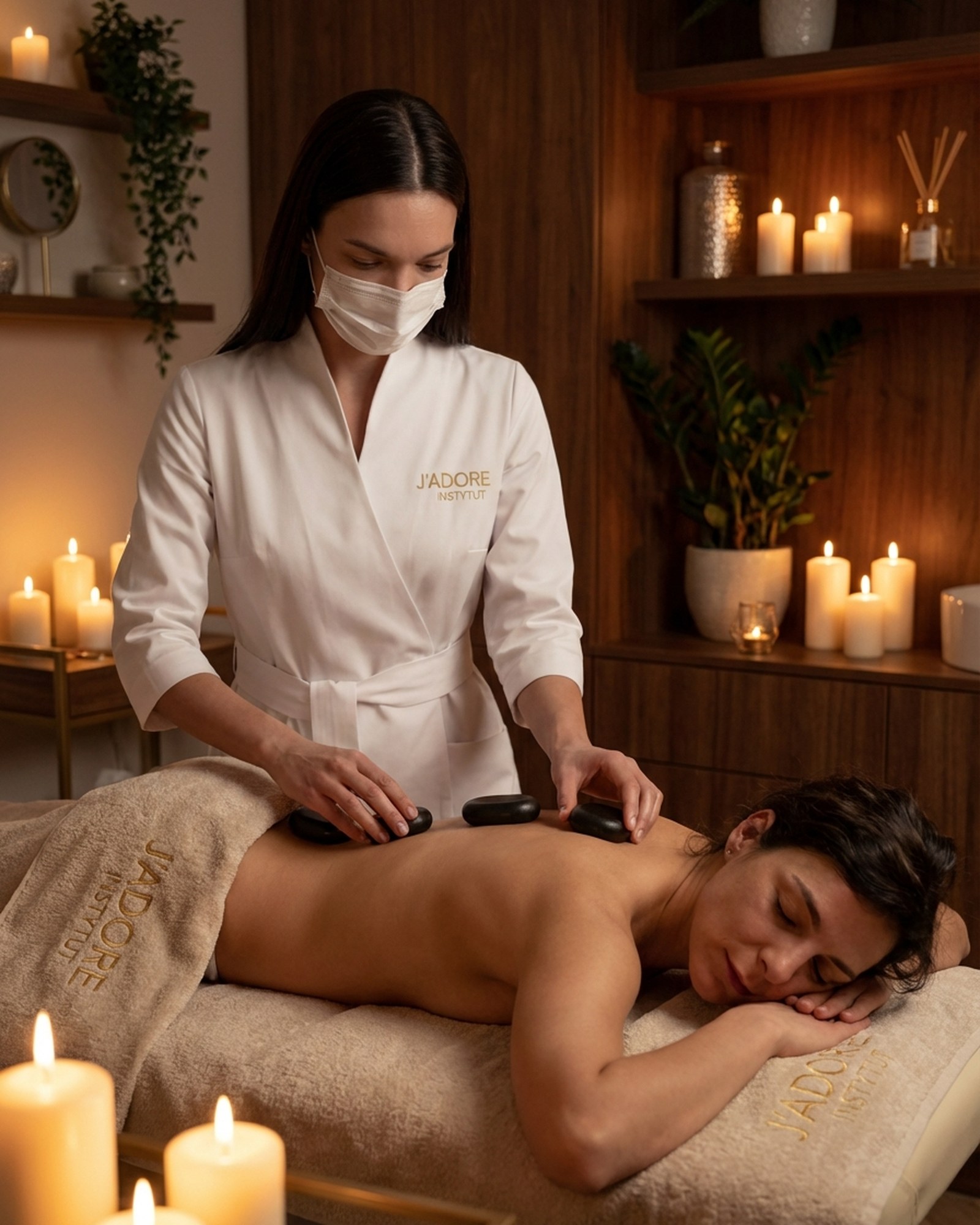
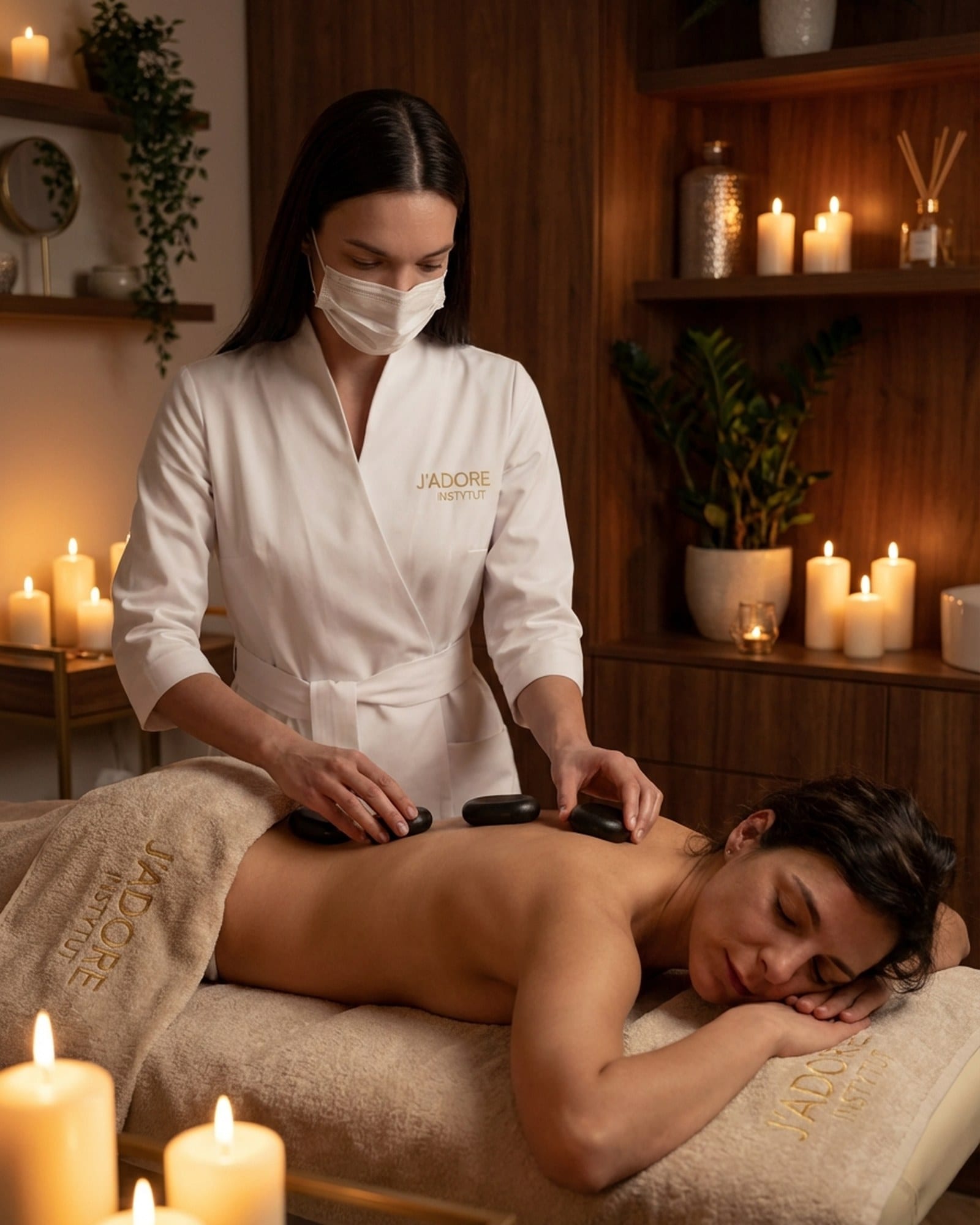
Stones should be heated in a dedicated device with temperature control, not in a microwave, oven or a free-standing pot. The therapist checks every stone before contact, because a larger piece holds heat differently than a small one. They first touch their own forearm or hand with it, then introduce it with movement; static placement requires a barrier and frequent checks. You must not assume that the heater setting guarantees an identical temperature for the entire contents.
The question "is it pleasant?" should return during the session, especially after changing a stone. Your skin is observed, not covered for a dozen minutes without control. If intense redness, mottling, burning or numbness appears, the stone is removed. At J’ADORE INSTYTUT in Krakow, it is worth reporting chronic diseases and poorer heat tolerance before booking, so that we can determine whether this form of massage makes sense at the consultation stage.
Oil and aroma can also be a contraindication
Stone massage is often combined with oil, sometimes with a fragrance composition. An allergy to an ingredient, asthma exacerbated by aromas, a migraine triggered by scent or very reactive skin require a neutral product. Ask about the composition before starting, especially if you know about an allergy to nuts, fragrances or specific essential oils. Heat can increase the perception of aroma and change the penetration of ingredients through the skin.
A patch test does not provide a guarantee, but it can reveal immediate burning. Diffuse hives, facial swelling, wheezing or difficulty breathing require urgent action. Mild itching after a session should also be reported, instead of using the same mixture during the next visit. A good massage does not need an intense scent. The oil is primarily meant to provide controlled glide and be tolerated, not to prove the exotic nature of the ritual.
Safety ends only after getting off the couch
After the session, stand up to a sitting position first and check if you feel dizzy. Drink water according to your thirst and avoid adding a sauna, a very hot bath or another intensive thermal treatment on the same day. Your skin may be slightly pink, but a blister, severe pain, persistent numbness and rapidly increasing redness require contact. Do not smear a burn with random oil or apply ice directly.
Hot stone massage does not cure vascular diseases, does not remove inflammation and will not fix an injury that has not been diagnosed. It can relax, calm and facilitate gentle manual work, but only when heat remains within the limits of physiological comfort. The conclusion is therefore practical: if you do not feel temperature correctly, tolerate heat poorly or have new swelling, choose another method. Do not try to fit your body to an attractive ritual.
Seven questions that filter out a risky service
Ask what the stones are heated in, how the temperature is controlled, whether a barrier is used during static placement, how tools are cleaned, what the salon does in case of sensory impairment, what oil will be used and when the therapist will refuse the treatment. The answers should be concrete. "Stones know how much heat to release" or "basalt does not burn" are myths. The material stores temperature well, but it does not regulate it according to skin needs.
A red flag is a heater without a thermometer, a stone taken out straight onto the body, a lack of interview and encouragement to endure burning. Re-inserting a used, uncleaned stone into the shared water is also worrying. A professional ritual may look soft and sensual, but underneath it has technical discipline. If you do not see it in the way of working, silence, music and light do not compensate for the risk.
When to reschedule and when to choose a massage without heat
Reschedule your visit in case of fever, active infection, fresh injury, sunburn, open wound, new unilateral swelling and exacerbation of a skin disease. Consult the plan in case of neuropathy, diabetes with complications, vascular disease, anticoagulant treatment, high-risk pregnancy, osteoporosis, cancer and after a recent surgery. If the limitation concerns temperature, a classic massage with selected pressure may remain an option.
Sometimes it is possible to work on a different area, sometimes total resignation is needed. You must not promise this before an interview. The most honest "not today" protects against burns, fainting and worsening of a symptom that massage should not touch. Stones are an addition to the therapist's competence. Never the other way around.
The same temperature is not the same dose for every person
Imagine two people on adjacent tables. One came after a quiet day, has normal sensation and likes heat. The other walked in from the cold, had alcohol earlier, has low blood pressure and takes medication affecting vessels. A stone taken from the same heater will not be an identical stimulus for them. Sensation is also changed by the body area, skin moisture, contact time and whether the tool is constantly moved. A safe protocol therefore does not consist of one setting repeated throughout the session.
The greatest vigilance is needed in the first seconds of contact and after each return of the stone to the water. The therapist asks about your impression, while simultaneously observing redness and touching your skin with their hand. If you tense your shoulders, pull away, hold your breath or say that you will get used to it in a moment, the heat must be reduced. Massage is not a test of endurance, and comfort should not require negotiating with burning.
If burning does not subside after removing the heat, a blister is visible or pain increases, the session is not continued on the adjacent area. The skin requires cooling according to first aid principles and further assessment depending on the appearance. The incident should be recorded along with the location, contact time and skin reaction, so as not to repeat the same setting. The answer "basalt cannot burn" is false: the material only stores energy, it does not recognise the limit of tissues.
Unexplained pain is not heated to check if it will release
Pain after sitting for many hours can resemble pain after an injury, and neck stiffness can coexist with hand numbness. Before the massage, it is necessary to determine when the symptom started, whether there was a fall, whether the pain radiates, wakes you at night or is combined with loss of strength. A hot stone can temporarily change sensation, but it does not recognise the cause. When the picture has alarm features, diagnostics are needed, not stronger heating.
Particular caution is exercised in case of abdominal pain, chest pain, fresh calf pain and ailments after a surgical procedure. A reliable refusal does not sound like a diagnosis from the reception. It sounds: we will not perform the procedure today because the description goes beyond the safe scope of massage; consult the symptom with the appropriate person. The boundary of competence is an element of service quality.
A short test before the first stone does not replace an interview
A temperature test on a small area only shows the reaction of that specific spot at that moment. It will not detect sensory disorders, medication taken that morning, or vascular issues you have not disclosed. Therefore, the therapist first asks about your health and heat tolerance before checking the stone's contact. If your sensation changes during the session, the settings must be adjusted, even if the initial test was normal.
In Krakow, please disclose your heat tolerance when booking.
The current service description is on the hot stone massage page in Krakow. J'adore Instytut is located at Karmelicka 45/2B, 31-128 Krakow and is open Monday to Saturday from 08:00 to 20:00. When booking, please mention any sensory disorders, vascular diseases, poor tolerance to saunas, recent skin procedures, or fragrance ingredients that trigger migraines or reactions.