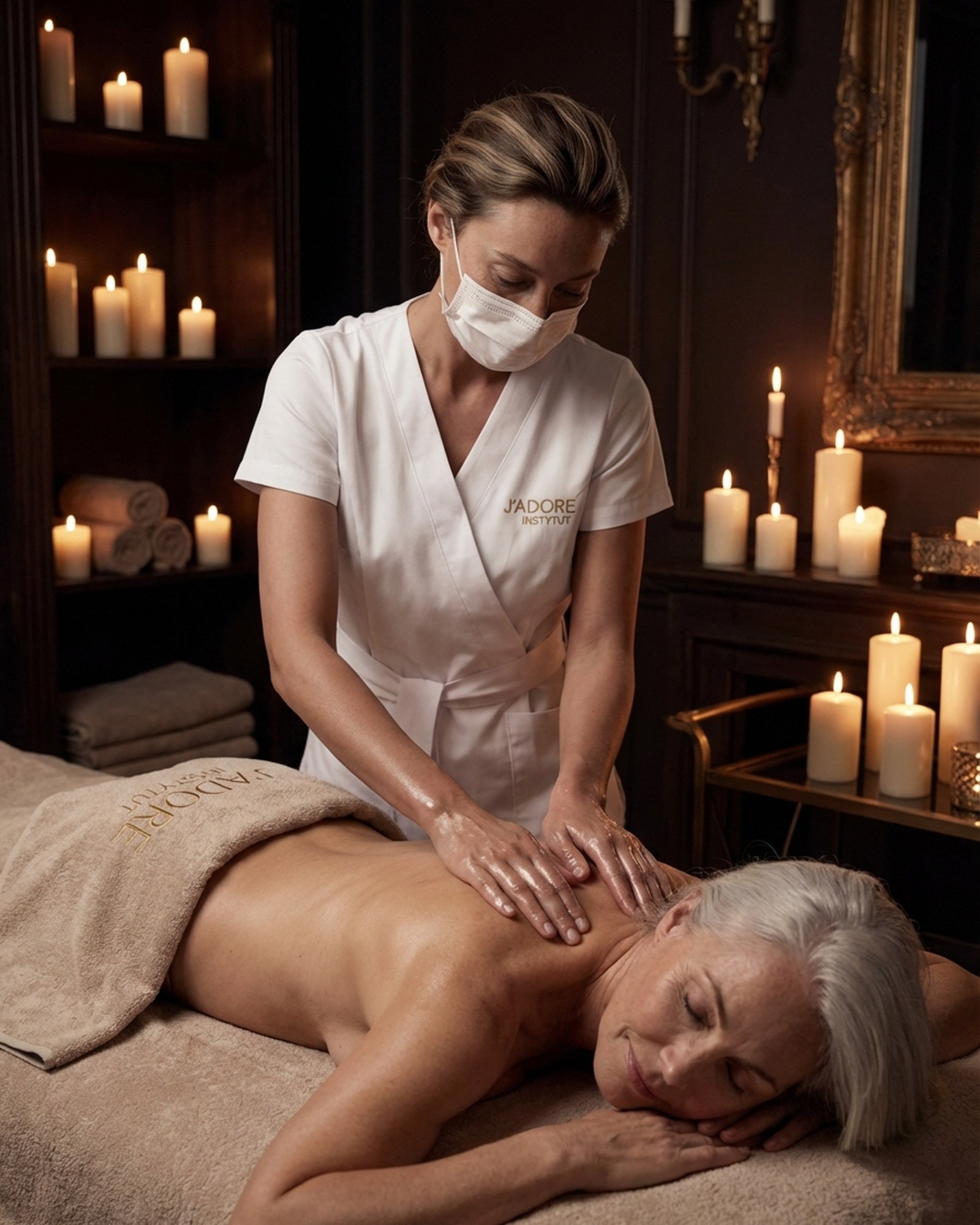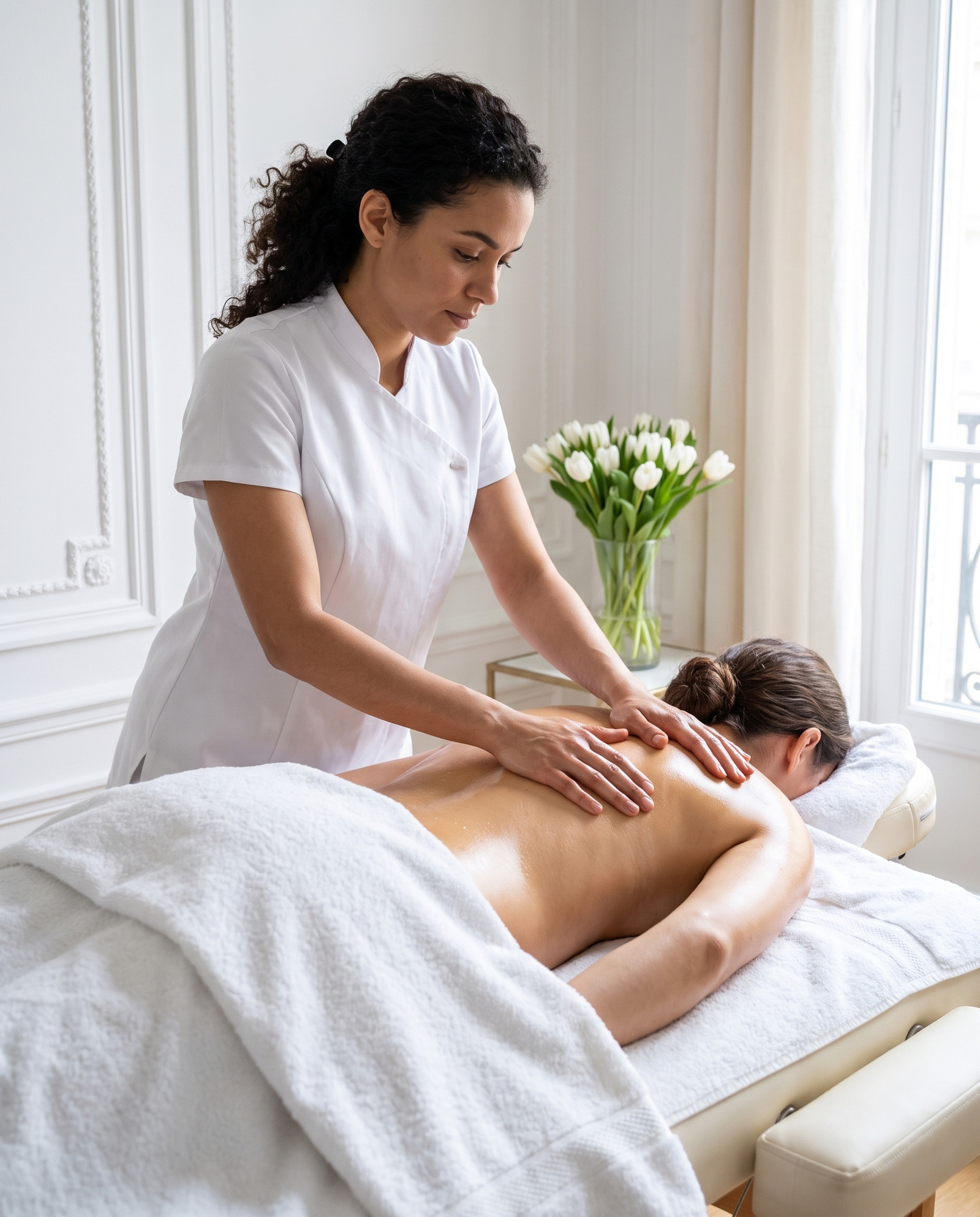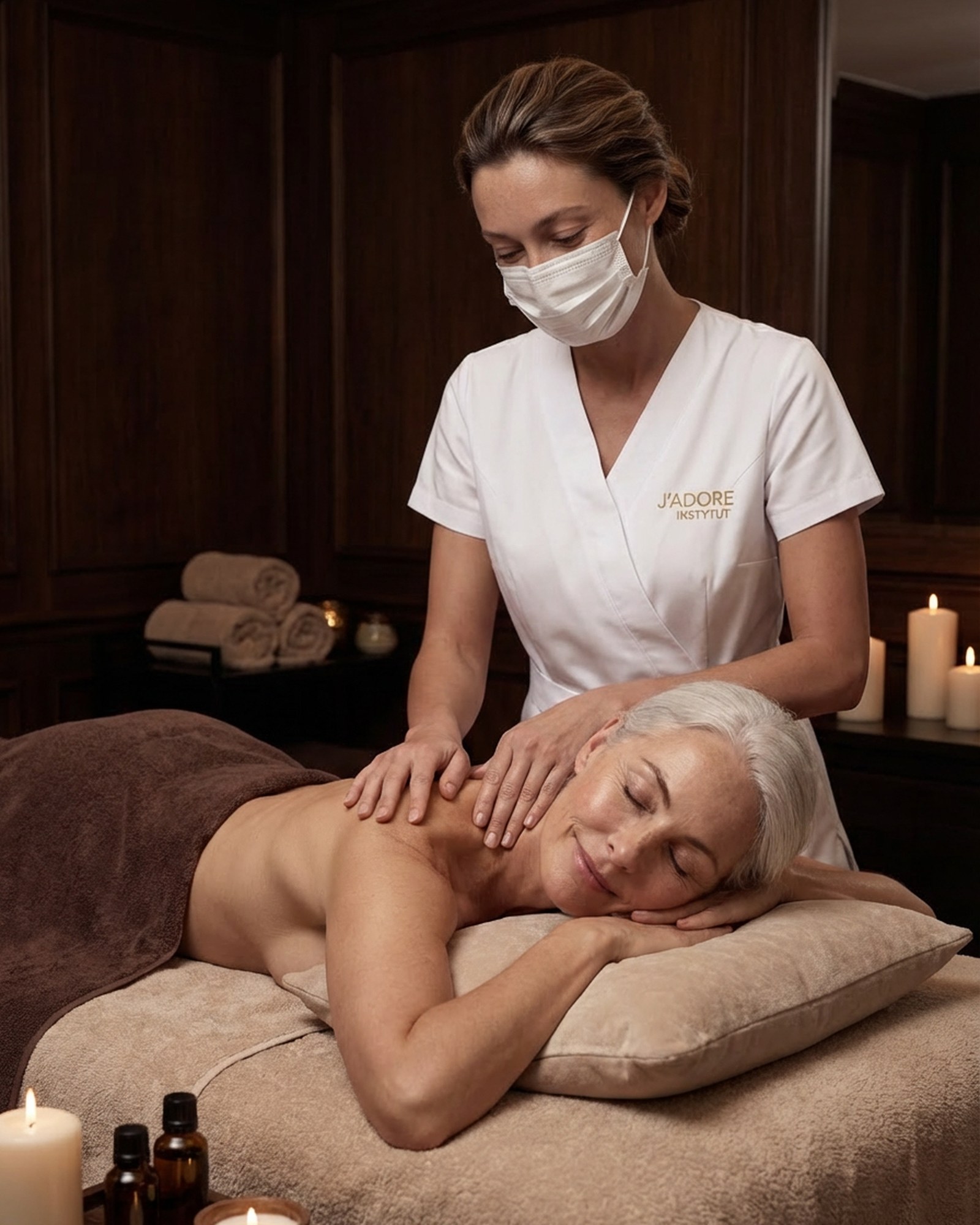
Heat and gentle touch are still stimuli for the body
Abhyanga differs from sports massage. It is not designed to work out painful trigger points, but to provide calm, full-body work with warm oil. However, it is still mechanical contact with the skin and tissues, a change in body surface temperature and lying in one position for a long time. In the case of infection, fresh inflammation or unexplained swelling, these elements do not become neutral just because the hand movements are fluid.
The most important distinction is not between "healthy" and "ill" people. It is more useful to distinguish between a transient situation and a state that requires prior medical assessment. A cold with a fever, fresh irritation after waxing or an active cold sore usually mean rescheduling. Suspected thrombosis, unexplained severe pain or sudden unilateral swelling require contact with a doctor, not searching for a milder oil.
Fever, infection and weakness mean rescheduling
The situation is similar immediately after a medical procedure, surgery or hospitalisation. Consent for daily activity does not always mean consent for a full-body massage. The date should be based on the recommendations of your treating specialist and the complete healing of the area, not on the fact that the wound is covered by clothing. The therapist should not have to guess the stage of your recovery.
- Reschedule your visit if you have a fever, chills or acute symptoms of infection.
- Report recent antibiotic treatment and significant weakness before you arrive.
- After surgery or a medical procedure, base the date on the recommendations of your treating specialist.
- Do not mask symptoms with medication just to use your booking.
Unilateral swelling and fresh injury are not tension to be massaged away
Calf pain after a long journey, sudden swelling of one leg, redness and noticeable warmth of the skin should not be treated by a massage therapist. These can have various causes, but some require urgent diagnosis. Attempting to "stimulate circulation" without a diagnosis is a dangerous idea. If thrombosis is suspected, massage is excluded; a doctor will indicate the correct direction.
A fresh sprain, a bruise with increasing swelling, an injury after a fall or acute pain during movement also do not fit a wellness ritual. Abhyanga is not a functional examination or rehabilitation. Skipping one area does not always solve the problem, especially when it is unknown what has been damaged and how the body is compensating for the pain. First, an assessment is needed, then a decision on a safe form of work.
May be considered after discussion
a known and stable condition
- long-standing muscle tension without new symptoms
- a need for gentle relaxation without working on a painful point
- a chronic condition with clear medical recommendations
- the possibility of changing position, pressure and scope
Diagnosis first
a sudden or unexplained symptom
- unilateral swelling, redness or warmth of a limb
- acute pain after an injury or clear loss of function
- numbness, weakness or pain of a new nature
- suspected thrombosis or active inflammation
The skin determines not only the oil but the massage itself
- Changes requiring the postponement of the massage. An active rash, weeping lesion, abraded skin, sunburn, fresh scar, fungal or bacterial infection should not be covered with oil and massaged.
- A small, healed area. Sometimes it is enough to avoid a small, clearly healed area.
- Extensive or unclear changes. With such changes, it is safer to reschedule the entire session.
A patch test on a small area of skin can reduce uncertainty regarding contact sensitivity, but it does not guarantee the absence of a reaction. The current state of the skin barrier also matters. A product well-tolerated a month ago may sting after sunbathing, intensive body peeling or irritation. Therefore, saying "I always use oils" does not replace a skin check on the day of your visit.
Pregnancy and chronic illness require the correct qualification path
In the case of cardiovascular diseases, active cancer, advanced venous problems, sensory disorders or other serious conditions, a declaration that the pressure will be gentle is not enough. Provide your diagnosis, treatment and any limitations. If the therapist does not have the basis for a safe decision, they should ask for a doctor's opinion or decline to perform the session.
Medications also matter. Anticoagulants can increase the tendency to bruise, blood pressure medications can change your tolerance to heat and position, and dermatological therapy can modify skin reactivity. Do not stop taking anything yourself for the purpose of a massage. The salon's task is to adapt or reschedule the service, not to interfere with your treatment.
The interview should concern today, not just your history
A form filled out during your first visit may already be outdated. Before each subsequent session, you should report any new medication, injury, infection, skin change, pregnancy, medical procedure or significant deterioration in your wellbeing. Abhyanga is sometimes treated as a regular ritual, but the body does not have a permanent qualification status. Yesterday's workout, today's migraine and a fresh burn change the course of the conversation.
- How do you feel today and do you have any general symptoms?
- Has any new pain, swelling, injury or change in range of motion appeared?
- Is your skin irritated, wounded, sunburnt or affected by an infection?
- Have your medications, treatment, pregnancy or doctor's recommendations changed?
- Do you know of any allergies to oils, herbs or fragrances?
- Can you lie comfortably in the planned position?
A reliable person does not need intimate details unrelated to the service, but they must have information that affects safety. They should also explain why they are asking. If the answer leads to a change of oil, skipping a zone, a shorter session or rescheduling, the decision must be named before starting, not introduced without a word in the middle of the ritual.
During the session, you do not need to endure heat or discomfort
The temperature of the oil should be pleasant, not a test of your skin's resistance. Tell us immediately if the product stings, the scent makes it difficult to breathe, the position causes numbness or you feel dizzy. The therapist should stop the work, remove the product if necessary and reassess the situation. Silence is not a condition for successful relaxation.
The pressure in Abhyanga is usually rhythmic and enveloping. Sharp pain, increasing stinging or radiating sensations are not proof that tension is "releasing". They may indicate that a given area should not be worked on. The correct reaction is to communicate this and change the plan, rather than being encouraged to endure until the end of the sequence.
Boundaries also apply to uncovering the body. Only the area being massaged should be exposed, and consent to a massage does not mean consent to every range. You may refuse work on the abdomen, chest, feet or any other zone without providing a justification. Safety encompasses physiology, privacy and a sense of control.
After the massage, observe the direction of your body's reaction; do not look for "cleansing".
After the ritual, you may feel sleepy, warm, have soft skin and a need for a calmer pace. This does not require special interpretation. Sit up before standing, drink water as you feel the need and choose a gentle return to activity. There is no need to "flush out toxins"; massage does not trigger a mysterious detoxification process that would justify feeling unwell.
A skin reaction to oil should fade after the product is removed. Expanding hives, increasing swelling, wheezing, shortness of breath or general symptoms require urgent medical help. Severe new pain, progressive numbness or a clear deterioration in function are also not a normal "effect of deep work", especially as Abhyanga should not be a deep-tissue massage.
- 01
Immediately after
Check how you feel before standing up; report any dizziness, nausea or unusual pain.
- 02
After contact with the oil
Observe your skin. Mild, brief redness should fade, not spread.
- 03
At home
If you have a worrying reaction, contact the salon, state the scope and the product used; seek medical help for alarm symptoms.
Five reassuring sentences that should not be trusted unconditionally
- A plant source does not exclude a reaction. "Natural oil is hypoallergenic" is a false shortcut. A plant source does not strip a substance of its ability to cause irritation or an allergy.
- Full product information matters. The full composition, fragrance, concentration of additives and the history of a specific skin's reactions all count.
- The product must be identifiable. If the salon does not know the product or pours it into unlabelled containers without the possibility of identification, it is impossible to conduct reliable observation after a potential reaction.
"If it hurts, it means it's working" does not fit Abhyanga. The ritual should be based on predictable, comfortable touch. Pain can trigger reflexive tension rather than relaxation. If it appears during light work, it is information requiring a stop and explanation, not an invitation to increase pressure. No sequence is more important than the body's current reaction.
The common mistake in these sentences is that they remove responsibility from decisions. Meanwhile, a safe massage is a series of small decisions: which product, what temperature, which position, what range and whether to start at all. The calmer the ritual, the easier it is to miss the fact that it still requires professional boundaries.
A reservation in Warsaw should leave room for a decision
You can check the scope of the service and booking availability on the Ayurvedic massage in Warsaw page. J'adore operates in two Warsaw locations: at Żelazna 59, 00-848 Warsaw, open Mon–Sat 8–21 and Sun 11–19, and at Mińska 29A/46, 03-808 Warsaw, open Mon–Sat 9–21.
When choosing a date, add any allergies, pregnancy, positioning restrictions and important health information in the notes. If symptoms appear only on the day of the visit, contact reception. A reservation is not an obligation to perform a massage despite a change in your condition. It is a space for a meeting and qualification, after which a decision to postpone the service may still be made.
A safe decision fits into one of three variants
The first variant is performing Abhyanga according to the plan: no acute symptoms, the skin is calm and the interview reveals no contraindications. The second is a modification — a neutral oil, skipping a small area, changing position or a shorter range. The third is postponing and, if the situation requires it, a medical consultation. None of these variants is a failed visit.
Do not choose a salon based on whether they always manage to perform the service. Assess whether the team can explain boundaries, provide the product composition, respect communication during the session and indicate a contact path after the massage. A ritual only makes sense if the body is ready for it. Sometimes the most Ayurvedic gesture of care is not warm oil, but a calm "not today".
After postponing, do not automatically book the first available date. The criterion for returning should correspond to the cause: healed skin, resolution of an infection, a completed stage of recovery or a clear medical opinion. If a new medication or another symptom has appeared in the meantime, the qualification starts from the beginning. Thanks to this, changing the date is not just pushing the same unknown back by a few days, but a real return to safe conditions.
Keep the name of the oil and the scope of the session, especially if you have reactive skin. At the next visit, this information is more useful than a general memory that "it was fine". If a reaction appears with a delay, it is easier to point to the product and the contact areas. Good documentation does not medicalise the ritual; it simply limits guessing. It also allows the next person in charge to distinguish a well-tolerated variant from a product that is better not to choose again.
A situation requiring separate attention is chronic pain that has suddenly changed its character. If constant back tension starts waking you up at night, is associated with limb weakness, loss of sensation, sphincter disorders or appeared after a serious injury, do not book a massage as the first step. Diagnostics are needed. A known muscle problem and a new alarm symptom can occur in the same body, so an old label should not automatically reassure you.
If you have diabetes, inform us about sensory disturbances, wounds, healing problems and how you control your glycaemia. Warm oil on skin that assesses temperature poorly requires caution. A sensor or pump also changes positioning and work areas. Do not move devices against instructions and do not treat massage as a method for sudden weakness. First, follow the standard management recommended for the disease.
After surgery, a healed scar surface alone does not mean the deeper tissues are ready. The date, position and possibility of pressure must be agreed with the person in charge, especially after procedures in the area of the abdomen, chest and joints. Do not ask the therapist to "loosen the scar" if there is no information about the healing stage. Abhyanga covers large areas and may require modifying the entire scenario.
Mental health and boundaries of touch are just as real as skin contraindications. If darkness, scent, uncovering the body or long movements trigger anxiety, arrange for more covering, lighting and a simple stop signal. You can exclude any zone without explanation. The massage therapist should not interpret tension as proof of trauma or persuade you to accept contact for which there is no current consent.
After a previous session, recall not only the relaxation but also the reaction the next day. Fainting, extensive hives, large bruises, increased pain or long-lasting swelling must be discussed before repeating. Do not accept an automatic explanation about "releasing toxins". A specific reaction has a specific time, area and possible causes that are worth organising.
If your well-being has changed on the way, the decision can be made again on the spot. A reservation and prior qualification do not take away the right to stop. New dizziness, shortness of breath, sharp pain or a skin reaction are more important than punctuality and a prepared salon. A safe ritual remains flexible until the last moment.