Where boxer braids came from — and why men wore them first
Boxers and wrestlers have plaited their hair into close braids before fights for decades. The reason was purely practical: no strand could fall into the eyes at a decisive moment, and the style had to survive an entire training session with no touch-ups. It wasn't a look — it was a necessity. Dutch braids (where strands cross over, not under, the neighbouring sections) sit tighter against the head than a classic plait and don't loosen from sweat or movement.
Mainstream popularity came through the media — and for a while the style got tagged as feminine. But in professional sport — MMA, basketball, swimming, football — men with long hair are going back to what works: two lines running from the forehead along the scalp, flat, tight, with no unnecessary flourishes. Not a fashion statement. A tool.
Who it suits — and what length you need
Boxer braids don't require very long hair. The minimum length is whatever lets you grip a section and cross it a few times — roughly shoulder-length when pulled straight, though often less is enough if the hair is thick. The longer it is, the more crossings you get, and the more the style holds its structure through the day.
Medium hair
ear-length or below, dry
- enough length for full boxer braids
- faster to plait — fewer sections to manage
- a natural finish — two short tails or bands just above the nape
Long hair
past the shoulders
- more crossings = a tighter hold against the head
- can be finished with tails falling down the back
- holds through harder training and longer sessions
Texture matters too. Curly and wavy hair naturally grips a plait — it's easier to braid, and the result holds better. Very straight, fine hair can slip — a light texturising product (dry shampoo, liquid wax, styling cream) applied before braiding helps. Scalp sensitive to pulling? The braid doesn't need to be painfully tight — the hold comes from the Dutch braid technique, not from tension.
What boxer braids look like and how they're plaited — no fuss
Boxer braids are two parallel Dutch braids running from the hairline, over the crown, down to the nape. The difference between French and Dutch braids: in a Dutch braid, you cross strands under the middle strand, not over — this makes the braid sit above the surface of the head and hold tightly against it. A simple technique, with a bit of practice.
- 01
Preparation
Clean or slightly unwashed hair (a day or two after washing plaits more easily). Optional: dry shampoo or texturising wax if the hair is very straight.
- 02
Part down the middle
Part the hair into two equal sections with a line running from the forehead over the crown to the nape. Clip one half out of the way so it doesn't get in with the other.
- 03
Starting — the first strands
Start at the hairline. Take three thin strands and begin a Dutch braid: the middle strand goes UNDER the left one, then UNDER the right one — not over.
- 04
Guiding it along the head
With each step, add new hair from the side (left hair into the left strand, right hair into the right strand). Guide the braid along the scalp — parallel to the centre line, not sideways.
- 05
Finishing
Once you reach the nape and there's no more hair to add, continue with a regular plait or finish with a hair tie. Repeat on the other side.
- 06
Securing it
Hair ties on the ends. Optional: hairspray or a little oil for any loose strands. For training, hair ties alone are enough.
Why it holds through training — and what makes it come loose
A Dutch braid sits close to the head because the strands cross underneath — gravity and head movement press the braid down instead of pushing it up. That's why boxers and wrestlers chose this technique over a classic plait or ponytail. After a few hours of intense training the style may loosen slightly at the temples (the first strands are often the loosest), but the structure holds.
What makes it fall apart too quickly:
- Strands too thin at the start — not enough hair in the first crossings near the forehead, which take the most friction.
- Freshly washed hair with no product — very clean, smooth hair slips. A little dry shampoo before plaiting changes everything.
- Braiding too loosely — boxer braids don't need to hurt, but they do need to be snug. Loose sections fall apart within an hour.
- Hair ties with poor grip — thin silicone ties hold better on wet hair than classic ones. Avoid decorative ties.
Boxer braids and hair health — what's worth knowing
Braids plaited tightly every day for months can create traction on the follicles — especially at the temples and hairline, where the scalp is thinner and more sensitive. It's not a myth: styles that are too tight and worn too often can, over time, weaken hair in these areas for many people.
But "boxer braids three times a week for training" is a completely different situation from "a tight updo for 12 hours a day, seven days a week". A style with moderate tension and regular breaks poses no problem for most men. A few rules that minimise the risk:
- Don't plait too tightly at the hairline — tension doesn't need to hurt for the style to hold.
- Give your hair time down between training sessions — especially if you're outdoors for several hours without a style holding it up.
- Undo your braids after training — sleeping in tight braids all night, regularly, isn't good for the follicles.
- If you notice your hairline receding at the temples — reduce the tension or take a break from the style.
After training — releasing your hair and what to do with it
Boxer braids after training tend to be sweaty, tangled and need a moment of care once released. Don't tug — unpick from the bottom, section by section, gently. If sweat has stuck the hair together, a hydrating spray or diluted conditioner on dry hair makes detangling easier.
After unplaiting, a visible wave often remains — hair holds the shape of the braid for a few hours. This depends on texture: on curly hair the effect looks intentional, almost styled; on straight hair it looks more like "just unplaited". Either way, this is a good moment to wash it — if you're planning a different look later that day.
When it's worth visiting a hairdresser — and what to expect
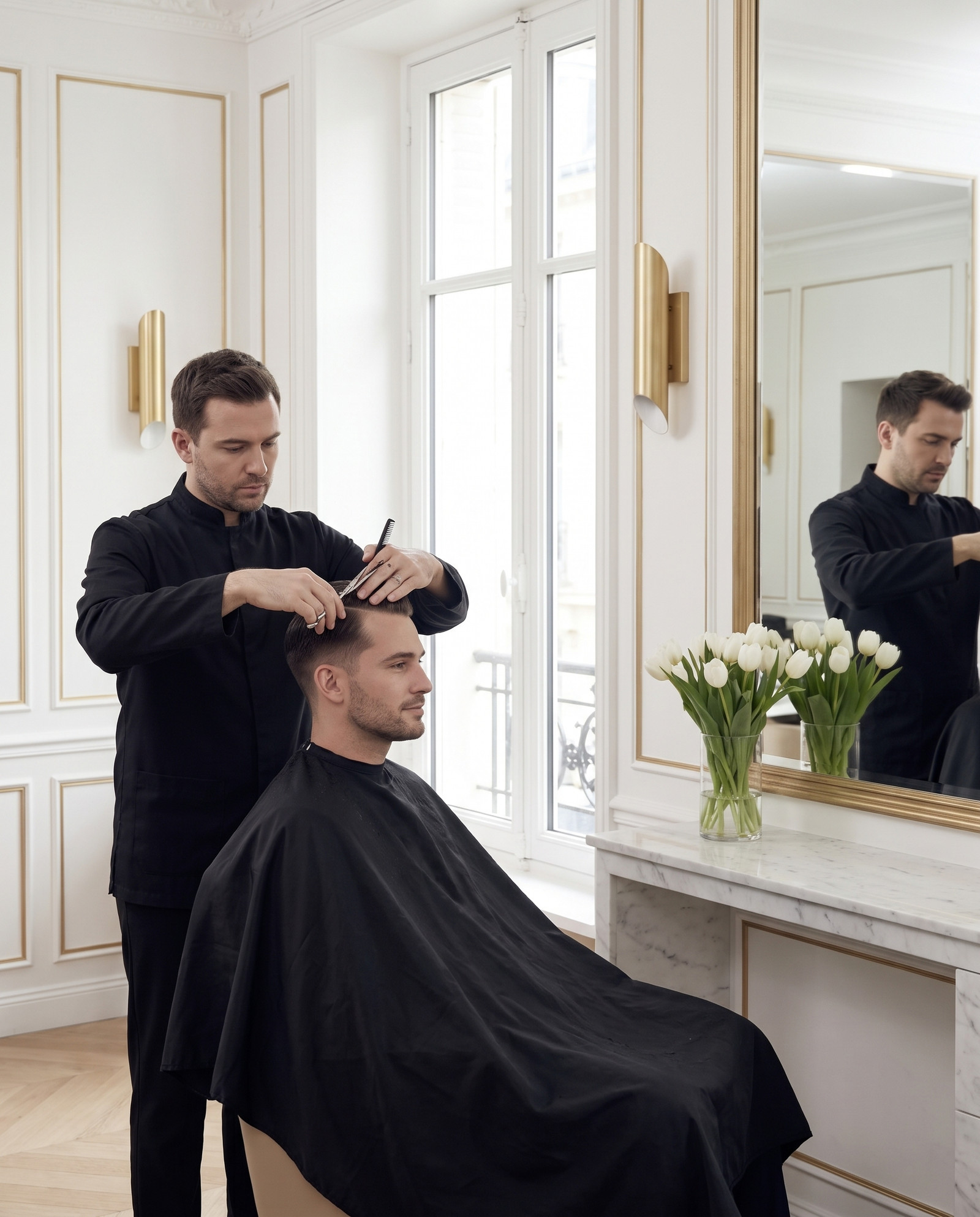
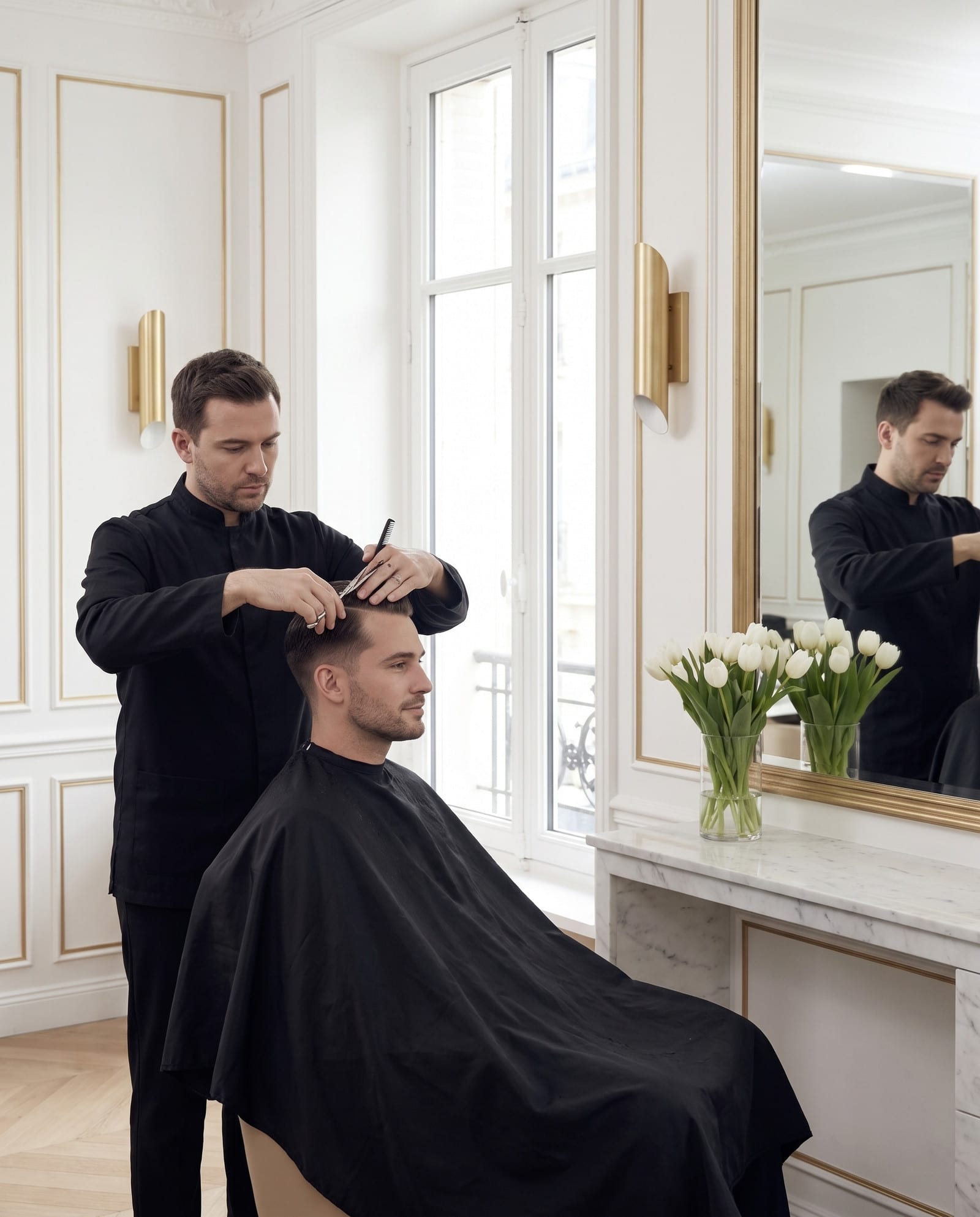
You can learn boxer braids on your own, but your first visit to a hairdresser makes sense for a few reasons: you'll see how the braid route runs on your specific head, the hairdresser will assess the density and texture of your hair and choose the right technique, and you'll walk out with a finished style for a match, competition or event — without half an hour of practising in front of a mirror.
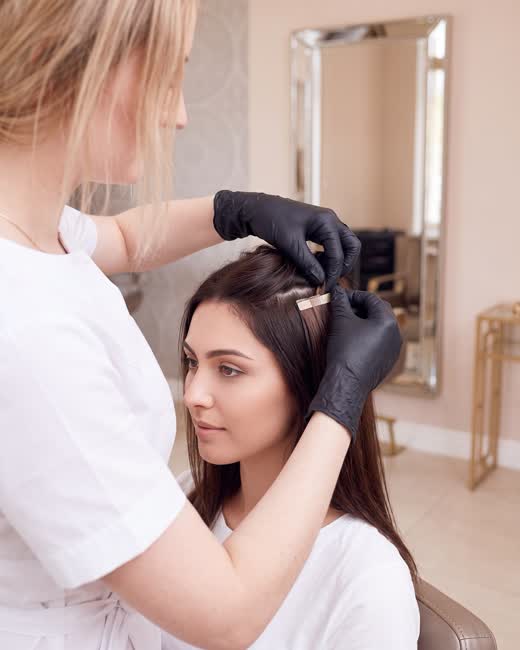
What to expect: the hairdresser will part your hair into two equal sections, start the braids at the hairline, and guide them along the head. You can ask for different plait thickness (fine boxer braids look different from thicker, sportier ones), different finishes (short tails at the nape versus long ones falling down the back), and different edge finishes (clean, neat lines at the temples or a looser, more casual look).
Undercut haircut
Boxer braids on shaved or very short sides look different from boxer braids on a full head — an undercut highlights the braid lines and gives a sportier effect. Good timing: get the cut a day or two before plaiting.
Keratin treatment or smoothing
If your hair is very frizzy or curly and hard to guide into straight lines, a keratin treatment can make plaiting easier and help the style hold longer. This applies especially to porous hair after lightening.
Scalp care
Wearing close-fitting styles regularly means the scalp needs attention — a scalp peel or serum reduces the risk of irritation from frequent boxer braids and generally improves follicle condition.