What is cellulite and where does it come from
Cellulite develops when the connective septa between fat cells harden and pull the skin downward unevenly. This change is influenced by genetics, hormonal balance, microcirculation quality and lifestyle — sedentary work, lack of movement, chronic stress.
Cellulite stages — the Nürnberger-Müller scale
Cellulite is classified into four stages, which differ in visibility and depth of change:
- Stage I — visible only when the skin is pinched; this is the best time for prevention and the first sessions
- Stage II — visible when standing, not visible when lying down; a series of sessions gives a clear result
- Stage III — constantly visible, skin has a firmer texture; requires a combination of methods
- Stage IV — deep, with painful pressure; requires an intensive series and lifestyle changes
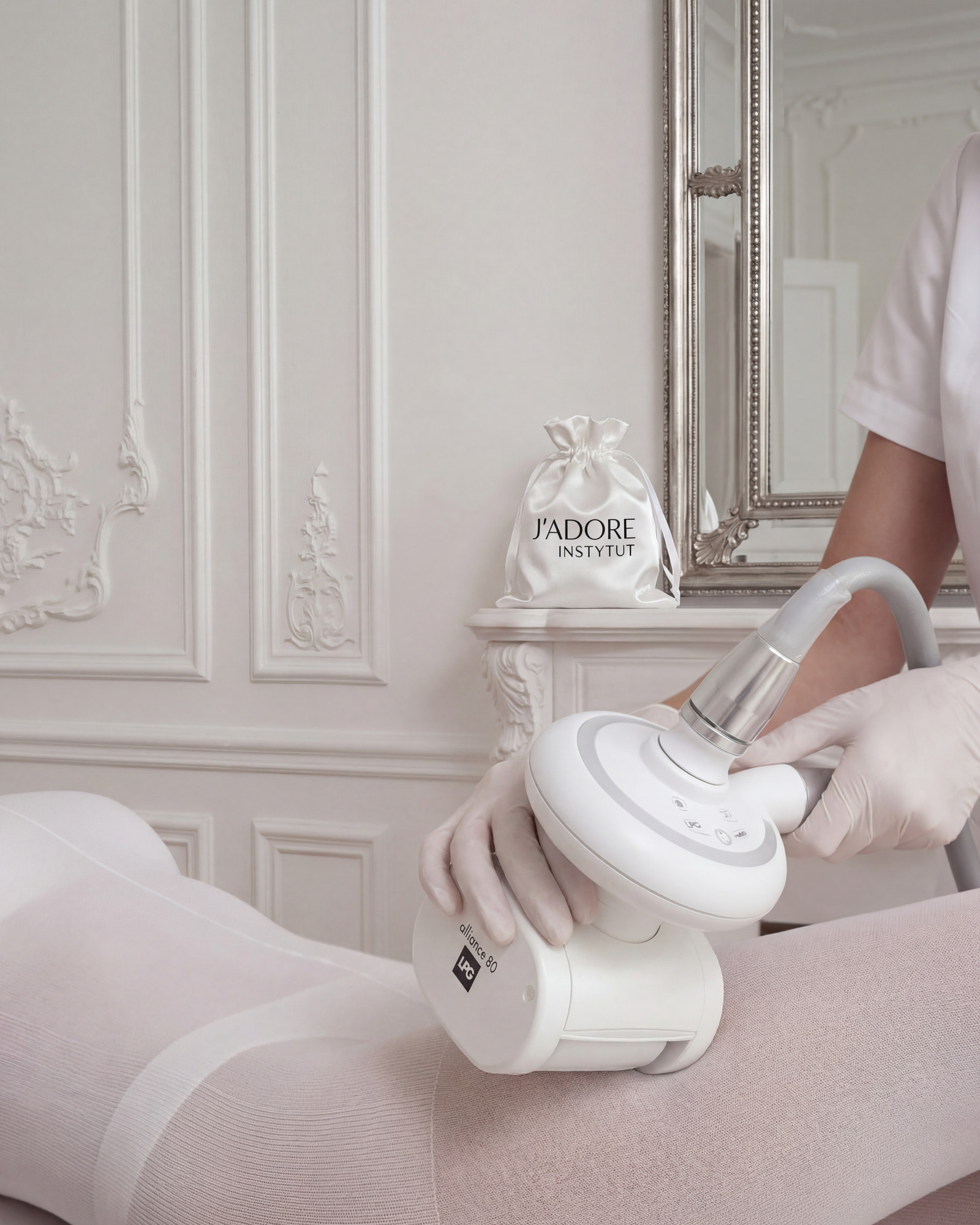
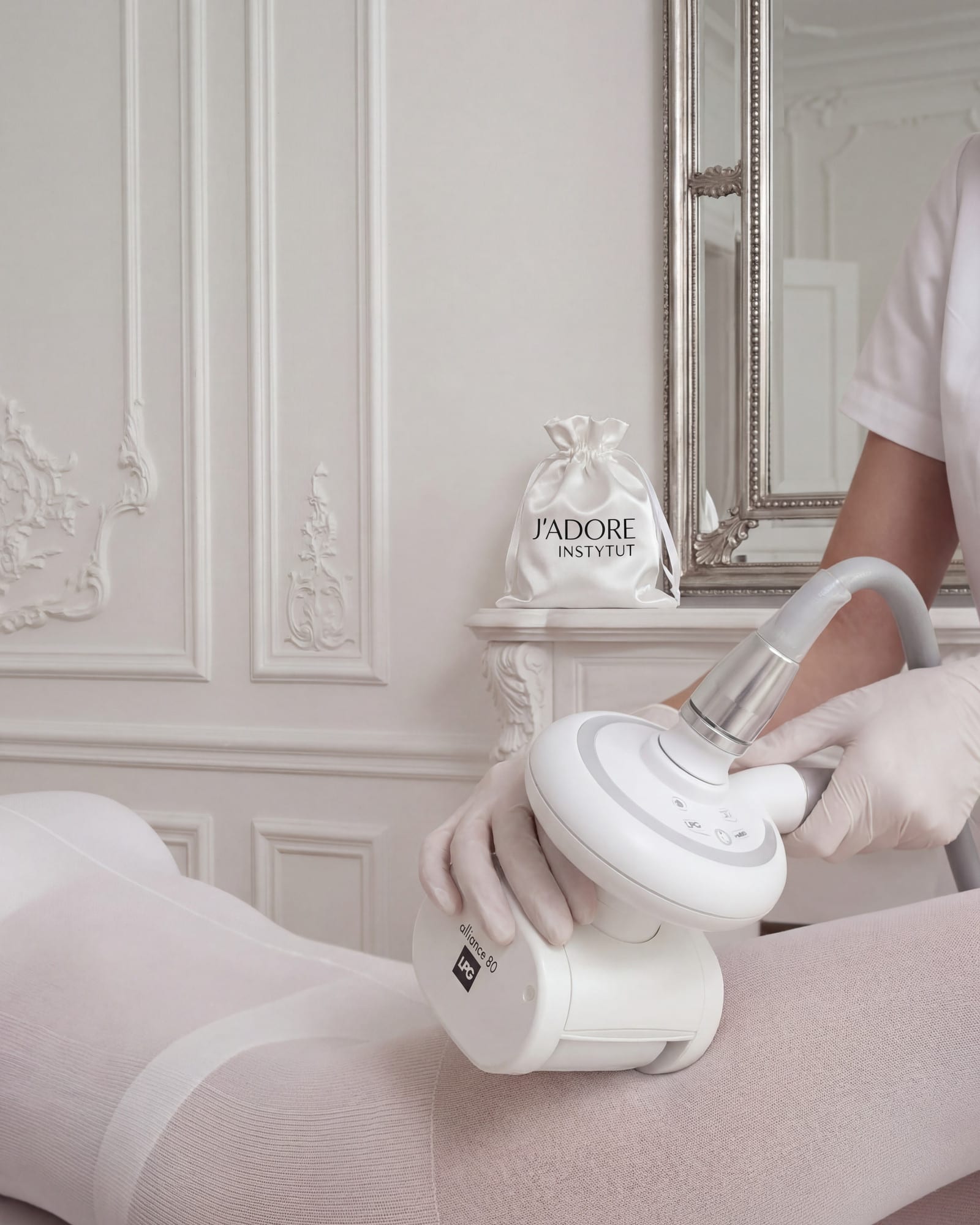
LPG Alliance — endermology
LPG endermology is a classic, well-researched method for treating cellulite. Mechanical roller massage with suction breaks down hardened connective septa, stimulates the lymphatic system and improves microcirculation.
The treatment is safe, non-invasive and well tolerated. Results appear gradually — skin becomes smoother and more resilient.
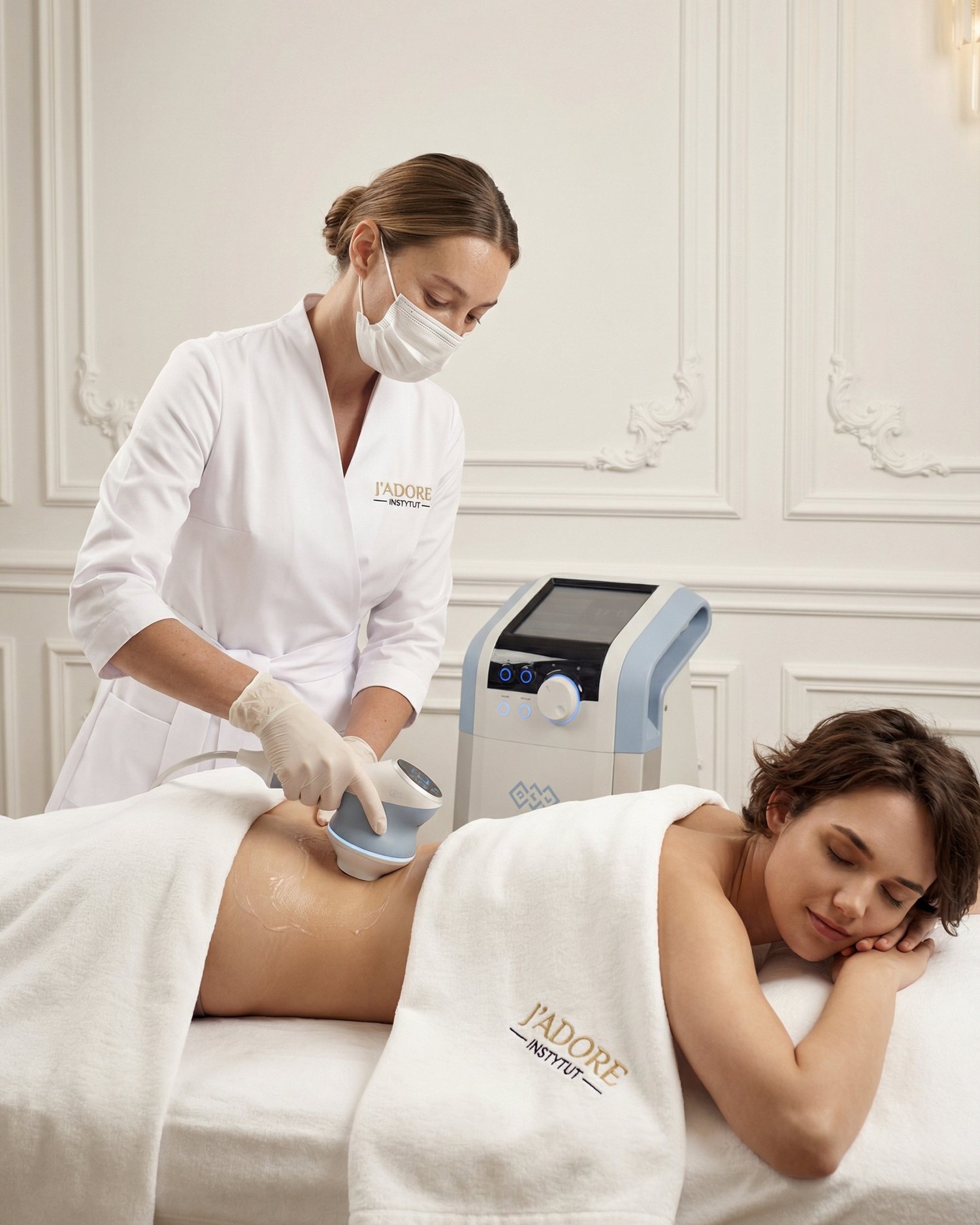
Emtone BTL — RF and acoustic waves in one
Emtone combines monopolar RF (radiofrequency) with acoustic waves working in sync. RF heats the tissue deeply, stimulating collagen neogenesis and thermolipolysis, while the acoustic waves mechanically break down connective septa and support drainage.
The BTL protocol involves a series of 4–6 sessions, 1–2 times a week. Results are visible during the series — improved texture, less visible "orange-peel" skin, noticeably more resilience.
Storz Medical — ESWT acoustic wave
Extracorporeal shockwave therapy (ESWT) is a method known from orthopaedics that has also found use in treating cellulite. The waves mechanically break down hardened collagen septa, stimulate collagen neogenesis and improve microcirculation.
Carboxytherapy for legs
Carboxytherapy involves the subcutaneous injection of CO₂, which leads to blood vessel dilation, improved microcirculation and local lipolysis. An additional effect is improved skin quality and firmness.
Carboxytherapy works well as a complement to an anti-cellulite programme, or as a standalone series for stage I–II cellulite, when improving skin elasticity is also a goal.
The most effective protocol — a combined approach
For advanced cellulite, the best results come from combining methods in the right sequence. Cellulite is a multi-dimensional problem — hardened septa, poor circulation, skin laxity — and no single method addresses all these aspects at once.
- Phase 1–6 weeks: Emtone (2× a week) + Storz (1× a week) — breaking down septa, thermolipolysis, first smoothing of texture
- Phase 7–12 weeks: LPG (2× a week) + carboxytherapy — drainage, contouring, further smoothing
- Maintenance: LPG 1× a week or Emtone once every 2 weeks — maintaining the results achieved
What to avoid with cellulite
Many popular approaches to cellulite fail to deliver the expected results — and some can make things worse:
- Anti-cellulite creams without a series of treatments — they can support the process, but can't replace in-salon action on deeper tissue layers
- A single treatment — cellulite needs a regular series; you may feel an improvement after one session, but lasting results take time
- Liposuction for cellulite — removes fat tissue, but can make skin irregularities more visible
- Drastic fasting — rapid weight loss reduces skin elasticity and, in many women, makes cellulite more visible