Why does alcohol affect skin this way?
Ethanol affects skin on several levels at once.
Is skin that reacts to alcohol a warning sign?
Redness after alcohol isn't an illness on its own, but it can be a sign worth investigating.
- You may have vascular skin or a tendency towards rosacea.
- Your skin's blood vessels may be weakened and need strengthening.
- Your skin may be dehydrated and overreactive — responding more strongly to all triggers, not just alcohol.
It's worth paying attention to this and discussing it with a cosmetologist or dermatologist — untreated broken capillaries and rosacea can worsen over time.
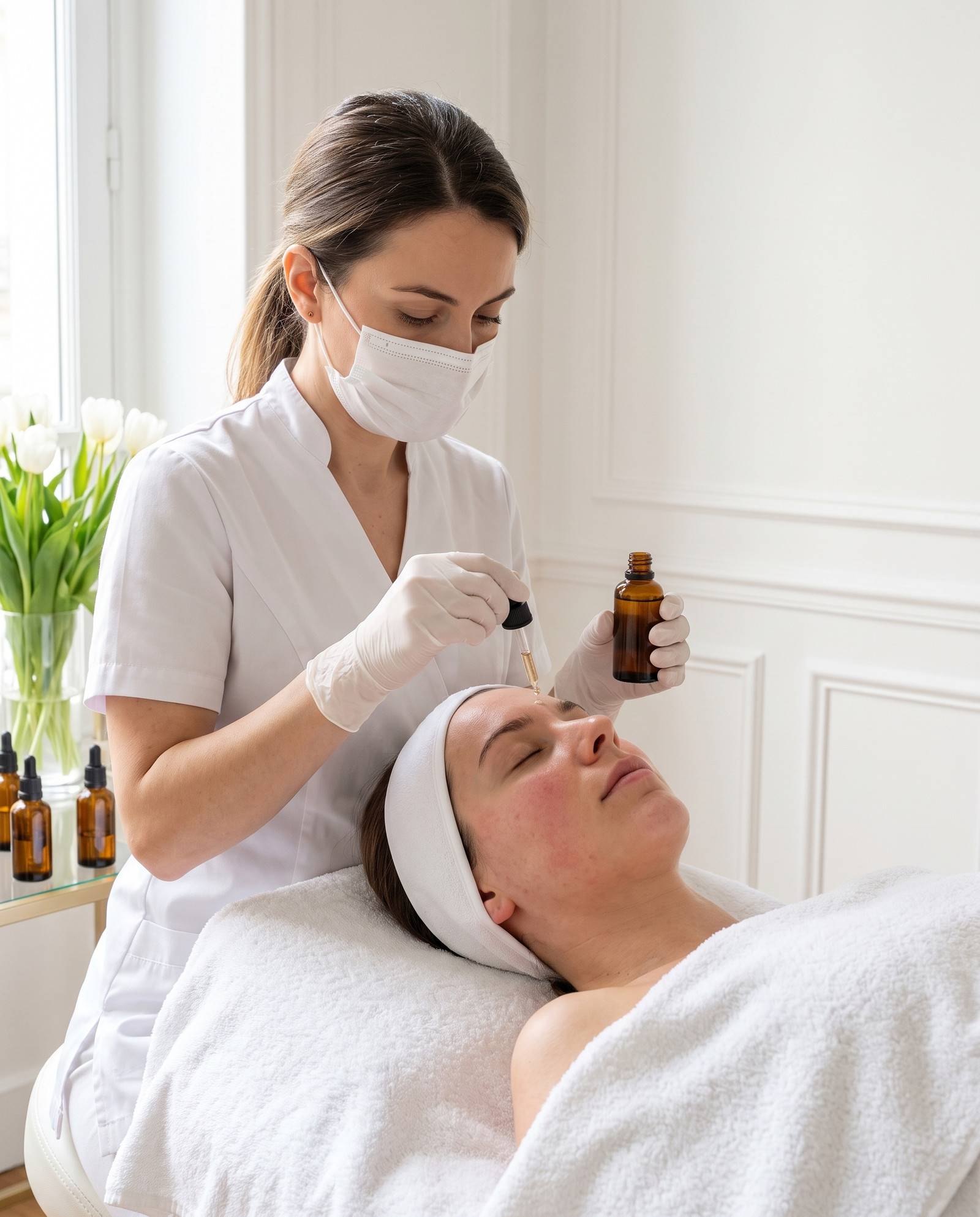
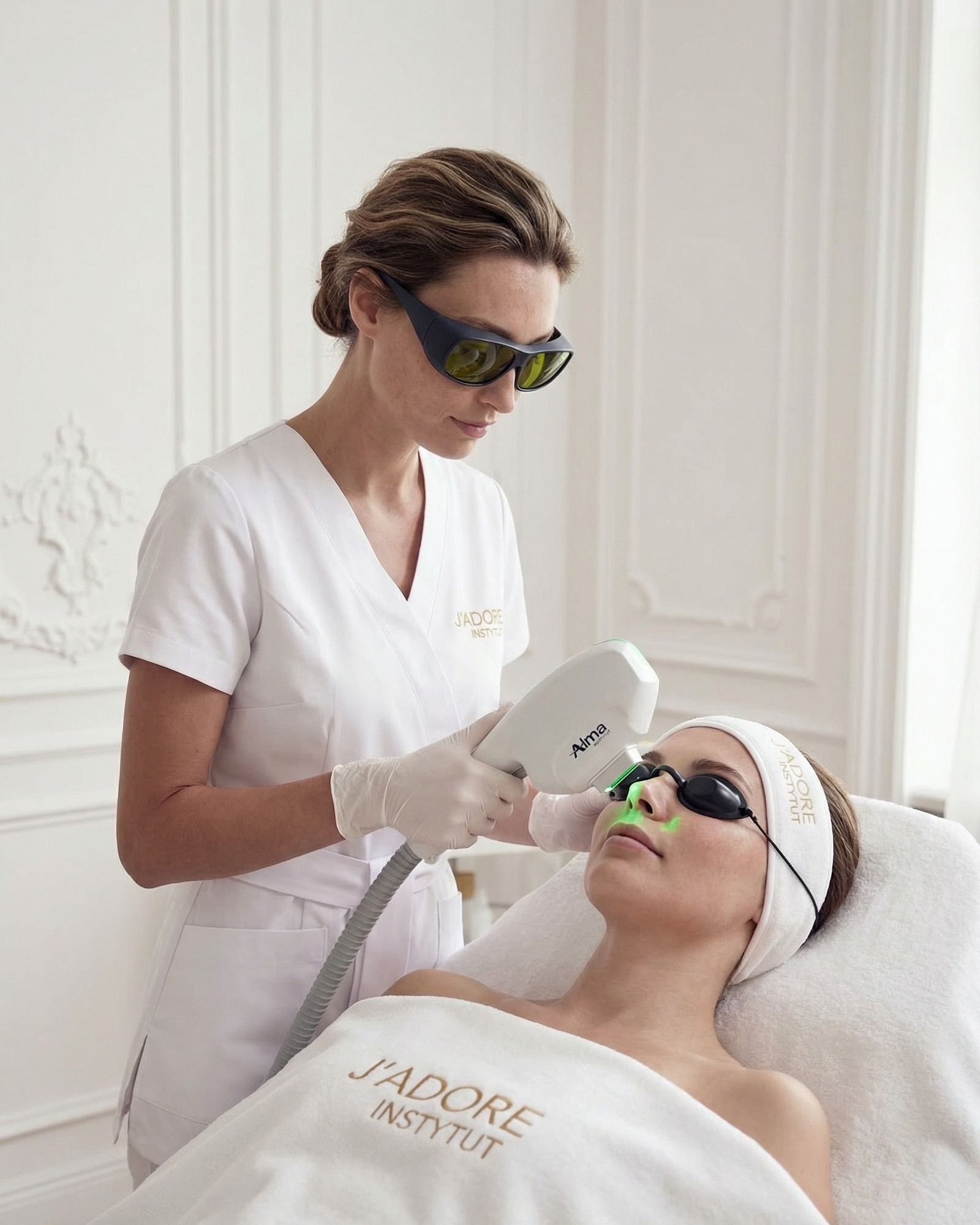
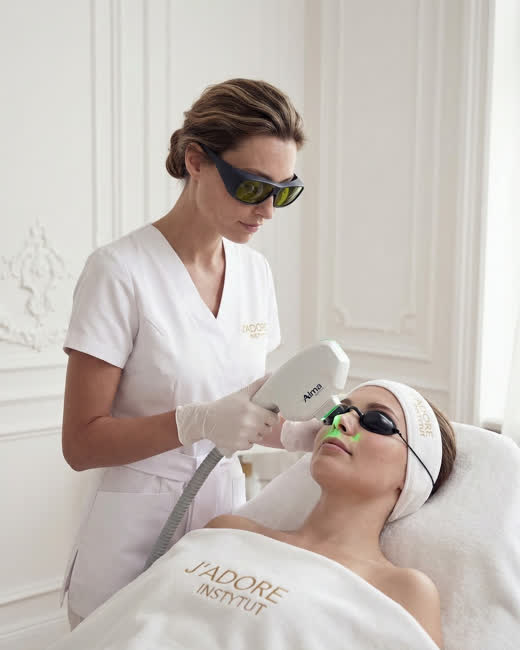
Treatments that help with vascular skin and alcohol-related reactions
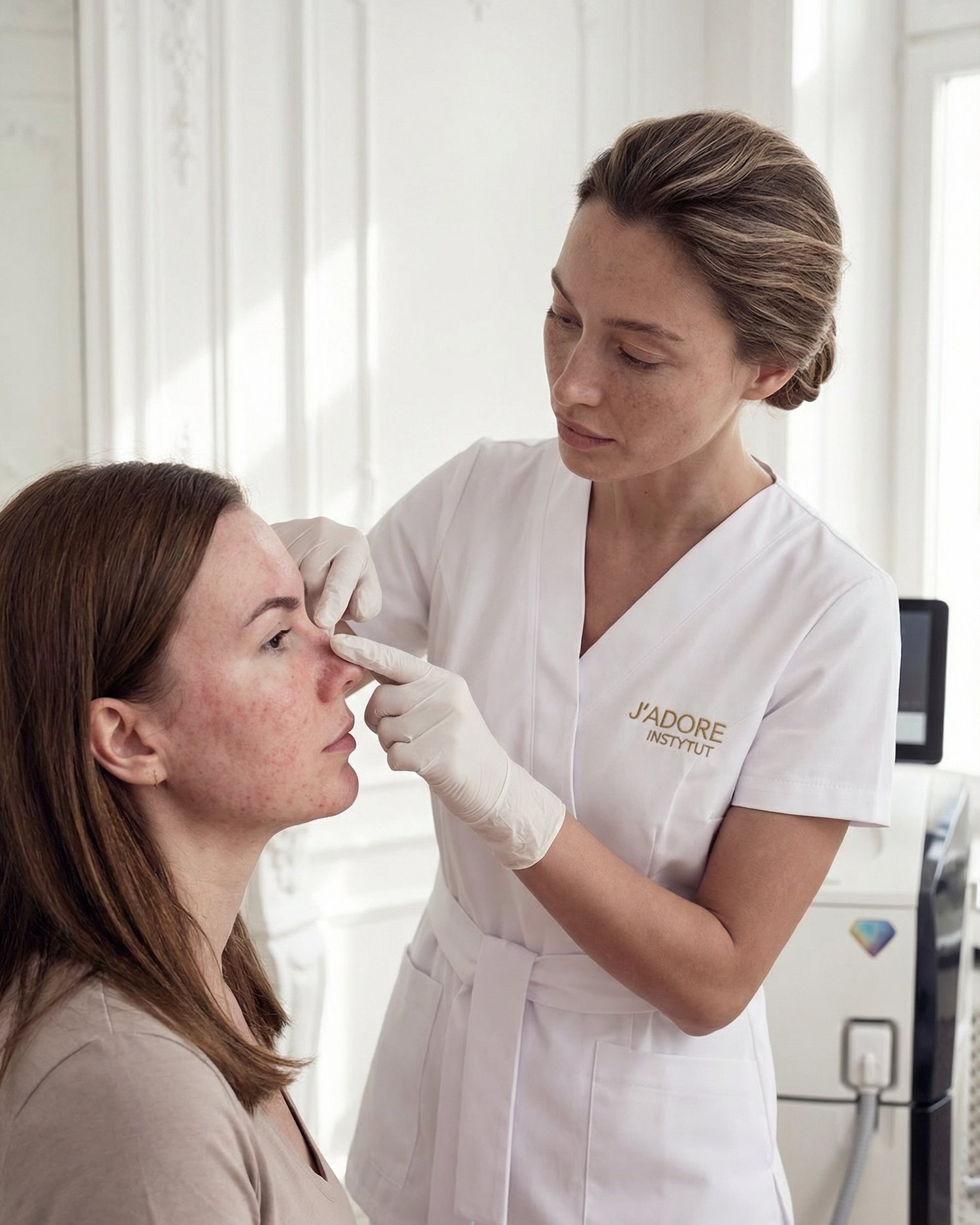
What does the specialist do during your consultation?
We assess your skin type, the severity of broken capillaries and your level of reactivity. We check whether we're dealing with rosacea, vascular skin, or reactivity caused by a weakened barrier. Based on this, we choose the right method — or refer you to a dermatologist if the condition requires pharmacological treatment.
Home care for skin that reacts to alcohol
- SPF 50+ every day — UV radiation increases vascular reactivity. This is essential for vascular skin.
- Vitamin C in the morning — an antioxidant that evens skin tone and strengthens vessels.
- Avoid hot drinks — coffee, tea and soups dilate blood vessels just like alcohol.
- Cool showers instead of hot baths — hot water is a trigger for broken capillaries.
- Gentle products without alcohol in the formula — toners and elixirs containing denatured alcohol can irritate vascular skin.
- Niacinamide — strengthens the skin barrier and reduces redness.