What actually happens under the skin during treatment
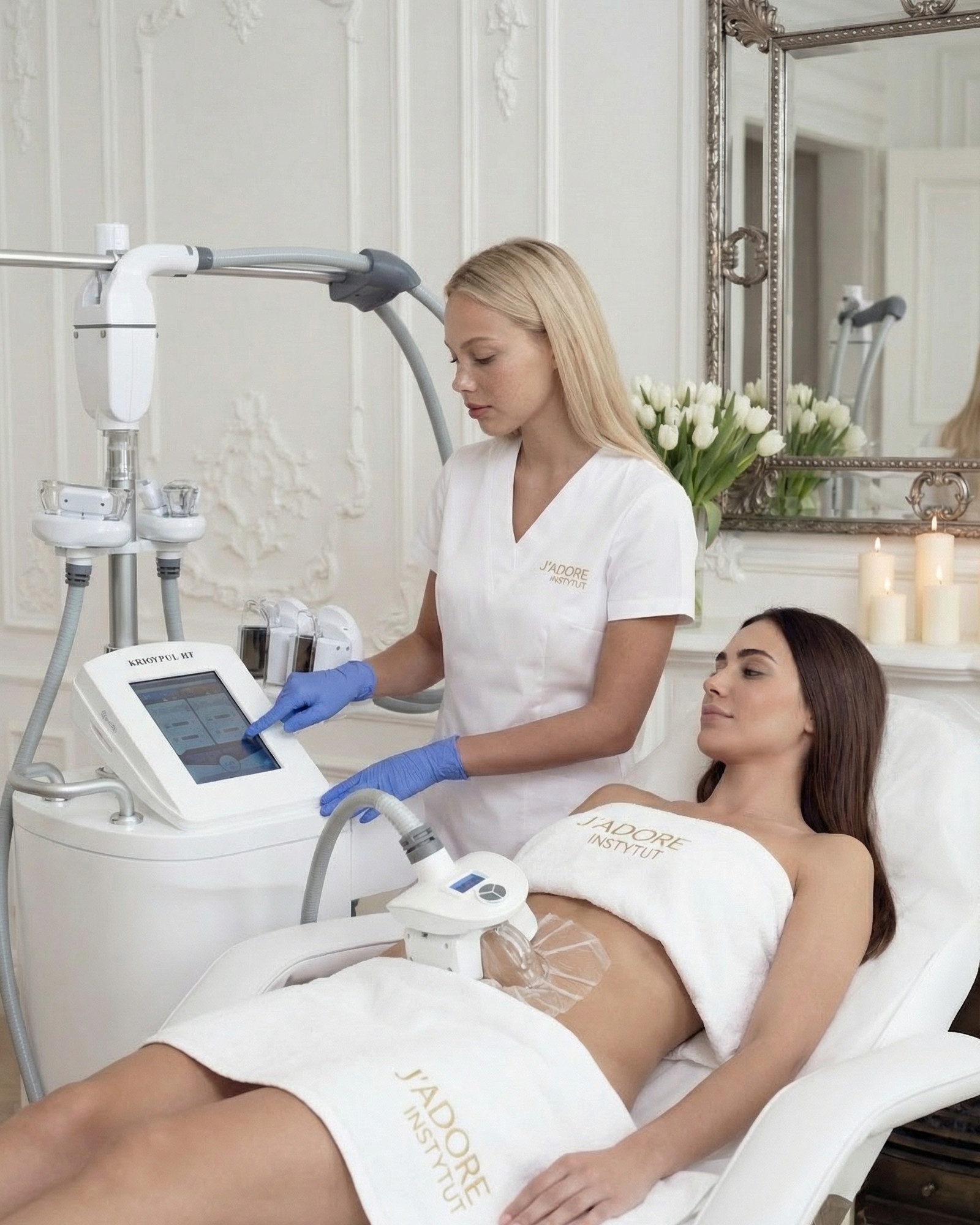
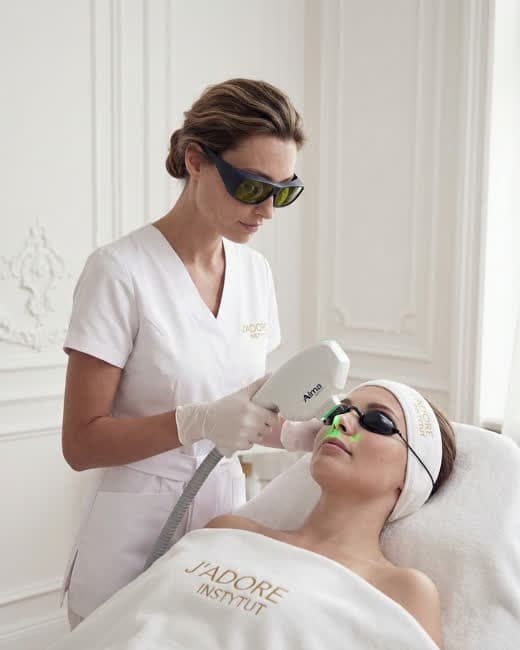
Before we get to the trap, it helps to understand what body-contouring treatments actually do. Regardless of the technology — cold, heat, mechanical waves — the mechanism is broadly similar: fat cells (adipocytes) are damaged or destroyed. It sounds drastic, but that's the essence of it. The body doesn't "burn" fat during the session — it receives a signal that something in the fat tissue needs clearing up.
After the treatment, an inflammatory response kicks in — mild, controlled, but real. White blood cells (mainly macrophages) start migrating to the damaged area. Their job is to absorb the remains of the fat cells and gradually clear the cell contents — lipids — from the body. This process runs through the lymphatic vessels and the liver. It doesn't happen in minutes. It takes weeks.
Importantly: once a fat cell is gone, it doesn't come back. An adult has a broadly fixed number of adipocytes — they can expand or shrink, but new cells appear very rarely. Treatments don't "slim down" existing cells; they eliminate some of them. With the right lifestyle, the effect can last considerably longer than with classic diet-based weight loss, where the cells stay put, just shrinking and waiting for better times.
Why results appear after weeks, not hours
This is where the key misunderstanding lies. Measuring results straight after treatment — or even the next day — is a bit like judging a harvest right after sowing. At this point, the body is only just starting the clean-up process. The tissue may be slightly swollen from the inflammatory response, and, paradoxically, the measurement might briefly increase rather than decrease.
- 01
Day 0–3: inflammatory response
The body recognises the damage. Macrophages begin moving into the area. Some swelling is possible — this isn't a failure, it's a sign the process has started.
- 02
Week 1–3: active clearance
Macrophages absorb the remains of the fat cells. Lipids enter the bloodstream and get metabolised. In this window, hydration and movement matter most.
- 03
Week 3–8: visible reduction
The tissue gradually loses volume. For many people, the first measurable changes in circumference appear in this window. The skin may start adapting to the new contour.
- 04
Month 2–4: stabilisation
The result settles. If the series was properly planned and followed up with further sessions, the reduction builds up. The area contours more clearly, and the silhouette looks more defined.
This timeline leads to a simple conclusion: a single session starts one cycle. The body runs it through and completes it. If no further stimulation follows — no next session in the series — the tissue stabilises at a new level, but without further progress. There is a result, but it's limited to that one cycle. It's like building a wall brick by brick — one brick is a foundation, but you need many more to finish the wall.
The "10 cm in one session" trap — where do those numbers come from?
Let's return to the promised measurement. Where do those advertised numbers actually come from? Some of them measure swelling, not fat tissue. Straight after cryotherapy or compression, the area often flattens temporarily — water and lymph are mechanically pushed out, and the skin briefly contracts. A tape measure at that point is measuring something quite different from what it's meant to. A few hours later, once the tissue settles, part of that result disappears. At the same time, some figures are actually collected after a full series — but presented as if they came from a single session.
Result after one session
what's realistically possible
- Apoptosis of fat cells has been triggered
- Temporary firming and improved circulation
- First subtle tissue changes — not visible to the naked eye
- A chance of measurable results — but only after several weeks
Result after a full series
what's realistically possible
- Cumulative cycles of adipocyte removal
- Measurable and lasting reduction in circumference for many people
- Better skin adaptation (firming alongside reduction)
- Visible, stable result once the full process is complete
What a series that actually works looks like
If one session starts one biological cycle, the logic of a series is simple: before the previous cycle finishes, we start the next one. This allows the processes to overlap, producing a cumulative effect far greater than the sum of separate, isolated sessions. That's exactly why recommended gaps between sessions aren't arbitrary — they're not a schedule for the sake of a schedule, but a way of matching the body's own biological rhythm.
Results are also shaped by factors rarely mentioned in adverts. Hydration — the lymphatic system needs fluids to transport metabolised lipids efficiently. Movement — even a moderate walk stimulates lymphatic circulation. A diet without extreme calorie surpluses — because the body can't efficiently metabolise removed fat while storing new fat at the same time. This isn't about giving anything up — it's about understanding that the treatment is one side of the equation.
What you can really expect — and what it depends on
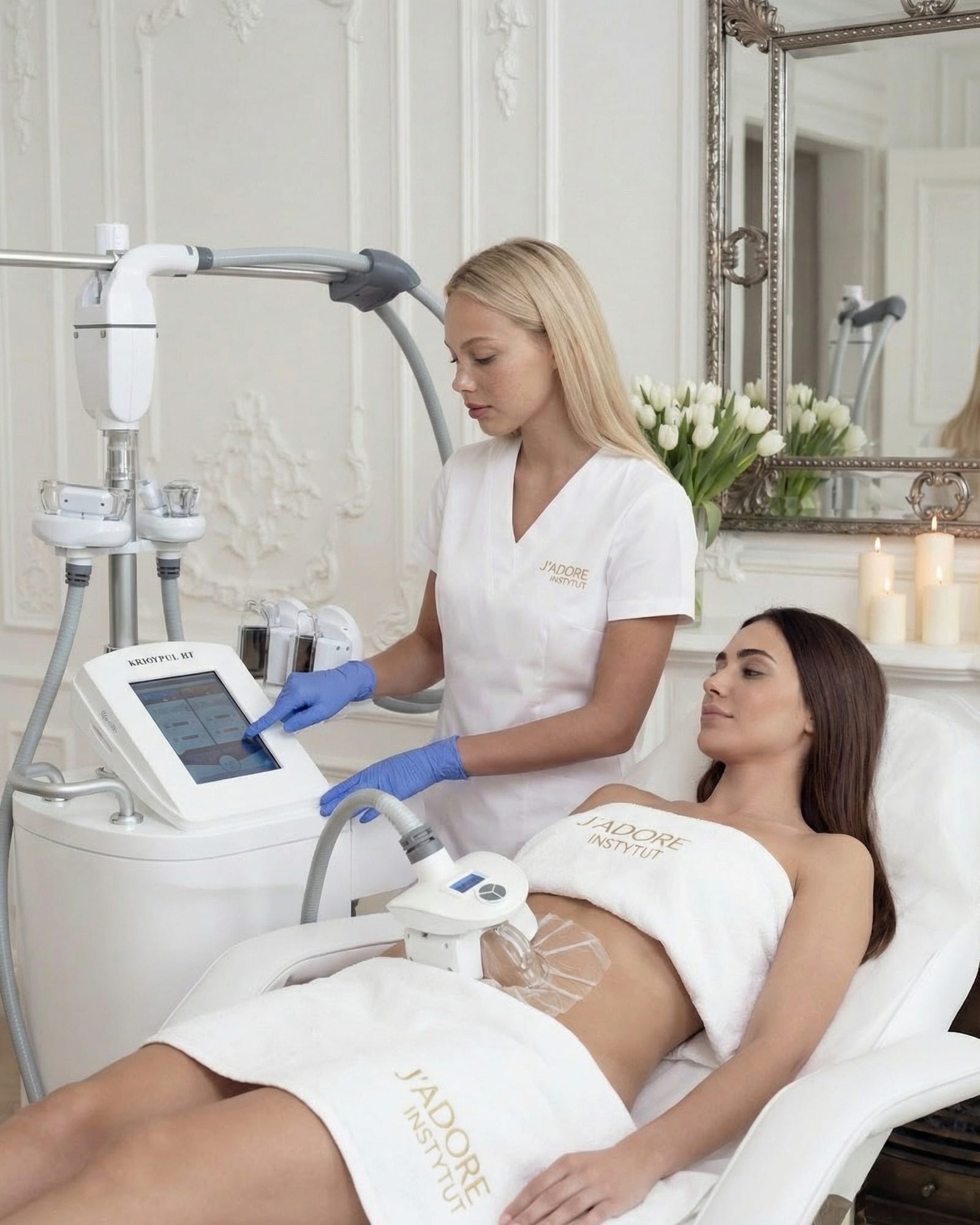
The honest answer is: results are real, but they vary. Age, body composition, metabolism, hydration, physical activity and hormones all affect the speed and scale of results. Two people following an identical treatment plan can see different outcomes, simply because their biology differs. That's not a flaw in the method — it's a flaw in any promise that ignores individual variation.
- Scale and pace differ between people — same device, same area, different body, different results. For many people, the reduction is measurable and satisfying; for others, it's more subtle.
- The treatment area matters — the abdomen responds differently to the thighs, and the thighs differently to the arms. Tissue thickness, blood supply and the hormonal profile of a given area all influence how it responds to treatment.
- Once adipocytes are lost, they don't return — but the ones that remain can still expand with a significant calorie surplus. Results last as long as your lifestyle stays stable — they aren't permanent regardless of everything else.
- Skin benefits can come as a bonus — some technologies also stimulate collagen production, which means the skin above the treated area can firm up and improve in texture, independently of the fat reduction itself.
When body-contouring treatment makes sense — and when it doesn't
Body-contouring treatments work best as a precise contouring tool — not as an alternative to lifestyle change, and not as a "reset" after a period of neglect. Someone who maintains a stable weight and exercises regularly, but has stubborn deposits in one area (classic saddlebags, lower abdomen, inner thighs), can see a clear effect, because the baseline is already good and the tissue in that area is simply resistant to classic methods.
The picture looks quite different when the goal is general weight loss with significant excess weight. Here, treatments can be part of a plan, but not the foundation of it — with a clear calorie surplus, the body "restocks" existing adipocytes faster each day than treatments can eliminate them. The result is then minimal or immeasurable — not through any fault of the technology, but because of the context in which it's used.
Lymphatic drainage
A natural complement to any contouring treatment — it supports the clearance of metabolised lipids and speeds up the visibility of results.
Body-firming treatments
When the goal is to improve skin firmness and contour the body at the same time, technologies working at different tissue depths can create a synergistic effect.
Endermologie / LPG massage
Mechanical stimulation of connective tissue and lymph — it strengthens the response to laser and cryotherapy treatments, particularly in areas with cellulite.