Where cellulite actually comes from
Before we debunk the myths, it's worth understanding one thing — everything else follows from it. Cellulite isn't "too much fat". It's how fat is organised beneath the skin in women. In women, the connective tissue septa that divide fat into compartments run vertically — perpendicular to the skin. When fat cells enlarge, or when the septa stiffen and shorten, fat bulges upward between them, while the septa pull the skin down. The result is a characteristic uneven surface — "orange-peel skin" or a "mattress" look. In men, the same septa run diagonally, in a criss-cross pattern — which is why men rarely get cellulite at all.
Three more factors deepen the picture over time: weakening microcirculation and lymphatic drainage (hence the "heavy legs" feeling and swelling), declining skin firmness as collagen depletes, and hormonal balance — oestrogen encourages fat storage in the thighs and buttocks. That's why cellulite can worsen during pregnancy, on contraception, or during periods of hormonal fluctuation. Since there are several causes at once, no single "miracle fix" can remove it — and that's the key to understanding every myth below.
Myths about causes — what we believe for no reason
Myth 1: "Only overweight people get cellulite." This is the most damaging myth, because it makes slim women feel betrayed by their own bodies. In reality, cellulite depends on skin structure and hormonal balance, not the number on the scale. You can be petite, well-trained and still have visible dimpling on your thighs — and vice versa. Losing weight sometimes improves the look, but for some women weight loss actually makes it more visible, because the skin loses support and becomes lax. Cellulite and body fat are two separate issues that only sometimes overlap.
Myth 2: "It's caused by coffee / red meat / gluten." Every few years the internet points to a new "culprit" — cut it out, and your skin will supposedly smooth over. The truth is less dramatic: there's no single food that "causes" cellulite. Diet matters, but in a general way — chronic excess sugar and salt can promote inflammation and water retention, which may worsen the look. But cutting out coffee or gluten alone won't "unlock" the connective tissue septa. It's a matter of overall lifestyle, not the effect of one item on a blacklist.
Myth 3: "Cellulite means your body is full of toxins." A trendy phrase that sells well — because if it's "toxins", then surely a "detox" will fix it. This is an oversimplification with no basis in physiology. Cellulite comes from skin structure, circulation and hormones — not from mythical "toxins" that need "flushing out" with tea. Lymphatic drainage genuinely helps — but because it improves lymph flow and reduces swelling, not because it "detoxifies". That distinction matters: one is a mechanism, the other is a marketing slogan.
Myths about "solutions" — what only masks it
Myth 4: "An anti-cellulite cream will get rid of cellulite." The most persistent myth on the pharmacy shelf. No cream can "burn fat" or dissolve connective tissue septa — they sit too deep for any cosmetic product applied to the surface to reach. What creams can actually do is more modest, but real: ingredients such as caffeine, draining plant extracts or retinol can temporarily improve skin firmness and hydration, give a feeling of "lightness", and smooth the surface slightly. This is a care and support effect that fades once you stop using it — not a cure. A cream is a great add-on to a series of treatments. On its own, it won't remove anything.
Myth 5: "Massage or dry-brushing alone is enough." There's a grain of truth here — which is exactly why this myth sticks. Massage, dry-brushing, cupping and drainage genuinely improve microcirculation and lymph flow, so the skin looks smoother, firmer and "lighter" afterwards. The problem lies in the word "enough". This effect is temporary and lasts only as long as you keep doing it; massage alone won't remodel the fibrous septa responsible for advanced dimpling. It's a great support and a good home routine — but for visible cellulite, it "masks and maintains" rather than "removes".
Myth 6: "One session — minus 10 cm, cellulite gone." This isn't a myth, it's a red flag. No honest technology can promise a lasting change after a single visit, because the skin needs weeks to rebuild collagen and remodel tissue. "Minus a few centimetres instantly" is usually a temporary drainage effect — water has left, the measurement drops, then returns within a day or two. Cellulite treatments work in a series, with a delay: first changes may appear after several sessions, and the full result is only assessed a few weeks after completing the whole series. Anyone who promises a miracle after one session is selling hope, not results.
What actually works — and why in a series
Since cellulite has several causes at once, the approach that works best is one that tackles several of them at the same time — and does so repeatedly, in a series, not once before a holiday. In the salon we usually work on three fronts: loosening fibrous septa, improving microcirculation and drainage, and rebuilding skin firmness by stimulating collagen. Different technologies focus on different elements of this, which is why they're often combined — and why there's no single "best cellulite treatment", only a plan matched to what dominates in your case: fibrosis, fluid retention or laxity.
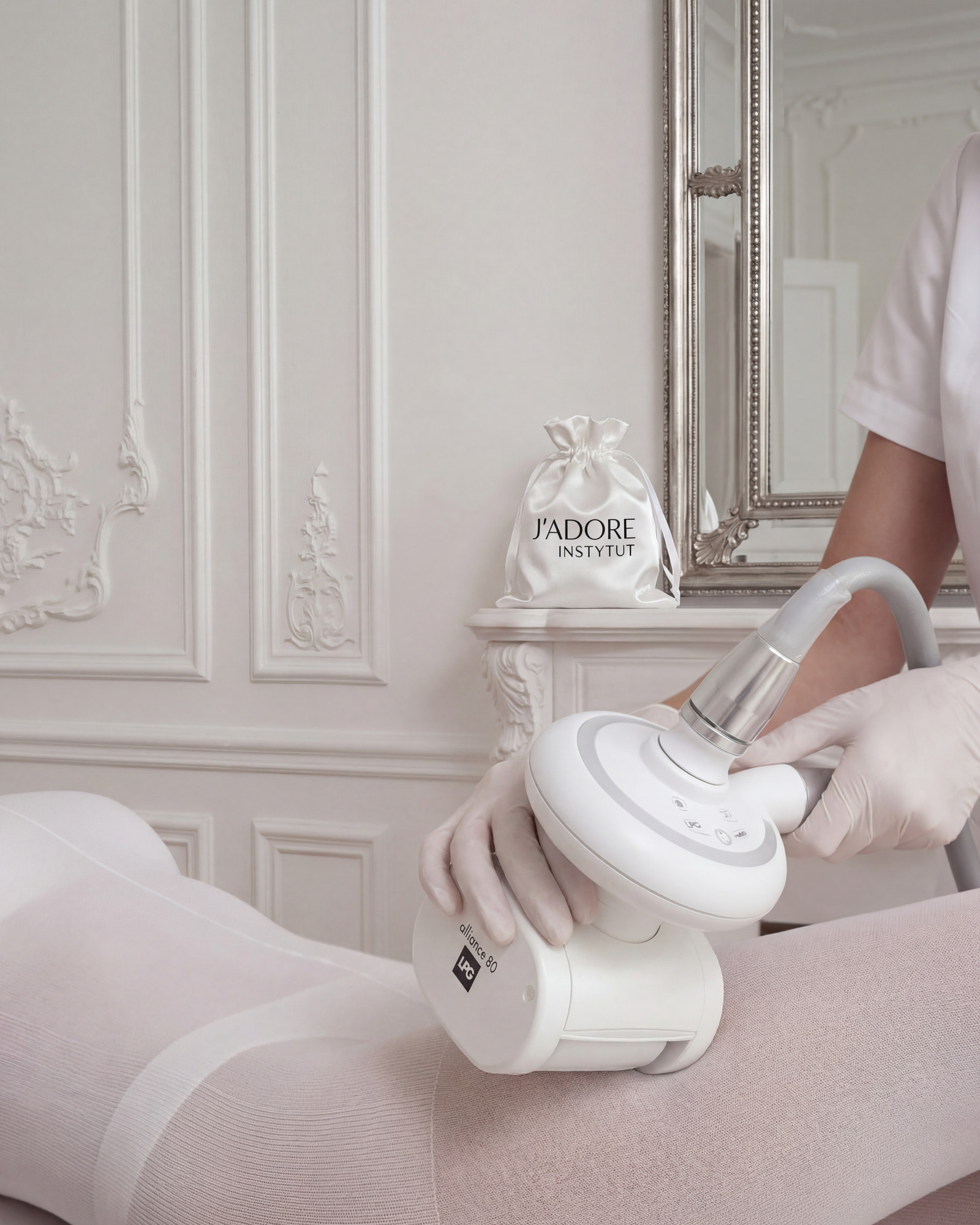
LPG Endermology
Mechanical roller massage with suction
- "Works" the tissue from within — lifting and unfolding the skin fold
- Strongly supports lymph drainage: lighter legs, less swelling
- Improves skin firmness and smoothness
- Pain-free, no needles, no downtime
Shockwave (ESWT)
An acoustic pulse with medical origins
- Mechanically loosens tense connective tissue septa
- Stimulates microcirculation and collagen rebuilding
- Also effective on stretch marks and scars
- No skin puncturing, no downtime
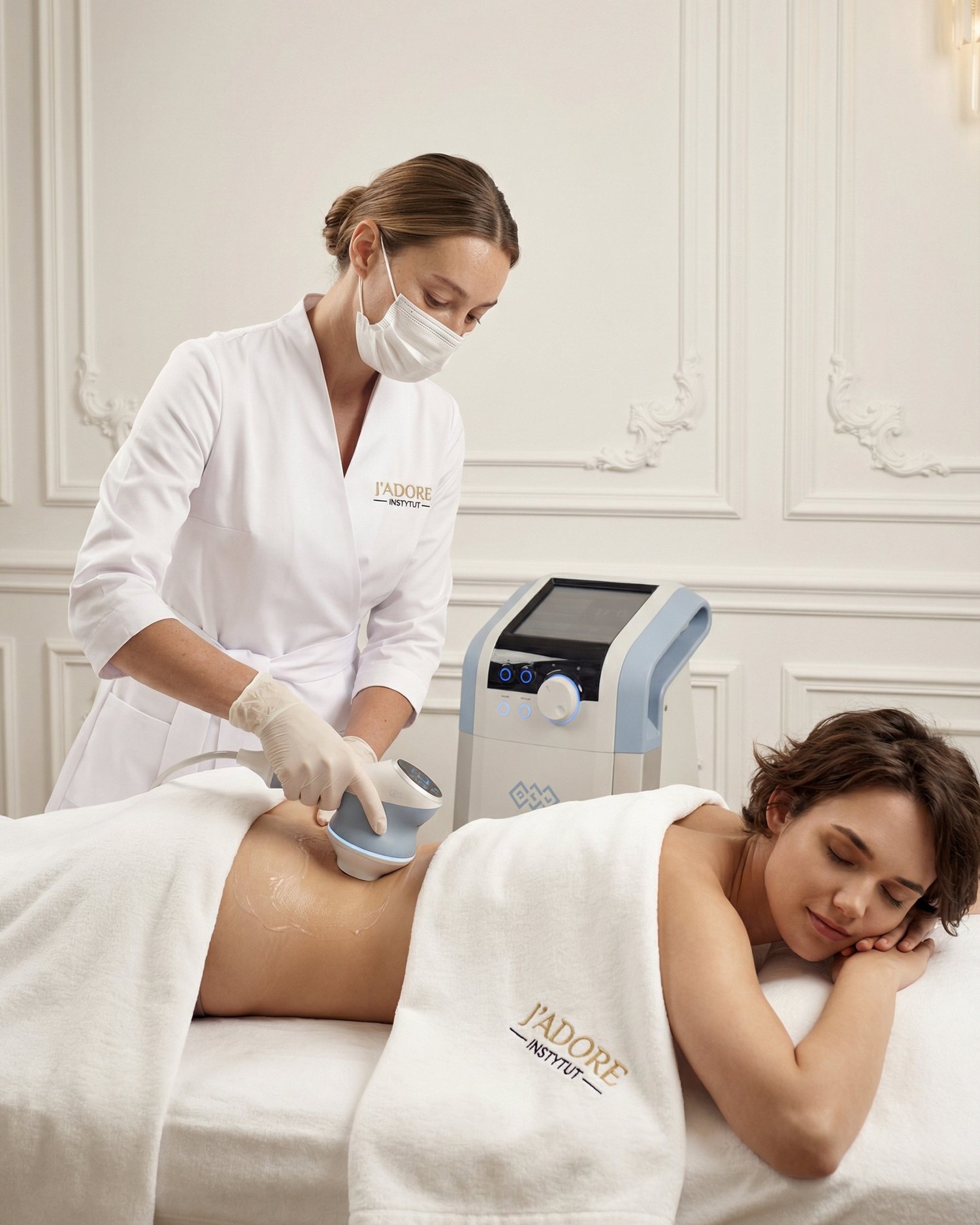
Emtone (RF + acoustic wave)
Radiofrequency heat + pressure-wave energy
- Targets cellulite from several angles at once
- RF heat stimulates the skin to firm up
- The pressure wave loosens septa and boosts circulation
- Short sessions, no downtime
There are also supporting treatments, best thought of as an add-on, not a standalone solution: lymphatic drainage (manual or device-based) "flushes out" what other treatments have loosened, and eases heavy legs; carboxytherapy oxygenates tissue and boosts circulation; cupping therapy stirs up stagnation as part of a home routine. Cryolipolysis is a different subject altogether — it targets localised fat tissue (love handles, the tummy area), not the structure of cellulite itself. It sometimes improves the look along the way, but it's a different tool for a different problem. The skill lies in fitting these elements into a coherent plan, not buying them at random.
- 01
Consultation & assessment
We identify what dominates in your case — fibrosis, fluid retention or laxity — and choose the method and number of sessions accordingly. Without this, everything else is guesswork.
- 02
The main series
Regular sessions (usually once a week or every two weeks). First results — lighter legs, smoother skin — can appear fairly quickly, but this is only the start.
- 03
Results developing
After the series ends, the skin keeps rebuilding collagen for weeks. The full result is only assessed now — not the day after your last session.
- 04
Maintenance
Occasional single sessions, plus a home routine — movement, hydration, skincare — help hold the result. Cellulite calls for ongoing work, not a one-off fix.
What to expect — and what to do at home
Cellulite treatments have one thing in common: they require patience and don't respond well to a one-off "quick fix" approach. The best results come from combining a series in the salon with daily habits, because your metabolism, movement and hydration finish the work the equipment starts. Without that, the result will be weaker and won't last as long. This doesn't mean you have to "earn" smooth skin through a punishing diet — it's about consistency: regular movement, drinking water, sleep and skincare form the foundation that the treatments build on.
And the most important point, to finish: cellulite is not a defect you need to "fix" to deserve acceptance of your own body. It affects most women — and it can be genuinely improved, if you want that, with the right tools and an honest plan. But you can also simply live with it, and that's entirely fine. In the salon, our role is to give you honest information instead of pressure: to tell you what will actually work, what only masks it, and what no treatment can promise. The decision is always yours.