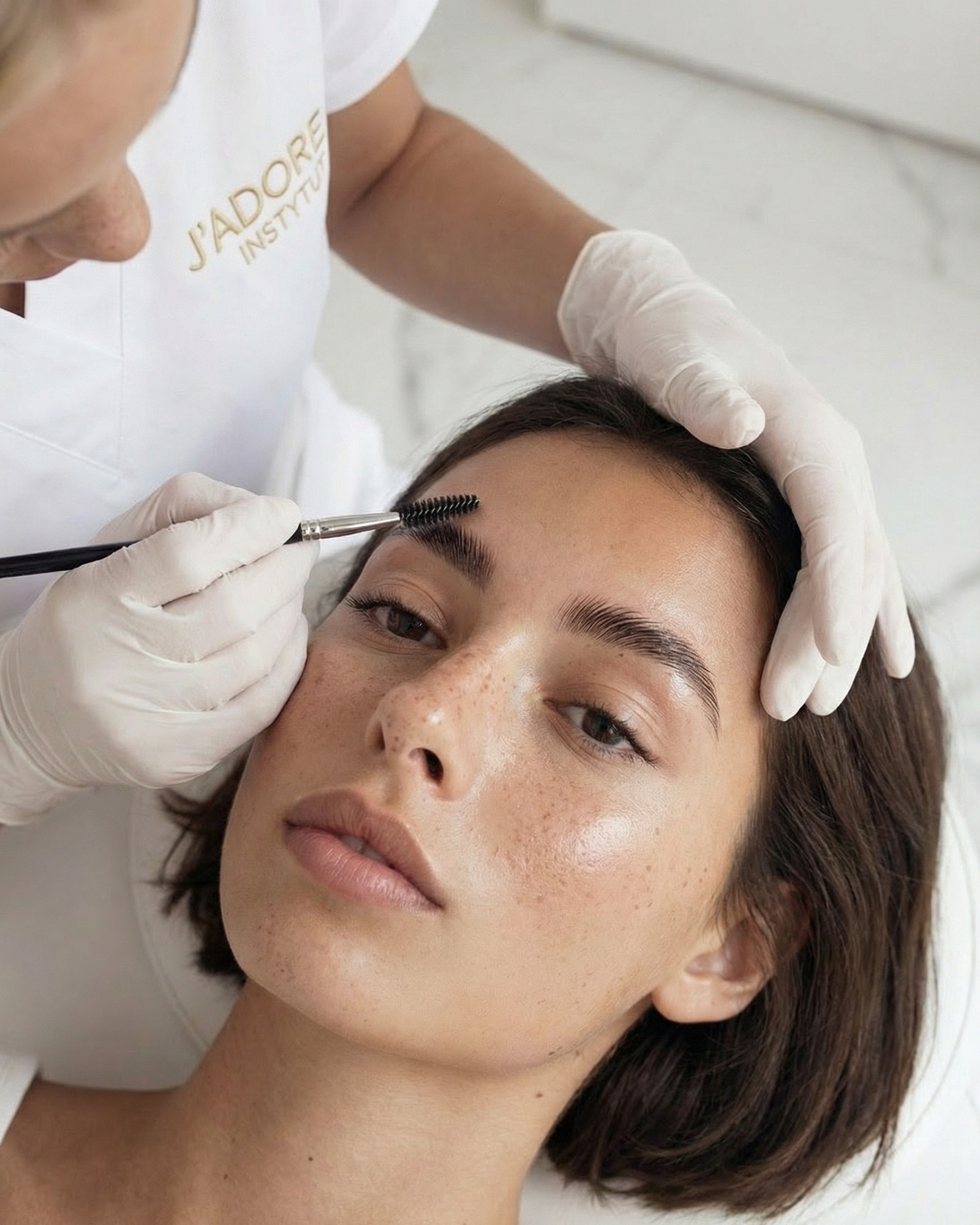
Before applying the product, you will mostly feel the cleansing and shaping
Degreasing may feel cool and cause a sensation of friction. If your skin is already irritated from retinoids, acids, sun exposure or at-home hair removal, even a mild product may sting. Tell your stylist about this before starting, not after the first stage has been applied.
Tweezing causes short pinches with each hair. Waxing can be more intense and is not always appropriate if your barrier is weakened or you use specific skincare. Ask if shaping can be done more gently or at a different time. It does not have to be part of every treatment.
- Do not use new acids or retinoids just before your appointment.
- Do not pluck individual hairs an hour beforehand.
- Report any reactions to dyes, adhesives and lash lamination.
- Point out any sores, flaking or fresh irritation.
The first stage may have a strong scent, but the skin should not burn
The product softens the hair structure so it can be set in a new direction. The characteristic scent results from the chemistry of the process and does not in itself determine the strength of the effect. You may feel dampness and gentle warmth under the occlusion. Sharp stinging is not necessary to relax the hair.
The stylist should monitor the hair throughout, rather than leaving the timer as the only criterion. The time depends on the system and the condition of the hair. Thin, bleached or previously laminated brows may require a different decision than thick, coarse hair.
Setting the new direction should be calmer, but it still requires observation
The second stage stabilises the hair in the new position. Sensations usually remain minimal. This does not mean that a reaction is impossible after a calm first stage. Every product has a composition, and the skin may react to one of the elements of the system.
If the product leaks beyond the hair, the skin is very red or the stylist repeatedly rubs the same area, report the discomfort. Precise application limits contact with the skin, but it does not guarantee the absence of a reaction.
Tinting and shaping after lamination may hurt more than you expect
After a chemical process, the skin and hair may be more sensitive. Adding dye, henna, tweezers or wax increases the number of stimuli. The package should not be performed automatically if redness has appeared or the hair looks weakened.
Dye may sting slightly for some people, but increasing burning, swelling or itching requires removal. Waxing on freshly irritated skin can damage the epidermis. Refusing this stage is a sensible modification, not an incomplete service.
Anaesthesia does not solve the problem. Masking sensations would make it difficult to catch a reaction, and the risk stems from chemical contact, not from a lack of pain tolerance.
Stinging, itching and pain mean three different situations
Sensations to report and observe
do not panic
- coolness during cleansing
- touch and dampness of the product
- short pinch of the tweezers
- mild skin tightness
Sensations requiring interruption
do not wait it out
- increasing stinging
- sharp pain in one spot
- rapid swelling
- blisters or damage to the epidermis
Itching appearing during or after the treatment may signal irritation or an allergic reaction. You cannot determine the cause yourself. Wash or remove the product according to the specialist's instructions, do not scratch and contact the salon. If you experience shortness of breath, tongue swelling or generalised hives, urgent help is needed.
After the treatment, tenderness should not develop into intensifying pain
The skin may be slightly red after brushing and shaping. The hair may appear stiff or unnaturally flat immediately after styling; the final look is assessed according to the guidelines for the first 24 hours. Do not try to wash them immediately with a strong gel or brush them in the opposite direction.
Increasing pain, oozing, blisters, scabbing, eyelid swelling or persistent intense stinging require contact. Take a photo, write down the time and the name of any cosmetics applied afterwards. Do not apply essential oils, alcohol or acids.
Hair breakage may reveal itself over time, especially if the treatment is repeated too often or the exposure is too long. Lamination is not a restorative treatment just because it ends with a conditioner. It is a chemical process that requires healthy starting material.
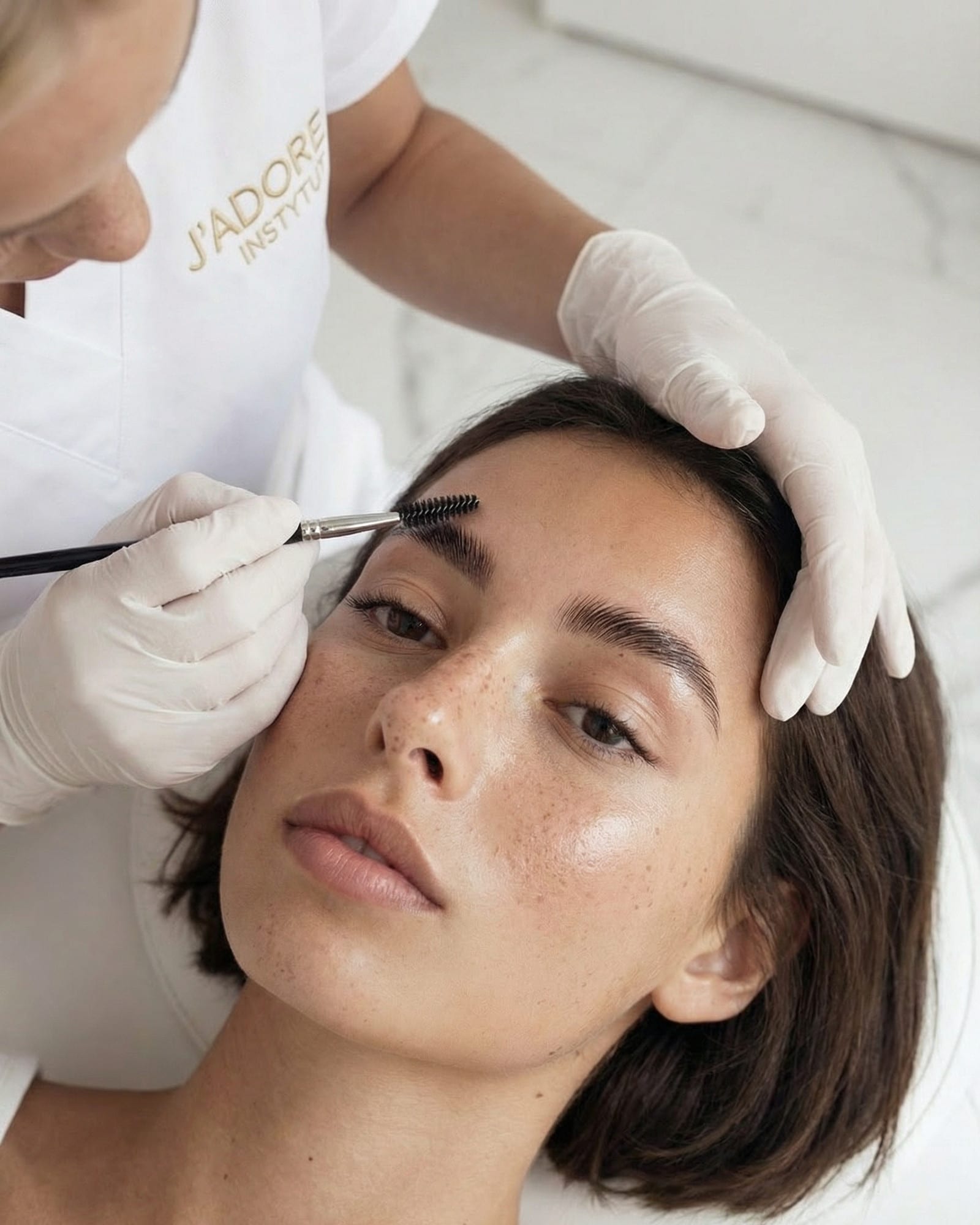
It hurts the least when the stylist knows how to decline the treatment
Active irritation, sores, dermatitis, a recent allergic reaction, very brittle hair or recent lamination may be reasons for postponement. A patch test, when recommended by the product, reduces uncertainty but does not guarantee the absence of a reaction during the full procedure.
Before the treatment, ask about the system used, the method of timing, skin protection and the plan if stinging occurs. The answer "no one has complained yet" does not describe a safety procedure. A good answer states when the product is removed immediately.
A patch test checks only part of the risk and does not allow you to ignore sensations
If the manufacturer recommends a test, it is performed at the appropriate time and place according to the instructions. Applying a bit of product five minutes before the full treatment is not equivalent. Ask which stages of the system the test covers and how long to observe the skin.
No reaction in a small area does not guarantee that full application with longer contact will remain neutral. The test also does not assess mechanical irritation after shaping or the condition of all the hair. Therefore, a consultation and observation during the process are still necessary.
A positive result, previous swelling or strong itching after a similar product should stop the procedure and prompt a proper assessment. Changing the brand without knowing the responsible ingredient may repeat the problem, as different systems use related substances.
Do not mask a reaction with an antihistamine in order to perform the treatment without a doctor's decision. Reducing symptoms does not remove the cause or the risk of further contact. Lamination is optional and can wait.
Hair condition is assessed by touch and history, not just by its thickness
Thick hair can be weakened by previous lamination, bleaching or frequent tinting. Thin hair is not always damaged, but it may react faster. The stylist should ask about the dates of previous procedures and examine the ends for brittleness, dryness and irregular curl.
If the hair breaks when brushed, has a clearly different structure or was stiff and curled after the previous treatment, further chemical setting may deepen the problem. A conditioner at the end does not automatically reverse over-exposure. Sometimes the best plan is a break and gentle care.
Do not speed up the repeat session just because new hair is starting to grow in its natural direction. The growth cycle causes the effect to gradually lose uniformity. Adding the treatment to already processed hair can overload it again.
After the treatment, brush your brows gently according to the recommendations. Pulling with dried gel and frequently changing the direction increases mechanical stress. If the hair becomes brittle, take a photo and report it before your next booking, instead of hiding the loss with another tinting.
In Krakow, describe your skin before the stylist assesses your hair
J’ADORE INSTYTUT in Krakow is located at ul. Karmelicka 45/2B. You can find information about the service on the brow lamination page in Krakow. When booking, report any previous reactions to lamination, dyes, henna, adhesives and cosmetics around the eyes.
Please arrive without having experimented with active skincare in the brow area. On-site, we will agree whether shaping and tinting are necessary or if they will only cause unnecessary irritation. During every stage, tell us about any change in sensation, rather than waiting to report the final level of pain.
The simplest rule is: lamination may be felt, but it should not hurt. If pain occurs, the goal is not to finish a perfectly styled tail. The goal is to remove the product quickly, assess the skin, and abandon further stages if the reaction requires it.