Serum speaks to the skin. Growth factors speak to its cells
To understand the difference, we need to go one level deeper than usual when discussing skincare. A conventional serum — even one with retinol, vitamin C or niacinamide — works mainly at a chemical level. It delivers a substance that enters the skin and takes part in biochemical reactions. It stimulates or modifies certain processes. The effects are real: improved texture, brightening and slower collagen degradation.
A growth factor works differently. It is a signalling protein — a molecule that does not directly “do something”, but gives the cell an instruction: divide, repair yourself, produce more collagen, begin healing. Cells have receptors on their surface — specific “locks” that fit a particular growth factor “key”. When the key fits the lock, the cell changes its behaviour. Not because something has forced it chemically, but because it has received a signal it understands.
- Serum / active ingredient — delivers a substance such as an acid, vitamin or peptide. The skin responds to it, but this is a response to an external “foreign” stimulus. The result: a chemical change at tissue level.
- Growth factor — delivers a signalling protein. The skin recognises it as its own because it produces it itself. The result: a change in the instructions the cell receives — which influences its activity over a longer period.
- The key difference — it is like the difference between administering a medicine and “telling” the body to produce what it needs itself. Both approaches have their place — but their mechanisms and duration of action differ.
What exactly are growth factors — a short glossary without jargon
Growth factors are a large family of proteins. In cosmetology and aesthetic medicine, several specific types are discussed most often. It is worth knowing what each one relates to, as they are not interchangeable.
- EGF (epidermal growth factor) — signals keratinocytes, or epidermal cells, to divide and renew themselves. It is essential for healing and regeneration of the skin’s surface. It is often associated with post-treatment skincare.
- FGF (fibroblast growth factor) — instructs fibroblasts, the cells responsible for producing collagen and elastin. The more active the fibroblasts, the more support structure the skin has.
- VEGF (vascular endothelial growth factor) — relates to blood supply and microcirculation. Better-supplied skin regenerates faster and is better nourished.
- TGF-β (transforming growth factor β) — is responsible for tissue repair and modulation of inflammatory processes. It is important, among other things, after skin damage.
- IGF-1 (insulin-like growth factor) — supports fibroblast activity and survival. It is involved in the skin’s cellular metabolism.
An important note before we continue: not every product labelled “growth factor” contains genuine signalling proteins — and not all of these proteins can meaningfully penetrate the skin when applied as a cosmetic. This is why the subject is more complex than a label suggests.
Where they come from — and why it matters
Growth factors used in cosmetology and aesthetic medicine come from different sources. The source matters, as it determines whether a protein is identical to a human one or only similar to it.
Human / biotechnological origin
biologically closest
- Recombinant growth factors — produced through biotechnology with a human amino acid sequence
- Platelet-rich plasma (PRP) — from your own blood, containing natural growth factors
- Exosomes — vesicles secreted by cells, carrying growth factors and RNA
Plant-based / other
similarity, not identity
- Plant-based EGF equivalents — act on different receptors, with an indirect effect
- Plant stem cells — controversial, with their ability to penetrate the skin questioned
- Fermented extracts — may contain peptides with signalling activity, but are not true growth proteins
This is where the interest in exosomes comes from — one of the newest directions in salons. Exosomes are not growth factors in their pure form, but natural carriers. They are vesicles secreted by cells that transport sets of signals between them — proteins, RNA and lipids. The “sending” cell packs inside what it wants to share with a neighbouring cell. It is a highly sophisticated communication mechanism, refined by evolution over millions of years.
The skin barrier — the real issue with cream alone
There is one fundamental difficulty that is rarely discussed openly when it comes to cosmetics with growth factors: proteins struggle to penetrate a healthy skin barrier. The epidermis is an excellent barrier — as it should be. Its role is to keep out what the skin does not need. Protein molecules are also much larger than hyaluronic acid or vitamin C.
This is why the application context plays a key role: whether the skin is intact, whether a treatment has preceded application and how deeply the ingredient needs to work. Growth factors applied to healthy, intact skin — especially in a cream — work mainly on the surface. They support the barrier, have an anti-inflammatory effect and help after irritation. These effects are real, but limited.
Cosmetic application (cream/serum)
on intact skin
- Works mainly at epidermal and barrier level
- Anti-inflammatory and healing-supporting effects
- Helpful after irritation and dryness
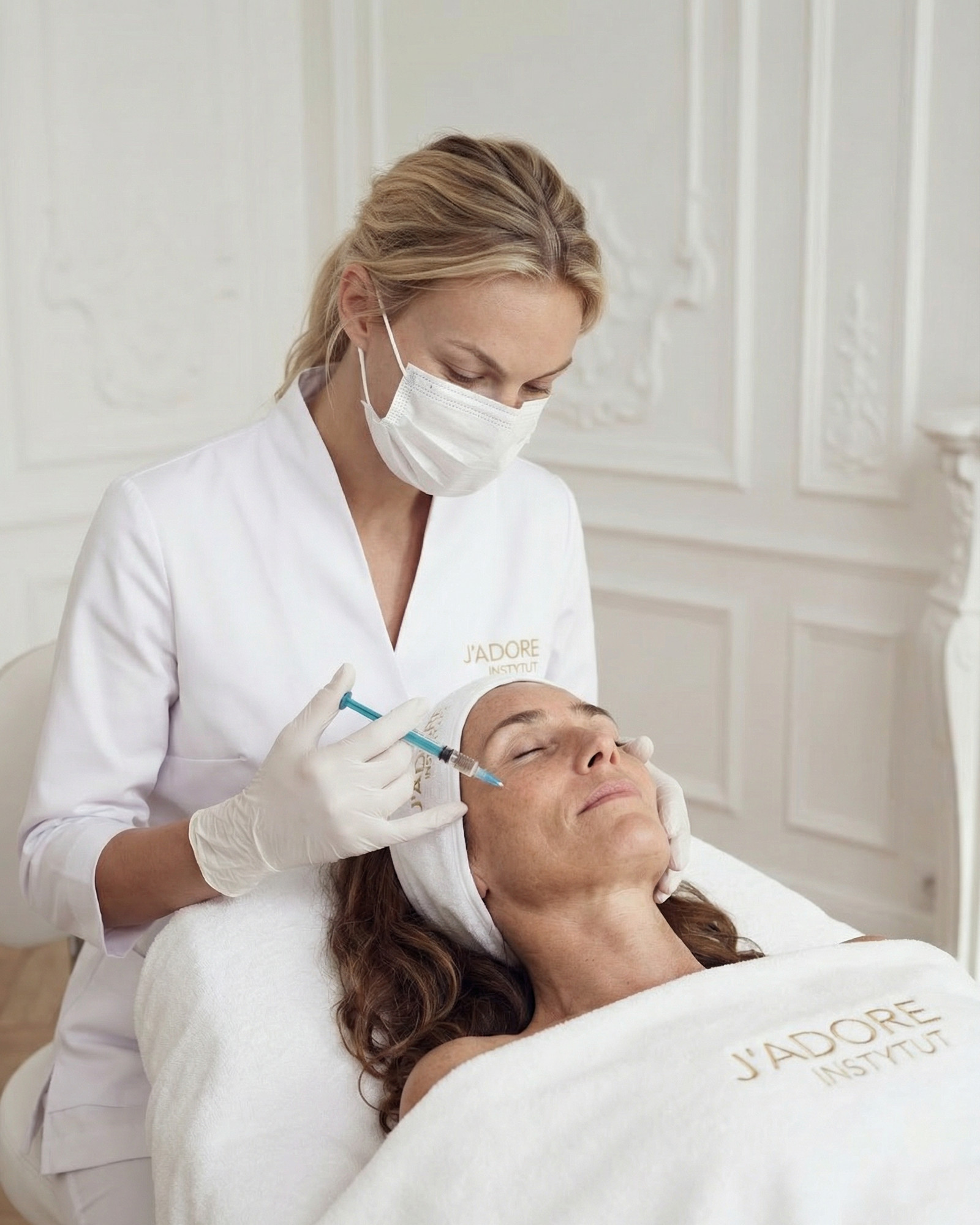
Salon application (mesotherapy / exosomes)
after opening the barrier or through a delivery channel
- Direct delivery to the target depth
- Contact with collagen-producing fibroblasts
- The signal reaches where regeneration is needed
What to do with this — and how to think about your choice
Growth factors are not the answer to everything — but they answer one specific question: how to stimulate the skin to regenerate in its own language. If your skin lacks firmness, looks tired or is losing density, this signals that fibroblasts are working more slowly and need a stimulus. Not a toxin, filler or tightening — but a signal to act.
- Skin after ablative treatments (lasers, microneedling, dermabrasion) — growth factors support regeneration and shorten recovery time.
- Skin losing density and firmness — when collagen degrades faster than it is rebuilt, a signal to fibroblasts may slow this process.
- Dull, grey skin lacking radiance — improved microcirculation and activation of epidermal renewal.
- Anti-ageing prevention — before changes become visible, it is worth supporting repair processes.
There are several options — from exosomes and mesotherapy with growth factors to combinations with platelet-rich plasma (PRP). The right choice depends on what your skin needs, not on trends. Rather than searching for the “best growth factor treatment”, book a consultation. This allows a specialist to assess your skin rather than follow fashion.