
One protein, four sources — what actually differs
Collagen is a protein — and in all four versions, we're talking about the same collagen molecule, built from amino acids (mainly glycine, proline and hydroxyproline) that the body uses to build skin, tendons, cartilage and bone. The source matters not because it changes collagen's chemical make-up — it changes how it's sourced, processed and how easily the body absorbs it.
Fish collagen
from the scales and skin of freshwater fish
- small molecule — often absorbed more easily in the gut
- popular in oral supplements
- odourless when well manufactured
- an option for people avoiding products from mammals
Marine collagen
from marine organisms (fish, jellyfish, molluscs)
- a marketing term, not a biological one — fish collagen can also be labelled "marine"
- an umbrella term for many aquatic sources
- quality depends on species and the hydrolysis process
- usually well tolerated — but check the ingredients, not the name
Bovine collagen
from cattle skin and bone
- naturally rich in type I and III
- popular in bone broths and supplements
- studied for a long time — a large body of research
- often chosen by people who can't tolerate fish
Horse collagen
from horse skin
- popular in topical cosmetics (creams, masks)
- as a supplement — rarer than fish or bovine
- used in traditional Japanese cosmetics
- requires source certification
Collagen at the salon — a different story from the shop shelf
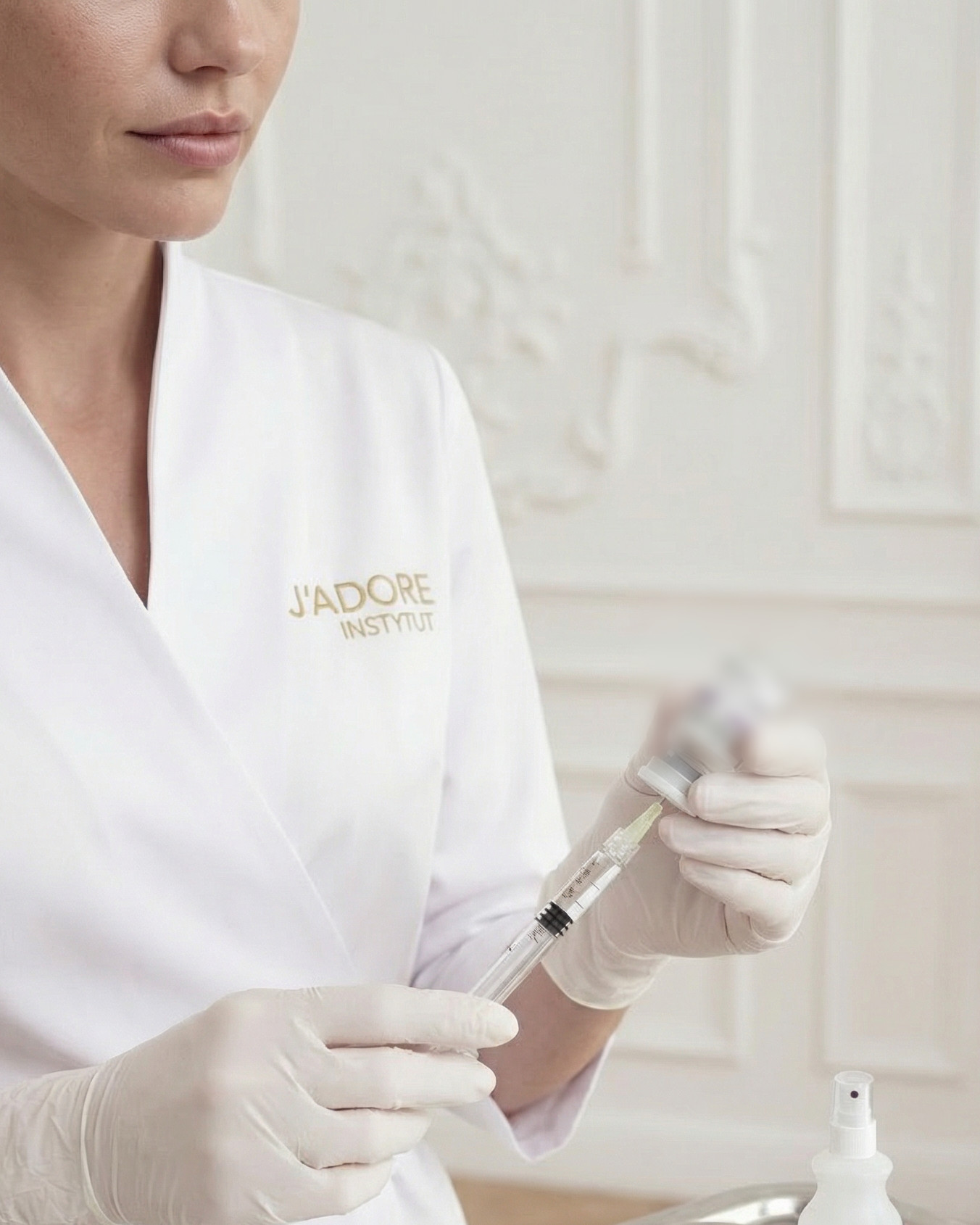
Supplements and cosmetics are one thing. Salon treatments are a completely different category — and here, the "fish vs bovine" distinction matters less than how the collagen reaches the skin. A formula delivered directly into the skin (via needle or needle-free mesotherapy) has entirely different requirements for purity, fractionation and composition than an oral supplement. In the salon, what matters most is the formula's certification and the specialist's experience — not which country the fish came from.
Allergy and intolerance — before you reach for a formula
This is one of those cases worth pausing over longer than a choice of flavour. Allergies to animal proteins can trigger reactions ranging from skin symptoms to anaphylaxis — and collagen always comes from animal tissue.
- Allergy to fish and seafood → avoid fish and "marine" collagen; consider bovine, or consult an allergist.
- Allergy to beef or milk (possible cross-reactivity) → avoid bovine collagen; consider fish collagen after consultation.
- Allergy to horse hair → be cautious with horse collagen, especially in topical use (creams, masks).
- Vegetarian or vegan diet → no animal collagen is an option; look for products with vitamin C, plant-based amino acids and biotin that support your body's own collagen synthesis.
- Kosher or halal requirements → bovine and horse collagen need certification; fish collagen may be kosher — check the manufacturer's certificate.
- No diagnosed allergy, but your skin reacts to a new supplement → wait two weeks and observe; if the reaction persists, consult a doctor before trying again.
How to choose — a simple test before you buy
Before you buy another formula, run through a few questions. They take a minute, and they can save you disappointment — and unnecessary expense:
- Do I have an allergy or intolerance to animal proteins? → If so, start with a medical consultation, not a choice of flavour.
- What are my personal beliefs — diet, religion, ethics? → Rule out the options that don't fit before comparing the rest.
- Oral or topical? → Supplements (hydrolysates) work from the inside; collagen creams work mainly as barrier moisturisers. These are different tools for different goals.
- Does the manufacturer provide third-party certification? → No external certification is a warning sign, especially for expensive formulas promising "clinical results".
- Which form do I prefer? → Powder, capsules, shots, gummies — this is a matter of convenience and consistency. Collagen only works with regular use, so the form you'll skip is worse than the one you'll actually take.
When it's worth combining supplements with a treatment
An oral supplement and a salon treatment aren't competitors — they're two different routes to the same goal. When they work together, they reinforce each other: the body gets building blocks from outside (amino acids from the hydrolysate), while the treatment stimulates the skin to use them.
Mesotherapy + oral collagen
the treatment delivers active substances directly into the dermis; supplementation supports regeneration between sessions.
Biostimulators + amino acids
biostimulators trigger fibroblasts to produce collagen; the supplement supplies the raw material for that production.
Exosomes + vitamin C
vitamin C is essential for collagen synthesis; without it, the body can't effectively convert amino acids into mature collagen fibres.
PRP + supplementation
platelet-rich plasma provides natural regenerative stimulation; oral collagen supports rebuilding during the healing phase.
One thing matters most: consistency. Skin doesn't rebuild in a week. Treatment programmes run for months, and results are cumulative — a week's break from supplementation won't undo everything, but a lack of regularity means the building blocks simply aren't there when they're needed most.