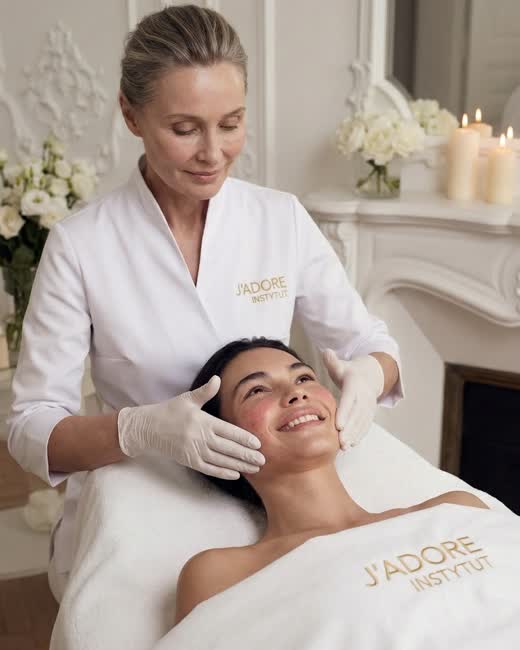
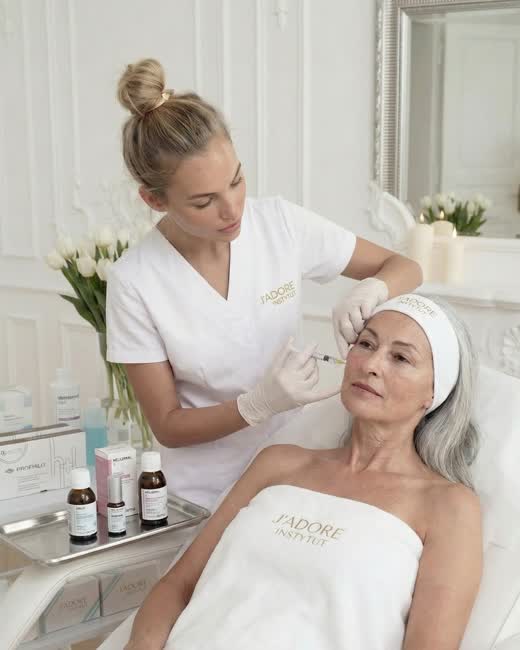
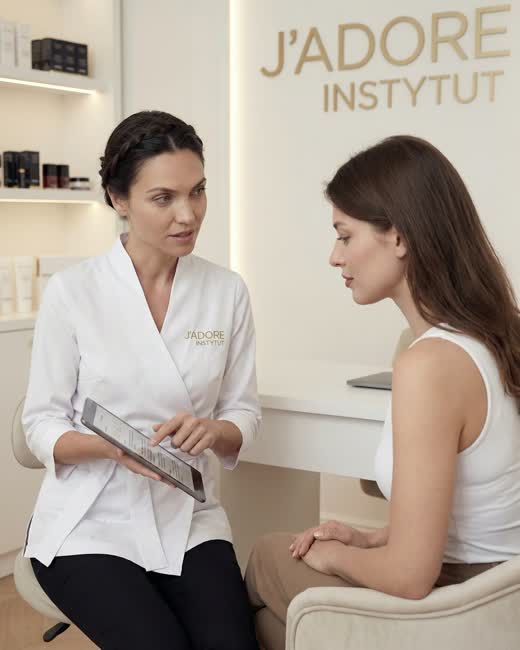
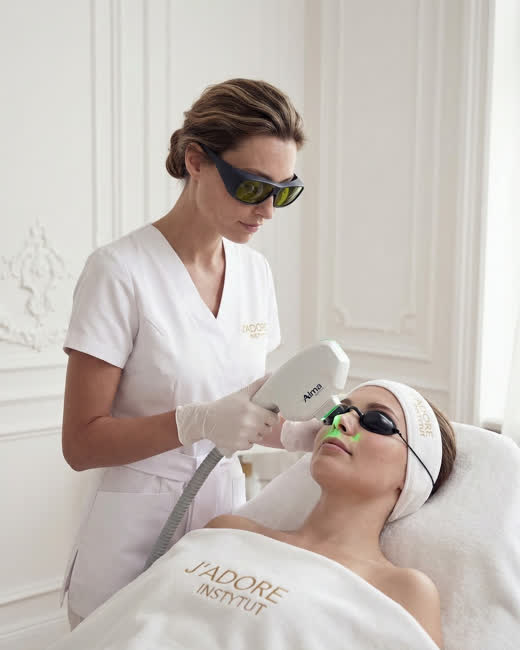
A treatment room at J'adore
MEDICAL PEELS
Persistent redness, "flushing" after hot tea, stress or a glass of wine, visible thread veins on the cheeks and around the nose, plus dark marks and hyperpigmentation after every breakout — this is everyday life for skin that is rosacea-prone, vascular and reactive. A standard cream isn't enough here. DermaQuest Azelaic Peel is an azelaic peel from the professional American brand DermaQuest (available only in salons), based on azelaic acid — one of the gentlest yet most "multitasking" acids in cosmetology.
It works anti-inflammatory, calms redness, strengthens the walls of small blood vessels, regulates sebum production and brightens hyperpigmentation — hitting exactly where rosacea-prone skin struggles most. This is a superficial peel: it's not about dramatic exfoliation, but about controlled calming and strengthening of the skin. At J'adore Instytut, the treatment is performed by an experienced cosmetologist. Below you'll find everything worth knowing before your first visit: whether it really works, whether it stings, whether you'll peel and for how many days, when results appear, how many sessions you need in a series, and why SPF is a condition here, not a suggestion.
series of 4–6 sessions every 1–2 weeks (plan set by your cosmetologist)
How it works
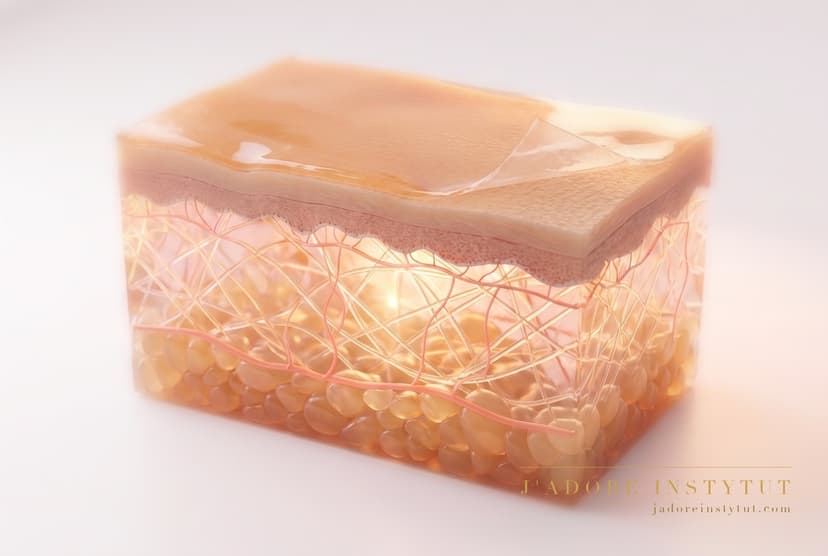
DermaQuest Azelaic Peel is based on azelaic acid — a substance your skin already knows naturally (it occurs, among other places, in grains). Unlike strong acids designed for intense exfoliation, azelaic acid works on multiple fronts, gently: it curbs inflammation, calms redness, strengthens the walls of small blood vessels, regulates sebum production and brightens hyperpigmentation by inhibiting excess melanin production.
This is a superficial peel — it works mainly in the epidermis, in a controlled, safe way. The goal isn't visible peeling in sheets, but skin that is calmer, more even in tone, and stronger. That's why azelaic acid is one of the first choices for skin that is rosacea-prone, vascular and reactive and doesn't tolerate aggressive treatments well.
The product comes from the DermaQuest line — an American brand of professional salon cosmetics (since 1995), available exclusively in salons, to certified cosmetologists. Its formulas are built on clinical ingredients: acids, retinol, peptides, vitamin C and plant stem cells. Within this line, Azelaic Peel is the "quiet specialist" for red, reactive skin.
Ideal for
This is a "first contact" peel for rosacea-prone and vascular skin — gentle, but consistent. For more advanced concerns, your cosmetologist may combine it with other treatments from the DermaQuest line, or with vessel-closing procedures (more on that below).
Women's zone and men's zone
The most common reason women choose DermaQuest Azelaic Peel for women is rosacea and visible capillaries — redness, flushing, skin that reacts with heat to every emotion and change in temperature. The second is hyperpigmentation (post-inflammatory and hormonal) and uneven skin tone. Azelaic acid is ideal here, as it soothes and brightens at the same time, while also being well tolerated by sensitive skin.
What we work with
In the men's zone, DermaQuest Azelaic Peel for men most often addresses oily skin with blackheads and post-acne scarring, along with hyperpigmentation and irritation from shaving (dark marks and breakouts along the beard line, including from ingrown hairs). Men rarely have the habit of wearing SPF, so sun-related hyperpigmentation adds to the mix. Azelaic acid regulates sebum, works antibacterially and evens skin tone — with zero downtime.
What we work with
Worth knowing: azelaic acid does two things at once that usually require two different ingredients — it calms redness and inflammation (like a "rosacea" ingredient) and brightens hyperpigmentation (like a "pigment" ingredient). That's why it works so well where problems overlap: rosacea-prone skin that also pigments after every breakout.
Safety
With peels, results and safety depend on a few things worth asking about at any salon:
DermaQuest Azelaic Peel is performed by an experienced cosmetologist — following skin analysis and a consultation. It's the cosmetologist who assesses your skin phototype and reactivity, and chooses the strength and exposure time. A peel done "on the spot", without assessing your skin, is asking for irritation.
We use only genuine DermaQuest products from legitimate, professional supply channels (the brand is only available to salons). A peel of unknown origin means unpredictable pH and concentration — risk instead of results.
There's no "one peel for everyone". The number of sessions and the intervals between them are set individually by your cosmetologist — a peel sold as a single "miracle" without a plan rarely delivers lasting results on redness or hyperpigmentation.
Without sun protection after a peel, post-inflammatory hyperpigmentation is easy to develop. A good salon finishes the treatment with SPF 50+ and gives you clear written guidance.
Red flag — when it's better to walk away ·
Contraindications
Some contraindications are permanent, and some are temporary — in that case, we simply postpone the treatment until the situation passes. We'll go through the full list during your consultation.
From the cosmetologist's chair
The most commonly overlooked issue: cold sores. "It's just a tiny blister on my lip" — that's enough to postpone the peel. An active virus combined with controlled exfoliation risks spreading the lesion. It's better to wait a few days, and for recurring cold sores, simply plan antiviral protection ahead of the series.
This isn't the full list — we'll discuss your medications, skin conditions, phototype and previous treatments individually during your consultation.

Why the price is so "reasonable"
A superficial peel can be cheaper than more intensive salon treatments, and that's not a reason for suspicion — provided it comes with a genuine product, a consultation and a plan. A low price only becomes a warning sign when it's paired with no skin assessment, an unlabelled product, or a series sold "blind".
In other words: with the azelaic peel, you're not paying for "heavy exfoliation" — you're paying for the right selection and safe management of the series. That's why a single session is affordable, while real change comes from consistency, not a one-off "big push".
The visit
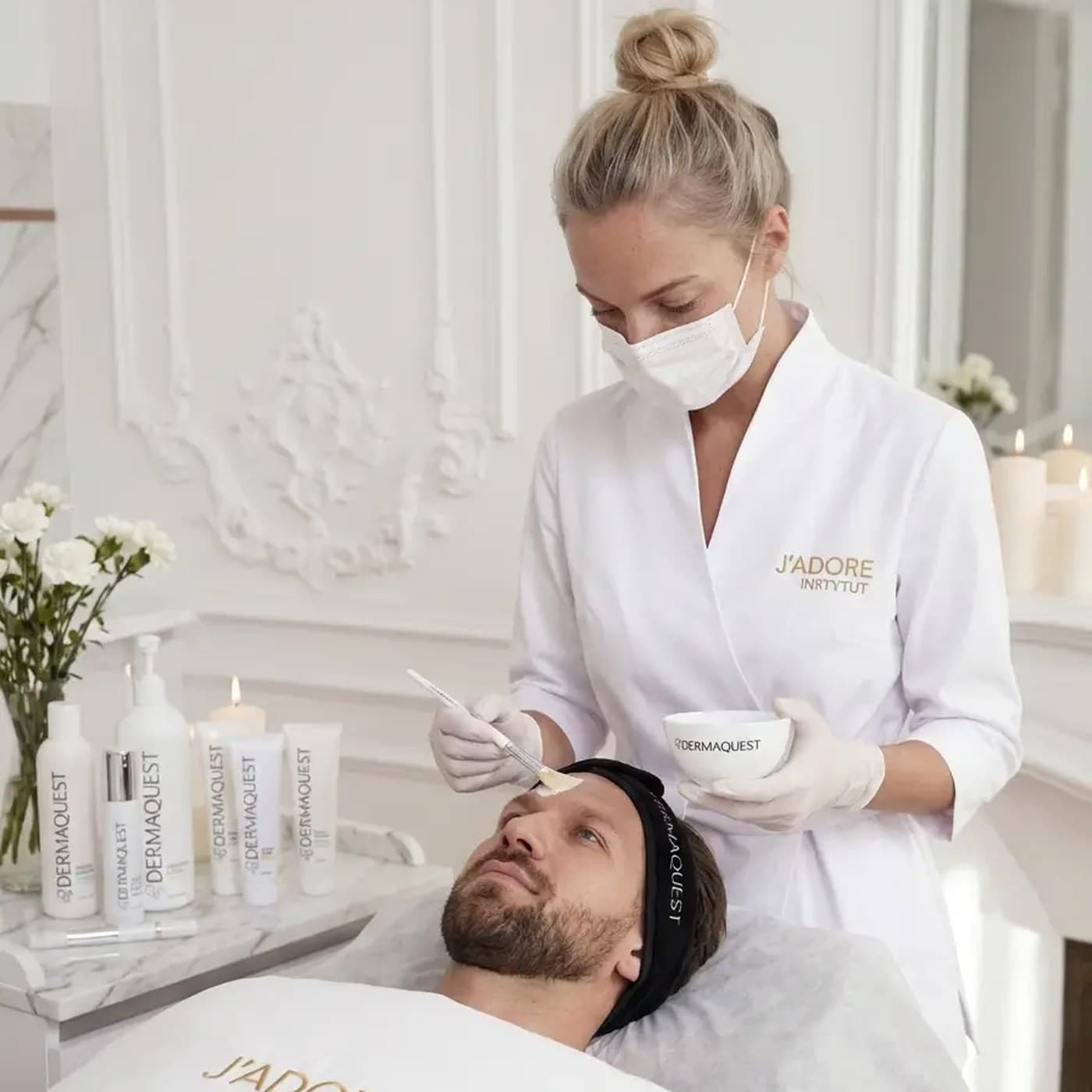
Consultation and skin analysis
your cosmetologist assesses skin type, the severity of redness/capillaries/hyperpigmentation, skin phototype and reactivity, rules out contraindications and selects the peel strength.
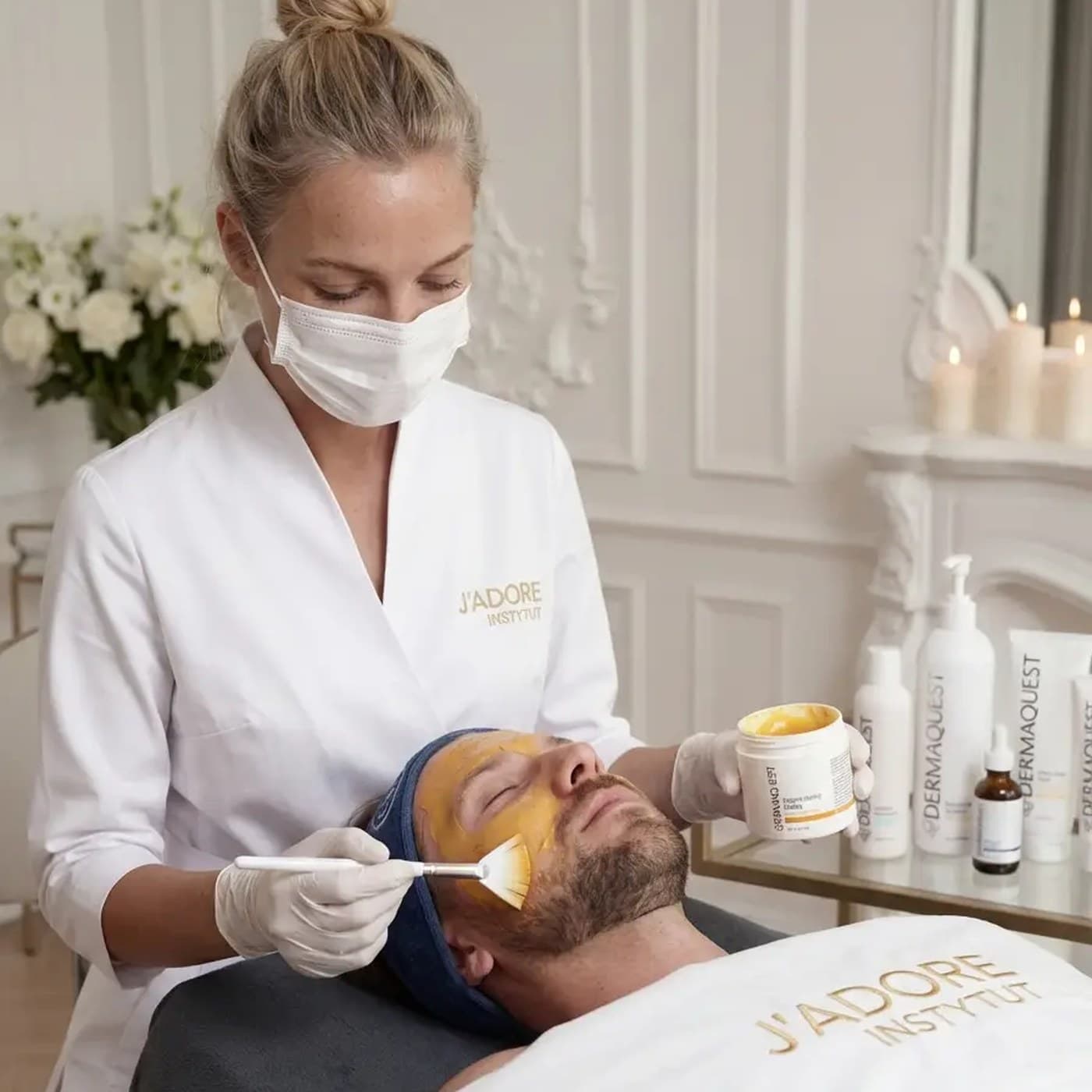
Degreasing the skin
thorough makeup removal and skin preparation with a pH-balancing product, so the acid works evenly.
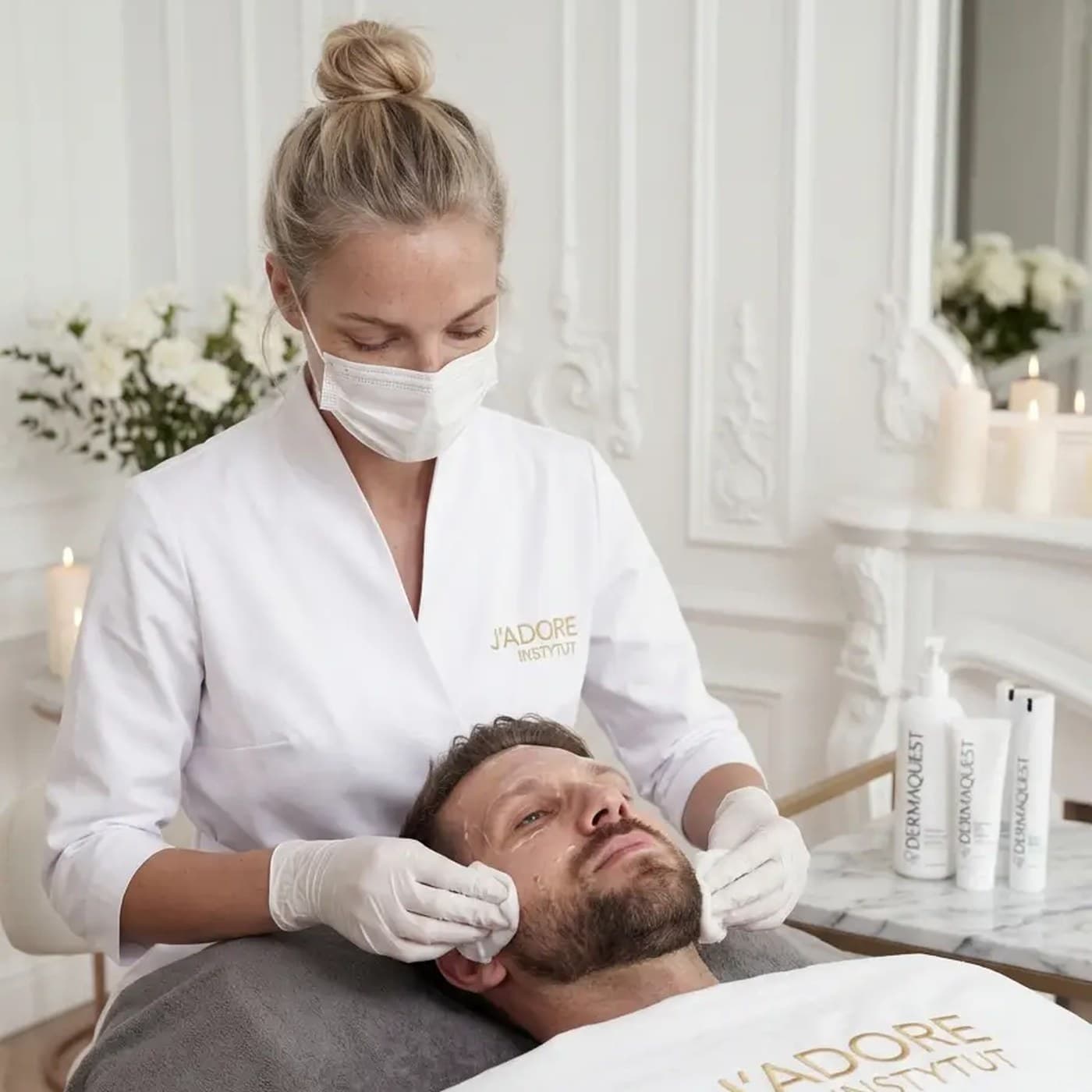
Applying the peel
the DermaQuest product is applied in layers (with a brush or gauze pad). Your cosmetologist monitors your skin's reaction as it happens and precisely controls exposure time.
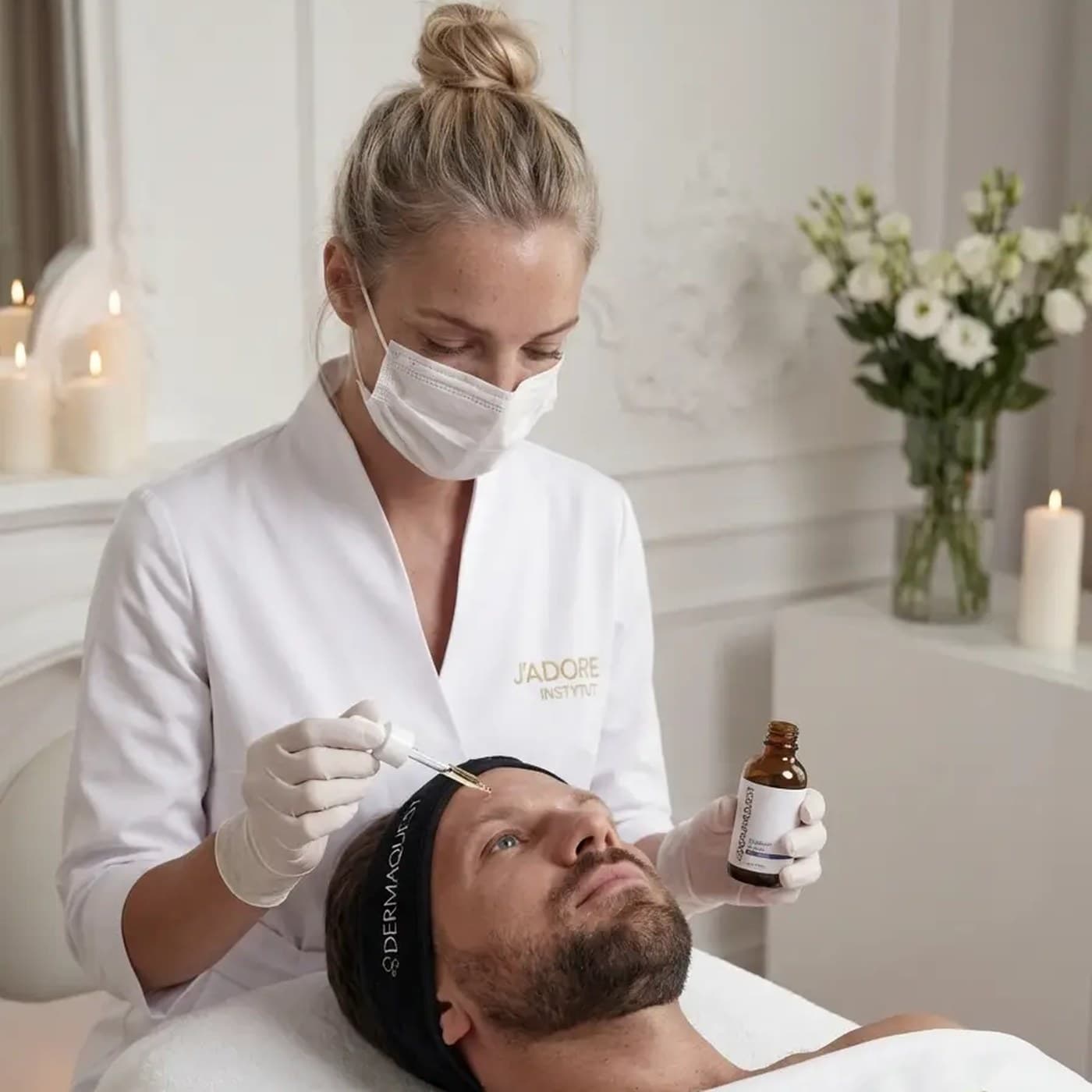
Neutralising / removing
the peel is neutralised or removed, following the product's protocol.
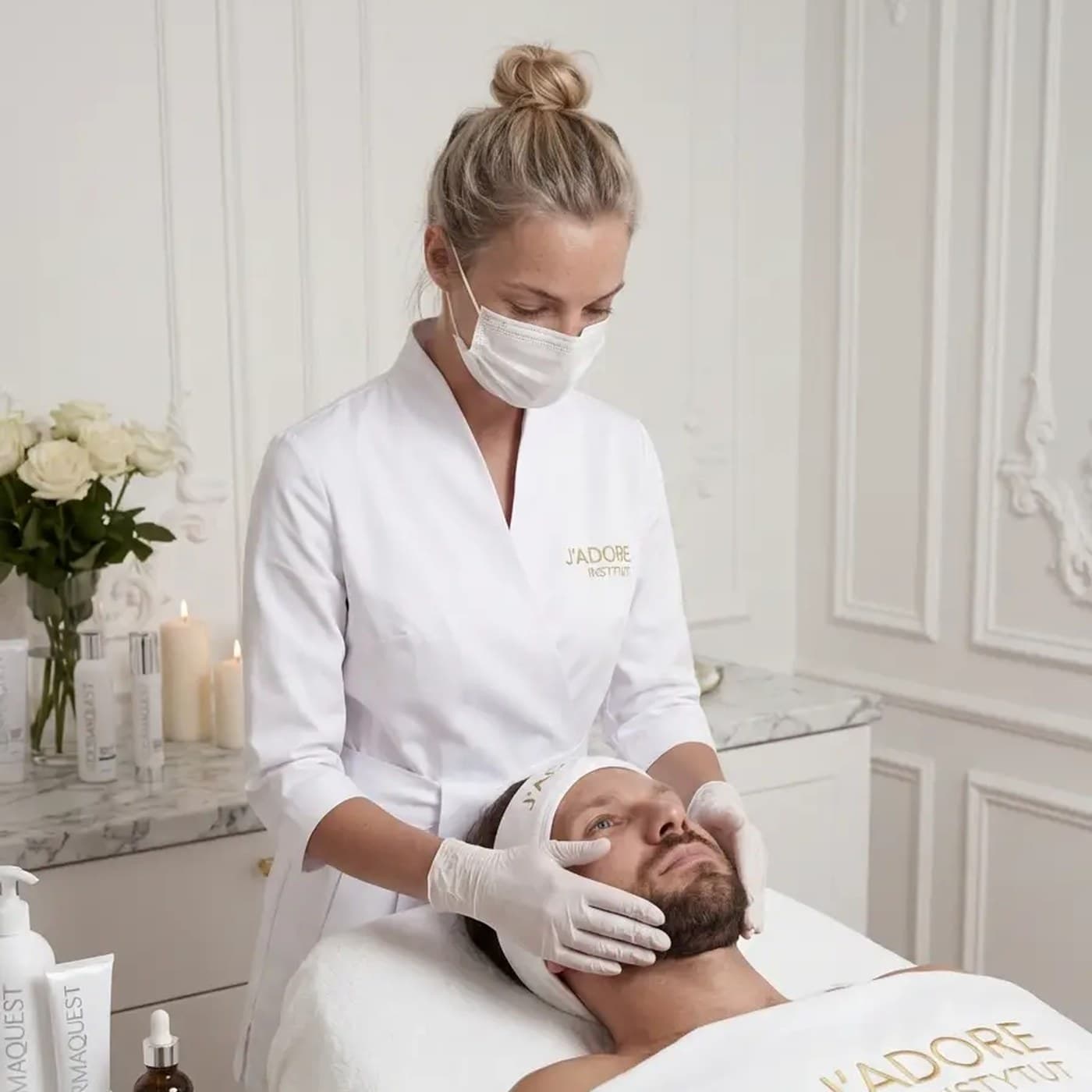
Soothing mask and SPF
a soothing, hydrating product, finished with SPF 50+. You'll receive written aftercare instructions.
I dose the azelaic peel according to the skin, not the price list. For very reactive, rosacea-prone skin, I take a more cautious approach on the first session — shorter exposure, fewer layers — to see how the skin reacts. Only in later sessions can I work more intensely. This isn't a peel you want to use to "go all in" on the first try.
Portfolio
A record of the work in our salons — the place where we publish treatment frames and, after photo sessions, results.
A record of results — in preparation. We publish photographs of our clients only with their consent.
What to expect
The key point: this is a gentle, superficial peel. Don't expect dramatic skin shedding. What usually appears is temporary redness and a feeling of tightness, and peeling tends to be light, sometimes barely visible — small, dry flakes, not large "sheets".
Does it sting? During application, you'll usually feel mild tingling, stinging or warmth — this is a normal reaction to the acid, controlled by your cosmetologist. Azelaic acid is one of the gentler peels, so sensations are generally well tolerated, even on sensitive skin.
Results don't appear "overnight". A refresh in skin tone can be visible after the first session, but real improvement in redness, visible capillaries and hyperpigmentation builds through the series and settles in with home care and consistent SPF use.
From the cosmetologist's chair
The most common disappointment after the first session is: "but I barely peeled at all". And that's a good thing! With rosacea-prone and vascular skin, we don't want heavy peeling — we want calm. Measure results by the series, and by how much less your skin flushes, not by how much "came off".
The peel and your lifestyle
With peels, most questions are about what comes after: sun, makeup, sauna, home acids, exercise, planned holidays. There's one rule — for the first few days, your skin is regenerating and more sensitive to UV, so sun protection isn't a suggestion, it's a condition for results.
This is the most important rule with any peel. After the treatment, avoid direct sun and sunbeds, and apply SPF 50+ daily for at least a few weeks. Without it, you risk post-inflammatory hyperpigmentation — the opposite of the intended effect.
With a superficial peel, makeup can usually be applied from the next day. On treatment day, let your skin rest. Your cosmetologist will give you precise guidance depending on your skin's reaction.
High temperatures, chlorine and sweat irritate freshly exfoliated skin and increase redness. Save sauna, pool and hot baths for a few days after the treatment.
Pause strong AHA/BHA acids and retinol in your home care routine until your cosmetologist allows them back. Using them right after a peel is a quick route to irritation.
Intense exercise and heavy sweating right after the treatment can sting and increase redness. Give your skin 1–2 days of calm, then you're back with no restrictions.
Sunbeds are out. Travelling into full sun during the series risks hyperpigmentation — mention your plans during the consultation, and we'll arrange the schedule so your skin isn't exposed during a critical window.
Azelaic Peel (DermaQuest)
"A peel for redness and hyperpigmentation" isn't a single tool. Azelaic DermaQuest, a stronger superficial peel, and a depigmentation protocol each do something different, and the choice is matched to the problem — sometimes they complement each other:
calms and evens
not an aggressive "resurfacing" treatment, won't remove deep scars or advanced melasma on its own
stronger exfoliation
can be too strong for very rosacea-prone, vascular skin — azelaic acid is a better choice there
targets stubborn pigment
this is a separate, intensive course — not a single refreshing peel
Combine with
The azelaic peel works best as part of a plan, not alone. Your cosmetologist decides the order and intervals during consultation, but the general logic stays the same — first we calm and strengthen, then we lock in the result:
If skin is mainly flushing and developing thread veins, I start with azelaic acid. If the issue is very oily skin with blackheads, I often reach for a salicylic or mandelic peel. And if it's stubborn melasma, a peel alone isn't enough — then we discuss a full depigmentation protocol (Cosmelan/Dermamelan). The choice isn't about "which peel is strongest" — it's about "which one suits your problem".
The product and its variants
The "azelaic peel" at J'adore is a specific product from the DermaQuest line, but you'll find a similar acid in other salon lines too. You don't choose the product "off the shelf" — your cosmetologist selects it based on your concern, skin reactivity and treatment area. Below are the main brands where this acid appears (ours: DermaQuest), and what actually differentiates the treatments:
An azelaic peel from a professional-only brand (since 1995): anti-inflammatory, regulating melanogenesis and sebum, strengthening blood vessels. Gentle, well tolerated by sensitive and reactive skin.
Dla kogoRosacea, visible capillaries, redness, post-inflammatory hyperpigmentation, reactive skin.
Another popular azelaic peel from the Spanish Sesderma/Mediderma line — the same "core" (azelaic acid), a different carrier formula and protocol. Available with us as a separate treatment.
Dla kogoAn azelaic-acid alternative — the choice depends on the cosmetologist's preference and how your skin responds.
The same product, different treatment area — from the face alone to face with neck and décolletage (where visible capillaries and hyperpigmentation also tend to appear).
Dla kogoFor when the problem doesn't stop at the face — the neck and décolletage flush and pigment too.
From the cosmetologist's chair
I often hear: "maybe go straight for something stronger than azelaic acid?" For skin that flushes and shows visible capillaries, stronger peels can be a mistake — they irritate and increase redness. I choose DermaQuest's azelaic peel precisely because it's gentle: it lets us work systematically, without "punishing" the skin.
Fact: Where do differences in strength and sensation come from? From the number of layers applied, the exposure time, and how your skin responds — not from the name on the label. Two azelaic peels using "the same product" can act differently, because your cosmetologist doses them differently for your specific skin. What matters is the choice, not "stronger = better".
Price list
Checking free hours…
From the magazine
Editorial pieces on how this treatment works in practice — what happens during the session, how to prepare, where the limits are and what the first days after look like.
See also
The result lastscumulative effect — builds and lasts with a series plus home careJ’adore Instytut
Informational text. The description above is for educational purposes and does not replace a consultation. DermaQuest Azelaic Peel is a beauty treatment (the word "medical" in the category name refers to the class of product, not to who performs it — this is not a treatment performed by a doctor). The choice of peel, its strength, the number of sessions in the series and any contraindications are decided by a cosmetologist/specialist during an individual consultation, following skin analysis.
Home care
Cosmetics matched to what your skin needs after a treatment — so the clinic effect lasts longer.
 capillaries and rednessMedidermaRedness Control A&A Sensitive Cream 50mlView in the shop(opens in a new tab)
 sensitive skinCell Fusion CLow pH CleanserView in the shop(opens in a new tab)
 sun protectionDermaQuestSunArmor SPF50 30 mlView in the shop(opens in a new tab)
 capillaries and rednessPeel MissionAza Gel 30 gView in the shop(opens in a new tab)
 sensitive skinSesdermaSERENITY mask 50 mlView in the shop(opens in a new tab)
 sun protectionSkeyndorProtective cream SPF 50+ – Age Photo DefenseView in the shop(opens in a new tab)
 capillaries and rednessMedik8Calmwise™ SerumView in the shop(opens in a new tab)
 capillaries and rednessVagheggiEmozioni Plus Soothing Mist 100ml — Soothing concentrated mist/tonerView in the shop(opens in a new tab)