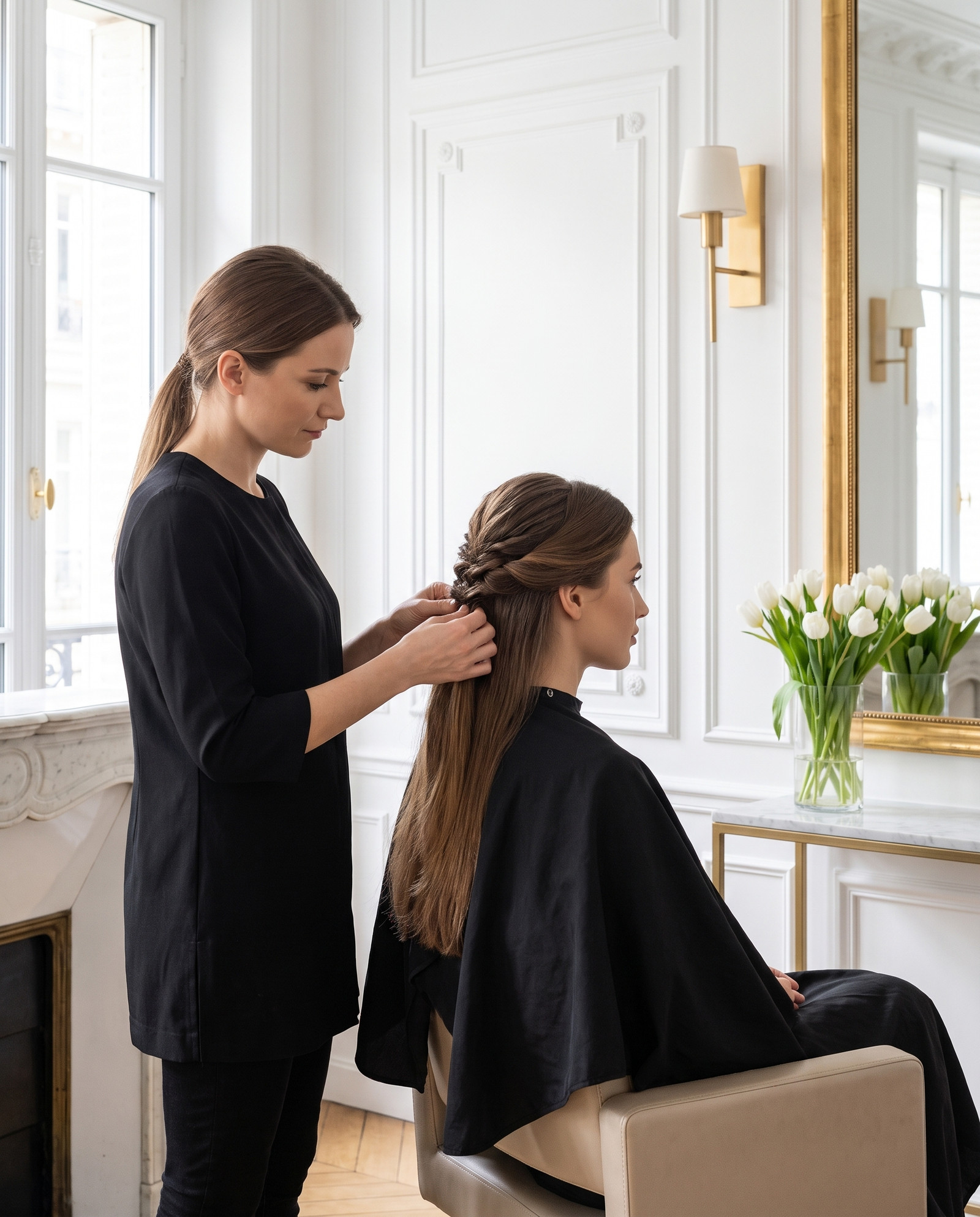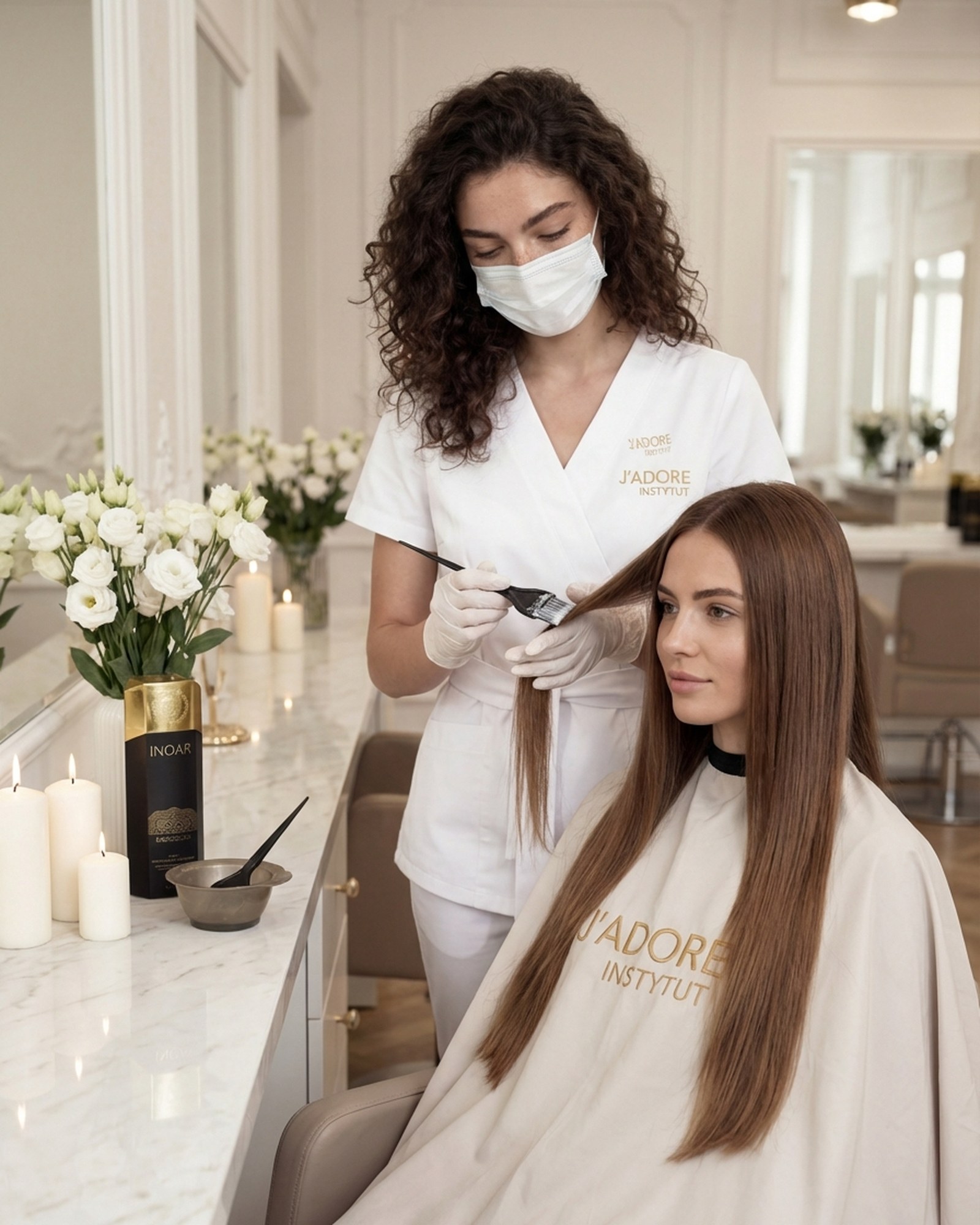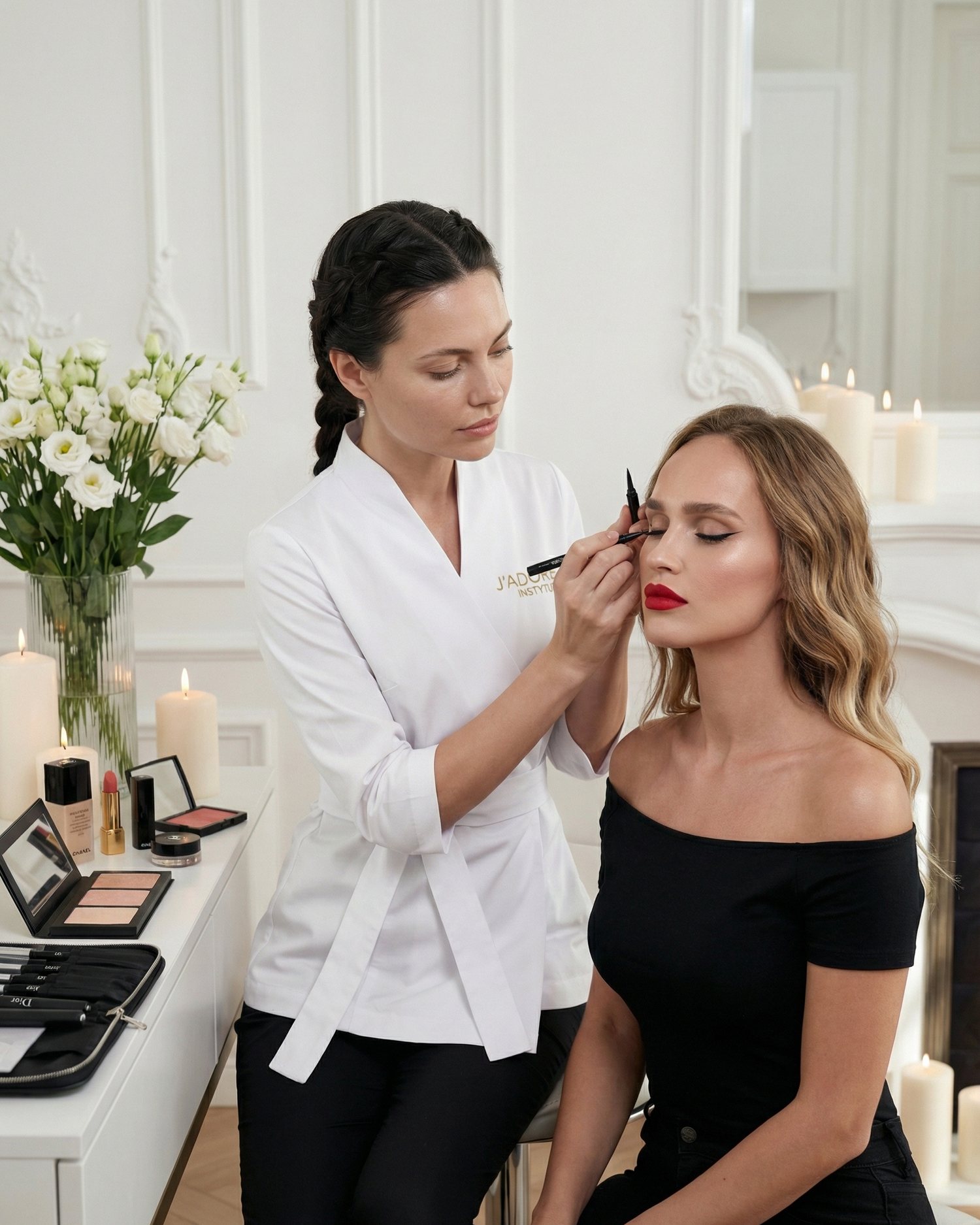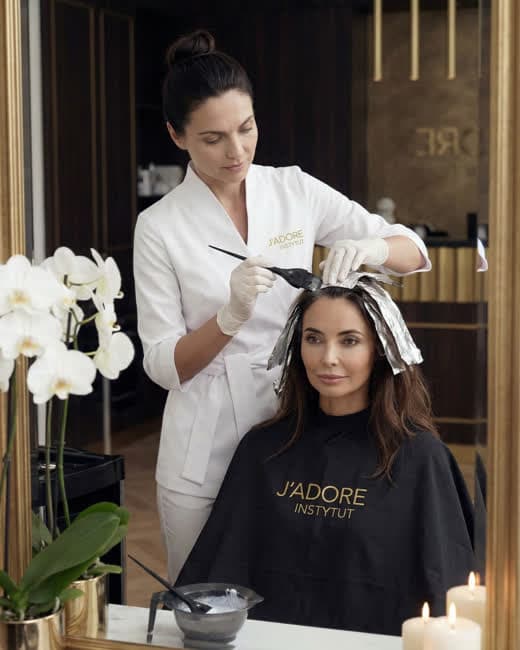
Hairstyle construction begins with an invisible base
Many people mistakenly assume that the durability of a hairstyle depends on the amount of hairspray used. In reality, an excess of styling products at an early stage only weighs the hair down, making it slippery and difficult to tame. A professional updo is primarily a well-thought-out architecture built on an invisible base. Instead of relying on chemical hold, the stylist builds a solid foundation upon which the entire structure rests.
Observing the stylist's work, you can notice a key moment: inserting hairpins in an opposing direction to each other. It is these small elements, hidden deep under layers of hair, that take on the entire weight of the hairstyle. When hairpins are inserted across the direction in which the hair pulls, they create mechanical locks that prevent the strands from shifting. Thanks to this approach, the finished updo does not look like a shell "drenched" in hairspray, but looks natural and soft.
- Building the base: strands gathered with an elastic band and precise placement of hairpins.
- Creating the form: arranging waves, buns, or braided details on the prepared scaffolding.
- Finishing: covering the construction with a top layer of hair to achieve the desired visual effect.
The difference between a hairstyle based on a solid construction and one that holds only thanks to hairspray is noticeable after just a few hours. An updo built on strand friction will survive emotions, dancing, and changing weather, maintaining its original shape from the first frame until midnight. At J'adore Instytut, we focus on technical hair preparation that allows you to avoid a stiff effect, prioritising durability and elegance in one.
A pre-wedding trial is the time for technical tests
On your wedding day, there is no room for random decisions. The trial is the most important stage of work, during which we turn visions from inspiration into technical reality. This is when we verify whether the chosen form will stand the test of time and movement.
- 01
Verification of accessories
We check how the veil or ornaments affect the construction. If the weight of the accessory changes the centre of gravity, we must move the anchor points of the bun so that the hairstyle does not sag.
- 02
Movement test
We verify that the updo does not interfere with the neckline of the dress. When turning your head, the hair must not catch on decorations or straps, which could disrupt the structure of the braids.
- 03
Durability check
We observe how the hair reacts to the fixing technique. After three hours, we check whether the strands maintain the given shape or whether they require a change to stronger or lighter products.
During the meeting, we test 1–2 variants of the updo, taking into account your facial features and hair type. This is the moment when we check how long the hairstyle "sits" and whether the chosen technique does not excessively strain the scalp. Thanks to this, on the day of the event, we know exactly how much time to reserve for preparations, eliminating haste and stress.
- Why is a trial so important with a veil?
A veil has its own weight, which changes the tension of the hair. During the trial, we check whether the base of hairpins will withstand this load without the construction shifting.
- Does the hairstyle have to look perfect all day after the trial?
The trial is for technical tests. We check how the hair reacts to fixing and whether the braids remain in place, which allows us to rule out any surprises on the wedding day.
Braids require appropriate hair density
Braids and braided details are one of the most common choices when creating romantic updos. However, for the braid to look aesthetic and not reveal gaps, the stylist must precisely match the technique to the natural density of the hair. Pulling strands too loosely on thin hair can make it look thinner, so the key is to properly prepare a base that will give the hairstyle volume without the need for excessive tension on the hair structure.
Thick hair
- Allows for the creation of elaborate, multi-layered braids
- Holds its form well without additional stiffening
- Possibility of creating loose, soft braids
Thin hair
- Requires the use of texturising sprays for grip
- Looks better in compact, precise braids
- Risk of gaps if strands are pulled too strongly
The comfort of wearing a hairstyle depends on how tightly the strands are pulled during braiding. Pulling the braids too tightly not only strains the scalp but can lead to discomfort throughout the many hours of the event. The stylist always strives for balance: the braid must be stable enough to survive dancing, but loose enough not to cause tension on the hair follicles. It is worth remembering that regular, very tight styling of hair in the same way can be taxing for it.
Makeup and hairstyle must talk to each other
A big event is not just hair or makeup; it is a coherent whole. A common mistake is treating these two elements as separate projects. If you decide on a strong, evening updo with a lot of volume and choose very delicate, almost daytime makeup, the proportions of your face may be distorted. A hairstyle with a distinct form can visually dominate your features, making subtle makeup almost invisible in photos.
Harmony of lines
When planning a hairstyle, we take facial contouring into account. If the makeup artist has strongly emphasised the cheekbones or jawline, we avoid falling strands that could hide these effects.
Balance of ornaments
When inserting a comb or a wreath, we check the jewellery. Earrings that are too large combined with a richly decorated hair clip create visual overload that distracts from your face.
Joint planning helps avoid chaos. The hair stylist and the makeup artist should know what the final effect is. If the hairstyle is to be smooth and minimalist, the makeup can afford a stronger accent, for example on the lips. Conversely, for romantic, loose braids, a luminous finish to the complexion works better.
The condition of the scalp determines the comfort of wearing an updo
The comfort of wearing an updo starts long before your visit to the salon. Although the technical side of the hairstyle relies on hairpins and elastic bands, the condition of your scalp determines how you will feel during the hours of the party. If you notice irritation, redness, or an active inflammatory state a few days before the event, do not ignore these signals. Tight, precise pinning of hair with hairpins that must keep the construction in check can further exacerbate the ailments and make you feel discomfort instead of enjoying the moment.
In situations where the skin is sensitive, it is worth giving up tight, smoothed hairstyles in favour of looser forms that do not require strong pulling of strands. The stylist can always suggest an alternative that will relieve the skin while maintaining the elegant character of the styling.
- Avoid intensive oiling of the scalp immediately before the visit so as not to weigh down the roots of the hair.
- Refrain from applying heavy masks to the entire length of your hair on the day of washing before the visit — overly slippery strands make working with hairpins difficult.
- If you have sensitive skin, inform the stylist about it before starting work so that they can choose a more delicate fastening technique.
- Should I wash my hair immediately before the visit?
It is best to wash it in the morning or the evening of the previous day, using a silicone-free shampoo. Hair that is not too slippery works much better with a base of hairpins, which translates into the durability of the hairstyle.
- Can I have an updo with fresh colouring?
Yes, but always let the stylist know. Freshly dyed hair may have a different structure, and the scalp after a chemical treatment can be more prone to irritation when pinned tightly.
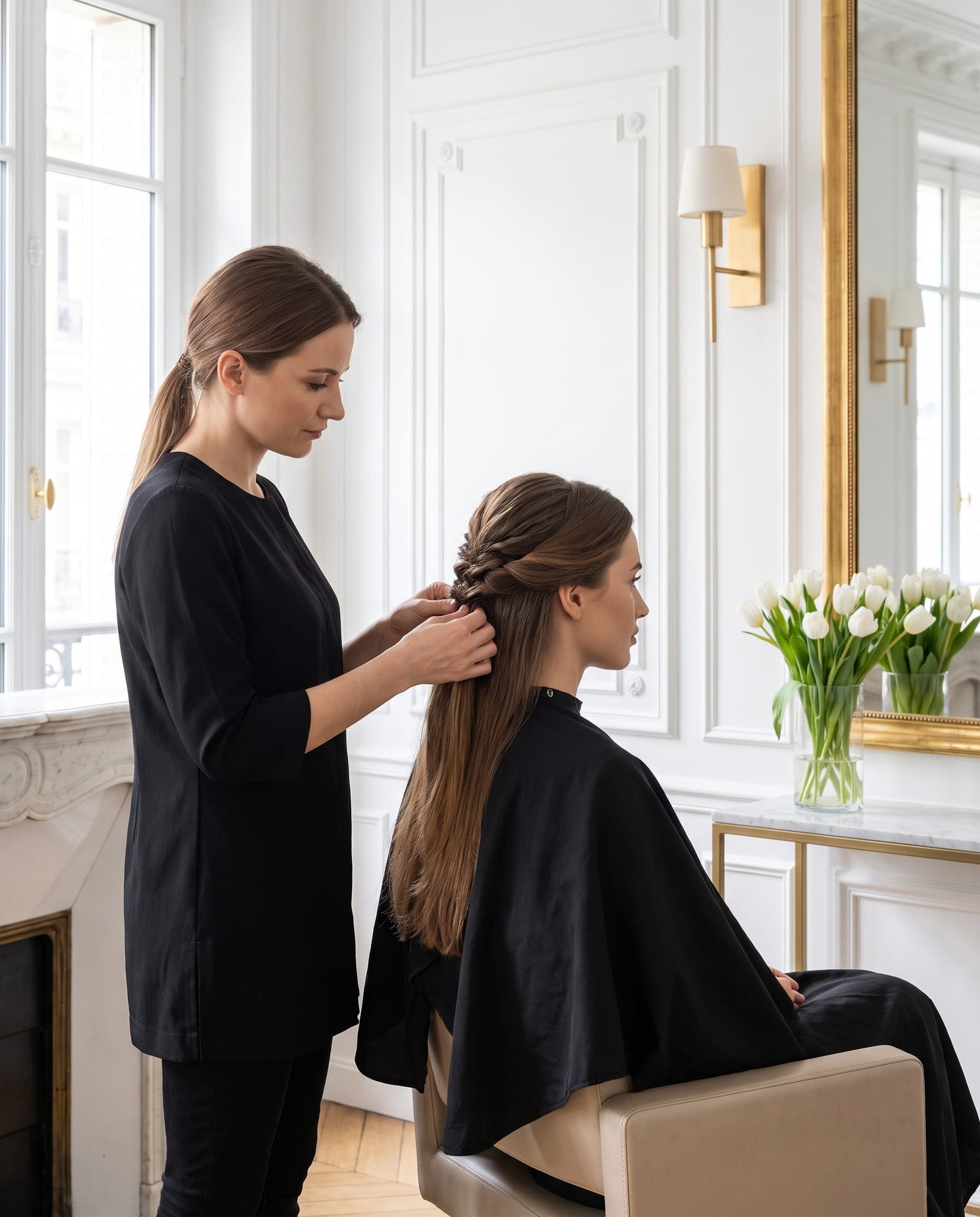
The duration of the treatment depends on the complexity of the form
The time required to prepare an occasion hairstyle is not a fixed value. It depends directly on the complexity of the form you choose. Although it may seem that a simple, smooth updo is created instantly, in reality, it requires extraordinary precision so that every hair lies perfectly in its place without unnecessary weighing down with styling products.
Smooth 'sleek' bun
- Minimalist form
- Requires perfect smoothing
- Focus on the purity of the line
Updo with braids
- Multi-layered construction
- Time-consuming braiding
- Requires precise anchoring
Elaborate hairstyles that feature braids, braided details, or complicated updos using a veil require much more time. Each element must be secured inside an invisible base so that the whole survives hours of emotions. Therefore, even if you are planning a seemingly uncomplicated hairstyle, it is worth reserving enough time in your calendar for the first visit. This allows the stylist to calmly prepare the hair, apply the necessary heat-protective preparations, and finally fix the form without haste.
- Book your appointment well in advance, especially during the wedding season and during proms.
- Plan the trial a few weeks before the date of the event to check how your hair reacts to the chosen technique.
- On your wedding day, avoid haste — haste is the enemy of durability because it makes it difficult to precisely build the hairstyle construction.
- Come to the trial with your makeup and accessories ready so that the stylist can match everything to your styling.
Planning the morning on the day of the event should include not only the process of styling itself but also time for any touch-ups or inserting ornaments. Haste makes it harder to stay calm, and the technical aspects of the updo, such as the appropriate tension of hairpins or even distribution of the hairstyle's weight, require focus. Remember that a well-executed hairstyle is not just a visual effect, but above all a solid construction that is intended to last from the first frame until the last dance.
Taking care of your hairstyle after leaving the salon is an art of moderation
When you leave the stylist's chair, your hairstyle is ready for the challenges the day will bring. An updo that will last for many hours does not rely on "cementing" the hair with hairspray, but on a solid, internal construction of hairpins and elastic bands. Nevertheless, maintaining an impeccable look until the last beat of music requires a conscious approach from you. The most important rule is moderation in interfering with the finished form.
If during the party you notice that a single strand is starting to slip out, stay calm. Attempts to fix the hairstyle yourself often end up making the situation worse because you cannot see exactly where the anchor points are. If you must react, do it gently, sliding the strand towards the base instead of tugging at the whole thing. Remember that a slight loosening of the braids after a few hours of dancing is a natural process that often adds the desired softness to the hairstyle.
Weather also poses a challenge, especially if the event takes place in a garden or in a humid environment. Humidity is the main enemy of durability because it makes the hair heavier and tends to make it return to its natural structure. To minimise the risk, it is worth remembering a few steps:
- Avoid direct contact with fog or rain; an umbrella is your hairstyle's best friend.
- If you feel that your hair is starting to lose volume, do not use random styling products that could weigh down the strands.
- Trust the construction that the stylist has prepared — the invisible base of hairpins inserted in an opposing direction has been designed to keep the whole thing together even in more difficult weather conditions.
Remember that an updo is a project that is meant to work with you. Instead of checking every strand in the mirror, focus on the event. A well-executed base, properly secured with heat-protective spray and light hairspray, is durable enough for you to enjoy freedom of movement without constant fixing.