Four methods, four different logics
Before we get into the details, remember one simple rule: the method should suit your hair and lifestyle — not the other way round. Each of the four techniques has its own unique attachment mechanism, and this determines how long the result lasts, how much it weighs on your hair and what daily care looks like.
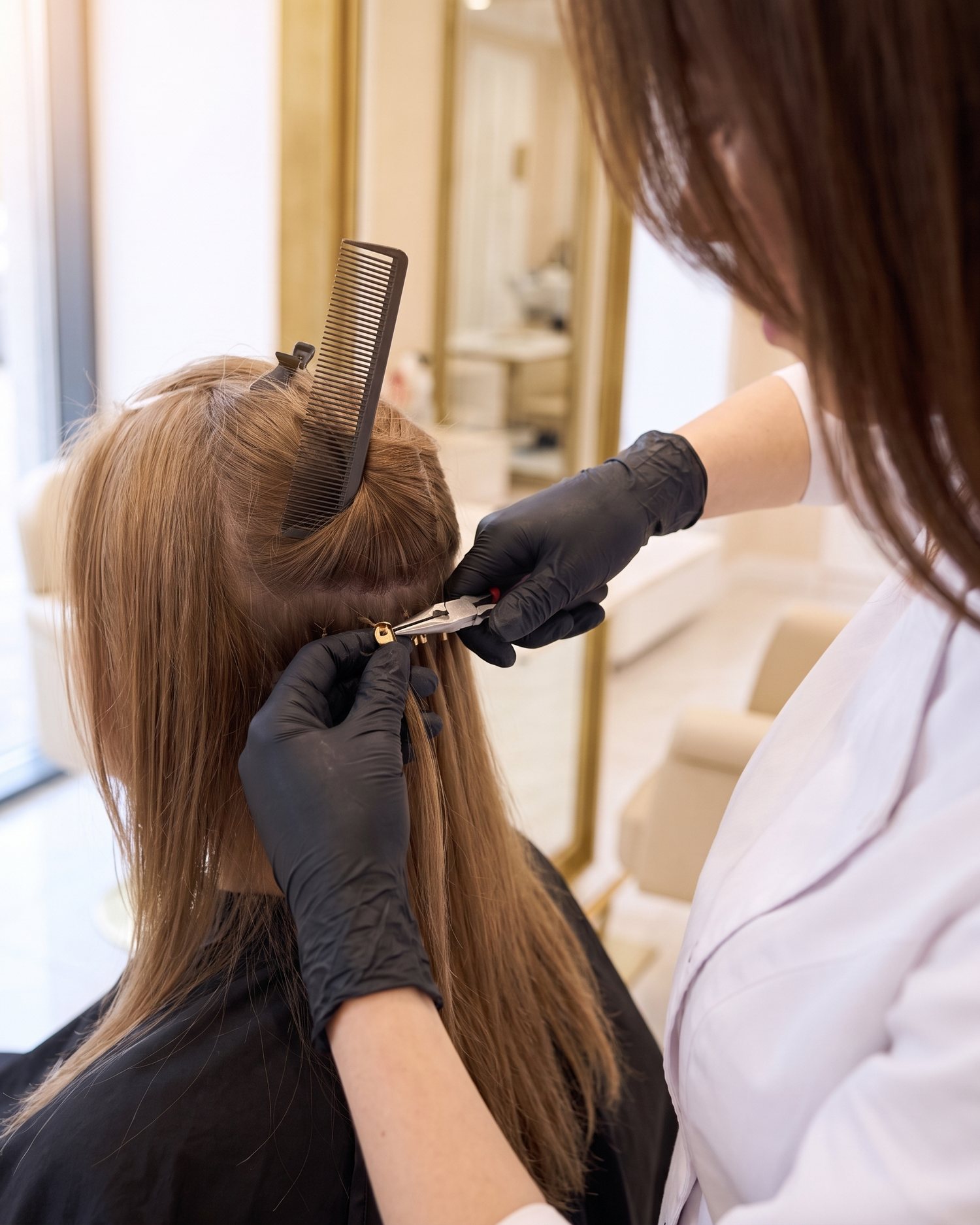
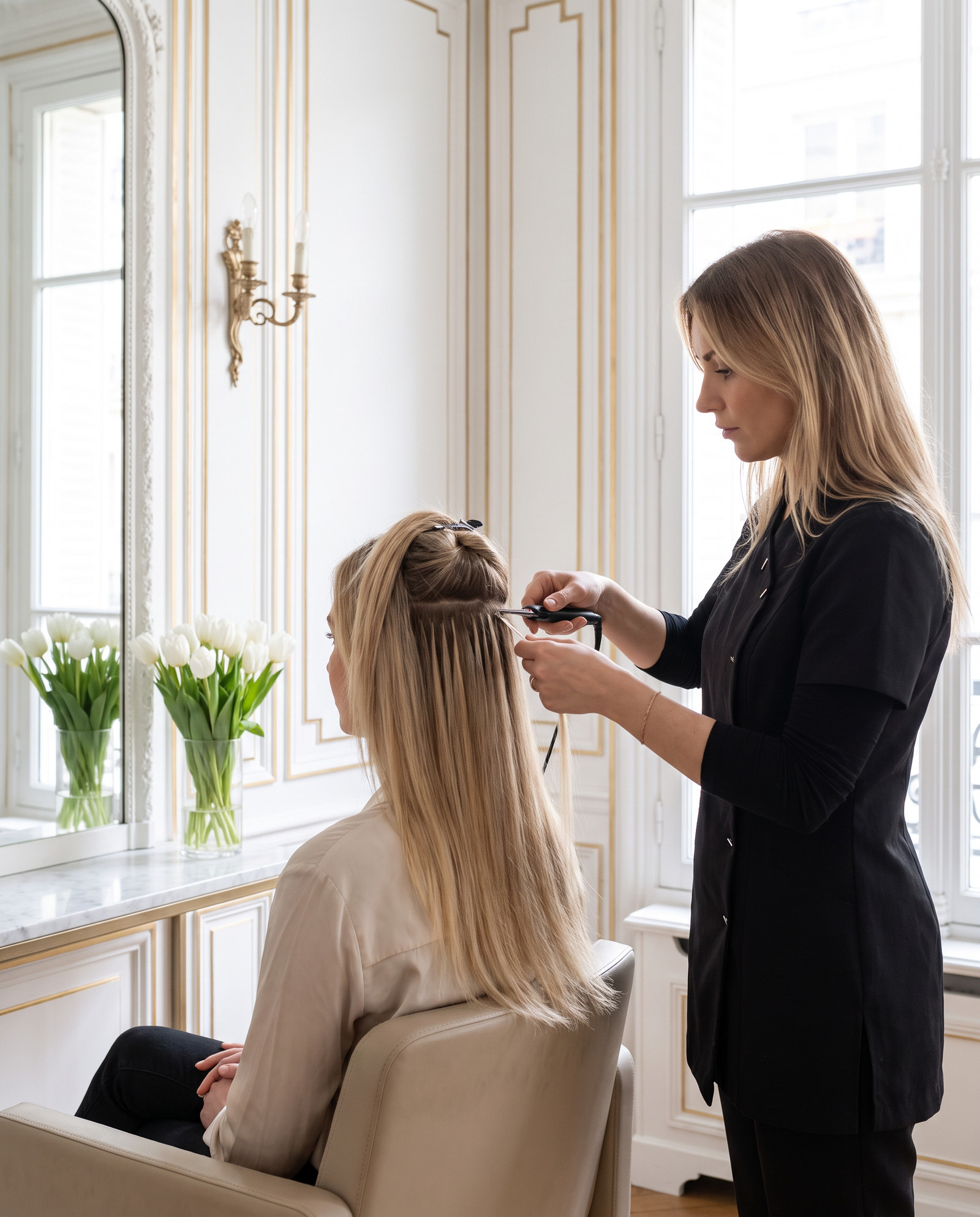
Keratin (hot fusion)
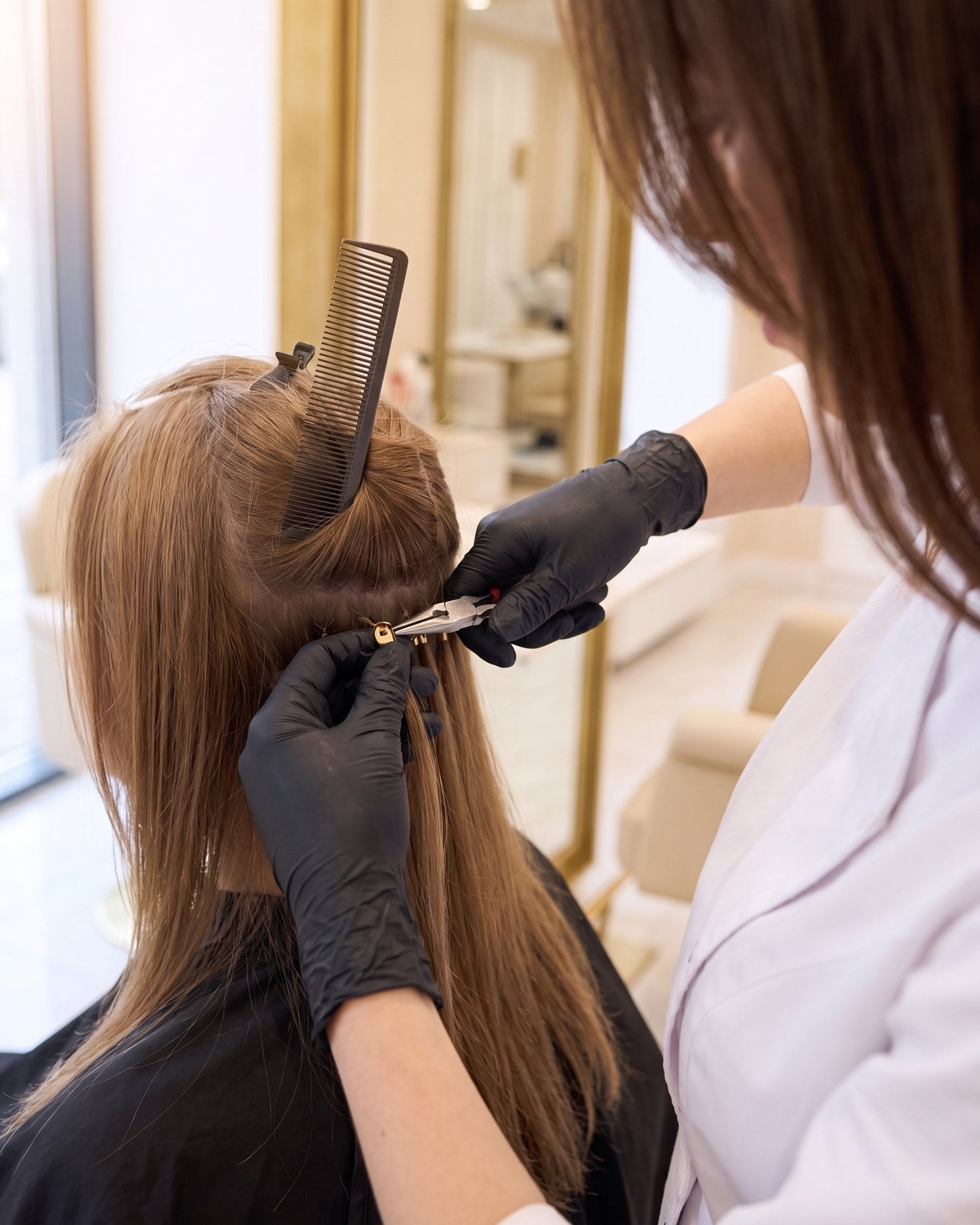
a traditional point-by-point bonding method
- fused with special tongs at high temperature
- a very durable bond — can last several months
- invisible when applied correctly
- works well on fine and normal hair
Tape-ins
a fast method for whole sections of hair
- flat wefts attached on both sides of the natural hair
- one of the fastest fittings among all techniques
- a good option for thickening — adds volume
- suitable for many hair types
Micro rings (micro ring / micro loop)
a non-invasive method — no glue, no heat
- attached with metal or silicone rings — no glue involved
- require neither heat nor adhesives
- hold up well through standard care, including washing
- easy to adjust and remove
Nano bonds (nano ring)
a gentle method for the finest hair
- miniature rings — much smaller than micro rings
- the optimal solution for delicate and fine hair
- very discreet — hard to see and hard to feel
- the bond is lighter and puts less strain on the hair
How to match the method to your hair
The best starting point isn't "what's trending" but a quick look at a few features of your own hair. It only takes a moment, and it sets the consultation off in the right direction from the start:
- Fine, weakened hair — nano bonds or tape-ins are usually gentler; hot keratin can be too heavy.
- Normal or thicker hair — most methods can work well; micro rings are often a comfortable compromise.
- Active lifestyle (sport, swimming, sauna) — micro rings and nano bonds handle moisture better than tape-ins; with keratin, it's worth asking your hairdresser first.
- You often wear your hair up (bun, ponytail) — tape-ins can be visible when hair is tied up; micro rings and nano bonds are more discreet in this context.
- You want a quick result — tape-ins have one of the shortest fitting times; nano bonds are usually the most time-consuming.
What really determines how long the result lasts
Durability is a topic where expectations often diverge from reality. Every method follows a natural cycle rooted in biology: hair grows from the root, which means that after a few weeks the bond "moves away" from the scalp and needs a touch-up — no matter how perfectly it was fitted.
- 01
Consultation & preparation
Assessment of hair condition, choice of method and colour matching for the strands. Often an underrated step — but one that decides the final result.
- 02
Fitting
Depending on the method and number of strands — from tens of minutes to several hours. Nano bonds usually take longer than tape-ins.
- 03
The first few weeks
An adjustment period: your hair gets used to the weight of the strands, and you get used to a new care routine. A slight feeling of tension may appear and then fade.
- 04
Touch-up (moving up)
Regular repositioning or reattaching of the bonds. Tape-ins need this most often; nano bonds — less often, though it depends on how fast your hair grows.
- 05
Removal
Extensions removed by your hairdresser — always gently, using the right products. Restorative aftercare is recommended once they're removed.
Four variables affect durability: the attachment method, how fast your own hair grows, the quality of the strands used and daily care. The last one is often underestimated — but unsuitable products (for example, silicones that coat keratin, or oils near the bonds) can shorten the results by several weeks.
When it makes sense to combine approaches
Extensions and thickening aren't always about choosing a single technique — sometimes it's about deliberately using several approaches over time or across different parts of the head. The logic is simple: your goal and hair condition can change along with your lifestyle. What works as your first set of extensions may not be what you choose a year later.
Tape-ins to start + keratin once your hair has conditioned
Tape-ins as an entry point into extensions (faster fitting, easier removal), then moving on to keratin once the hair is stronger.
Nano bonds for fine hair + a strengthening course alongside
A gentle method paired with regular keratin or protein care — extensions don't have to conflict with hair recovery.
Micro rings for thickening + a colour touch-up
Rings don't require heat, so they work well alongside a planned colour change. Your hairdresser can update the colour of the strands during a touch-up appointment.
A good hairdresser doesn't sell you a technique — they suggest a plan matched to your hair, your lifestyle and the result you want. If, on first contact, all you hear is "we do keratin here", with no questions about your hair condition or lifestyle — it's worth looking for a salon that takes the consultation seriously.