What is the Bohr effect — before we move on to the myths
To debunk myths sensibly, you first need to know what we are talking about. Christian Bohr was a Danish physiologist who, in 1904, described the relationship between carbon dioxide concentration in the blood and the ability of haemoglobin to release oxygen to tissues. In simple terms: the more CO₂ accumulates in the tissues, the more readily haemoglobin releases oxygen from its grasp and delivers it where it is needed. This is a purely internal mechanism — it occurs in the blood and blood vessels, without any external input.
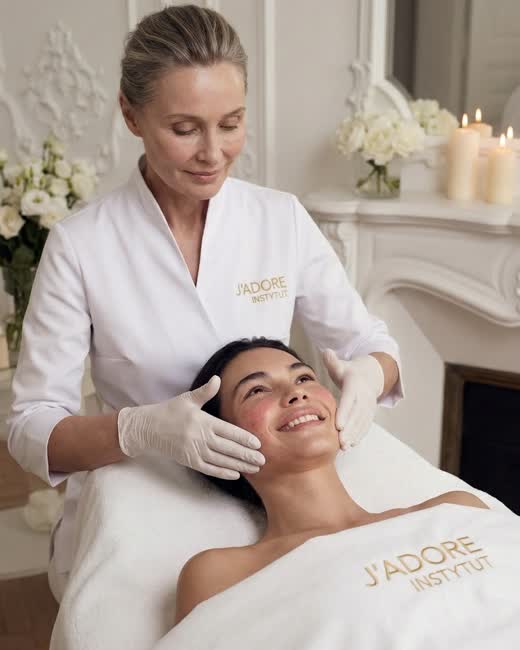
OxyGeneo uses this principle in the following way: the device head applies a capsule tablet to the skin, which reacts with a gel to produce CO₂ bubbles. The skin "sees" a sudden increase in carbon dioxide concentration at its surface and — in accordance with the Bohr effect — the blood vessels underneath react, delivering more oxygen from the blood to the tissues. Not from the outside. From your own blood, through your own vessels. This is exactly what makes the mechanism real. And this is also the point where most misunderstandings arise.
Five myths — one by one
Myth 1: "We oxygenate the skin from the outside — oxygen enters through the pores like a gas balloon." This is the most common simplification and the biggest misunderstanding at the same time. The Bohr effect does not involve pumping oxygen from the outside. The mechanism works the other way around: CO₂ produced by the capsule reaches the skin and signals to the blood vessels underneath that the tissues need more oxygen — and they react by increasing its local delivery from the blood. The oxygen that "enters" the cells comes from haemoglobin, not from the air or any bottle. This is a subtle but fundamental difference.
Myth 2: "It is the same as oxygen in a tube — like active oxygen creams." Cosmetic products with "active oxygen" work by directly delivering an oxidised substance to the skin's surface — this is a different chemical mechanism, working at a different depth and for a different duration. The Bohr effect in Geneo is a physiological vascular reaction that occurs inside the skin. Comparing them is like comparing a neck massage with a painkiller applied to the forehead — both may help with a headache, but for different reasons and in different ways.
Myth 3: "The Bohr effect in cosmetology is a marketing invention — the phenomenon does not exist." The phenomenon exists — it is described by over a hundred years of physiology and is a foundation of sports medicine, anaesthesiology and intensive care. The question is not: is the Bohr effect real, but: how strongly and how deeply does it work in a cosmetic context. And here the answer is honest: it is an area of active research. Available data indicate an improvement in microcirculation and tissue oxygenation after a Geneo treatment, but the scale of this effect depends on the individual biology of the skin, its condition and the number of sessions. There is no guarantee of a specific result here — there is a mechanism with a real, but variable effect.
Myth 4: "One Geneo treatment will replace a course — results are visible immediately and forever." The improvement in colour, smoothing and radiance that many people see after the first treatment results mainly from a temporary improvement in microcirculation and oxygenation, as well as from the cleansing and hydrating effect. This is real — but short-lived. Long-term effects, such as improvement in skin structure, deeper stimulation of collagen synthesis or evening out hyperpigmentation, may appear after a series of sessions, not after one visit. In fact, this applies to almost every cosmetic treatment — the skin does not "repair itself" in an hour.
Myth 5: "Geneo is for everyone — it is gentle, so it is safe for all." Geneo is indeed considered a gentle and well-tolerated treatment, without a distinct healing period. But "gentle" does not mean "without contraindications". Active inflammatory lesions, reactive skin, allergy to product ingredients, certain vascular diseases, pregnancy, active skin infection — these are situations where the treatment may not be appropriate or should be modified. Every good cosmetologist conducts an interview before the treatment precisely because "gentle" is not the same as "for everyone without exception".
What Geneo really does to the skin
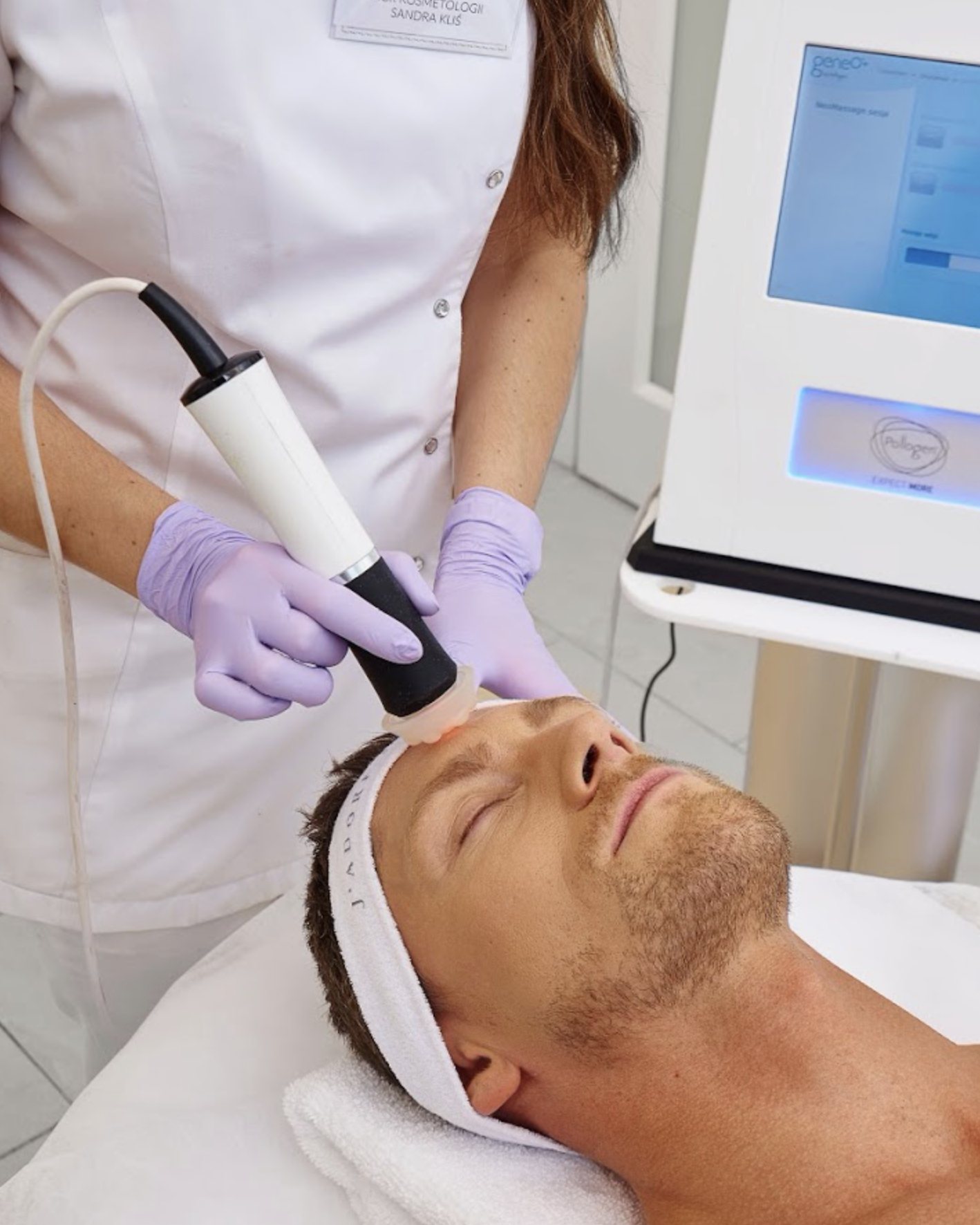
Let us put the Bohr effect aside for a moment and see what happens in a Geneo treatment simultaneously with the CO₂ mechanics. The device head also acts as a gentle oxygenating peel — it exfoliates dead epidermal cells and prepares the skin for deeper penetration of active ingredients from the gel. These ingredients — depending on the chosen protocol — can have a hydrating, brightening, anti-ageing or anti-acne effect. Added to this is the effect of vascular massage and the physical stimulation of microcirculation by the application of the head itself.
In other words: even if someone wanted to question the scale of the Bohr effect in a cosmetic context, the remaining components of the treatment have their own independent justification. Cleansing, hydration, stimulation of microcirculation and the application of active ingredients are four things that bring a noticeable effect for many people — regardless of how deeply we are convinced about the CO₂ mechanism.
Who is Geneo really a good choice for
The question of who will benefit most from Geneo is more important than settling the dispute over the mechanism. Because the treatment has its own specific profile — and it is worth knowing it before you book.
Geneo works particularly well for people whose skin looks tired, grey or lacks radiance — regardless of whether this is the effect of stress, lack of sleep, urban smog or natural changes with age. For some clients, the skin seems more radiant and "livelier" after just one treatment. The treatment is also often chosen as preparation before an important event — a wedding, a photo shoot, a congress — when you want a quick refresh. Allow enough time before the event for any redness or peeling to settle.
Geneo can also be a valuable element of supplementary treatments. As a microcirculation stimulant and a cleansing element, it combines well with treatments that work deeper — mesotherapy, biostimulators or PRP. It does not replace them, but it can strengthen the environment in which they work: better oxygenated, cleansed and hydrated skin reacts more fully to active ingredients. That is why Geneo appears in salons both as a standalone series and as an element of a comprehensive protocol.
It is also worth speaking directly about when Geneo is probably not the best choice. If your main concerns are deep static wrinkles, significant volume loss or advanced hyperpigmentation — Geneo may improve them slightly, but it will not be an adequate tool to address them. In such situations, a conversation about mesotherapy, biostimulators or laser methods will bring a better effect of matching expectations to possibilities.
The issue of gender in the context of Geneo is simple: the treatment is well-tolerated by the thicker, seborrhoeic skin typical of men, and the effect of cleansing and microcirculation improvement is often even more visible in men than in women — precisely because the skin is denser and less regularly subjected to care. Men who come to Geneo for the first time are often surprised at how clearly the skin differs before and after. It is not about a "treatment for women" — it is about physiology, which knows no gender.
How to put all this into a sensible decision
The Bohr effect is a real physiological phenomenon, and Geneo has a real mechanism of action. But between "the mechanism exists" and "this treatment will change your skin in exactly the way the advertisement promises" — there is a gap that an honest specialist should fill with a consultation, not with guarantees. A well-chosen treatment is one that responds to the specific needs of specific skin, not one that sounds best in a description.
If your skin looks tired, needs cleansing and refreshing, and you are looking for something without a healing period — Geneo may be exactly what you are looking for. If you have deeper care needs, it is worth talking about combining it with a more targeted protocol. The answer to this question is not on the internet — it is at a consultation, where a specialist sees your skin and hears what you expect.