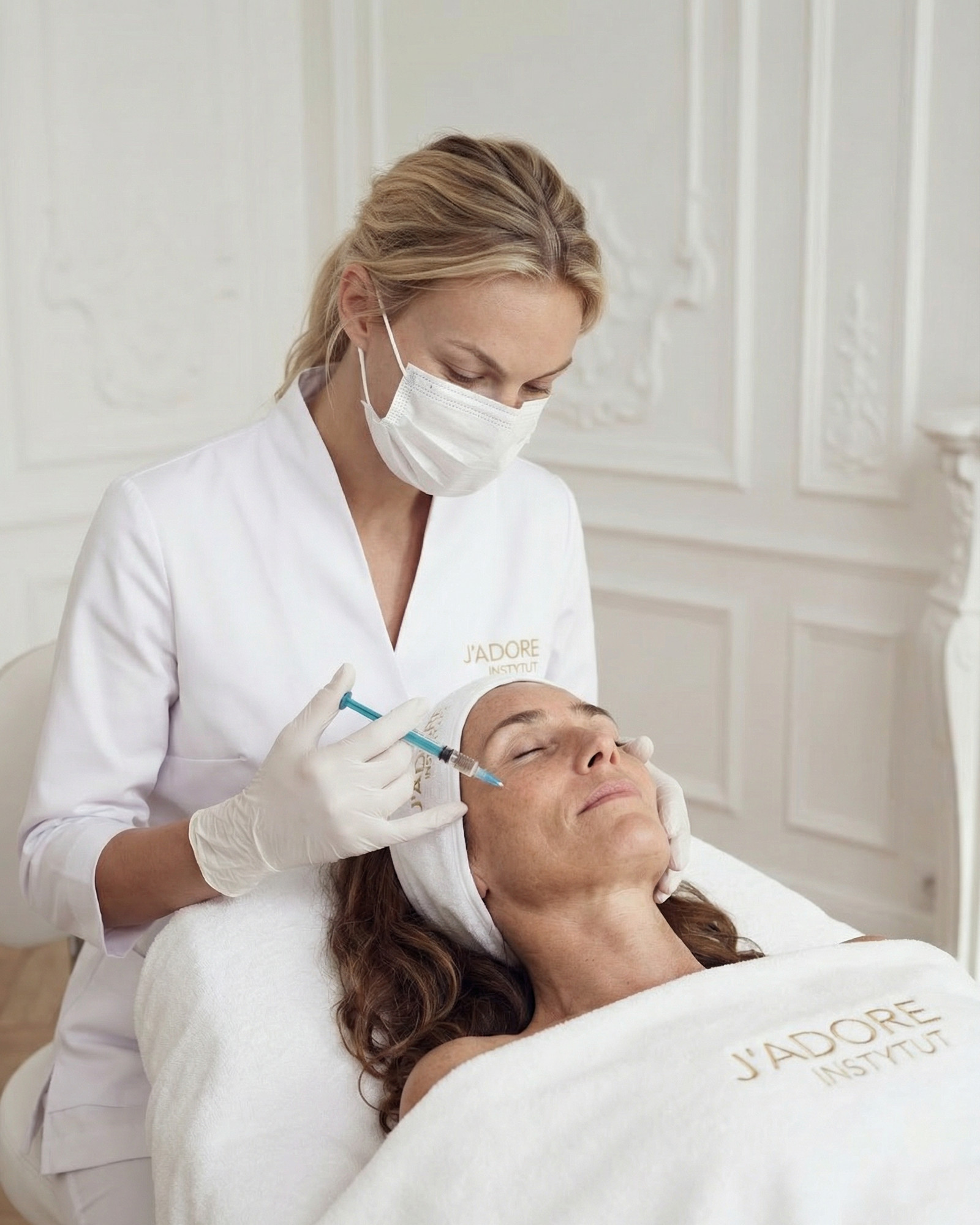
The initial effect should be broken down into the preparation, the procedure and the photo conditions
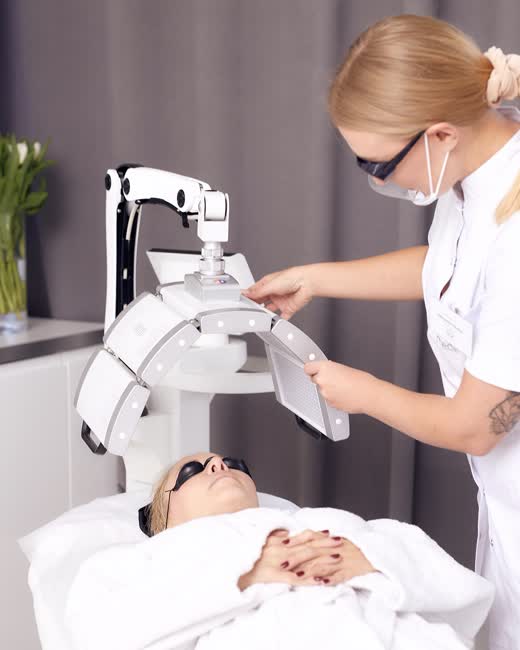
Exosomes are usually used as part of a procedure, not in a vacuum. The skin may have been prepared beforehand with microneedling, a fractional laser or another technology. Each of these methods triggers a reaction itself and can influence texture and healing. Added to this are the serum, the post-treatment cream and the change in light reflection from a hydrated surface.
None of these elements is a deception in itself. The problem begins when an immediate image is described as proof of long-term regeneration. To attribute a change to the preparation, a comparison with a procedure performed without it or with another well-described control is needed.
The first few days tell us about tolerance, not skin remodelling
In the first few days, you primarily observe healing after the delivery method. Redness, burning, swelling, dryness or pinpoint marks describe the intensity of the microneedling or laser more than the "action of exosomes". The preparation may influence comfort and the regeneration process, but a photo without a control group does not settle this.
- 0–24 h
The post-procedure reaction dominates
Skin colour, warmth and firmness depend on the needling, energy, cosmetics and individual reactivity.
- 2–4 days
We assess the calming process
We check if redness and discomfort are fading; we do not yet announce changes in wrinkles or density.
- End of the week
The surface returns to its rhythm
You can assess tolerance and appearance after some of the reaction has subsided, still with caution regarding the effect of the skincare.
- Subsequent weeks
Only then do we compare quality parameters
Hydration, elasticity, texture or pigment are assessed at a set time and under the same conditions.
Studies suggest short-term improvement in several features, but they do not create a single answer
A systematic review of human studies gathered signals of short-term improvement in, among others, hydration, elasticity, wrinkles, pores, pigmentation and general appearance. The authors did not perform a joint meta-analysis due to the high diversity of protocols, and most studies were not randomised.
What supports cautious optimism
early clinical data
- studies performed on human skin
- measurements of hydration and elasticity
- assessment of texture and skin tone
- protocols combined with microneedling or energy
- often favourable topical application profile
What limits certainty
methodological shortcomings
- small and unrepresentative groups
- lack of randomisation in most papers
- different sources and characteristics of products
- different delivery procedures
- short observation and little long-term data
The result "exosomes improved hydration" does not mean that any product will give the same result. You must check whether the tested preparation corresponds to the one offered in the clinic in terms of source, purification, particle count, storage and route of application. A matching category name is not enough.
Hydration and smoothness can be assessed faster than density or wrinkles
Surface parameters react faster to skincare and barrier changes than deeper structures. The skin may become softer, less rough and reflect light better before any signs of long-term remodelling appear. This is a real improvement in comfort, but it should not be called new collagen without measurement.
- Hydration is assessed at a similar temperature, humidity and skincare routine.
- Texture is photographed without makeup, filters and side lighting changed between visits.
- Pores do not "close"; you can assess their visibility under repeatable conditions.
- A dynamic wrinkle changes with facial expression, so it requires an identical position.
- Elasticity is best measured with a tool, not just by the touch of the person performing the treatment.
One series does not yet answer how long the change will last
Short observation may show improvement during the time when changed skincare is still working, healing after needling is ongoing, or the participant is particularly careful about the sun. To speak of durability, you need to see what happens after the entire protocol is finished and the usual rhythm returns. In exosome studies, long-term data is much more modest than marketing descriptions.
- Starting point
Measurement before changing skincare
Documentation is created before serum, the base treatment and recommendations change hydration and light reflection from the skin.
- After the procedure
Assessment of safety and tolerance
Erythema, swelling and comfort describe the first few days; they are not a measure of lasting rejuvenation.
- After the series
Assessment of the planned parameter
We compare the previously selected goal, rather than choosing the feature that happens to look better after the fact.
- Late follow-up
Checking durability
Only a follow-up after a longer interval shows whether the improvement lasts without a continuous accompanying procedure.
Lack of late follow-up encourages the selection of the best moments: the photo is taken when the skin looks most favourable, and the subsequent decline disappears from the narrative. Set the assessment date before starting the series and do not move it just because an earlier frame is more impressive.
Short-term safety does not determine the effects of every source and every batch
Many papers report good tolerance of topical application, but the category is heterogeneous. A different biological source, purification method, excipients, impurities and storage conditions can change the product profile. Lack of reaction in a small group in a short study does not prove the safety of all formulations.
The promise of "no risk because it is cellular communication" is a false shortcut. Biological origin does not automatically mean indifference, and a scientific term does not replace quality control. The less standard the route of administration, the stronger the data and documents you should expect.
Pigment and scars require separating the action of the base procedure
In a protocol for hyperpigmentation or scars, the main work may be done by a laser or microneedling. Exosomes are then an addition applied after controlled trauma. Without a control side, a comparable group or another good study design, it is impossible to say what part of the improvement results from the preparation.
Exosomes will not remove the mechanical attachment of a deep scar, will not replace active acne treatment and will not recognise the cause of hyperpigmentation. With melasma or a tendency to hyperpigmentation, the entire plan must include sun protection, skincare and potential dermatological treatment. A trendy addition does not neutralise a poor indication.
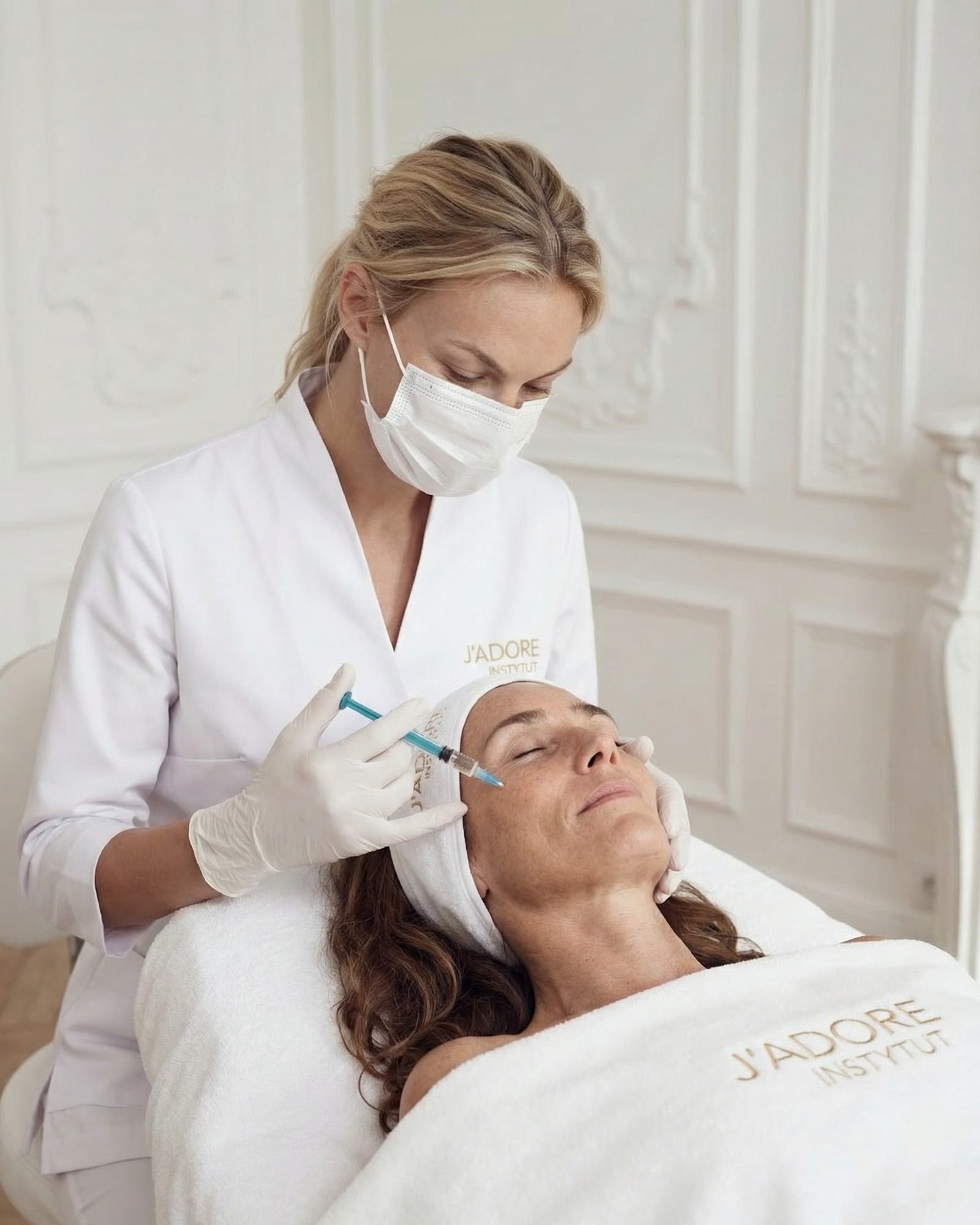
"Exosomes" on the label do not say what is really in the vial
Preparations can come from various biological or plant sources, contain extracellular vesicles, cell secretions, soluble factors or a mixture of ingredients described by a marketing common name. Isolation and confirmation of exosome identity require laboratory methods; a transparent label should indicate more than a slogan.
- The full name of the manufacturer and product must be available before the treatment.
- The source of the material, composition, batch and expiry date should not be a secret.
- Transport and storage conditions must comply with the manufacturer's instructions.
- The salon should distinguish between topical application and injection.
- Testing an ingredient is not automatically testing the finished vial used in the treatment.
If staff cannot show the packaging and documentation, it is unknown whether the discussed publications even refer to the product. The number of alleged particles also does not determine efficacy without information on the counting method, purity, biological activity and stability.
The route of administration changes questions about efficacy and safety
Application to intact skin, application after microneedling and injection are not variants of the same exposure. The barrier, the dose reaching the tissues and the risk profile differ fundamentally. The result of a topical cosmetic study must not be used as evidence for injection.
Topical application or after the procedure
the product remains an element of the skin protocol
- barrier integrity is important
- sterility after needling counts
- you must know the base procedure
- the effect may mix with healing
- the assessment concerns the finished protocol
Injection
a different route and a higher threshold of evidence
- bypasses the natural skin barrier
- requires the correct status and purpose of the product
- cannot be based on data for a cosmetic
- carries separate risks of infection and reaction
- should trigger a detailed qualification
The FDA has warned against unapproved exosome products offered as regenerative therapies. This is a message from the American market, not a description of Polish law, but it reminds us of an important principle: the status, route of administration and documentation of a specific product must be verified, not assumed from the category name.
Before and after photos only make sense after standardising the conditions
It is easiest to create the impression of improvement through soft light after the treatment, lower camera exposure and a slight smile. Documentation should use the same lens, distance, camera height, background, exposure and face position. The skin must be without make-up and comparable topical skincare.
Exosomes in Krakow — ask about the vial before any promise of results.
J'ADORE INSTYTUT in Krakow is located at ul. Karmelicka 45/2B, 31-128 Krakow and is open Monday to Saturday from 8:00 to 20:00. You can find information about the service on our Exosomes in Krakow page.
During your consultation, ask for the full product name, its source, the application method, the accompanying procedure and publications regarding that specific protocol. Establish one main parameter for assessment and a date for follow-up photos. If a plan promises to remove scars, pigment, laxity and pores simultaneously, the goals are too broad to attribute the result honestly.
A real effect from exosomes is possible, but it must be distinguishable from the rest of the protocol.
Early human studies justify interest in improving hydration, elasticity, texture and colour. They do not justify the claim that any given vial rejuvenates every skin type. The greatest unknown remains the repeatability of the product, the protocol and the effect over time.
Before the treatment, name the product, the base procedure and one goal. After the treatment, assess tolerance separately from the aesthetic effect, and take photos once the skin has calmed down. If you cannot say what the preparation itself contributes beyond microneedling or laser, the honest conclusion is "we do not know", not "regeneration confirmed". Such an answer does not dismiss a promising technology. It protects it from promises faster than research and allows you to recognise the moment when further data actually changes your decision. Then, the series remains a conscious experiment with a measurable goal, rather than a purchase of hope without control or a criterion for completion, wrapped in a scientific-sounding name.