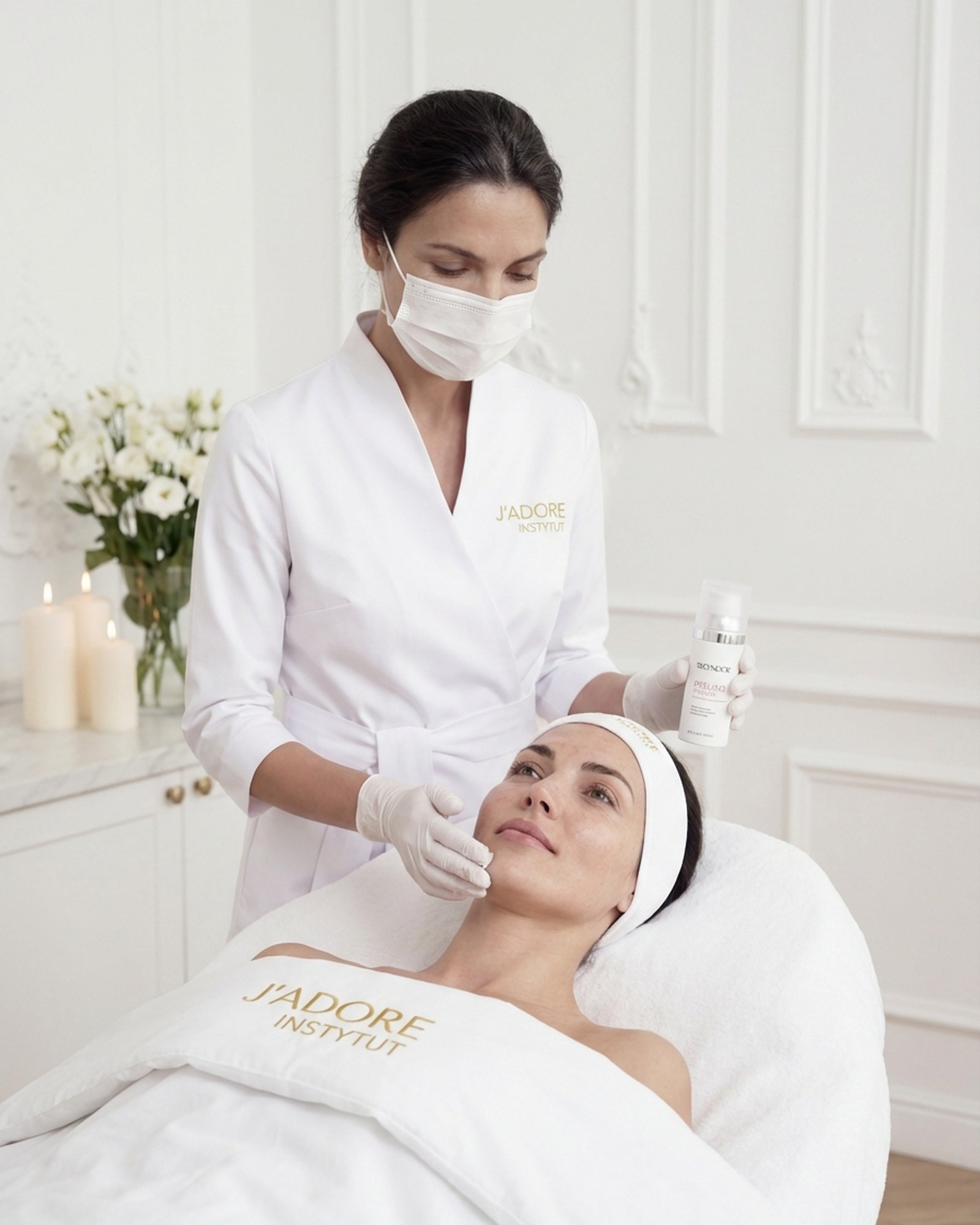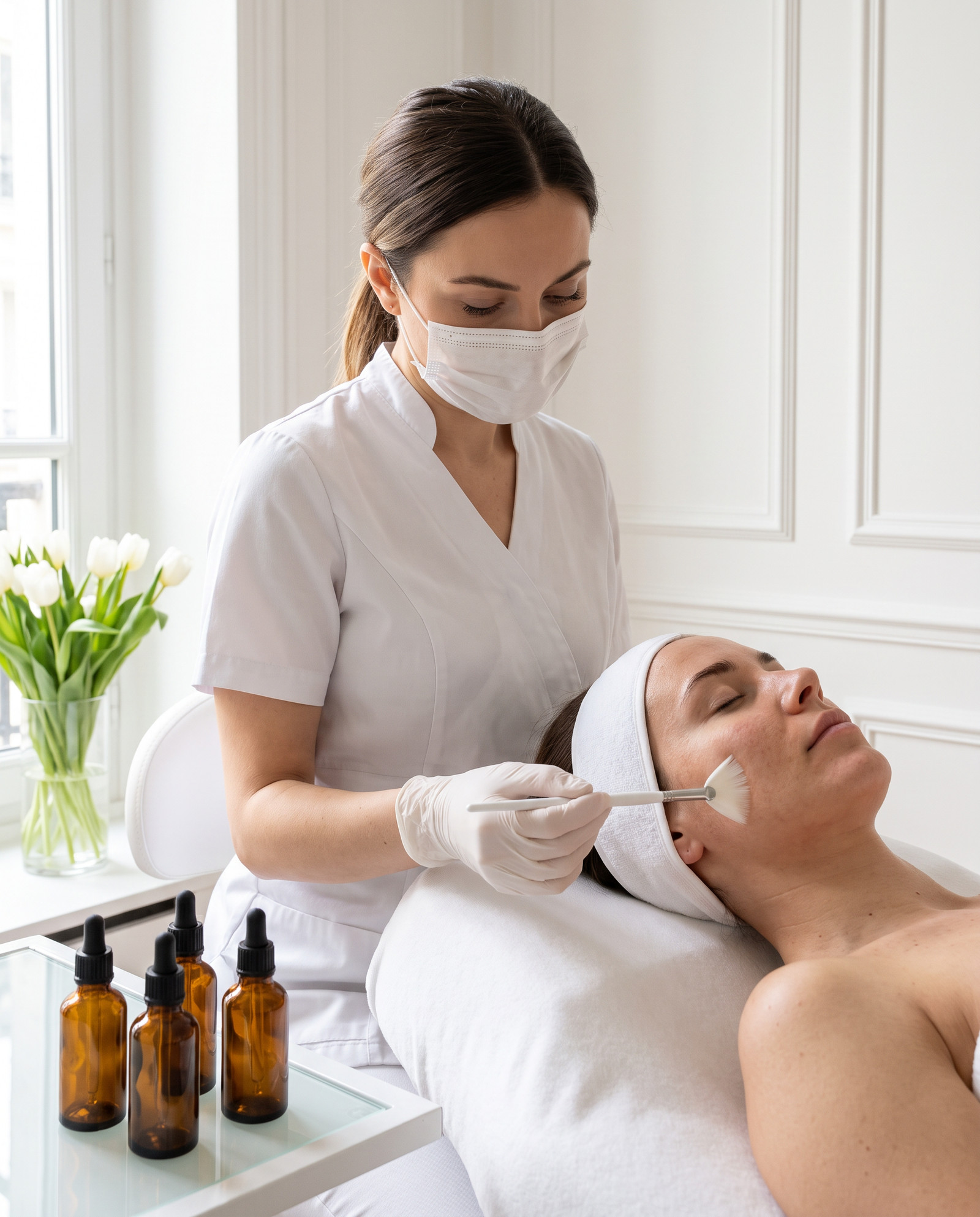
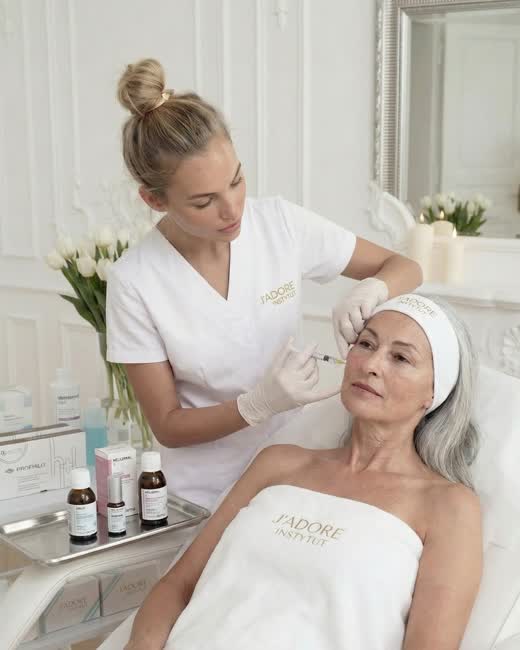
Why exfoliate skin at all — and what "depth" means for a peel
Skin exfoliates on its own — it's a natural process in which dead epidermal cells shed and new ones take their place. With age, tiredness, chronic stress or hormonal changes, this rhythm slows down: dead cells build up, skin looks grey, dull and "thick", absorbs skincare less well, and pores become more prone to blackheads. A chemical peel is simply a controlled acceleration of something skin already wants to do — the difference is that a cosmetologist decides how deep and how intense.
And depth is the key word here. There isn't one "peel" — there's a whole scale, from very superficial peels that work within the epidermis and mainly deliver radiance, to stronger ones that reach deeper and can genuinely remodel the skin. The deeper the peel, the greater the potential result — but also the greater the demands: longer recovery, stricter sun protection, more contraindications.
Superficial
epidermis — radiance and tone
- brightening, smoothing, "refreshing"
- grey, tired skin, first fine lines
- sensitive skin, "first peel"
- minimal downtime — often a "lunch peel"
Medium depth
deeper layers — a real change
- hyperpigmentation, acne scars
- more visible texture, enlarged pores
- photoageing, loss of firmness
- result builds up but lasts longer
Series vs single session
how to think about a plan
- most peels work as a series, not as a one-off
- the result builds up session by session
- autumn–winter suits this best (less sun)
- the plan is always set by a cosmetologist
Main acid families — what actually sets them apart
Rather than learning a dozen brand names, it's easier to remember the families. Peeling acids are divided mainly by whether they're water-loving or fat-loving — because that decides where in the skin they work. The rest is nuance a specialist will fine-tune.
AHA — water-soluble
surface: radiance and tone
- mandelic — gentle, for sensitive skin and darker phototypes
- lactic — hydrating, for dry skin
- glycolic — the strongest AHA, evens out tone
- for: dullness, fine lines, early hyperpigmentation
BHA — fat-soluble
inside the pore: acne and sebum
- salicylic — gets into the pore, "unclogs" from within
- for: acne, blackheads, oily and combination skin
- also has anti-inflammatory action
- often combined into a scar-treatment protocol
Specialist
targeted tasks
- retinol — fine lines, photoageing, scars
- pyruvic — acne plus collagen biostimulation
- azelaic — redness, rosacea, broken capillaries
- TCA / bioremodelling formulas — deeper remodelling, firmness
How to identify what your skin needs — a home test
Before anyone suggests a specific name, take a moment in front of the mirror for a quick, honest look at your skin. Not to diagnose yourself — just to know where to start the conversation:
- Shiny T-zone, blackheads, breakouts that "pop up", enlarged pores → a sebum and clogged-pore issue → direction: BHA / salicylic, sometimes pyruvic.
- Blotches, uneven tone, marks from old breakouts, a "shadow" from sun exposure → a hyperpigmentation issue → direction: acids targeting hyperpigmentation (mandelic, ferulic, targeted depigmenting peels); for persistent melasma, a separate, planned protocol.
- Grey, dull, "tired" skin without radiance, but no single obvious issue → direction: a gentle AHA / revitalising peel, ideal as a starting point.
- Reactive skin that flushes easily, feels tight, flakes → direction: the gentlest, hydrating formulas (lactic, enzyme, "first peel") — and caution with strong acids.
- Fine lines, loss of density, photoageing → direction: retinol / biorevitalising and biostimulating formulas — the result builds up over a series.
Most skin types don't fit neatly into one box — and that's normal. Mature, tired skin usually has a bit of each category: some hyperpigmentation, some dullness, a clogged pore here and there. So the home test isn't meant to tell you "this is your peel" — it's meant to help you name what bothers you most. That's where a well-structured plan starts.
What to expect — the process and recovery
The treatment itself usually runs calmly and follows a consistent logic, whichever acid is used. What differs mainly is how intense the sensation feels (from mild warmth to a stronger tingling) and what happens over the following days:
- 01
Preparation
Thorough cleansing and degreasing of the skin — without this, the acid works unevenly. Sometimes skin is "primed" beforehand with home care.
- 02
Acid application
The cosmetologist applies the product and monitors your skin's reaction. You may feel warmth, tingling or slight stinging — this is normal and temporary.
- 03
Neutralisation / finishing
Some peels are neutralised, others work on their own. To finish — soothing, hydrating and regenerating ingredients.
- 04
The first few days
Possible mild redness, a feeling of tightness, sometimes subtle flaking. Never pick at flaking skin — let it come away on its own.
- 05
Protection
High SPF, every day, no exceptions — this is essential for the result and for protecting against hyperpigmentation. During this time, we skip strong active ingredients and home exfoliation.
The results of a peel can't be promised "to the letter" — they depend on your skin, the specific acid and, most importantly, consistency. A single session can deliver a nice, temporary glow. A real, longer-lasting change — more even tone, smoother texture, less visible pores — usually comes with a series and with home care that maintains that work between visits.
When it's worth combining a peel with something else
A peel is rarely a "lone hero." Most often it's a great part of a plan — it prepares the skin for other treatments or completes an effect it couldn't fully achieve alone. The order and intervals are always decided by a specialist, but the logic of combinations stays fairly consistent:
Peel + mesotherapy / nourishing cocktails
first exfoliation and "opening up" the skin, then delivering nutrients deeper. A classic duo for grey, tired skin.
Peel + microneedling (Dermapen)
the peel works on surface and tone, microneedling on texture and scars. Together they give a fuller result than either alone.
Series of peels + home care
this isn't an "extra" — it's half the result. Well-chosen skincare maintains the treatment's effect and speeds up progress towards your goal.
Peel for hyperpigmentation + depigmenting plan
for persistent melasma, a single peel isn't enough; a longer, multi-month protocol is built instead.
A good salon doesn't sell "a peel" like a product off a shelf. It starts with a question — what do you want to achieve — and only then chooses the acid, the intensity, the number of sessions, and whether anything else is worth adding. If you're offered one name "for everything" straight off, with no questions about your skin, lifestyle or the season — that's a good moment to ask why that particular one.