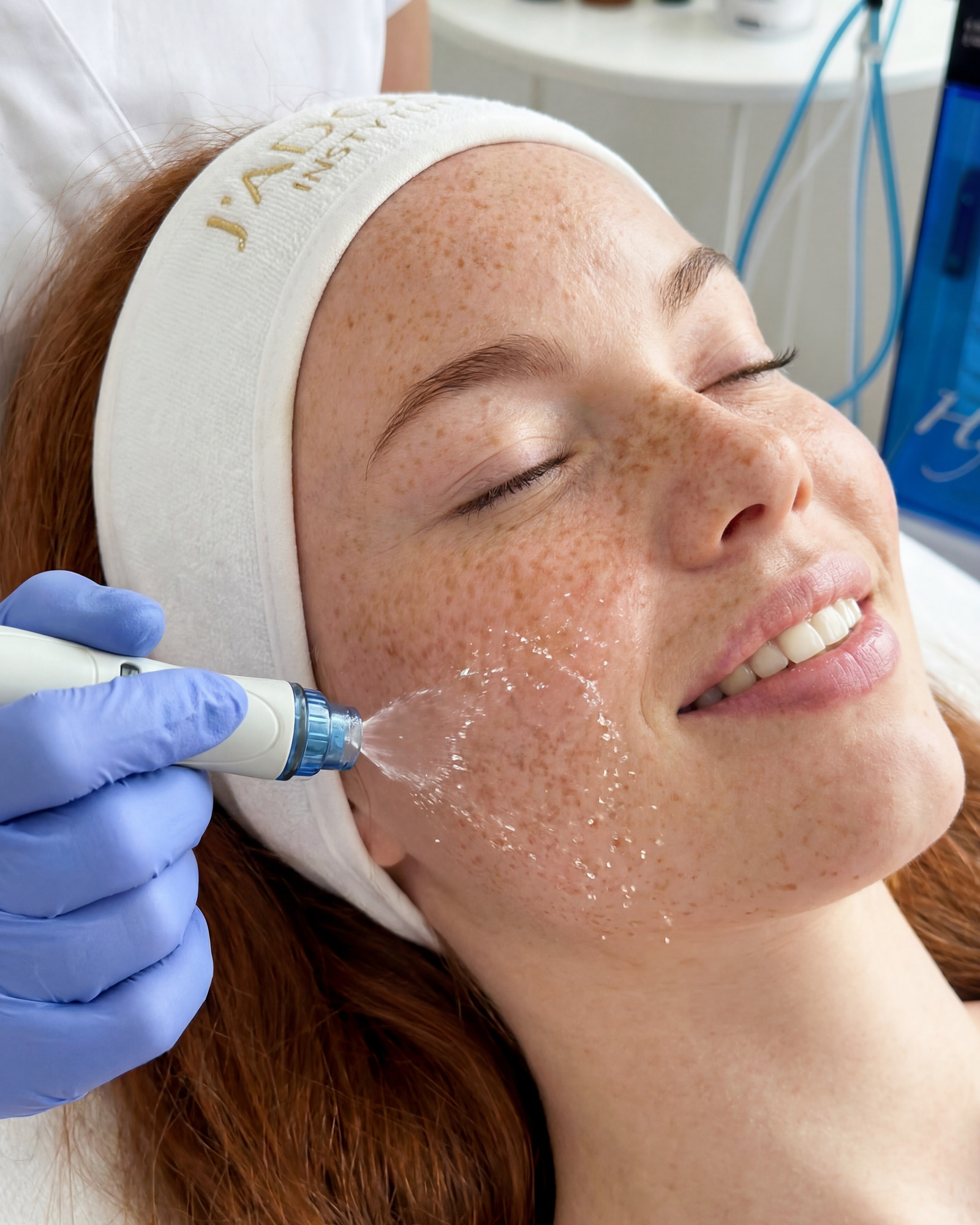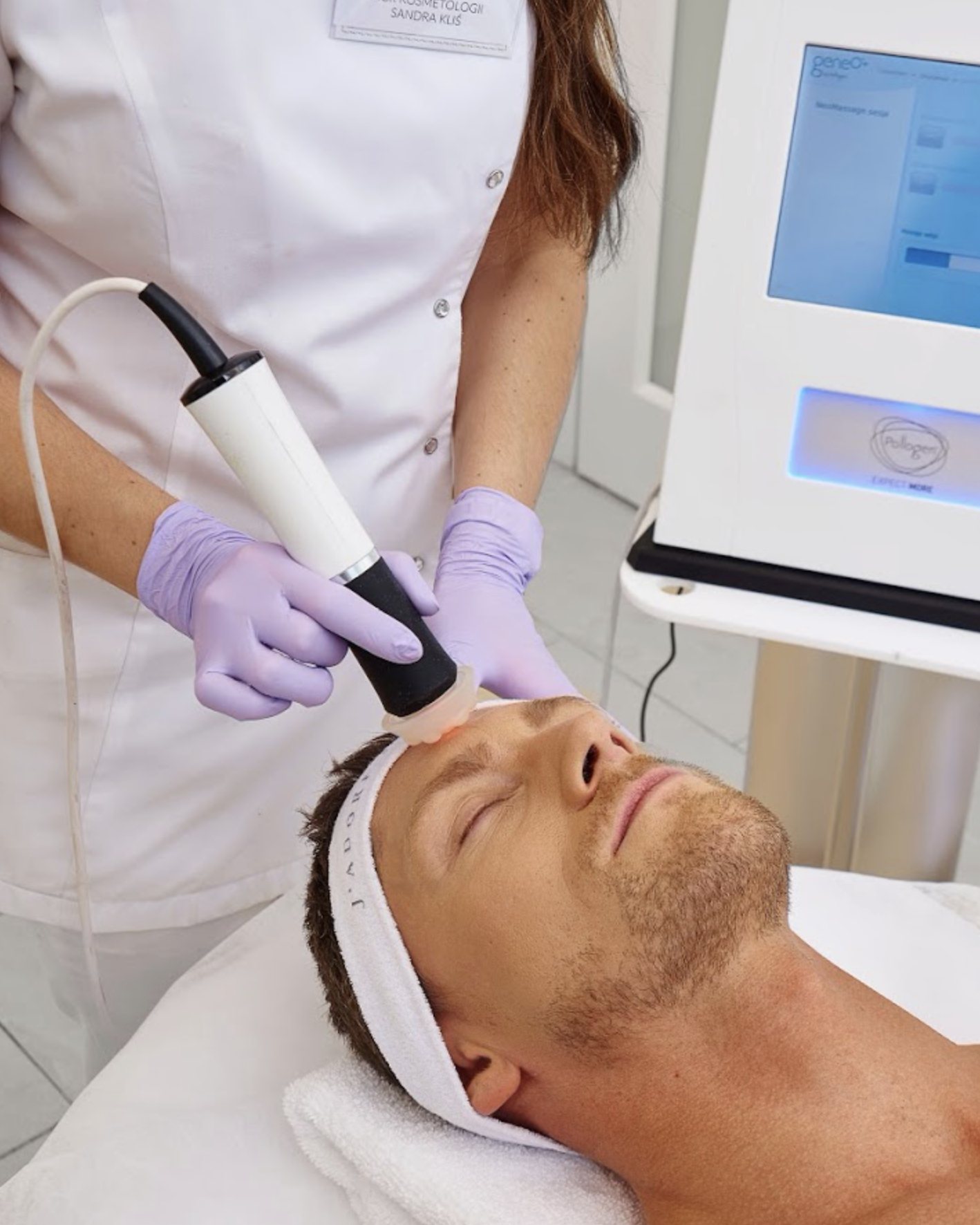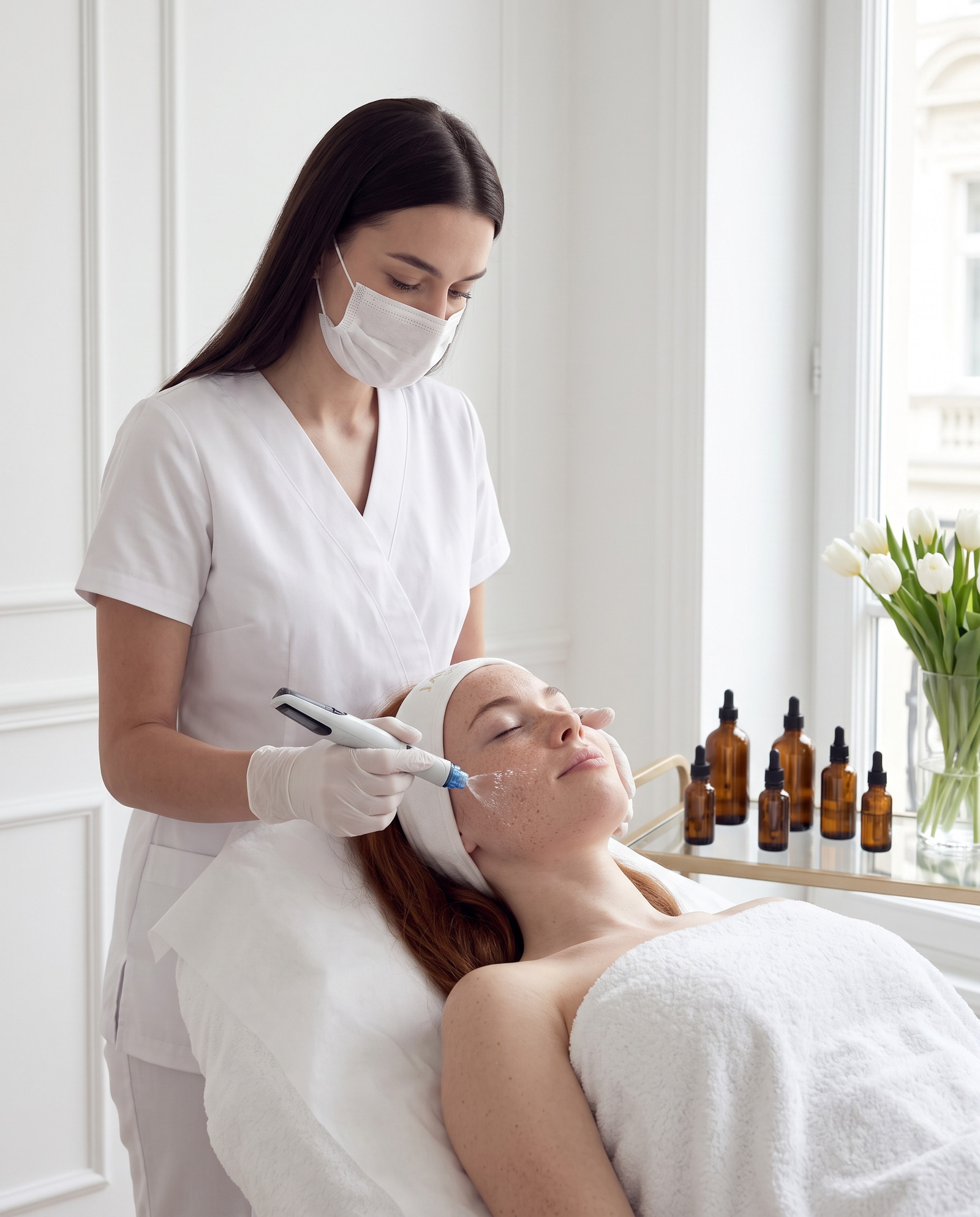
Cold sores, weeping, and active infection stop the tip
A cold sore blister, honey-coloured crust, purulent wound, or bacterial or fungal infection in the treatment area are reasons to reschedule. The tip moves across the skin and works with fluid; avoiding one lesion is not always enough when the surrounding tissue is affected by the process.
Fever and general infection are also significant. Your body does not need an additional cosmetology stimulus at that time. Wait until you recover and set a criterion for your return. Do not mask changes with foundation before the assessment.
Inflammatory acne requires distinguishing a blackhead from a painful lesion
Individual blackheads may be an indication for controlled cleansing. Extensive, painful nodules, cysts, erosions after picking, and sudden breakouts are a different situation. Intensive extraction does not shorten the biology of inflammation and may increase trauma.
During dermatological treatment, the procedure should be part of an agreed plan, not a competitor to it. Provide the names of your topical and oral medications. A sudden deterioration may require a doctor's check-up, not a stronger tip.
A damaged barrier may not have a single visible wound
Stinging after washing, tightness, flaking, sudden redness, and intolerance to a known cream indicate that the skin has not returned to balance. The cause can be a retinoid, an acid, a home device, hair removal, wind, or several methods at once. Vacuum and exfoliation can deepen reactivity.
Do not assess readiness only by the absence of redness in the morning. Describe how your skin behaves in the evening, after water, and after products. If a neutral cream stings, rescheduling is more sensible than choosing the "gentlest" tip.
- stinging after water
- flaking without a planned peel
- fresh scratches and picking marks
- redness persisting for hours
- sudden intolerance to cosmetics
Retinoids and medications require names, dosages, and dates
Oral and topical retinoids, medicinal acids, antibiotics, steroids, anticoagulants, and therapies affecting healing must be discussed. The phrase "something for acne" is not enough. The substance, dose, area, and time since the last application are what matter.
Do not stop therapy on your own for the treatment. A cosmetologist may ask for a doctor's opinion or set a later date. Past good tolerance of HydraFacial does not guarantee the same reaction after starting a new medication.
Pregnancy and breastfeeding change the choice of solutions and the clinic's decision
HydraFacial is not one unchanging fluid. Variants use different stages and active substances. During pregnancy and breastfeeding, the composition must be assessed separately, and the clinic may decide to omit part of the procedure or reschedule the whole thing. Information must be provided before opening the preparations.
Hormonal changes can intensify hyperpigmentation, acne, and sensitivity. The treatment should not promise to stop melasma or treat breakouts. In the absence of safety data, a sensible refusal is of greater value than a cosmetic compromise.
Fresh sun, wind, and frost can temporarily disqualify the skin
Sunburn, a hot tan, peeling after UV exposure, and intense dryness after frost are arguments for a break. Vacuum on irritated skin can intensify redness, and exfoliation can increase sensitivity. Sunscreen applied in the morning does not reverse previous damage.
After returning from holiday, give your skin time to stabilise. Before you leave, do not schedule a session just before the beach, swimming pool, or a long flight. The treatment does not create a shield against the sun; protection and shade remain necessary.
Skin ready for assessment
calm
- no heat
- no flaking
- tolerates washing
- no fresh burn
Skin to be rescheduled
after exposure
- stings
- is hot
- peeling in patches
- has fresh redness
Injections, lasers, and peels need a gap even without visible traces
Filler, botulinum toxin, laser, microneedling, chemical peel, hair removal, and energy-based treatments have their own stabilisation times. HydraFacial performed too early may add friction, vacuum, or active solutions to tissue that is still regenerating.
Provide the exact name, date, and area of the previous procedure. "Something with acid" could mean a peel or an injection, and these require a completely different plan. If you do not have the data, find confirmation of your visit before qualification.
Vessels, bruising, and clotting disorders change how the vacuum works
Vascular skin is not always excluded, but active redness, fresh bruising, capillary fragility, and medications affecting clotting require special assessment. The strength of the vacuum cannot be chosen according to the "the stronger, the cleaner" rule.
If you bruise easily or take an anticoagulant, tell us before the treatment. Do not stop it without a doctor. A cosmetologist may change the parameters, avoid the zone, or refuse. A bruise is not an acceptable proof of effective extraction.
An unexplained skin change first goes to a dermatologist
A changing mole, a non-healing wound, a bleeding spot, a new nodule, or an asymmetrical pigmented lesion should not be bypassed without a diagnosis and then "cleansed". A cosmetologist does not diagnose cancer during a treatment, but they should stop the procedure and recommend an assessment.
The same applies to a sudden rash or swelling. First, it must be determined whether the cause is an allergy, medication, infection, or dermatosis. A soothing serum does not replace a diagnosis. A photo from a few days ago may show the dynamics of the change.
- the lesion is growing or changing colour
- the wound is not healing
- spontaneous bleeding occurs
- a rash is spreading rapidly
- swelling affects the eyelids or lips
Chronic conditions require a current medical history, not a historical one.
Uncontrolled diabetes, active cancer, immune disorders, exacerbation of autoimmune disease and healing problems may change our decision. The fact that a treatment was performed a year ago does not determine today's qualification.
Inform us about changes in treatment, hospitalisation, new diagnoses and planned procedures. If in doubt, a doctor's consent may be required. The cosmetic benefit of cleansing should not outweigh uncertain safety.
On the day of the treatment, the salon should be able to say "no".
Reliable qualification includes examining the skin before makeup or immediately after gentle cleansing. We ask about medications, illnesses, pregnancy, allergies, sun exposure, home actives and other procedures. If a programme is chosen immediately without an interview, the process is incomplete.
A refusal should not end with a general "please come back later". Ask what criteria must be met: healing, the end of an infection, a medical consultation, a break after a procedure or the restoration of comfort. This ensures the new appointment is not random.
- 01
Interview
Medications, illnesses, pregnancy and previous procedures.
- 02
Skin assessment
Infections, barrier, lesions and redness.
- 03
Decision
Execution, modification or postponement.
- 04
Return criteria
A specific condition instead of a random date.
Warsaw: two addresses, the same principle of current qualification
J'ADORE INSTYTUT operates at Żelazna 59 and Mińska 29A/46. Before booking, prepare a list of medications and active cosmetics, dates of sun exposure and other treatments, as well as photos of any temporary reactions. You can find the local scope and contact details on the HydraFacial Warsaw page.
Do not go to the other location just to bypass a refusal at the first one. The contraindication concerns your skin, not the address. HydraFacial makes sense when the surface is suitable for controlled cleansing. If it is not suitable today, postponing protects both the result and your skin health.