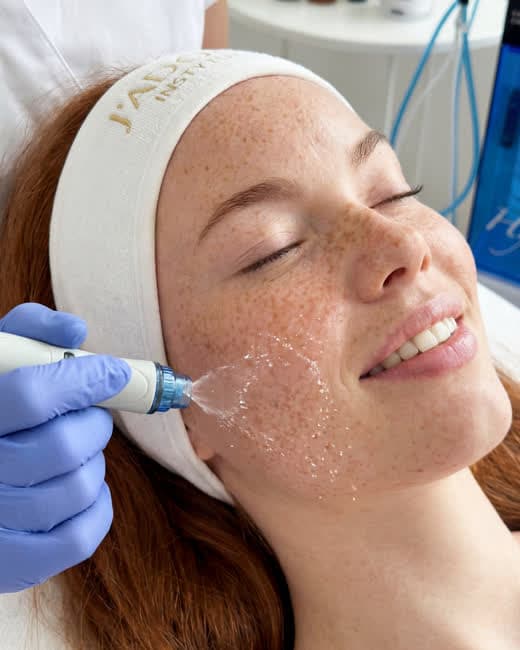
The first result is a renewed surface, not new skin
After the peeling subsides, the face may look brighter, and the surface may feel smoother to the touch. This is the effect of organising the stratum corneum and changing how light is reflected. Do not confuse this with full remodelling. Deeper quality improvement develops later and is more subtle than the contrast between peeling skin and freshly healed skin.
If large patches of epidermis did not form after the treatment, do not try to compensate with a home peel. The reaction depends on the protocol, the condition of the barrier and previous exposure to retinoids. Adding acids may prolong irritation but will not safely accelerate remodelling.
Hyperpigmentation and texture require observation in the same light
A photo taken immediately after regeneration can be misleading: hydration, redness, light and make-up change. Assess your skin in similar conditions, without a filter, with the same face positioning. With hyperpigmentation, what matters is not only the colour but also whether new sun-induced spots appear. With scars, look at the shadow and texture from different angles.
If the problem is deep or has several causes, a peel may be one stage of a plan. It should not be presented as a universal substitute for a laser, a surgical procedure or dermatological treatment.
The best indicator is the trend, not the intensity of one reaction
- The skin returns to comfort without prolonged stinging.
- The colour becomes calmer, not just momentarily brighter.
- Texture improves without adding increasingly stronger irritation.
- Home care remains simple and predictable.
- The next session results from an assessment of the effect, not an automatic calendar.
- Photoprotection is not a seasonal addition, but part of maintaining the result.
Vitamin A and its path through the skin — from the epidermis to the cell nucleus
To understand Retix.C, you must first understand how retinol works in general. Vitamin A and its derivatives — collectively called retinoids — are one of the few groups of cosmetic ingredients for which we have truly solid data on their action. But their mechanism is complex and works in stages, like passing a baton.
- 01
Retinol penetrates the skin
A retinol molecule — from outside the skin, from a cream or a peel — penetrates the epidermis. This is the stage where irritation most often occurs: free retinol is reactive and may encounter cells before it reaches where it should.
- 02
Conversion to retinaldehyde
In skin cells, retinol is oxidised to retinaldehyde. This is an intermediate stage of transformation — fast, but necessary. Cells have special enzymes for this.
- 03
Conversion to retinoic acid
The second oxidation step leads to retinoic acid (all-trans retinoic acid) — this is the actual "active" form. Only retinoic acid penetrates the cell nucleus and binds to RAR receptors.
- 04
Gene activation
The retinoic acid + receptor complex enters the nucleus and triggers a gene transcription cascade — it literally changes which proteins the cell produces. Hence the influence on collagen, regeneration and pigmentation.
This entire pathway — retinol → retinaldehyde → retinoic acid → receptor → genes — takes place inside the cells. The problem with classic retinol in a cream is that before it reaches the place where it is to be transformed, retinol "lies" on the surface and in the upper layers of the epidermis for a while as a free, reactive molecule. It is this stage that is responsible for most irritation.
Retinyl Retinoate — a retinoid that waits
This is where the key ingredient of Retix.C comes in: retinyl retinoate. It is an ester-based new retinoid — a molecule built from two vitamin A fragments connected by an ester bond. Imagine a sealed envelope: the retinoic acid is inside, but sealed. Only the skin's enzymes — lipases and esterases — cut this bond and release the active form.
Classic retinol (cream)
works from the outside
- The free retinol molecule contacts the skin immediately
- Requires gradual skin acclimatisation
- Risk of irritation, peeling, redness
- Used independently at home (low concentrations)
Retinyl retinoate (Retix.C)
activates in the skin
- Molecule inactive until it penetrates the skin
- Skin enzymes release retinoic acid deep down
- Milder tolerance profile at a higher concentration
- Used in the salon under the supervision of a specialist
What else is in Retix.C — the role of vitamin C and the three-phase peel
Retix.C is not just a retinoid. The name is no coincidence in combining "reti" and "C" — vitamin C is an equal active ingredient here, and both work synergistically. Their combination is not accidental: in the mechanism of skin ageing, these two biological pathways truly complement each other.
- Vitamin C (ascorbic acid and its derivatives) — one of the most powerful antioxidants available in cosmetology. It can inhibit excessive melanin production (which translates into hyperpigmentation), support collagen synthesis and neutralise free radicals formed under the influence of UV radiation. The problem with classic ascorbic acid is similar to that of retinol: it is unstable and irritating. Retix.C uses its derivatives, which are more predictable in their action.
- Exfoliating acids (AHA and others) — Retix.C belongs to the category of peels, which means it contains exfoliating acids working on the surface of the epidermis. Their role is to remove the layer of dead cells and facilitate the penetration of active ingredients — that is, preparing the skin to receive what is meant to work deeper.
- A three-phase mechanism — in simple terms: acids exfoliate the surface, vitamin C works at the epidermal level (pigmentation, antioxidant protection), and retinyl retinoate penetrates deeper to activate. Three pathways work simultaneously at different depths.
What the treatment looks like — and what happens to your skin afterwards
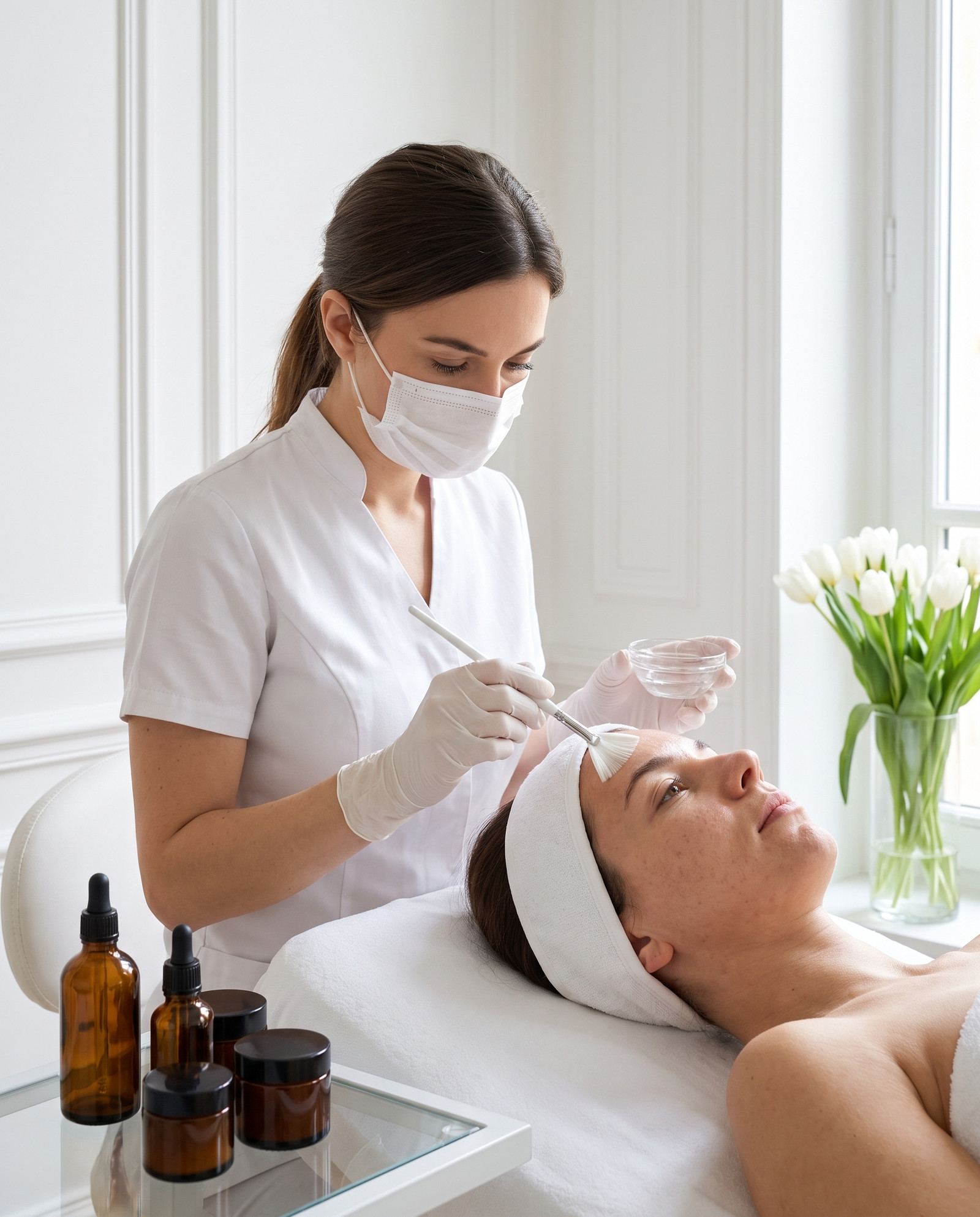
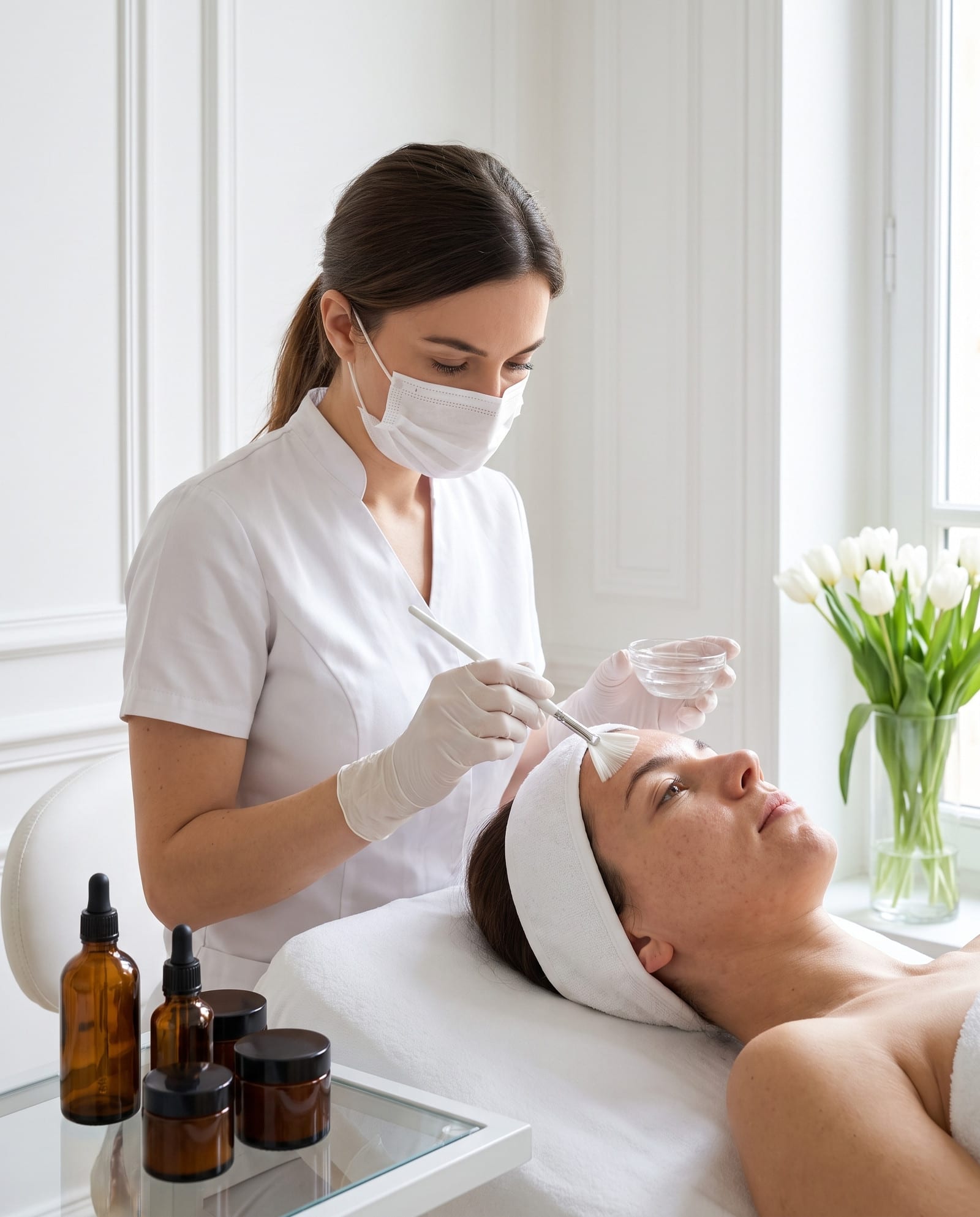
Retix.C is a professional peel performed by a cosmetologist or doctor. It is not an invasive treatment, but it requires skin assessment, preparation and the appropriate selection of a protocol. The process is controlled — the specialist observes your skin's reaction and regulates the exposure time.
After the treatment, your skin may peel for a few days — this is a normal and expected reaction, resulting from the action of the acids and accelerated epidermal renewal. This is not the same as irritation — peeling is visible proof that the epidermis is rebuilding. The intensity of this reaction varies between individuals and depends on factors such as epidermal thickness, skin sensitivity and the chosen concentration of the preparation.
Who can benefit from Retix.C — skin profiles
Retix.C is a treatment recommended for several characteristic skin needs. There is no single "ideal candidate" — the specialist selects the indications after a consultation, but certain patterns repeat.
- Hyperpigmentation and uneven skin tone — post-acne melanin, sun spots, uneven skin tone. The combination of vitamin C and retinoids addresses pigmentation at various levels: vitamin C can inhibit the formation of new melanin, while retinoids accelerate epidermal renewal and "bring" the discoloured epidermis to the surface.
- Laxity and early signs of ageing — retinoids are one of the few ingredients with a documented impact on collagen synthesis and the remodelling of the dermal matrix. For many people, after a series of treatments, the skin may appear denser and firmer.
- Photoageing — skin with a history of intense sun exposure (thicker, greyish, with uneven texture) is a classic indication for retinoids. Retix.C combines exfoliation with regeneration at a deeper level.
- Acne and post-acne hyperpigmentation — retinoids have an established position in anti-acne protocols: they normalise the keratinisation of the hair follicle (reducing the tendency for blackheads), and vitamin C supports the clearing of skin tone after inflammatory lesions.
- People who do not tolerate classic retinol — if attempts to use retinol at home have resulted in significant irritation, Retix.C — with its milder tolerance profile — can be a sensible alternative, naturally after a consultation.
What Retix.C will not do — an honest assessment
The mechanism of action of Retix.C is well-founded biologically. This does not mean it is a universal solution for every skin problem — and it is better to know this upfront than to be disappointed after the treatment.
- It will not remove deep atrophic scars — the peel works at the level of the epidermis and the upper layers of the dermis. Deep acne scars with tissue loss require other methods (fractional lasers, microneedling, laser treatments).
- It will not replace an entire skincare protocol — the results of the treatment can be significantly enhanced or ruined by home care. Aggressive acids after the treatment, lack of sun protection, or a return to irritants is the way to waste the results.
- It is not a one-off treatment for years — retinoids stimulate the skin to work, but the skin does not "remember" this stimulation forever. Results require maintenance — both through series of treatments and (at the appropriate time) home care with retinoids.
- It does not work the same for everyone — the pace and intensity of the results depend on your skin phototype, exposure history, epidermal thickness and many other factors. For one person, hyperpigmentation may fade significantly after two treatments; for another, the same protocol will yield a more subtle effect.
An honest summary: Retix.C is a treatment with an interesting and well-justified mechanism that, for many people, can provide a better result and better tolerance than a classic retinol peel. But the word "can" is key here — the decision of whether and when is up to the specialist who sees your specific skin, not the article.
Retix.C vs. home retinol — different tools for different tasks
A natural question after reading this text: since Retix.C works via retinyl retinoate, and classic retinol also eventually converts to retinoic acid — why have the treatment if you can buy a cream? The answer is multi-layered.
Retix.C (salon)
one session / series
- Higher concentrations of active ingredients, impossible for home use
- Combination of exfoliating acids + retinoid + vitamin C in one protocol
- Specialist supervision, selection for your skin, possibility of intervention
- Controlled exfoliating effect — intense renewal in a short time
Retinol at home
daily skincare
- Low concentrations, gradually built up — better long-term tolerance
- Cumulative effect with regular use over months
- Easy to integrate into your skincare routine
- Available without a visit, flexible in intensity
The most sensible approach is not "either/or", but a sequence: a series of Retix.C treatments can prepare your skin to better accept retinol at home, and regular home care maintains and enhances the salon results. The specialist who knows your skin will best assess how to arrange this order.
Needle mesotherapy
After the exfoliation and regeneration phase following Retix.C, mesotherapy delivers active ingredients (hyaluronic acid, peptides, vitamins) deep into the renewed skin. Your skin accepts them better after the peel — an enhancement effect.
Biostimulators
Combining Retix.C with biostimulators (e.g. Skin biostimulator or polynucleotides) addresses both the quality of the skin surface and its density from within. Two different working depths, a synergistic rejuvenation effect.
Chemical peel (series)
Retix.C can be part of a longer peeling protocol — in a sequence with acid peels of different action profiles. An agreed schedule with your cosmetologist provides more comprehensive results than a single treatment.