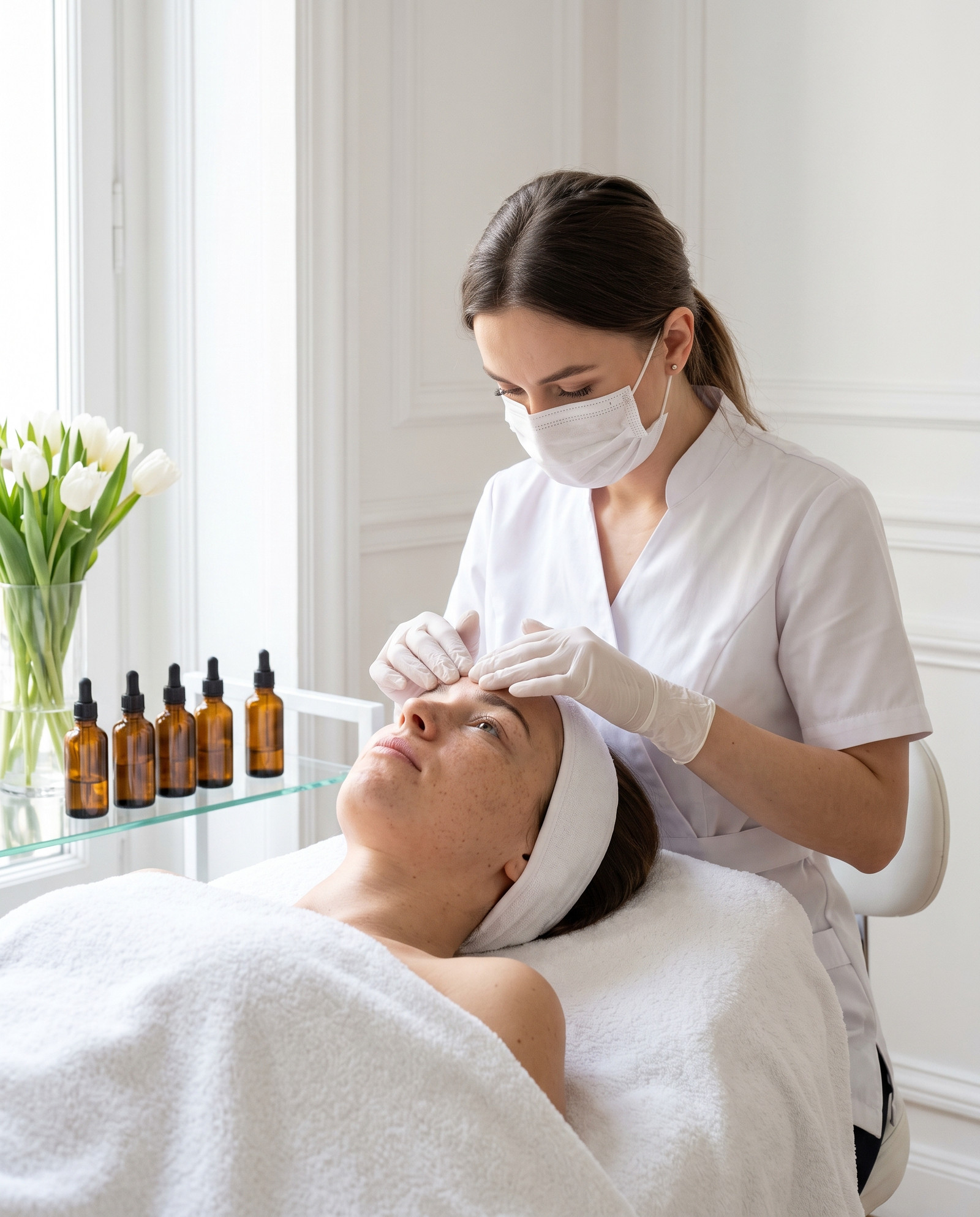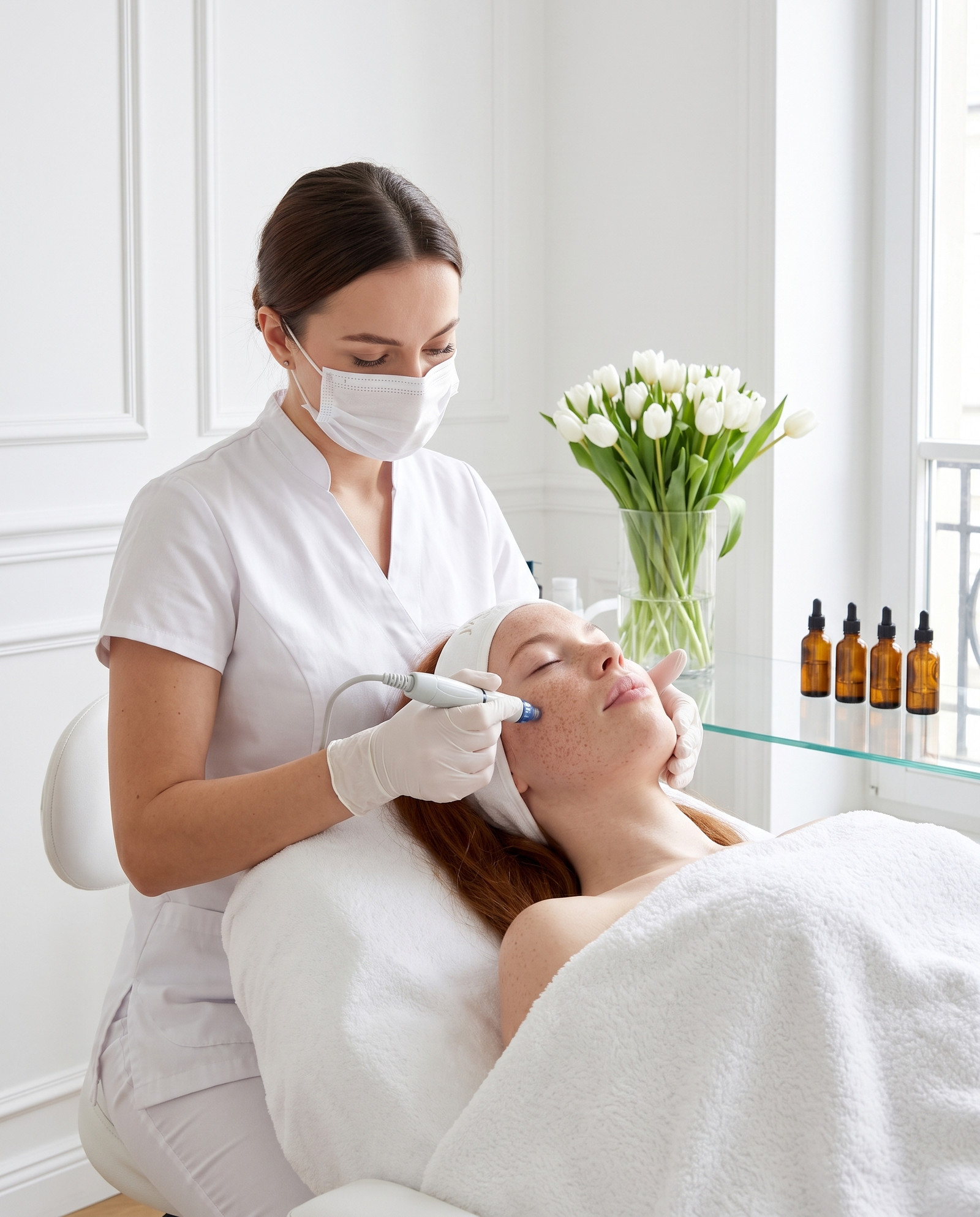
First, one important sentence: cosmetology does not cure acne
Acne is a skin disease. This means that a cosmetologist should not make a medical diagnosis, prescribe medication, or promise a "cure" through a series of treatments. They can, however, assess the condition of the skin surface, your skincare routine, the presence of blackheads, barrier irritation, and whether it is safe to perform a beauty treatment at that moment. When the clinical picture goes beyond this scope, the correct response is a referral to a dermatologist — not the sale of a stronger package.
This boundary also protects against disappointment. Cleansing, a peel, or calm salon skincare can improve the comfort and appearance of the skin, but they will not remove the cause of hormonal acne, replace medication for severe disease, or stop deep, painful lesions on their own. If the problem requires medical treatment, cosmetology can later play a supporting role — within a scope agreed upon with the doctor and adapted to the current condition of the skin.
A cosmetologist and a dermatologist look at the same problem from different sides
A cosmetology visit focuses on how the skin looks and reacts here and now: whether blackheads, excess sebum, dryness, irritation, marks from healed lesions, or active inflammation dominate. Your home routine is also important — sometimes the skin is simultaneously oily and damaged by too many acids, peels, and drying preparations. Organising these elements is often the first real step, but it is still not a diagnosis of the disease.
A dermatologist assesses the broader medical picture. The doctor recognises the type and severity of the acne, takes into account possible causes, selects the treatment, and decides whether further diagnostics are needed. If you are taking dermatological medication, the treatment plan must take into account their effect and the sensitivity of your skin. A cosmetologist should not independently change a doctor's recommendations or suggest stopping therapy in order to perform a treatment.
Cosmetologist
skin and daily habit support
- assesses current skin condition and tolerance
- organises home skincare
- selects a beauty treatment when the skin qualifies
- monitors the reaction and stops the plan if necessary
- refers to a doctor when they see the limit of their competence
Dermatologist
diagnosis and treatment of the disease
- makes a medical diagnosis and differentiates lesions
- assesses severity and the risk of scarring
- selects treatment and potential diagnostics
- controls medication and its side effects
- determines when supporting treatments are safe
What cosmetology can realistically do — without the word "cure"
With a milder picture, especially when blackheads and irregular skincare dominate, it makes sense to work on pore hygiene, the gentleness of cleansing, and barrier protection. A cosmetologist can help distinguish between necessary actions and those that only irritate: daily scrubbing, applying several active products at once, or spot-drying every lesion often increases chaos instead of reducing it.
- Organising your routine. Fewer random cosmetics, a clear order, and observing skin reactions instead of constantly changing products.
- Working with selected blackheads. Controlled cleansing can take place when the type of lesions and the state of the barrier allow it.
- Reducing irritation. A cosmetologist helps identify excessive friction, peels, alcohol, and overlapping active ingredients.
- Supporting consistency. The plan organises visits and skincare, but it is corrected based on skin reactions, not carried out at all costs.
- Working on marks only at the right moment. Discolouration and a scar are not the same, and treatments for skin structure are planned after the active process has calmed down.
A cosmetologist can also help lead an organised observation: what changed after simplifying your skincare, whether the skin tolerates the planned element, and when a signal for re-evaluation appears. Such documentation is valuable because it replaces memory and random conclusions with a concrete history of skin reactions. However, it still does not serve to independently recognise the cause of the disease. If the progress indicates that cosmetological support is not enough, the plan should be handed over to a dermatologist, not endlessly strengthened with further treatments.
When we postpone cleansing and refer to a dermatologist
Manual extraction is not about removing every visible lesion. Deep, painful nodules, extensive inflammation, or damaged skin should not be treated like "more difficult blackheads". Mechanical work at the wrong moment can increase irritation and increase the risk of marks. Therefore, before booking, it is worth describing whether the lesions hurt, ooze, spread quickly, or leave scars.
This is not a closed list or a tool for self-diagnosis. If a cosmetologist sees a picture that raises doubts during a consultation, they should postpone the treatment and ask for a dermatological assessment. After the lesions have calmed down, the doctor and cosmetologist can conduct different parts of the plan in parallel, but each remains within their scope of competence.
Manual extraction: a possible element of a plan, not a therapy for the whole disease
The manual extraction page is the parent of this publication because it is under this broader service that the Krakow price list and the entry point for a cosmetology consultation are found. The treatment itself, however, has a narrower goal: it can help with appropriately qualified blackheads and clogged pores. It does not cure the hormonal background, does not replace medication, and is not used for treating deep inflammatory lesions.
In practice, one person may need calm cleansing and a simpler routine, another — first a dermatologist, and only then supporting treatments. For a third, what looks like acne may require a different diagnosis. Therefore, do not buy a series solely based on a photo from the internet. First, you need to establish what problem dominates and whether cleansing is the right tool right now.
Rosacea is not a variety of common acne
The phrase "rosacea Krakow" often leads to content about acne vulgaris, although it is a separate, chronic disease. Rosacea can cause persistent redness, flushing, visible vessels, burning, and sometimes papules or pustules. The similarity of the name and the presence of eruptions do not mean, however, that the same treatments or home ingredients will be appropriate.
When rosacea is suspected, the starting point is a dermatologist. Aggressive cleansing, heating, or randomly combining strong acids can further stimulate the skin. Cosmetology can later support gentle skincare and the barrier, but it should not call redness "common acne" or manage both problems with one protocol.
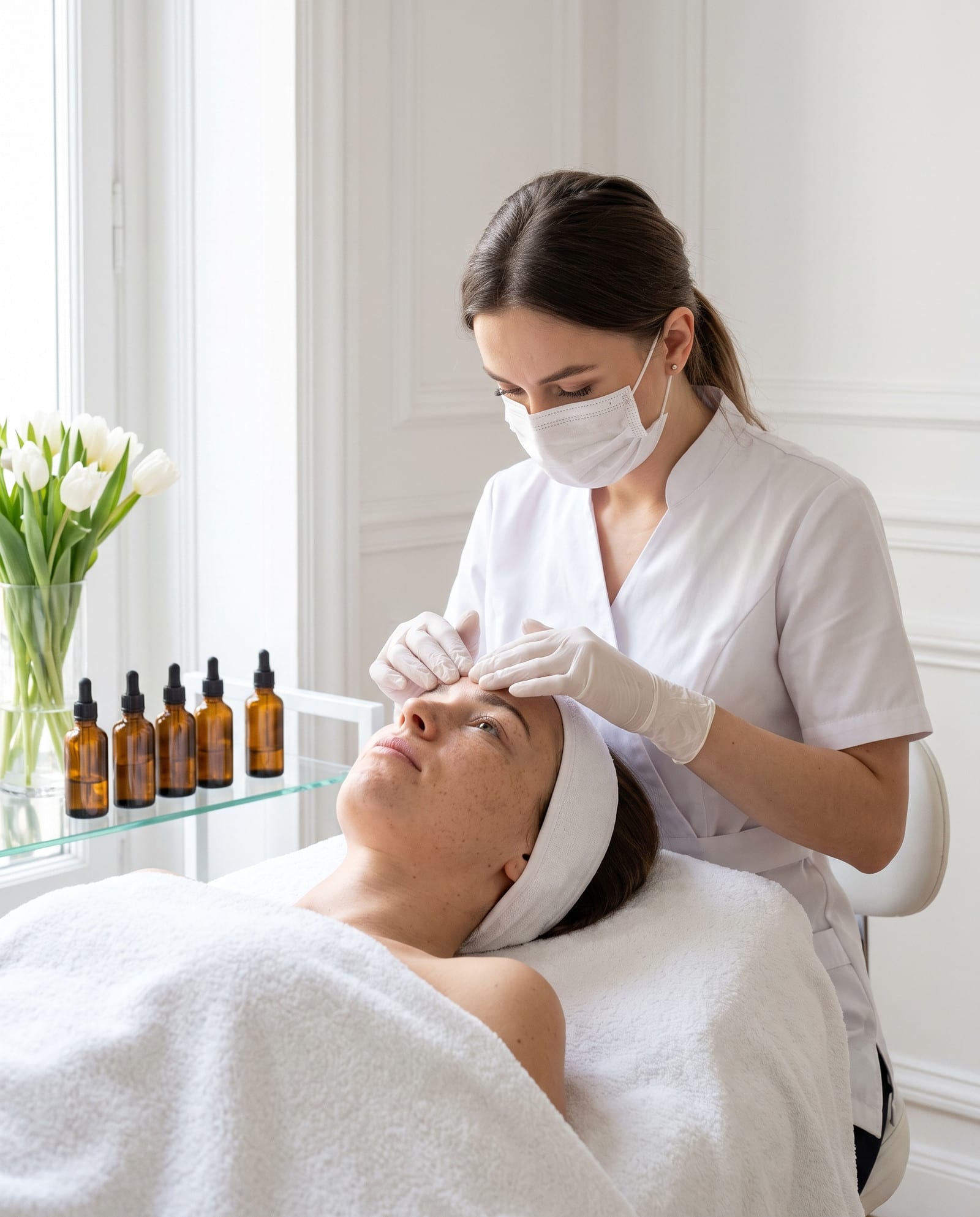
What about the term "laser acne treatment"?
It is a popular phrase, but it is too broad to serve as a basis for choosing a service. We approach active lesions, persistent redness, hyperpigmentation, dilated vessels, or post-acne scars differently. The word "laser" does not determine which problem needs addressing, whether the skin is ready for the procedure, or if dermatological treatment is required first.
We do not treat technology as a substitute for a diagnosis. If an active process is not under control, working on scars or marks may be premature. First, we determine the current state, then organise treatment and support. Only when the skin is calm do we discuss procedures aimed at remaining irregularities or hyperpigmentation.
What a sensible sequence of actions might look like
- 01
Name the problem without self-diagnosis
Describe how long the lesions have been present, where they occur, whether they are painful, what aggravates them, and whether they leave marks. A photo cannot replace an examination, but the history helps us choose the right first contact.
- 02
Determine who should lead the initial phase
For mild blackheads, a cosmetologist consultation may suffice. For severe inflammation, a sudden onset, or scarring, we start with a dermatologist.
- 03
Calm the chaos in your skincare
Do not add more active products on your own. Your home plan should be simple, well-tolerated, and consistent with any ongoing treatment.
- 04
Include only treatments for which your skin qualifies
Cleansing, gentle care, or other elements are selected based on the current skin presentation. If the skin reacts poorly, the plan is paused or changed.
- 05
Separate active acne from its aftermath
We manage the active problem first. Only later do we assess hyperpigmentation and scars separately, as they require different tools.
This sequence does not promise quick, linear improvement. The skin may react unevenly, and the plan may require adjustment. Its value lies in the fact that every action is justified, rather than selling the maximum number of procedures from the start.
Acne treatment in Krakow — where to start and where to check the price list
In Krakow, we perform cosmetologist consultations and appropriately qualified treatments at J'ADORE INSTYTUT, Karmelicka 45/2B, 31-128 Krakow. The institute is open from Monday to Saturday, 8:00–20:00. When booking, please describe whether you have mostly blackheads, active painful lesions, redness, or marks from previous breakouts — this will help us determine the first step.
Current, specific prices and variants of the parent service can be found on the page Manual extraction in Krakow — price list and location. Look for the "Manual extraction" item and the variants described alongside it. Do not assume that purchasing this item automatically means a full acne treatment — the cosmetologist may suggest a different scope, postpone the treatment, or refer you to a dermatologist.
Questions that help set realistic expectations
Before your first visit
- Can a cosmetologist tell me if I have acne?
They can describe the condition of your skin and indicate that the presentation requires a consultation, but diagnosing a disease is the doctor's role. If the presentation is uncertain or severe, the correct step is a dermatologist.
- Does manual extraction always help with acne?
No. It may make sense for properly qualified blackheads, but for deep, painful, or extensive inflammatory lesions, it may be postponed. The decision is made after examining the skin.
- Can I come during dermatological treatment?
For a consultation, yes, but please bring the names of the medications you are using and your doctor's recommendations. This does not mean automatic approval for a treatment — your skin may require a break or explicit confirmation from your treating dermatologist.
About the effect and scope
- Is one visit enough?
We cannot promise that. One consultation can clarify the direction, but acne and skin reactions require observation. Sometimes the most important result of the first visit is a referral to a doctor.
- Will the treatment remove post-acne scars?
Manual extraction does not remove scars. First, we must calm the active lesions, then distinguish between flat hyperpigmentation and structural loss, and select further steps separately.
- Is rosacea managed the same way?
No. It is a separate disease, not a variation of acne vulgaris. If you have redness, burning, and visible vessels, start with a dermatological assessment instead of choosing cleansing on your own.
The best consultation does not end with the sentence "this treatment will solve everything". It ends with a clear division: what we are doing now, what we are not doing, when a doctor is needed, and how we will assess whether the plan is still appropriate. This is the realistic answer to the question about acne treatment in Krakow.