Three methods — three depths of action
The key to understanding mesotherapy is depth. Each method delivers active substances to a different level of the skin. That determines what it can — and cannot — achieve.
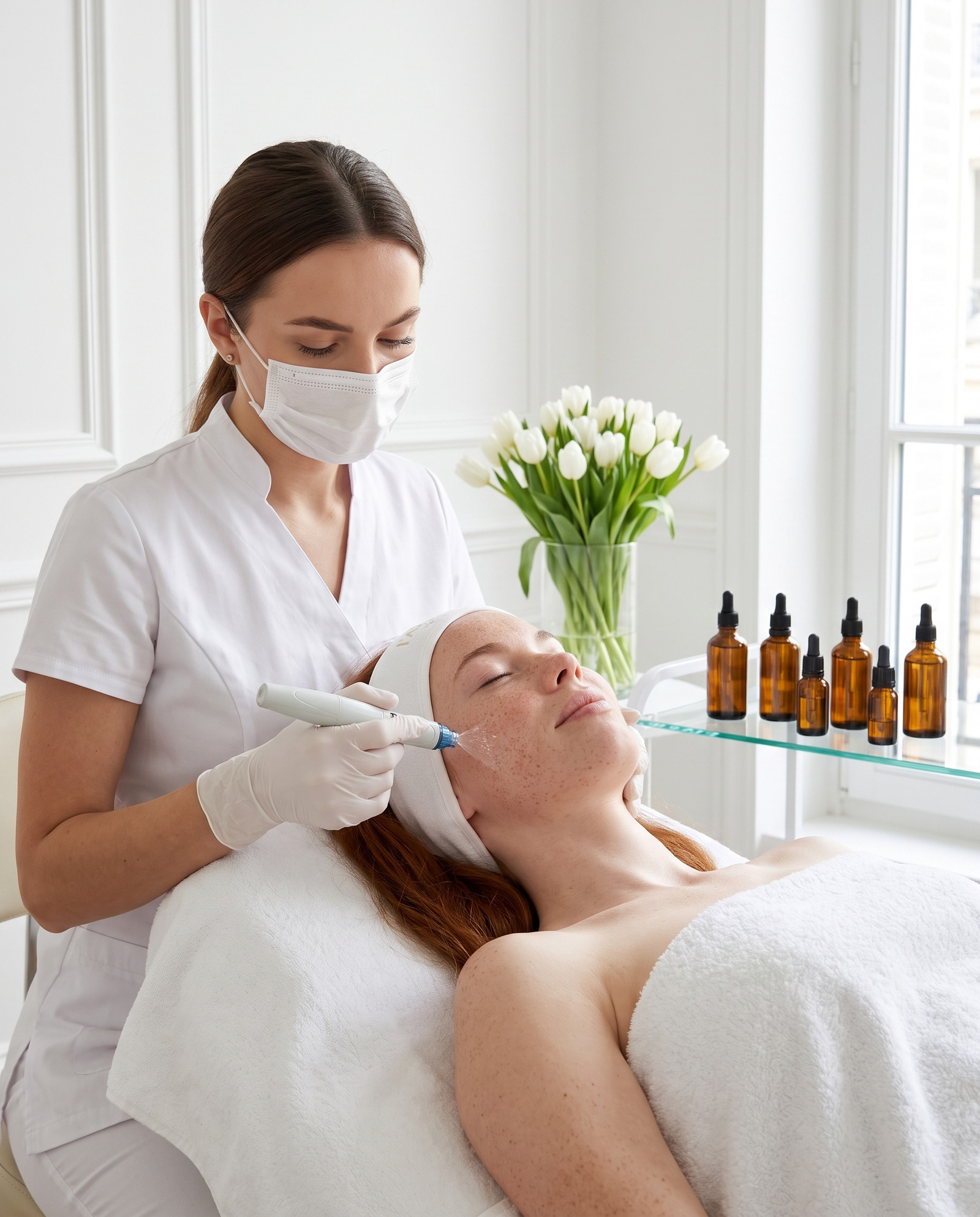
Needle-free mesotherapy
delivers actives through the skin without puncturing it
- delivers active substances through closed micro-channels
- sensitive skin with broken capillaries, reactive skin
- hydration, reduced signs of fatigue, improved skin tone
- zero downtime — makeup can be applied straight away
Nanopore mesotherapy
micro-channels open precise transport windows
- deeper delivery than the needle-free method, without a full puncture
- dehydrated, dull skin with early signs of ageing
- improved density and hydration, more even skin tone
- minimal skin reaction, brief rest after the treatment
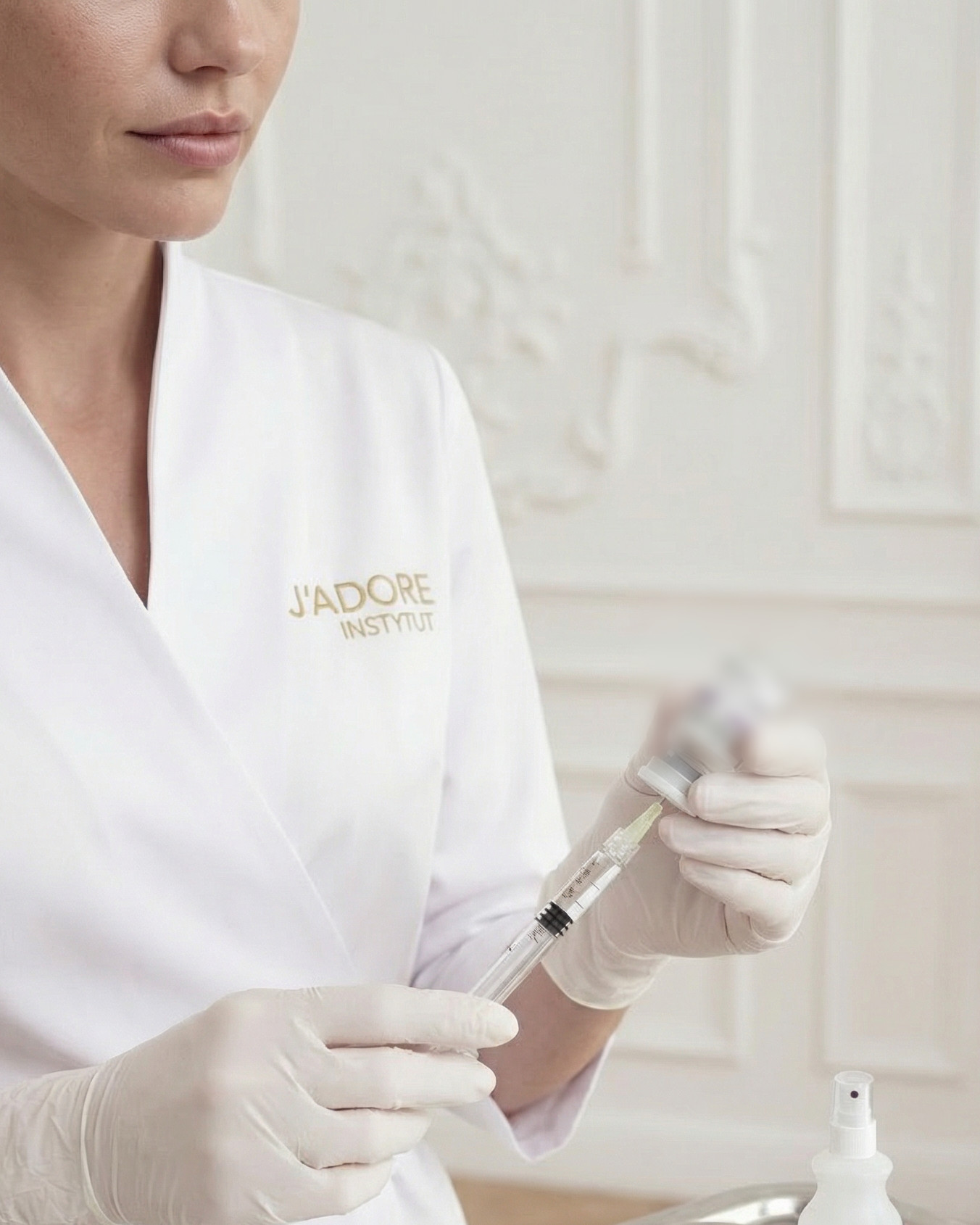
Needle mesotherapy
precise micro-injections deep into the dermis
- delivers the product directly to where it works
- advanced signs of ageing, loss of firmness, deep wrinkles
- stimulates fibroblasts and rebuilds skin from within
- visible results often after the first sessions of the series
How to recognise what your skin needs
Before you ask "which mesotherapy?", answer a few earlier questions first. Your answers will steer the conversation with your cosmetologist in the right direction:
- Is your main concern hydration and a grey complexion? Tired skin, lacking radiance, but without noticeable wrinkles — the direction is needle-free or nanopore.
- Is your skin losing firmness, with the first wrinkles appearing, thin like parchment? You need a boost to rebuild collagen — the direction is nanopore or needle mesotherapy, depending on sensitivity.
- Noticeable wrinkles, loss of density, sagging skin? This needs work at depth — the direction is needle mesotherapy, after consultation with a cosmetologist or doctor.
- Broken capillaries, redness, reactive skin? This calls for the needle-free method — no puncturing, no risk of irritating blood vessels.
- Scalp and hair loss concerns? Needle mesotherapy for the scalp is a separate category of treatment — it requires a trichological assessment.
One caveat: the list above offers guidance, not a diagnosis. Mature skin may need hydration and deep-layer repair at the same time. In that case, the plan becomes more complex. That's why it's best to start with a consultation, not with choosing a method.
When needle-free comes before needle mesotherapy — and when it's the other way round
The needle-free method is often seen as a "gentler version" of needle mesotherapy — that's an oversimplification. Either can be the first-choice method, but for different concerns. Here are a few situations that illustrate the difference well:
When to combine methods — the logic of a series
Mesotherapy works best as a series, and different methods can be combined in one plan — each covering what the other cannot achieve alone. The plan depends on your goal, your skin condition, and how much recovery time you can allow between visits:
- 01
Skin assessment
Consultation with a cosmetologist — a discussion, assessment of how deep the problem runs, and evaluation of vessels and reactivity. The method for the first series is chosen here.
- 02
Base series
Usually 3–5 sessions, spaced 2–4 weeks apart. Needle-free or nanopore for hydration, needle mesotherapy for deeper work. Results build up over the whole series.
- 03
Assessing results
After the base series — has your skin responded as planned? Does the method or product need adjusting for the next series?
- 04
Maintenance
A maintenance session once every few weeks or months. Here, needle-free treatment often complements needle mesotherapy: deep work in the series, plus a light booster in between.
Needle-free mesotherapy + acid peel
The peel exfoliates old cells; mesotherapy delivers actives right after — absorption can be deeper and faster. The cosmetologist decides on the order and choice of product.
Needle mesotherapy + LED photomodulation
Needle mesotherapy stimulates fibroblasts; LED in regenerative mode supports healing and can boost collagen production. This is a common protocol after invasive treatments.
Nanopore mesotherapy + biocellulose mask
Nanopore opens the micro-channels; an intensive mask "seals in" the effect and supports hydration. This protocol is popular in brightening and smoothing series.
Scalp mesotherapy + trichological treatments
For hair loss, needle mesotherapy of the scalp is often part of a wider trichological protocol. It requires a diagnosis of the cause of hair loss before the treatment is chosen.
A few facts worth knowing before your visit
Beyond choosing a method, practical questions often come up — and it helps to have the answers before your visit:
- How many sessions? Mesotherapy works in series. One session can give a result, but lasting change to skin condition usually comes after a complete series — typically a minimum of 3–4 sessions.
- When are results visible? With the needle-free and nanopore methods — often after the first or second session. With needle mesotherapy — skin may look more intense for a few days after the treatment, and results appear gradually as recovery progresses.
- How often can it be repeated? It depends on the method and protocol — your cosmetologist decides on the schedule. Sessions of needle mesotherapy spaced too close together don't give the skin time for a full regenerative response.
- What about aftercare? Needle-free — almost no restrictions. Nanopore — mild redness may appear for a few hours. Needle mesotherapy — avoid intense sun, sauna and activities that raise body temperature for a few days. SPF is essential throughout the course of treatment.
- Does it hurt? Needle-free and nanopore — practically no discomfort. Needle mesotherapy — it depends on the protocol, the product used, and individual sensitivity; numbing cream is used for more intensive protocols.