
Where the fear of refusal comes from
Most of us walk into a salon with a picture already in our head. You saw something on Instagram, read an article, or a friend had it done and it looks great — and the decision is already made: "I want that". A doctor who asks questions, digs deeper, challenges you, or says "no" outright can feel like an obstacle rather than an ally. That role reversal drives one of the biggest problems in aesthetics: salons that will do anything, simply because "the client wants it".
Seven myths about consultations, one by one
Myth 1: "A refusal means I'm a difficult patient, or that something's wrong with me."
Fact: refusing a treatment in a medical setting is the standard, not the exception. There are over a dozen categories of contraindications — temporary ones (active infection, pregnancy, blood-thinning medication, recent sun exposure), absolute ones (certain autoimmune conditions, active cancer, active herpes at the treatment site), and anatomical ones (previous surgery, scarring, implants). Each has a clear medical rationale. None of them says anything about you as a person. A doctor who asks detailed questions and refuses when necessary is simply doing their job.
Myth 2: "A good salon will always find a way, even if I have a contraindication."
Fact: that's not a strength — it's a warning sign. A treatment performed despite a contraindication doesn't work "better". It can work worse, cause a complication, or produce the opposite of the intended result. If a doctor hears that you have active skin lesions, that you're taking retinoids, or that you were sunbathing last week — and still says "no problem, let's do it" — that is the problem. Your comfort matters. Your safety matters more.
Myth 3: "If this doctor refuses, another salon will surely take my money."
Fact: that exact way of thinking fuels a market of salons that answer "of course" to every "I want this" — regardless of health or anatomy. A salon that never says no is a salon that always gets paid — and that should give you pause. A refusal in a good place and an agreement in a bad one are two ends of the same problem.
Myth 4: "The consultation is just a formality — I'll get what I came for anyway."
Fact: a well-conducted medical consultation is valuable in its own right — and can be the most important step in the whole process. The doctor assesses your anatomy (proportions, symmetry, skin quality, muscle tension), listens to what you expect, and then compares that expectation against what's possible. Sometimes the match is perfect. Sometimes it isn't. And that second "no" can protect you from a result that wouldn't have suited you, or from a treatment that, given your anatomy, simply wouldn't deliver what you wanted.
Myth 5: "If the doctor advises against it, they must lack experience, or be afraid of harder cases."
Fact: it's the opposite. An experienced doctor sees more — which is exactly why they have doubts more often. They know that certain treatments combined with specific anatomy give unpredictable results. They know some expectations need different tools than the ones you're asking for. And they know that "not now" can mean "yes, but after preparation". Naive confidence that "it can always be done" is a sign of inexperience, not expertise.
Myth 6: "The doctor is advising against it just to upsell me to a pricier treatment."
Fact: this myth has one rational root — a lack of trust, built over years of bad experiences at salons where sales come before diagnosis. And yes, in some places that's exactly what happens. That's why it's worth asking directly: why this treatment and not another? What specifically do you see in my anatomy that leads you to recommend this approach? A good doctor will answer without hesitation. That answer will either build trust or signal that it's time to look elsewhere.
Myth 7: "He said no, offered nothing else, and I left empty-handed."
Fact: a refusal isn't the end of the conversation — it's the real start of it. "I won't do X, because..." should always come with: "...but we could consider Y or Z, or revisit X once [condition] changes". A doctor who advises against a treatment with no alternative and no explanation isn't doing their job properly. A doctor who explains their reasoning and proposes a concrete path gives you something priceless: honest information about yourself that you won't get from any other conversation.
What a good consultation looks like — and how to recognise one
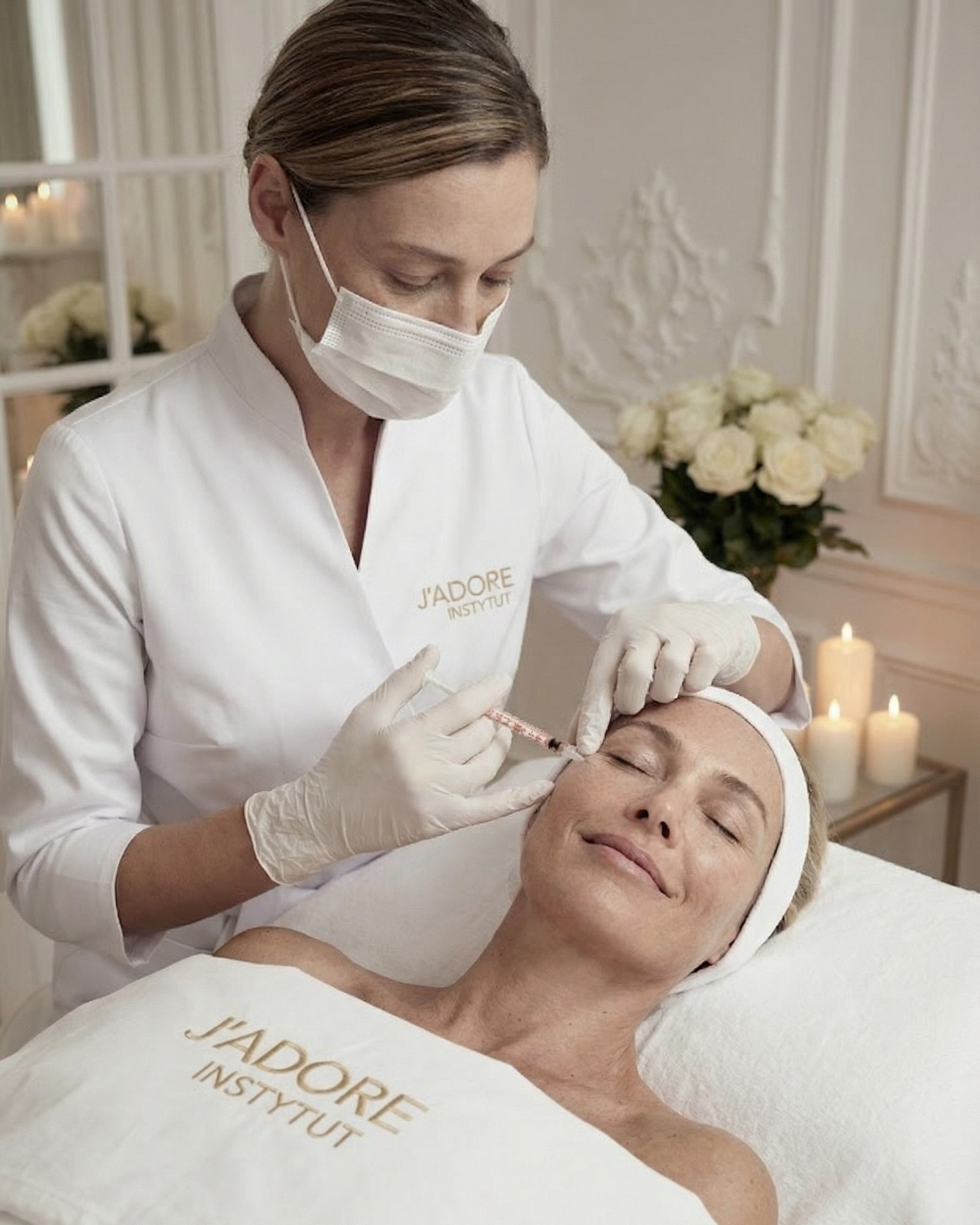
A good medical consultation in aesthetic medicine has a few fixed elements. They set it apart from a quick chat before a treatment. First — the doctor asks about your medical history, not just what you want. Questions about medication, chronic conditions, previous treatments, pregnancy, allergies — this isn't bureaucracy. It's the foundation. Without it, every treatment decision is made blind. Second — they carry out a visual and hands-on assessment (skin, proportions, symmetry), because what they see and what you describe are often not the same thing. Third — they explain their conclusions, not just state them.
That last point is crucial. There's a fundamental difference between "I'd recommend X for you" and "I can see the muscles here are asymmetrically tense, so Y would give an unpredictable result — that's why I'm suggesting X". The first is service. The second is medicine. You have the right to ask for the reasoning behind every recommendation — and the right not to understand it the first time, and to keep asking until you do.
What to do with a refusal — in practice
If you've heard "no" or "not now", ask three questions before you leave. Why? — what specifically makes this treatment unsuitable: anatomy, health, timing, expectations? For how long? — is this an absolute refusal or a temporary one? If temporary, what needs to change, and when can you come back? What instead? — is there an alternative that gives a similar or better result in your case?
These three questions turn a potentially frustrating visit into the first conversation of a good plan. A plan built on an honest assessment — even one that starts with "no" — always beats a series of treatments carried out without one.
One caveat: if the answers to these questions are vague, evasive, or the doctor can't explain their reasoning, that's a signal to seek a second opinion. A refusal only makes sense when it's justified. A refusal without explanation isn't medicine — it's just as flawed as consent without assessment.
Conclusion — "no" as the foundation of trust
In a world where "the client is always right", and where any anonymous account can recommend any treatment with zero accountability, a salon that can say "no" is worth more than a hundred before-and-after adverts. Trust is built in exactly these moments — not when everything goes to plan, but when someone tells you a truth you might not have wanted to hear.
A medical consultation isn't a formality, or a hurdle to get past. Done honestly, it's a conversation that gives you something priceless: a picture of yourself through a specialist's eyes — someone giving you their full attention, with no interest in selling you more. And if that conversation ends with "not now" or "not that", don't leave frustrated. Go home with one thought instead: you've just been to a good doctor.