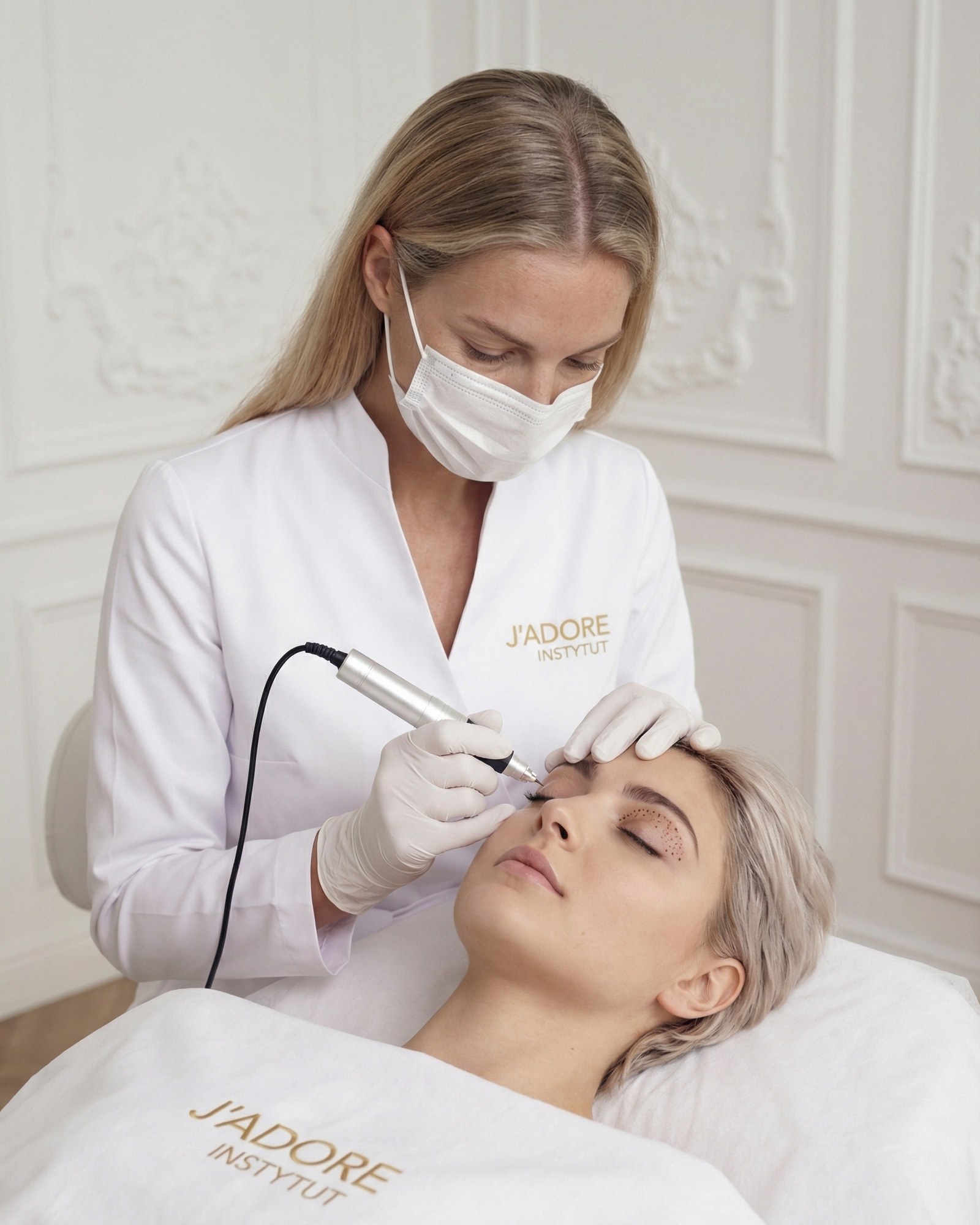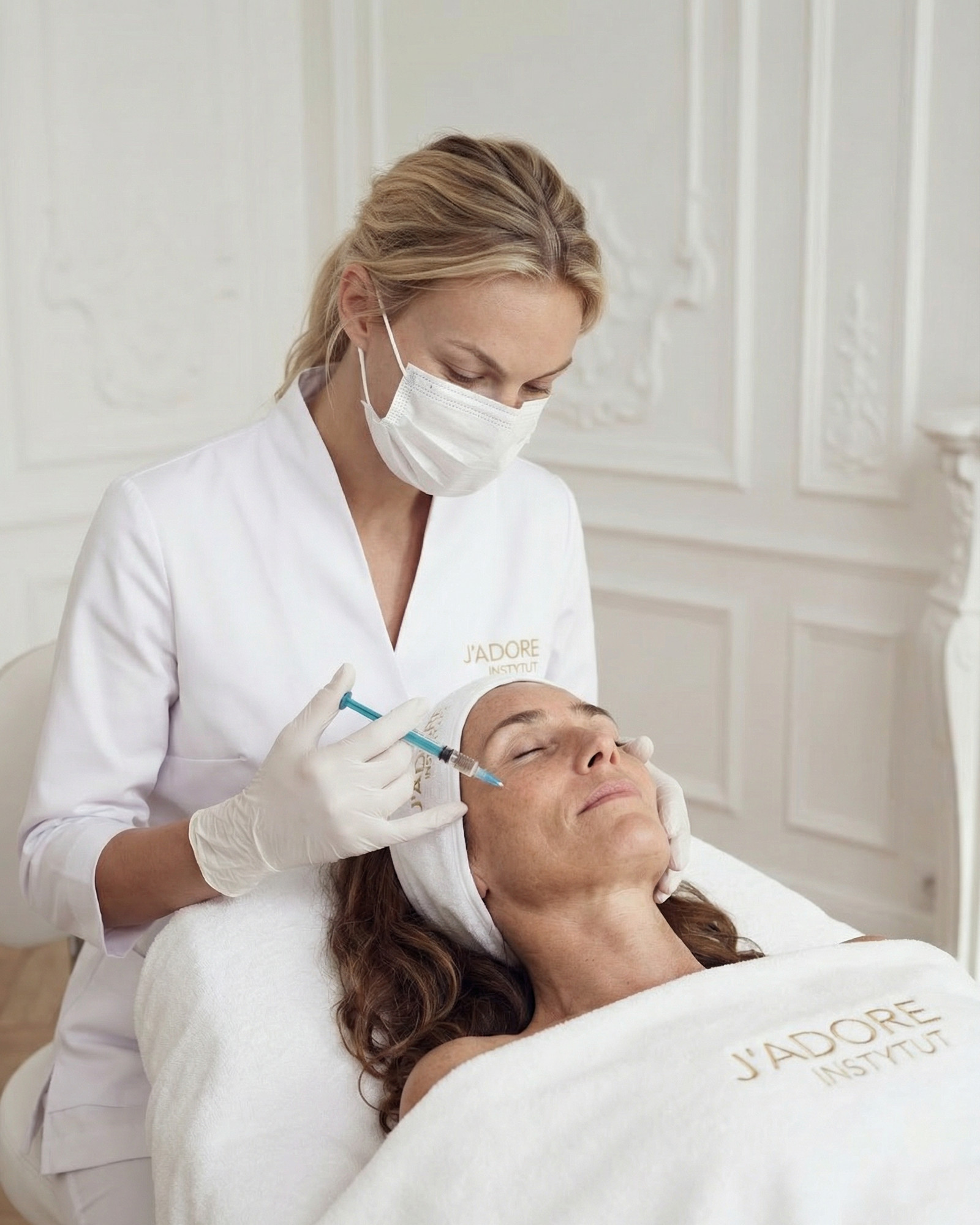
Two areas, two layers, two goals
There's one thing worth understanding from the start: under-eye mesotherapy works on the skin, while filler works on volume beneath the skin. It's the difference between hydrating a wall and laying concrete behind it. The effects differ, the depth differs, and so do the indications.
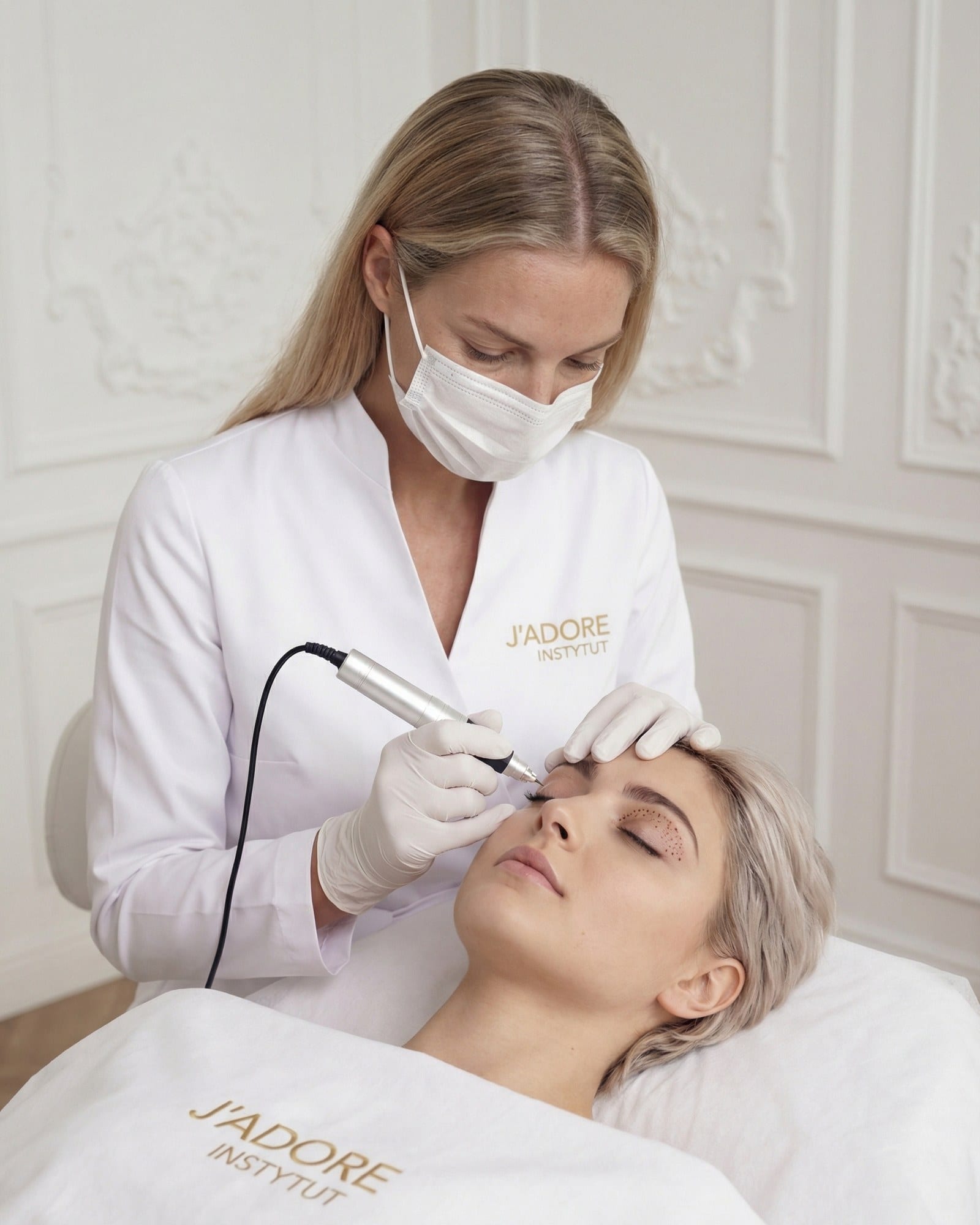
Under-eye mesotherapy
nourishes and regenerates the eyelid and under-eye skin
- thin, dehydrated skin around the eye
- fine lines, greyish tone, lack of radiance
- improves skin quality — density, hydration, firmness
- crow's feet, a tired look without volume loss
- results build gradually over a series
Tear trough filler
restores volume and corrects the under-eye groove
- a visible groove running from the nose towards the cheek (tear trough)
- a shadow caused by tissue "hollowing", not pigmentation
- result visible immediately after the treatment
- a medical procedure — hyaluronic acid placed in deep tissue
- a natural transition between the eye and cheek
Many people come to a consultation thinking "I want something for dark circles" — and only in the salon does it become clear whether it's a skin issue (solution: mesotherapy), a volume issue (solution: filler), or both. This is exactly why this area calls for a conversation with an experienced specialist, not a choice made straight from a price list.
How to tell what you need — a home test
Before your consultation, try a simple test in front of a mirror in natural light — not in a bathroom with overhead lighting, which distorts things. It takes two minutes and gives your conversation direction:
- Touch the skin under your eye. If it's thin and paper-like, and you can see the blood vessels through it, that's a skin quality issue. Direction: mesotherapy.
- Look at your profile. Can you see a clear hollow or groove running from the inner corner of the eye towards the cheek? That may be a tear trough — direction: filler, a medical procedure.
- Gently stretch the skin under your eye. If the shadow visibly fades, it's pigmentation or blood vessels. If it stays, it's geometry — a lack of volume.
- Check by a window in natural light. A shadow that's symmetrical, deep, and unchanged by rest or lighting is a classic tear trough.
- Assess the overall look: a tired appearance without a clear groove — this is often a combination of dehydrated skin and a greyish tone. A series of mesotherapy sessions works best here.
Remember: a home test is a map, not a diagnosis. The eye area is anatomically unique — tissue is thin, blood vessels are dense, and filler applied incorrectly here can cause unwanted results. This is exactly why the tear trough is one of those areas where a doctor's qualification really matters — not just a formality.
When it's worth combining them — and who decides
The mature eye area rarely has just one problem. More often, thin, dehydrated eyelid skin appears alongside a visible under-eye groove on the side profile. In these cases, combining both methods achieves results that neither one can deliver on its own:
Mesotherapy + tear trough filler
first rebuilding the skin (quality, density), then correcting volume. Two layers, two tools, one logic.
Mesotherapy + polynucleotides/exosomes
intensive regeneration of the skin around the eye for a "radiant" finish — recommended when the skin is especially thin and sensitive.
Tear trough filler + biostimulator
volume here and now, plus long-term collagen rebuilding in the area. Often used for clients over 40.
Mesotherapy as preparation
before filler, a series of mesotherapy sessions "primes" the skin: improved blood flow and hydration help the filler sit more naturally.
The sequence, injection depth and interval between sessions are always decided by a doctor — not because "that's how it's done", but because every face is anatomically different. Skin thickness, vascular structures, bone symmetry — none of this is visible on a selfie, yet all of it is critical for safety.
When you absolutely need a doctor
An experienced cosmetologist can perform under-eye mesotherapy — it's a treatment that works within the dermis. But tear trough filler is strictly a doctor's procedure. Not because of regulations, but because of anatomy and risk:
- The under-eye area has a dense network of blood vessels — incorrect injection can lead to vascular complications.
- The Tyndall effect (a bluish tint) results from placing filler too superficially — correcting it requires a different product and medical expertise.
- Anatomical asymmetry in the facial skeleton affects how filler distributes — a doctor assesses this clinically.
- Only a doctor has access to hyaluronidase, the enzyme that dissolves hyaluronic acid — essential in the case of complications.