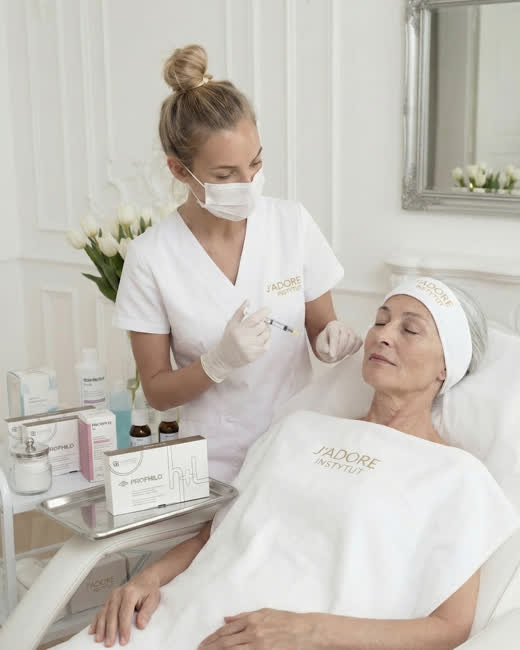
Why the eye area shows tiredness first
The skin under the eye is the thinnest on the whole body — in places almost translucent. There's barely any fat tissue here to buffer and diffuse light the way it does elsewhere, and blood vessels run just beneath the surface. It's an anatomical disadvantage: any change — a dilated vessel, a touch of pigment, lost volume — shows immediately, quite literally.
Then daily life adds to it. Poor sleep, salt in your diet, allergies, long hours at a screen, smoking, dehydration — all of this worsens stagnation and makes the eye area look "darker". But note: these factors worsen the shadow; they rarely create it. Underneath, there's usually one of three structural mechanisms at work — and you need to identify it before you can do anything effective about it.
It's also worth saying honestly: some dark circles are written into your genes and facial structure. In some people — regardless of gender, though the topic comes up just as often in men, just less often discussed — deep-set eyes or a pronounced boundary between the eyelid and cheek create a structural shadow that no cream will "brighten", because it isn't a matter of colour at all. This makes it even more important to identify the type before starting treatment.
Three types of dark circles — three completely different causes
This is the heart of the whole article. Keep it simple: vascular circles get their colour from blood vessels, pigmentation circles get their colour from pigment, and tear trough circles aren't about colour at all — they're a shadow cast by a hollow. Each responds to something different, which is exactly why there's no single "treatment for dark circles".
Vascular
visible blood vessels
- bluish, purple, blue-ish tone
- worsens with tiredness, in the morning, after salt/alcohol
- very thin, "translucent" skin
- often runs in families, present from a young age
Pigmentation
excess melanin
- brown, beige, "coffee-toned" shade
- doesn't disappear when the skin is stretched
- worsened by sun, friction, inflammation
- more common with darker skin tones
Tear trough
shadow cast by a hollow
- a groove/furrow at the boundary between eyelid and cheek
- it's a play of light and shadow, not a stain
- deepens with age (volume loss)
- visible even with light, even-toned skin
In practice, types tend to overlap. A very common combination is vascular shadow plus a tear trough that deepens with age — the bluish tone sits in the groove, and the groove deepens it further. That's why identifying the type isn't an either/or choice. It's about working out what dominates and where to start.
Home test — identify your type in a minute in front of the mirror
Before anyone suggests a treatment, you can run three simple checks yourself, in good natural light — ideally by a window, without concealer. This isn't a diagnosis, but it sets the conversation on the right track and helps avoid treating the wrong problem.
- Stretch test. Gently pull the skin under your eye to the side. If the discolouration lightens or disappears → it's most likely vascular (stretching the skin reduces how much the vessels show through). If the colour stays the same → it's most likely pigmentation (the pigment sits in the skin, not underneath it).
- Light and shadow test. Face a window, then raise a light source (like your phone torch) from below, underneath your face. If the "shadow" clearly flattens and disappears when you light the area from below → that's a tear trough (a shadow cast by a hollow, not a stain).
- Colour test. Look closely at the colour: bluish/purple suggests vascular, brown/beige suggests pigmentation, and no clear colour, but a visible groove points to a tear trough.
- Morning test. Compare the eye area right after waking up and after a few hours on your feet. If it's noticeably darker in the morning and eases during the day → a strong vascular/circulatory component.
One more thing worth knowing upfront: when there's a strong genetic or anatomical component (deep-set eyes, a family tendency towards bluish shadows), a realistic goal is noticeable softening and lightening, not complete "erasure". An honest consultation will tell you this directly — and that's a good sign, not bad news.
What actually works for which type
Since there are three mechanisms, there are also three directions of treatment. Below is the logic — without promising miracles, because the choice of a specific method and its suitability is always decided by a specialist during consultation.
For vascular circles and skin quality
thicken and firm thin skin
- mesotherapy for the eye area — hydration, density, microcirculation
- revitalising ingredients that support the vessels
- the effect builds up gradually, over a series
For pigmentation
calm the pigment and protect
- a brightening treatment targeted at hyperpigmentation
- strict sun protection
- gentleness — the eye area doesn't tolerate irritation
For tear trough
replenish volume, remove the shadow
- precise volume replacement in the eye area
- the shadow disappears because the hollow that cast it disappears
- a medical treatment, after a thorough consultation
When it's best to combine treatments — because a "pure" single type is rare
A single treatment for an area with several problems at once rarely gives the most natural results. A well-thought-out sequence works better — matched to what dominates and spread out over time. The logic of combining stays the same, though the order and intervals are set by a specialist:
Tear trough + skin quality
first, remove the structural shadow, then work on the thin, "translucent" skin so the vessels show through less.
Brightening + protection
with pigmentation, the treatment and daily SPF go together as one set; without protection, the pigment comes back.
Vascular + pigmentation
a common duo: first calm the pigment, while also supporting skin density and microcirculation.
Home care as a foundation
sleep, hydration, less salt and gentle skincare won't replace a treatment, but they can noticeably help it deliver more.
A good clinic doesn't sell a "treatment for dark circles". It first identifies the type, and only then chooses the tool. If a clinic offers one miracle treatment for every type of dark circle straight away, without examining the area or running a simple test — that's a good moment to ask: which specific mechanism is this meant to address? For men, who more often come to the clinic with strongly vascular, "tired" shadows, the same rule applies one hundred per cent — diagnosis first, tool second.