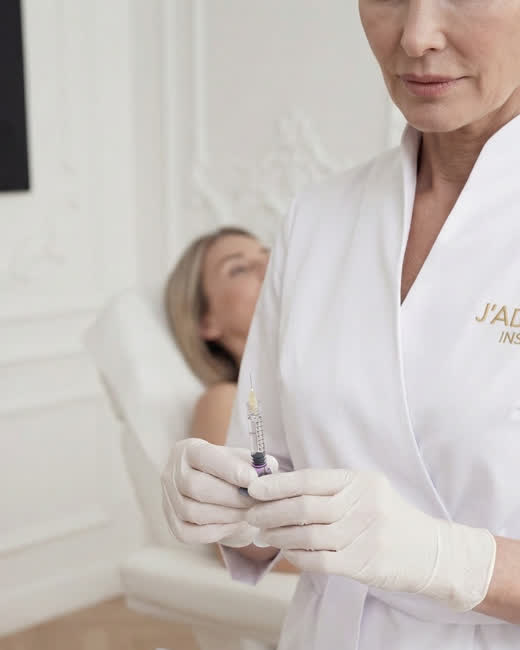
The injection is brief, but the nose remains a sensitive area
The first sensation is the needle or cannula touching the skin: a pinpoint burning, stinging, or pressure. The nose has little soft tissue over the bone and cartilage structures, so the movement of the tool may be felt more clearly than in softer parts of the face. Comparing pain scales between people is not very informative; what matters is the injection site, technique, speed, and individual sensitivity.
There is no need to pretend the treatment is relaxing. It can be unpleasant. At the same time, very strong, burning, or rapidly increasing pain should be reported to the doctor immediately, rather than endured for a "better result".
Pressure results from the volume administered in a confined space
During the deposit, you may feel pressure and a sense of fullness. This is a different sensation from a superficial sting. The doctor should work slowly, observe the skin colour, and ask about your sensations. Your feedback is part of safety monitoring, not an interruption of the procedure.
After the treatment, tenderness to touch and slight swelling may occur. However, the nose should not be pressed hard or massaged without explicit instructions. Attempting to "adjust the shape" at home can increase swelling and make assessment difficult.
Anaesthesia reduces skin pain but does not eliminate every sensation
Numbing cream limits superficial stinging, and some products contain an anaesthetic agent. You may still feel pressure, the movement of the tool, and a sense of fullness. More anaesthesia does not always mean better: the doctor selects the method to maintain control over the tissue and perform the procedure safely.
- Tell us before the treatment if you have previously fainted during injections.
- Do not take painkillers or sedatives "just in case" without consultation.
- Eat a light meal and arrive without rushing.
- Report any change in the nature of the pain in real time.
What can hurt more than social media videos suggest
Recordings show a few seconds of injection, not the tense waiting, disinfection, touch in a sensitive area, or subsequent tenderness. For some, stress and the reflex to tear up are bigger problems than the pain itself. A calm position, information about the next stages, and the option to take a break all help.
The promise that "you will feel nothing" does not help. It is more honest to prepare for a brief sting, pressure, and possible tenderness. Surprise increases tension, and tension can intensify the perception of stimuli.
Warning pain has characteristics that should not be waited out
A normal bruise changes colour over the following days and is locally tender. Ischaemia can cause disproportionate pain and discolouration beyond the injection point itself. You do not have to diagnose yourself; you need to know who to call at any time indicated in the aftercare instructions.
Minimising discomfort cannot overshadow qualification
The greatest risk is not removed by numbing cream, but by proper qualification and technique. The doctor should know about previous fillers, surgeries, nose injuries, illnesses, allergies, and medications taken. An active infection or skin lesion in the area is a reason to postpone the procedure.
Filler correction will not make the nose smaller or improve breathing. For someone with that goal, it is not worth enduring even minor pain, as the method is poorly chosen. Comfort does not make an inappropriate procedure the right one.
In Warsaw, establish contact after the treatment before the injection
J’ADORE INSTYTUT has Warsaw locations at Żelazna 59 and Mińska 29A/46. Service details are on the Warsaw nose correction page. During the consultation, ask what pain is considered typical, what is a warning sign, and how to contact the salon after you leave.
A good procedure is not about "enduring it". Typical discomfort is brief and controlled, and every concerning signal is assessed immediately. This principle is more useful than someone else's pain assessment on a scale of one to ten.
Sensations change in stages: from disinfection to the first hour
Before the injection, the area is cleaned and disinfected. The coolness of the liquid, the smell of the agent, and the touch during the nose examination do not hurt, but in a tense person, they can increase the anticipation of the needle. If numbing cream is used, the skin may become numb, heavy, or slightly tingly. This superficial sensation does not block the awareness of pressure deeper in the tissues.
The skin puncture itself is usually a distinct and brief point. The next sensation may resemble pressure, fullness, or movement in a stationary area. Not every part of the nose perceives the stimulus identically, and the number of injections depends on the doctor's plan. You should not predict the technique based on this or ask for a specific route of administration; however, you can ask for information before the next stage.
After completion, you may feel warmth, throbbing, tenderness during facial expressions, or the feeling that the nose is more present than usual. Part of this sensation results from attention focused on the freshly treated area. The doctor assesses the skin and the result before you leave. It is important not to rush this observation due to another appointment or transport.
In the first hour, expected sensations should remain mild or gradually subside in accordance with the instructions. A sudden change in the nature of the pain is more important than whether someone rates it as three or six points. If burning, increasing pain occurs, which is disproportionate to touch or combined with abnormal skin colour, do not wait for the scheduled follow-up.

Fear of the needle can increase discomfort, but you must not blame it for symptoms
Tension can cause faster breathing, neck stiffness, clenched hands, nausea, dizziness, or a feeling of heat. These are real reactions, not a lack of willpower. Tell us about them before starting. A person with a history of fainting should be prepared in a position and conditions chosen by the staff, and after the procedure, they should only stand up after their well-being has been assessed.
A simple communication agreement helps: the doctor announces the moment of injection, you signal the need for a break and describe the pain without apologising. Not everyone wants to hear technical details during the procedure; you can agree in advance whether full information or short messages are better. Breathing should remain free. Holding your breath and tensing your whole body usually makes it harder to get through a brief stimulus calmly.
However, you must not explain away a symptom that may indicate a complication as just anxiety. The phrase "it is probably stress" is not enough when there is vision change, whitening, bruising, mottling, or increasing pain. First, the doctor should assess tissue safety. Only after excluding an urgent problem can it be assumed that some sensations were related to the reaction to the needle.
If the fear is so strong that you are unable to lie still, communicate, or consciously accept the risk, postponing the treatment is reasonable. Aesthetic correction is not a procedure that must be completed at all costs. Simply showing up for a consultation does not commit you to an injection on the same day.
Do not prepare for pain with self-selected medications
The list of medications, supplements, and illnesses is part of the qualification. Do not stop prescribed treatment after reading a guide, and do not add a painkiller without consultation. Some agents can affect clotting, bruising, alertness, or the interpretation of symptoms. The decision to use them is made with a doctor who knows your health status.
During the consultation, also mention allergies, previous reactions to anaesthesia, hyaluronidase, or fillers. Report any infection, cold sores, skin inflammation, and recent procedures in the facial area. Anaesthesia does not resolve a contraindication; it only affects the sensation. If tissues should not be injected on a given day, the lack of pain will not make the treatment safe.
A light meal, hydration, and not being in a rush help limit stress-related discomfort, but they are not a guarantee of a specific reaction. Do not arrive under the influence of alcohol or substances that alter your assessment of the situation. A person giving consent must understand the procedure, be able to describe symptoms, and follow instructions after leaving.
Tenderness after the treatment is assessed by change over time, not by comparison with a friend
One person feels mainly tension, another a delicate sting when touched, and yet another barely pays attention to the area. The difference does not prove better or worse performance. What matters is whether the reaction falls within the doctor's recommendations, whether it is subsiding, and whether it is not accompanied by vascular signals, vision disturbances, fever, or symptoms of infection.
Do not check the shape every few minutes by pressing hard on your nose. Touching increases local sensitivity, can increase swelling, and blur the image. Do not try to move the product, even out asymmetry, or perform a massage based on a video. If the doctor recommends a specific action, they should show you how and specify the timing and frequency. The absence of such a recommendation means leaving the area alone.
A bruise can be tender to the touch and change colour during healing. Disproportionate pain with pale, blue, or mottled skin requires a different approach. A photo sent to the salon can help, but in the case of warning symptoms, it should not replace a quick assessment. The previously established contact route shortens the time wasted looking for a number.
A scale from one to ten only makes sense together with a description of the pain
A digit is a communication shortcut, but two people can assign completely different values to the same stimulus. The doctor also needs answers: where it hurts, when it started, whether the pain is increasing, whether it is burning, throbbing, pressing, constant, or triggered by touch. It is also important what is happening with the skin and vision. This set of information provides more than a lonely seven.
During the injection, you can say: "I feel a short sharp point, then pressure" or "a new burning sensation has appeared, which is increasing". The first description may correspond to an expected stage; the second requires stopping and assessment. You do not have to identify a complication; you have to report the change. The doctor decides what it means and whether it is possible to continue.
After leaving, note the approximate time the concerning symptom appeared and take a photo in neutral light if it does not delay contact. Do not wait until the pain reaches an arbitrary value. In the nose area, the dynamics and accompanying symptoms are important. The aftercare instructions should clearly state when to contact us immediately and when to observe.
What not to plan immediately after the treatment, even if the injection was easy
A brief and well-tolerated treatment does not mean the nose immediately stops being tender. Do not plan activities immediately after where the area could be accidentally hit, pressed hard, or overheated. Specific restrictions depend on the procedure and the doctor's recommendations; establish them before the visit if you have training, a dental procedure, travel, or a duty requiring equipment that presses on the nose on the same day.
Glasses, goggles, a helmet, and a tight mask can exert pressure exactly where the tissues are freshly injected. Do not decide on your own when you can return to them. Tell the doctor what you use on a daily basis, and they will relate the recommendation to the injection site. This is especially important when the correction was performed on the bridge.
Make-up should not be used to immediately cover injection points without the consent of the person performing the treatment. Friction, applicators, and unclean hands can irritate the area. Ask when and how you can clean the skin, what to use for a small bruise, and which products not to apply. General advice from the web does not take into account your skin or the course of the procedure.
The most important rule is: an easy course does not exempt you from observation. Complications do not have to start spectacularly, and high pain tolerance does not protect the vessels. Receive the recommendations, save the contact number, and make sure you understand the warning symptoms. This plan, not a promise of painlessness, gives a sense of control.