Knees, calves and thighs — firming, cellulite, hair removal
Every concern affecting the legs has a solution — the key is choosing the right method.
7 min readwritten for women
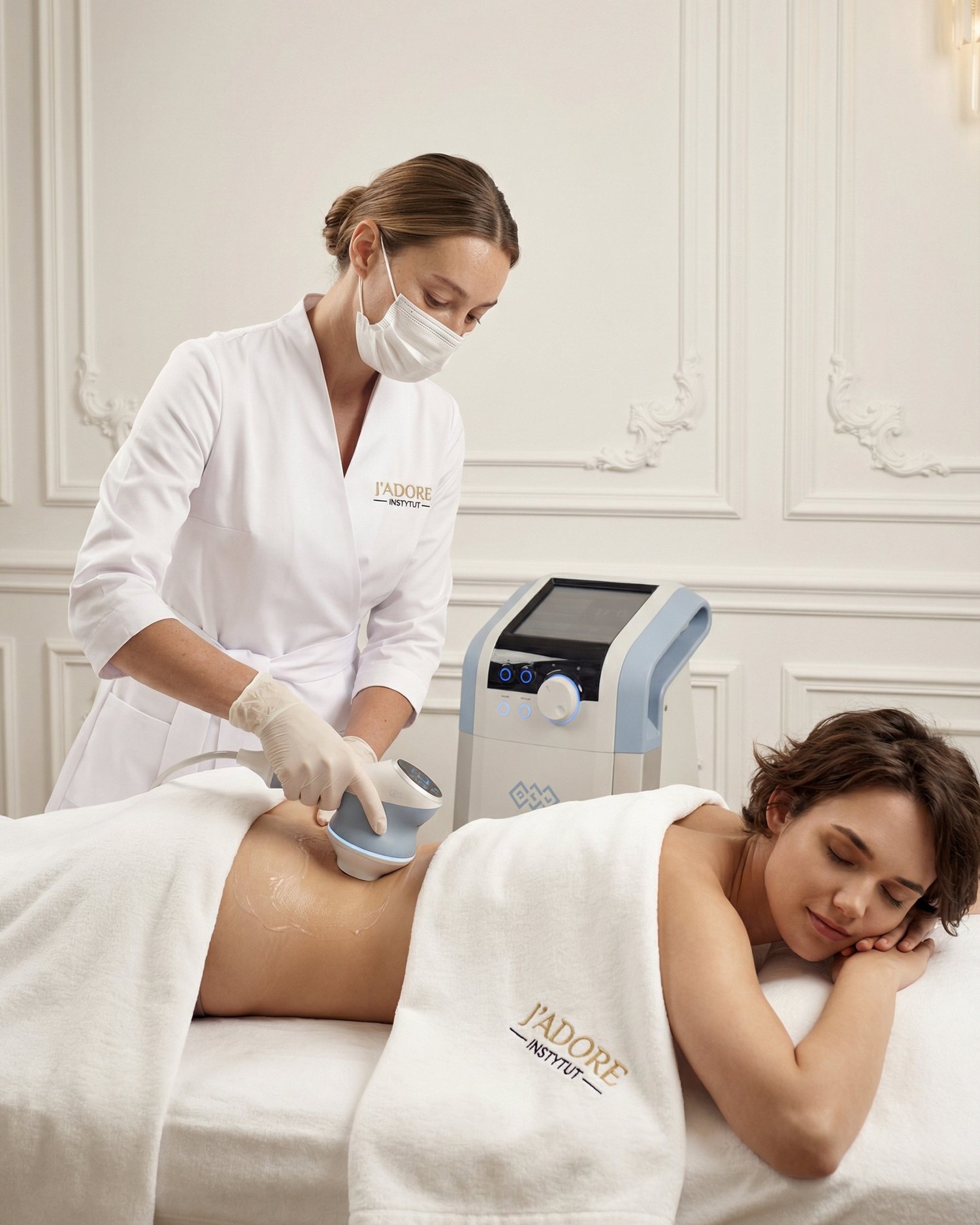
Illustrative photo. It shows an example of how the treatment is performed.
7 min read14 September 2026
Legs are an area that often causes insecurity: “pads” above the knees, cellulite on the thighs, laxity on the inner thighs after weight loss or after the age of 40, and excessive hair growth. Each concern requires a different approach. A good assessment is half the success. Below, we discuss the methods we use most often at J'ADORE.
01
Common concerns and suitable methods
Grade II–III cellulite on the thighs → Emtone BTL, LPG, Arosha compression bandages
Soprano ICE is SHR (Super Hair Removal) technology — gradual heating of the hair follicle rather than a sudden pulse of light. The treatment is significantly less noticeable than traditional laser hair removal. It can be performed at any stage of tanning, following consultation.
Full leg: calves + thighs (can be extended to include knees and toes)
A course usually consists of several to over a dozen sessions
The interval between sessions is determined by the hair growth cycle — usually several weeks
After completing the course, hair often does not regrow for many months or years
05
Heavy, swollen legs — lymphatic drainage
06
Telangiectasia (spider veins) on the legs
Spider veins and small blood vessels on the legs vary in size and depth. This determines the choice of method:
Small telangiectasia (below 1 mm) — DYE-VL or electrocoagulation, closing the vessel with minimal invasiveness
Reticular veins (2–4 mm) — sclerotherapy or electrocoagulation, requiring assessment by a phlebologist
True varicose veins (above 4 mm) — the domain of a phlebologist or vascular surgeon, not cosmetology
07
How should you plan a leg treatment programme?
Legs rarely require just one treatment — most often, a combination of methods is needed. An example approach for cellulite with laxity:
A course of Emtone or ESWT (cellulite) + Maximus TriLipo RF (laxity) — can be alternated
BTL Lymphastim drainage between sessions — accelerates detoxification and fluid drainage
Arosha bandages — maintenance compression between treatments
Laser hair removal — planned separately or in parallel, without interfering with the above