WarszawaŻelazna 59WarszawaMińska 29AKrakówKarmelicka 45Warszawa · Kraków

Careers

ENPL

Warsaw · KrakowSkin Clinic & Med Spa

PLEN
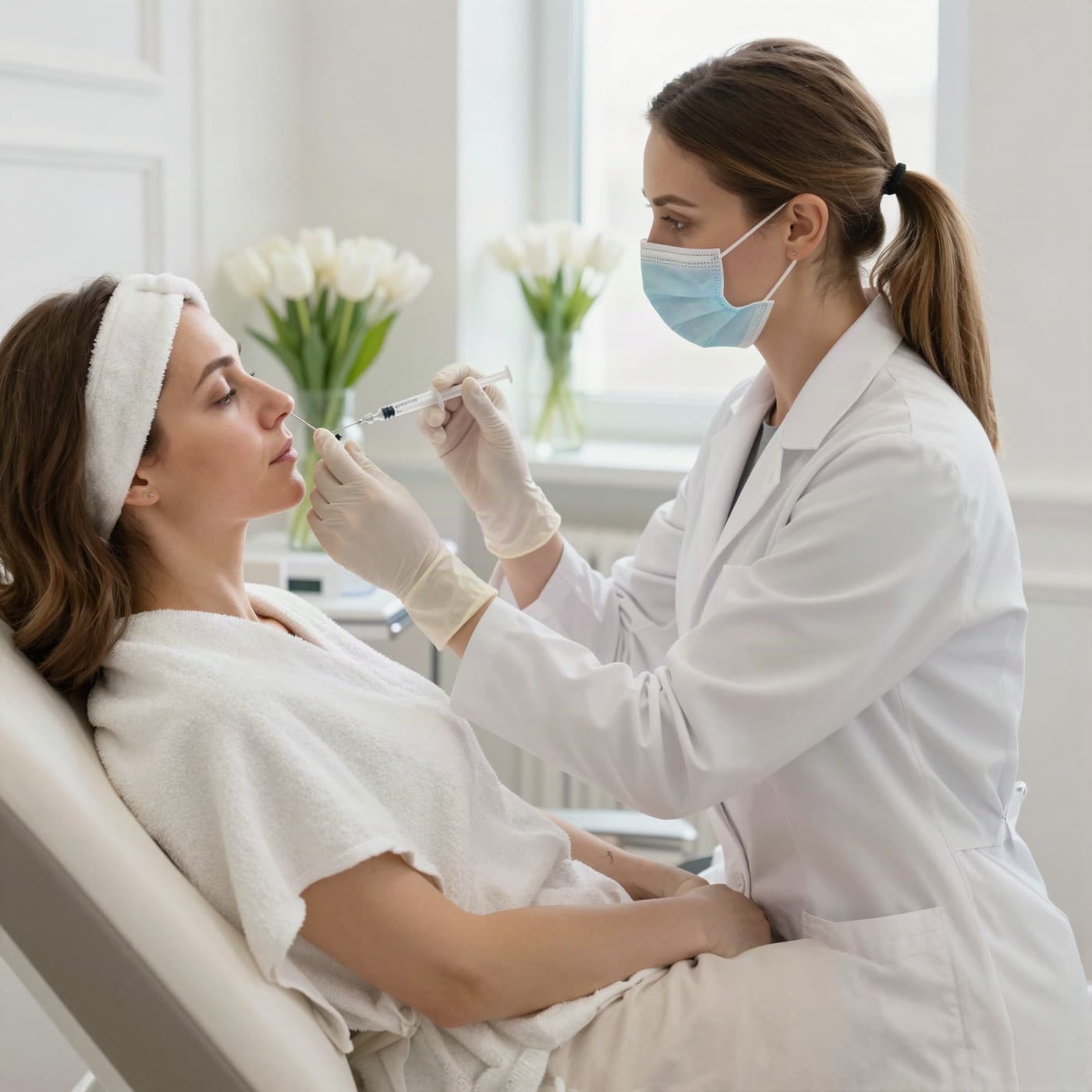
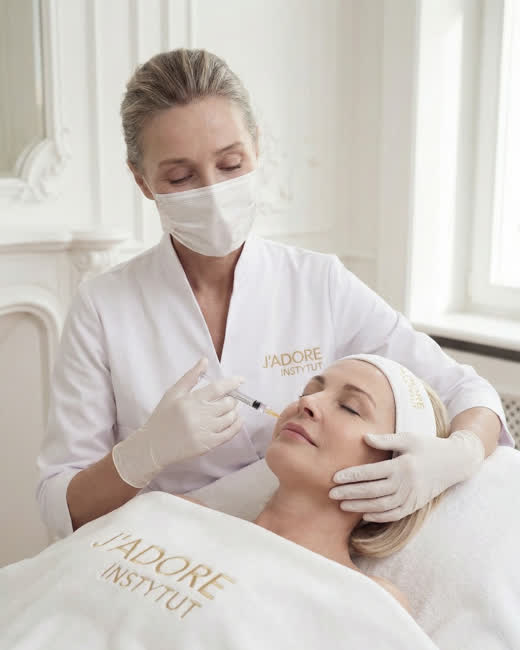
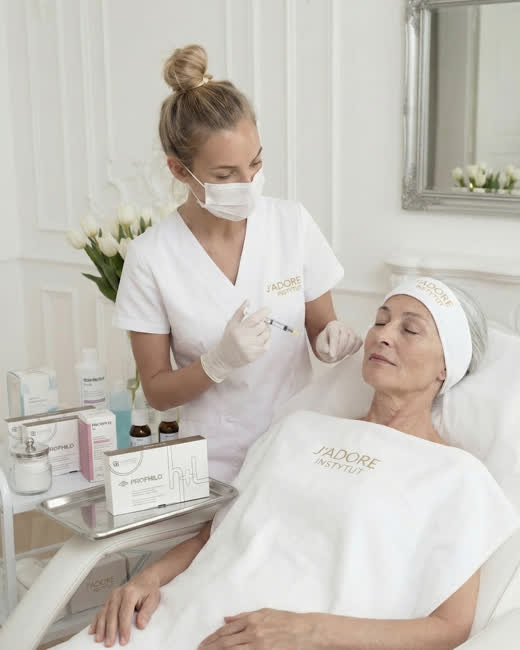
Non-surgical rhinoplasty — treatment at J'adore InstytutA treatment room at J'adore

AESTHETIC MEDICINE

Profile contouring
“reversible correction”

A visible hump in profile, a drooping "heavy" tip, or slight asymmetry after an injury — these details can dominate the whole face, even though they involve just one small feature. Non-surgical nose correction is profile contouring with a dense hyaluronic acid gel.

We don't remove tissue or "slim down" the nose. Instead, we add a touch of volume at precisely chosen points to harmonise the line. Paradoxically, the hump "disappears" because we even out the area around it. Results are visible immediately, and the outcome is reversible. Below you'll find everything worth knowing before your first visit.

  • A visible hump
  • A drooping or "heavy" nasal tip
  • Asymmetry
  • Overall profile harmony
  • Wanting to preview the direction of change

usually 1 session + an optional follow-up/touch-up as needed

Book an appointment
Duration
around 30–45 minutes (including preparation)
Result
usually longer than in other areas (the nose barely moves)
Recovery
minimal — slight swelling, occasional bruising for a few days
Sessions
usually 1 session + an optional follow-up/touch-up as needed
Performed by
aesthetic medicine doctor

How it works

How it works

Nose correction with hyaluronic acid is precise profile contouring using a dense HA gel. The doctor injects small amounts of a firmly supportive filler at selected points along the bridge and tip. The new profile is shaped as the treatment progresses, with symmetry checked throughout. This allows us to optically even out a hump (by filling the areas above and below it, so the side profile becomes straight), lift a drooping tip, and correct minor asymmetry or irregularities after an injury.

The most important myth to bust: hyaluronic acid doesn't reduce the size of the nose. The treatment doesn't remove tissue or "slim down" a large nose — quite the opposite. It adds a touch of volume at strategic points to harmonise the profile. Paradoxically, the hump "disappears" because we even out the line around it, not because we take the hump away. This treatment adds rather than removes — and like any HA-based filler, it's reversible: the product can be dissolved with an enzyme (hyaluronidase).

Three layers in cross-section: the epidermis at the surface, the dermis beneath it, and deepest of all the subcutaneous layer, where the support of the tissues lies. The needle travels along the bridge of the nose and leaves the formula deep down, just above the cartilage and the bone. The doctor chooses the delivery level during the consultation.
  1. Epidermisthe surface the delivery does not involve
  2. Dermisthe layer the needle is guided through
  3. Subcutaneous layerthe space where we rebuild the support

Ideal for

Ideal for

  1. A visible humpin profile — for optical evening of the line.
  2. A drooping or "heavy" nasal tipfor gentle lifting.
  3. Asymmetryand minor irregularities — including after an injury.
  4. Overall profile harmonya subtle correction that improves the relationship between the nose, forehead, chin and lips.
  5. Wanting to preview the direction of changebefore deciding on surgery — HA correction can be a great "first step".
  6. When is surgery the better choice? When the nose is large and needs genuine reduction, when the septum is significantly deviated, or when there are breathing problems — HA won't solve these, since it adds volume rather than removing it. Your doctor decides during the consultation whether acid-based correction is the right path for you — and if a surgeon is needed, we'll say so directly.

Women's and men's approach

What's different

For her

A nose that suits your face — not an operating theatre

The goal is usually a subtle lift of the tip and a straightening of the profile — the effect of a "lighter", more harmonious nose, discreetly matched to the rest of the face. This is the classic nose correction for women: a soft goal, an optical slimming of the line, softening a minor hump — all while preserving the natural character of the face.

The areas we support

  1. optical evening of a hump and straightening the bridge line;
  2. gentle lifting of a drooping tip;
  3. softening minor asymmetry and irregularities;
  4. harmonising the nose with the rest of the profile — discreetly, without "overdoing it".
For him

A nose that matches your face — without an operating theatre

Male skin is thicker, and the goal is different: a straight, decisive profile without feminisation. We don't lift the tip "upturned" — this is a treatment that's easy to overdo in the wrong direction. Instead, we straighten the bridge line while keeping the nose's strong character. This is nose correction for men — often using a denser filler, so the profile holds steady.

The areas we support

  1. straightening the bridge line — a straight, masculine profile;
  2. optically softening a hump without adding "lightness";
  3. correcting minor asymmetry after an injury (typically from sport or contact);
  4. zero downtime — back to work practically straight away.

Did you know: "non-surgical nose correction" sounds like subtraction, but it's purely an optical illusion of addition. Just filling in a tiny hollow above and below the hump makes the eye read a straight line — even though, physically, the nose has gained volume, not lost it.

Safety

Why this treatment isn't "just another filler"

This is the most important section for this treatment. The nose is an area with elevated vascular risk — vessels here connect to the eye socket's vascular system. Incorrect placement of the filler (for example, into a vessel) can, in rare cases, lead to serious complications: tissue necrosis and, in extreme, exceptional situations, a risk to eyesight. This isn't meant to alarm you — it's meant to explain why this treatment differs from an "ordinary" filler and isn't performed on a whim. Two factors, worth asking about, determine both results and safety in nose correction:

  1. Who performs it

    At J'adore, nose correction is administered only by an aesthetic medicine doctor experienced in this specific area — one who understands its vascular anatomy and often works using a cannula technique (a blunt-tipped cannula that "moves around" vessels rather than piercing them).

  2. Whether the filler is genuine and reversible

    We use only genuine, reversible HA fillers from an authorised distributor for the nose — never permanent fillers. Reversibility isn't just about peace of mind — above all, it's a safety measure.

  3. Whether the salon has hyaluronidase on hand

    The enzyme that dissolves hyaluronic acid must be ready for immediate use in case of a vascular complication. This is a genuine safety tool, not a formality.

Red flag: suspiciously cheap nose correction · For the nose, a bargain price is a serious warning sign — because savings usually come from cutting corners on what matters most: a genuine, reversible filler, cannula technique and the practitioner's experience. You have every right to ask about the filler's name, the practitioner's experience specifically with nose correction (not fillers in general), and whether the salon has hyaluronidase. A good doctor will answer without hesitation.

Contraindications

When to postpone the treatment

Some contraindications are permanent, others temporary — in the latter case, we simply postpone the treatment until the situation resolves. Because of the elevated vascular risk, qualification here is especially thorough.

We don't perform it
  • Pregnancy and breastfeeding
  • Active cold sores (Herpes)even when the outbreak is away from the injection site (for example, on the lip, near the nose, or elsewhere on the face); the treatment can reactivate the virus, so we wait for full healing, and for recurrent cases the doctor may recommend antiviral prophylaxis.
  • Previous nose surgery or a permanent (non-HA) fillerrequires special caution: altered anatomy, scarring and the presence of permanent material genuinely increase vascular risk; always tell your doctor about this.
  • Autoimmune conditions in an active flare
  • Allergy to a filler ingredient(including lidocaine, if present in the gel).
  • Active infection, inflammation, eczema or an unhealed woundin the nose area.
  • Fever and general infectionwe wait until you've recovered.
  • Clotting disorders and blood-thinning medicationrequire the doctor's assessment.
  • Active cancer or ongoing cancer treatmentassessed individually.

From the doctor's chair

The thing people most often forget to mention about the nose: previous surgery or a permanent filler from years ago. Patients think "that was ages ago, it doesn't matter." It does — altered anatomy and scarring genuinely increase the risk. The second is cold sores: "I only get them on my lip, and the injection is on my nose" — I still postpone, because an active virus is a risk regardless of where it appears.

This isn't a complete list — we'll go through your medications, health conditions and previous nose treatments individually during your consultation.

The visit

What to expect during your visit

  1. Non-surgical rhinoplasty — treatment at J'adore Instytut — Consultation and photos

    Consultation and photos

    the doctor assesses your nose in profile and from the front (often with photo documentation, which helps with planning and later comparison), takes your medical history (including previous nose treatments, cold sores and blood-thinning medication), plans the injection points and selects a dense HA filler.

  2. Non-surgical rhinoplasty — treatment at J'adore Instytut — Preparation

    Preparation

    thorough skin cleansing and numbing cream for comfort; the treatment is well tolerated.

  3. Non-surgical rhinoplasty — treatment at J'adore Instytut — Injection

    Injection

    small amounts of dense gel, usually with a cannula (safer in this area) or a fine needle, at designated points along the bridge and tip, with continuous shaping of the profile and symmetry checks. The doctor works slowly and carefully.

  4. Guidance and finishing up

    the result is visible immediately. You'll receive aftercare instructions (mainly about glasses and sleeping on your back) and, if needed, a date for a follow-up.

What to expect

No surprises

The result is immediate — the new profile is visible right after the treatment. This is one of the method's main advantages. Unlike the lips, the nose doesn't swell much — swelling is usually discreet and barely noticeable.

  1. Faza 1.immediatelythe new profile is visible straight away — we make an initial assessment on the spot
  2. Faza 2.the first few hoursdiscreet swelling and redness; usually fades quickly
  3. Faza 3.around two weeksthe filler settles into place — time to assess the final look
  4. Faza 4.longer than elsewherethe nose barely moves, so results usually last longer than in other areas
The question I hear most after this treatment: "when will I see the result?" You can see the nose's result immediately — but when I ask for patience until the follow-up at around 2 weeks, I'm not delaying without reason. Only once the filler has settled can we tell whether the profile is perfectly even, or whether something needs a touch-up.
From the doctor's chair

The whole visit usually takes around 30–45 minutes including preparation — most of the time is spent on assessment, planning and careful work, not the injection itself.

Portfolio

Frames from the institute

A record of the work in our salons — the place where we publish treatment frames and, after photo sessions, results.

01Modelowanie nosa, strefa męskaOur own work · J’adore Instytut
01 / 01

A record of results — in preparation. We publish photographs of our clients only with their consent.

What's normal right after the treatment

  • mild swelling and redness in the first few hours;
  • sometimes a small bruise at the injection site — fades within a few days to just over a week;
  • a feeling of slight tightness along the bridge of the nose in the first few days.
Red flag: when to call your doctor

Rare, but important to know. Contact your doctor urgently if you notice: worsening, severe pain disproportionate to the treatment, pale or bluish discolouration of the skin on the nose or surrounding area, or vision disturbances. It's precisely because of these situations that the practitioner's experience and immediate access to hyaluronidase matter so much.

Nose correction and your lifestyle

What you can and can't do, and when

The first week is about protecting your fresh contouring — the goal is to avoid displacing the filler and reduce the risk of bruising. A few simple rules:

  1. Glasses

    avoid for ~7 days

    This is a key rule. For the first week, frames (both prescription and sunglasses) shouldn't press on the bridge of the nose — pressure could displace the fresh filler. If possible, switch to contact lenses during this time.

  2. Sleeping

    on your back for a few nights

    It's best to sleep on your back for the first few nights after the treatment, to avoid pressing your nose into the pillow.

  3. Sport and contact sports

    skip for a few days

    Intense exercise, and especially contact sports, should be put off for a few days — there's a risk of injury to the nose and displacement of the filler.

  4. Sauna and hot baths

    a few days' break

    High temperatures dilate blood vessels and worsen swelling. Sauna, hammam, hot baths — best left for a few days.

  5. Sun and sunbeds

    avoid for a few days

    Intense sunbathing and sunbeds should be put off for a few days. After that, there are no restrictions — as long as you use daily SPF 50+.

  6. Makeup and touching the nose

    usually after a day

    Makeup on the nose — usually after a day, applied gently. Don't massage or press on the nose in the first few days, to avoid shifting the contouring.

Before the treatment, it's worth — in consultation with your doctor — stopping blood-thinning agents a few days beforehand and avoiding alcohol on the day of the treatment, to reduce the risk of bruising.

Non-surgical rhinoplasty

Frequently asked questions

  1. QuestionWill hyaluronic acid reduce the size of my large nose?
    AnswerNo — this is the most common myth. Hyaluronic acid adds volume and optically evens out the profile; it doesn't reduce the size of the nose. The hump "disappears" because we even out the line around it. For a large nose that needs genuine reduction, surgery is the right choice.
  2. QuestionHow long do results last?
    AnswerUsually longer than in other areas, because the nose barely moves and doesn't work through expressions the way the lips or eye area do. The final look is best judged after about two weeks, once the filler has stabilised and settled.
  3. QuestionCan the result be reversed?
    AnswerYes — hyaluronic acid can be dissolved with an enzyme (hyaluronidase). This is an advantage not just for comfort (if the result doesn't turn out as expected), but above all as a safety measure in case of a vascular complication. That's why only reversible HA fillers are used for the nose — never permanent fillers.
Have another question?Ask at your consultation

Price list

Treatment options

Nose – correction

30 min · Stylage M 1 ml

Treatment prices

Choose your treatment and price it

Area and salon — we'll show the price straight away.

Area
Nose – correction1200 złPrice from the Warsaw · Żelazna price list. The choice of product and the number of sessions is decided by your specialist at the consultation.
Salon

Warsaw, Żelazna 59 · 1200 zł

Prefer to call? Żelazna 573 569 431 · Mińska 732 228 806 · Karmelicka 732 228 846

Start with a consultation

The result lastsusually longer than in other areas (the nose barely moves)J’adore Instytut

Medical information. Nose correction with hyaluronic acid is a medical treatment performed by an aesthetic medicine doctor. The text above is for informational purposes only and does not constitute medical advice or advertising for a specific product. Indications, filler and technique selection, and contraindications are determined by the doctor during an individual consultation. Because of the elevated vascular risk in the nasal area, qualification here is especially thorough.