Why the nose defines a male profile more than you think
A face viewed from the front can look balanced even with a pronounced hump — frontal symmetry conceals a great deal. The issue appears from the side. The profile is largely about the nose: its bridge, root angle and the relationship between the tip and upper lip. If a hump projects forwards, it visually lengthens the face and changes the proportions of the whole skull. The forehead appears smaller and the chin weaker. The effect is subtle in person but significant in photographs.
Men come for consultation for several reasons. The most common are a hump on the bridge — especially visible in side photographs — asymmetry, where one side is clearly higher or projects more, a concave bridge line where the nose “collapses” rather than forming a straight line, and an indistinct, overly wide root that blends into the forehead. In each case, one non-surgical tool is available: precise placement of hyaluronic acid at selected points on the bridge or root.
What the treatment looks like — plainly speaking
There is always a consultation before the treatment. The doctor assesses your nose in three planes: from the front, side and below. This matters because, for example, a hump visible in profile may also require tip correction with certain proportions. Otherwise, the result will be only partial. During consultation, you agree on the goal. The doctor explains what is possible without surgery and what lies beyond the scope of this method.
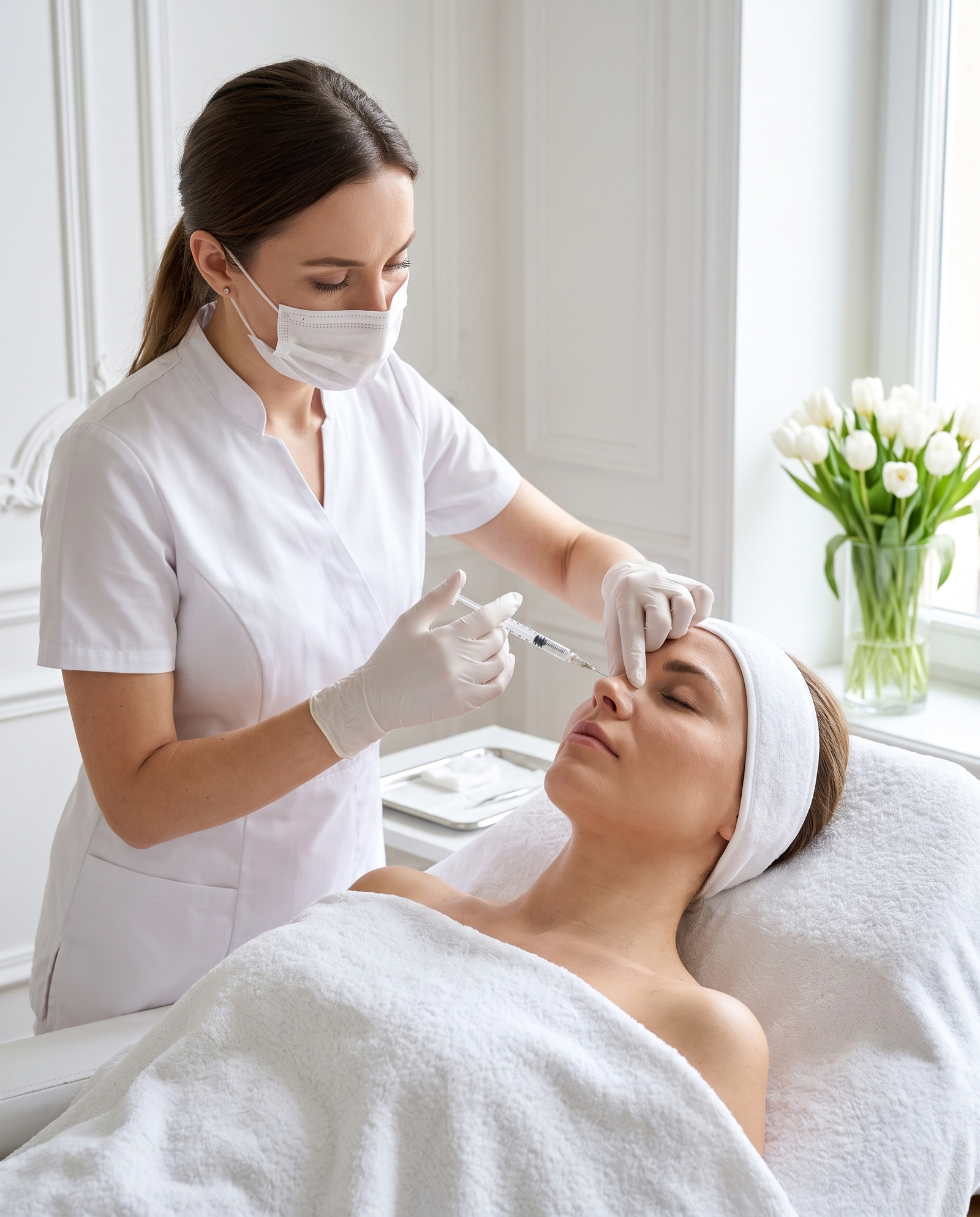
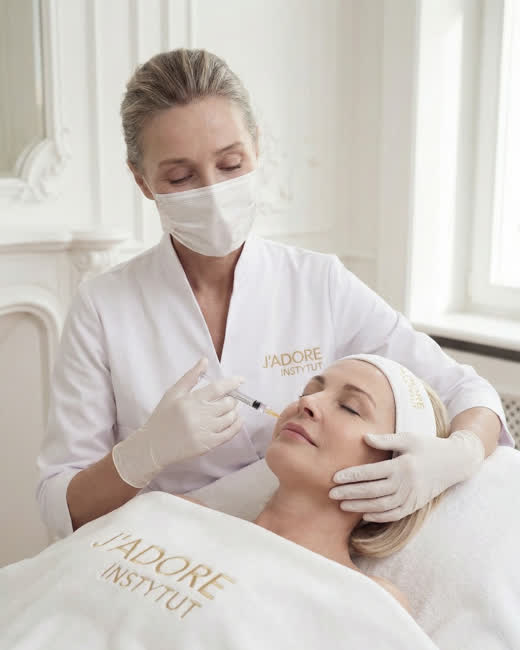
The treatment itself takes several minutes. After applying anaesthetic cream, the doctor precisely places hyaluronic acid at selected points on the bridge or root. You see the result immediately. Minor asymmetries can be corrected within a few days. There is no downtime or visible trace — any slight redness fades within hours, and a small bruise may occasionally appear.
- 01
step
Medical consultation — assessment of nose geometry in three planes, setting the goal, and discussing the possibilities and limitations of the method.
- 02
step
Application of anaesthetic cream — waiting several minutes to ensure the treatment is comfortable.
- 03
step
Precise placement of hyaluronic acid — several injections at selected points on the bridge or root; the whole procedure takes several minutes.
- 04
step
Immediate assessment of the result — the doctor shapes the nose, with minor correction possible immediately after placement.
- 05
step
Follow-up after a few days (optional) — once swelling has fully subsided, the final result can be assessed and refined if needed.
After the treatment, avoid physical activity, saunas and alcohol for the first 24 hours. Do not press on your nose or wear glasses for several days. Apart from these rules, you can return to your usual day. The result lasts for more than a dozen months, after which the acid is gradually absorbed. Your face returns to its starting point — there is no “stretching” effect or permanent deformation. If you decide not to repeat the treatment, nothing happens.
Where the difference lies between male and female correction
This is not a matter of taste — it is anatomy and an aesthetic goal. Female and male noses differ in proportions, tip rotation angle and the desired bridge line. A doctor who does not carry out this analysis before the treatment may perform a technically correct correction that produces a result inconsistent with the sex and character of the face.
Female correction
different proportions, different goals
- lifted tip (angle approx. 100–105°)
- narrower, slimmer bridge
- a more delicate, refined root
- an overall tendency towards “miniaturisation”
Male correction
retaining character
- horizontal or slightly downward-pointing tip (angle approx. 90–95°)
- a defined, straight bridge — without “lifting”
- a strong root retained or slightly emphasised
- geometric correction without feminising proportions
This is why it is worth saying directly during consultation: “I want to retain a defined, masculine profile.” A good doctor will carry out this analysis independently — but if, at the first appointment, you are not asked about your expectations for the character of the result, it is a sign to explore the subject further.
When non-surgical correction is not enough
The method has its limits. No reliable doctor will tell you about them afterwards — they will tell you beforehand. Hyaluronic acid fills and levels, but it does not reduce or reshape cartilage and bone tissue in the sense of reducing it. If your concern is a large, clearly overly wide nose, impaired nasal airflow or a very pronounced hump requiring bone correction, the non-surgical route may provide a partial result but will not address the problem at its source.
What to bring to your consultation
You do not need to prepare a presentation or bring celebrity photos. A few things are useful, however:
- Profile photos — ideally several, taken on different occasions and in different lighting. The doctor can see your nose in natural conditions, not only in the consultation room.
- A specific description of the concern — “a hump visible from the right side”, “the nasal root blends into the forehead”, “asymmetry from a certain angle”. The more precise you are, the more effective the consultation.
- A list of medications and supplements — especially anticoagulants, aspirin and high doses of vitamin E. The doctor will assess whether they increase the risk of bruising.
- Any previous treatments — if your nose has already been corrected, surgically or non-surgically, let us know in advance.
One practical detail: if you wear glasses every day, bring them with you. Frames resting on the bridge of your nose for several hours a day can affect the result. The doctor may ask you to take a week-long break or adjust the injection site.