Vistabel, Azzalure, Bocouture — why so many names for one substance
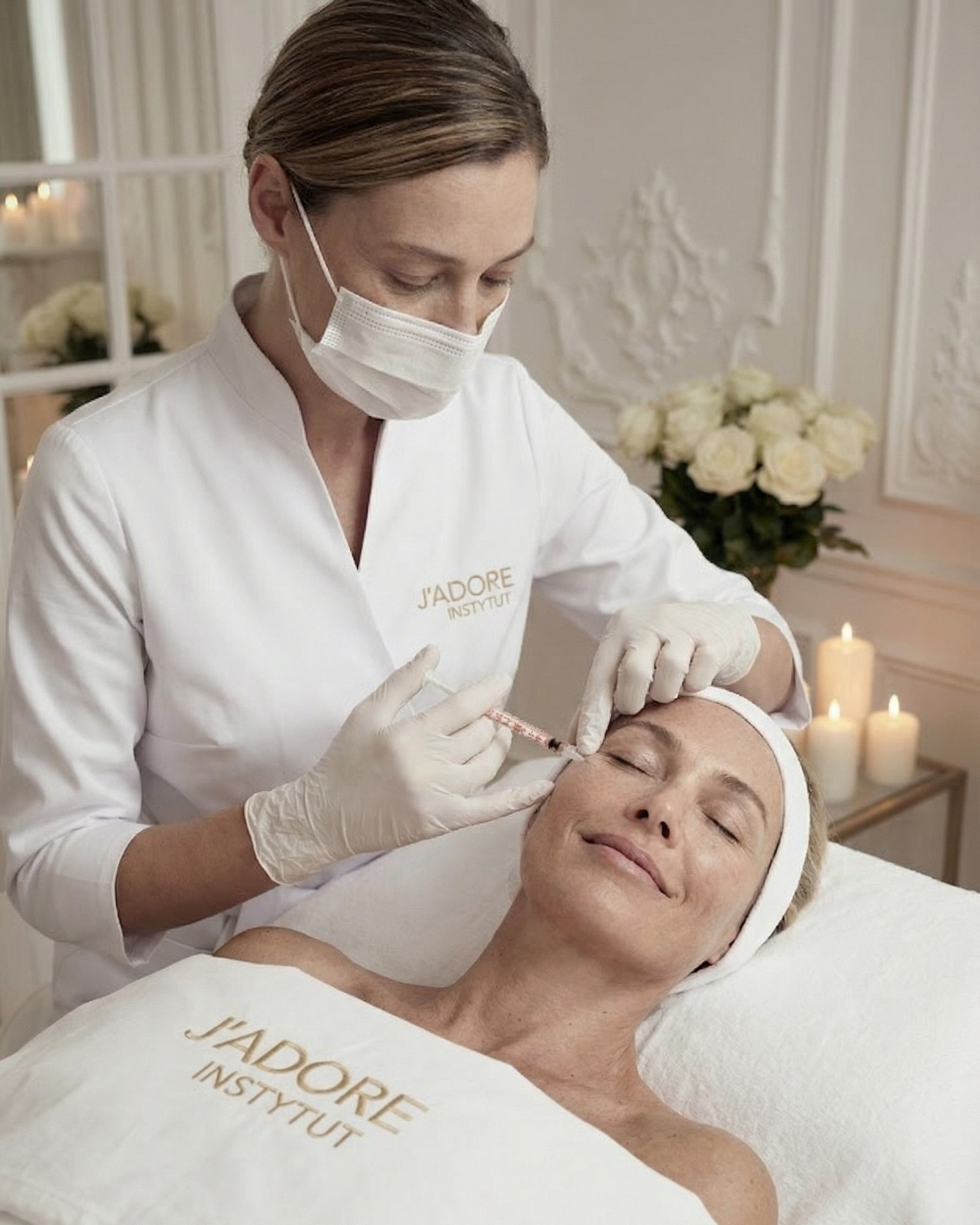
Before we move on to the myths, it helps to understand what we are dealing with. Botulinum toxin type A is one active substance — but it is available on the medical market in several products from different manufacturers. Vistabel (Allergan/AbbVie), Azzalure (Ipsen) and Bocouture (Merz) are three products registered in Poland for aesthetic and therapeutic use. They differ in their protein complex, purification method and unit conversion. This matters in practice when a doctor selects the dose, but it does not change the basic mechanism of action. Each works in the same way: it blocks nerve signals to the muscle, causing temporary relaxation. In bruxism treatment, the target is the masseter — one of the strongest muscles in the human body.
Six myths — one by one
MYTH 1: Vistabel, Azzalure and Bocouture are the same — you can choose any of them, it makes no difference.
Fact: In simple terms, they contain the same active substance and have a similar mechanism of action — but this does not mean they can be used interchangeably without converting the dose. They differ in their accompanying protein complex and unit conversion: one unit of Azzalure is not the same as one unit of Vistabel or Bocouture. A good doctor knows how to convert doses between products — which is precisely why you should not “switch” products without a consultation. When the dose is converted correctly, you will not notice a difference. An error in dose conversion may lead to an insufficient or excessive effect. The doctor selects the product — based on their experience with a particular formulation and the anatomy of your jaw.
MYTH 2: Botulinum toxin permanently “changes the shape of your face”, and your jaw will not return to normal.
Fact: The effect of botulinum toxin is fully reversible. As the masseter relaxes over several months, its cross-sectional size decreases. This may make the lower face appear slightly slimmer. The change is temporary: when the effect wears off and you do not return for another treatment, the muscle rebuilds its mass and your face returns to its original shape. If you want a “slim face” effect, or subtle jawline slimming, it is exactly the same biology described differently. Surgery changes the shape of the face permanently, not botulinum toxin.
MYTH 3: Bruxism treatment with toxin is “cosmetic” — a dentist is enough.
Fact: Bruxism has functional and medical aspects — and botulinum toxin for this indication is a therapeutic, not aesthetic, treatment. Occlusal splints, physiotherapy and work on tension are the first line of care. However, when the masseter is excessively developed or tension is so strong that a splint is not enough, toxin may be an essential addition. At J'adore, the treatment is performed only by a doctor after assessing the indications — it is not offered “on request” without a diagnosis.
MYTH 4: The higher the toxin dose, the better the result — “so that it really works”.
Fact: A different principle applies in aesthetic and functional medicine: less is more when it is placed precisely. An excessive toxin dose in the masseter may make chewing and speaking difficult — effects nobody wants. The aim is selective weakening of excessive tension without eliminating chewing function. A good doctor selects a conservative dose and assesses the effect after two weeks — when the muscle reaches its relaxation plateau. It is always easier to add a correction than reverse one.
MYTH 5: The effect of toxin in bruxism lasts a year or longer — there is no need to return often.
Fact: Botulinum toxin usually lasts in the masseter from four to six months, and less often longer. This is similar to other aesthetic applications, although the masseter is much larger and stronger than facial expression muscles. In people with a strong bite, this may shorten its duration. Individual differences are considerable. Muscle mass, bruxism intensity and lifestyle all affect treatment frequency. Claims of “a year without returning” made without examining you are marketing simplifications that create unrealistic expectations.
MYTH 6: Botulinum toxin in bruxism treatment is new and has not been researched.
Fact: The opposite is true. Botulinum toxin for bruxism and functional temporomandibular joint disorders has been described in medical literature for over two decades — with numerous clinical studies and meta-analyses confirming its efficacy and safety. It is one of the better documented non-aesthetic uses of this substance, alongside migraine, spasticity and excessive sweating treatment. The treatment itself is not new — its availability outside neurological clinics is.
Does the product matter, or is it only the doctor that counts?
This question comes up at every consultation — and the answer is slightly counterintuitive: one does not work without the other. The product matters because it must be original, stored correctly (the cold chain — from production to administration) and used at the right dose. The doctor matters because only they assess the anatomy of the masseter, select injection points and decide on the dose — both at the start and at the two-week review. The result is not the sum of “a good product + a good doctor”. It is the result of their combination. Even an excellent doctor cannot achieve a predictable result with a poor-quality or incorrectly stored product. Nor can a doctor without experience of botulinum toxin for bruxism, even with the best product on the market.
In practice, remember one thing: you have the right to ask which product the salon uses and where it comes from. A confident answer is a good sign. A salon that cannot or will not explain this sends a signal more important than any online review.
Bruxism in women and men — the same toxin, different doses and reasons
Bruxism affects women and men to a similar extent, but their reasons for coming to the salon may differ — and anatomy affects dose selection. Women more often seek help because of pain: tension headaches, ear pain without infection, or the feeling that their “jaw is clamped in a vice” in the morning. Some are referred by a dental salon that has made another new splint yet again. The masseter is usually more delicate, which means lower doses. As an additional effect, if they want a slimmer jawline, toxin may provide this too.
Men with bruxism often come in late — either because the pain “goes away with coffee”, or because a dentist is the last person they see regularly. The masseter is usually stronger and more developed. This means higher doses and more time before the effect can be assessed. The motivation is usually practical: “jaw pain during long meetings”, “I find it hard to chew hard food”, “my wife says I grind my teeth at night”. For men, botulinum toxin for bruxism is often their first contact with aesthetic medicine — and the easiest one, because it is a specific solution to a specific problem, not a treatment “for appearance”.
What to know before you decide
Bruxism treatment with botulinum toxin is not a decision you make instead of seeing a dentist or physiotherapist. It is a decision you make together with a doctor who will assess whether you have indications for it. There are several things worth knowing in advance. The effect is not immediate — the muscle relaxes gradually over several days after the treatment, with the full effect visible after two weeks. A review at this point is part of the treatment, not a “problem”. The treatment is not significantly painful — the masseter is accessed externally through the skin, and the administration itself is brief.
If you already have an occlusal splint, this does not rule out treatment. The two often work together. If your dentist has repeatedly mentioned enamel wear or cracked teeth, raise this during your medical consultation. Toxin cannot reverse mechanical damage to your teeth: it can only slow its progression. Finally: the effect is reversible. If, after your first treatment, you decide it is not for you, your masseter returns to its previous state after a few months. Few medical treatments offer this degree of reassurance when trying them.