How fractional laser works — 30 seconds of theory
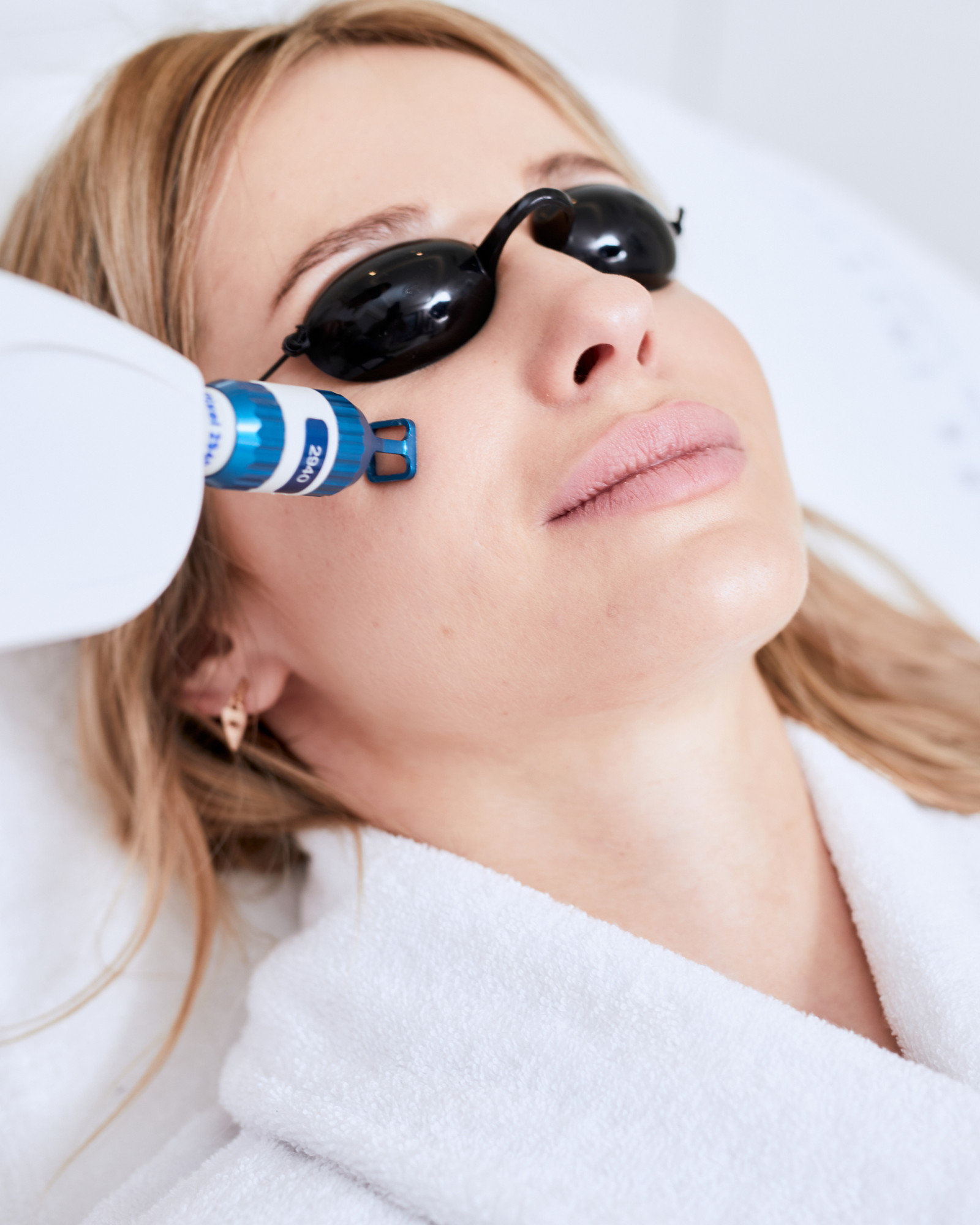
Fractional laser works on a simple principle: controlled damage. The laser beam creates thousands of microscopic columns of thermal damage in the skin — known as microthermal treatment zones (MTZ). Each column is narrower than a human hair.
Healthy tissue remains between these columns — and that's the key. These untouched "islands" of skin supply stem cells and growth factors that repair the damaged zones. Skin regenerates from within, producing new collagen and elastin.
Days 0–3: Thermal shock
What you see: Straight after the treatment — intense redness, swelling (especially around the eyes, if the laser covered that zone), and a warm sensation. Skin looks like a serious sunburn. Some people notice tiny pinpoint bleeding — this is normal, especially with deeper settings.
What to do during this time:
- Cool (not ice-cold!) compresses — 10 minutes every hour for the first 24 hours
- A regenerating cream with panthenol or a specialist post-laser balm
- SPF 50 from the next day (if you need to go outside)
- Nothing else — no active ingredients, no makeup, no touching the skin
Days 4–7: The big shed
What you see: This is where patience gets tested. Skin turns rough and dry, covered in fine flakes and darker specks. It looks like a fine mesh — as if someone had sprinkled brown sand over your face. It's tempting to peel, scratch or "help" it along.
- Intensive hydration — barrier cream, low-molecular-weight hyaluronic acid
- SPF 50 is mandatory — new skin is extremely sensitive to UV
- A gentle cleansing milk — no SLS, no acids
- Still zero retinol, acid-form vitamin C, and AHA/BHA
Weeks 2–4: Pink new skin
What you see: The flakes have gone. Underneath — pink, smooth but delicate skin. Redness persists, but its character changes — from "sunburned" to a "pink glow". Hyperpigmentation looks lighter than before the treatment. Texture is smoother. You think: "Oh, it's starting to work!" Yes — but it's only just getting going.
- SPF 50 still applies — new skin is extremely prone to hyperpigmentation
- You can gradually return to gentle skincare (niacinamide, centella, hyaluronic acid)
- Mineral makeup is fine from the second week, once the skin has healed
- Retinol — still no, wait a minimum of 4–6 weeks after the treatment
- Avoid direct sun, saunas and intense physical exertion
Month 1–2: The quiet revolution
What you see: On the surface — things stabilise. Redness fades. Skin looks better than before the treatment, but you might think: "All that effort for THIS?" This is the point where many people lose faith. Don't.
At the same time, remodelling of scar tissue — if the laser targeted acne scars — is only now gathering pace. Old, disorganised collagen within the scars is broken down and replaced with new, well-organised collagen.
- You can return to a full skincare routine — retinol from week 4–6, vitamin C, niacinamide
- SPF 50 still applies, and will do so at least until spring
- If you're doing a series — the second session is usually booked 4–6 weeks after the first
- A great moment for supporting mesotherapy (hyaluronic acid + amino acids)
Month 3: The big reveal
What you see: And suddenly — as if someone had moved a slider in a photo editor. Acne scars are shallower for many people, hyperpigmentation is noticeably lighter, texture is more even — pores look smaller, skin feels smooth to the touch. Overall — a "glow". Skin quality is simply different.
Realistic expectations: one session vs a series
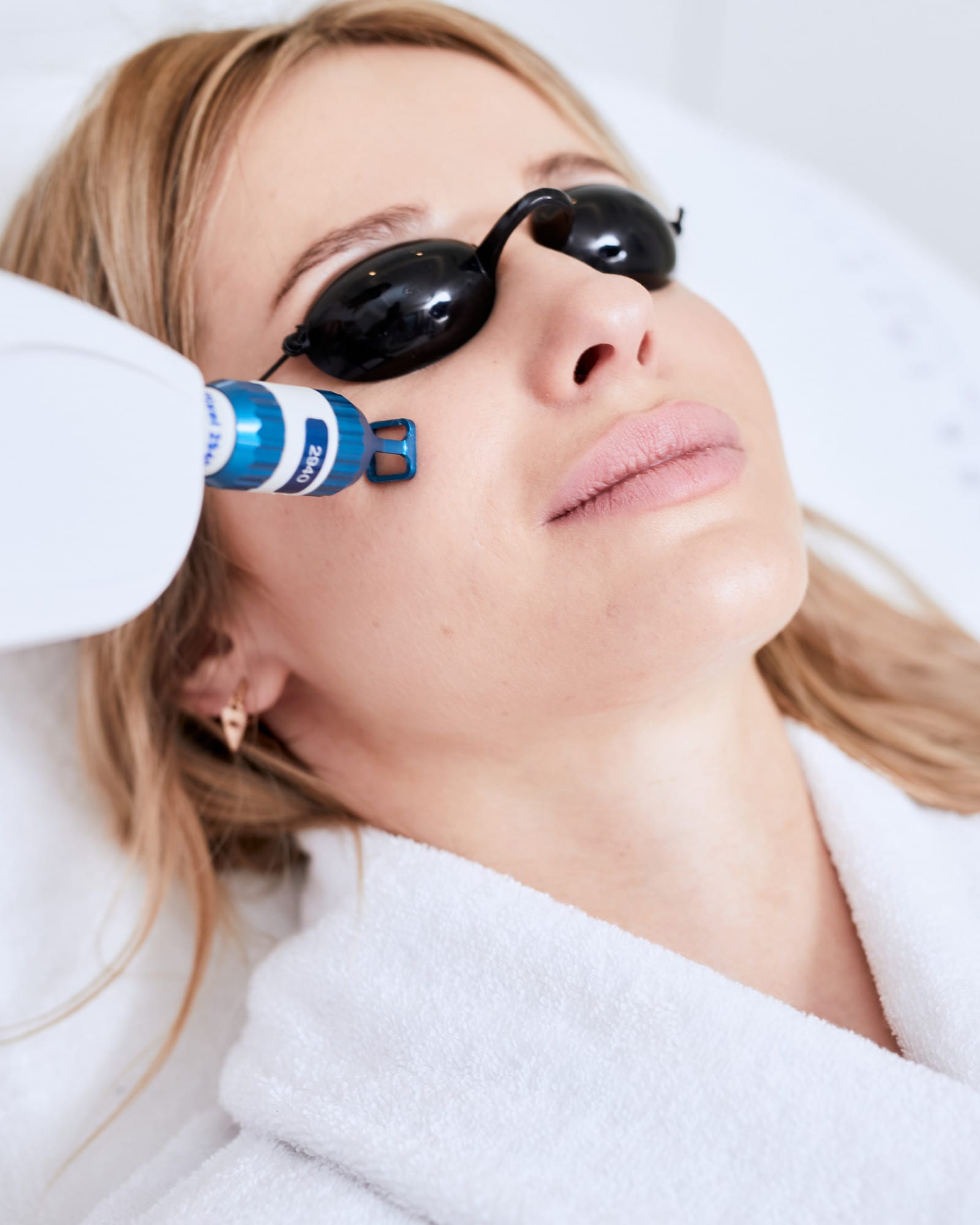
A single fractional laser session won't work miracles. It will deliver a noticeable improvement — but a transformation usually requires a series. A series of 3–4 sessions spaced 4–6 weeks apart produces results that build on each other — each laser session builds on the foundation laid by the last.
- Acne scars: noticeable shallowing after one session; significant reduction after a series
- Hyperpigmentation: clear lightening after one session; very clear improvement after a series
- Fine lines: subtle reduction after one session; significant improvement after a series
- Texture and pores: "something's changed" after one session; "you look different" after a series
Aftercare — the complete cheat sheet
A summary of healing rules in one place:
What NOT to do — the list of cardinal sins
- Don't sunbathe — zero direct sun for a minimum of 4 weeks. Post-inflammatory hyperpigmentation (PIH) from laser is real and hard to reverse.
- Don't pick at the flakes — every flake you pull off is a potential scar or a patch of discolouration.
- Don't use retinol too soon — leave a gap of 4–6 weeks. Skin needs time to regenerate.
- Don't have chemical peels — leave a minimum of 4 weeks. The skin has already been "peeled" by the laser.
- Don't panic in weeks 1–2 — flaking, rough texture and uneven colour are all normal and temporary.
- Don't compare yourself to Instagram — "before/after" photos are taken in optimal lighting. Real-life healing is less photogenic.
Why September is the ideal time
Fractional laser requires 4–6 weeks of UV protection. If you have the treatment in September, you heal in October — when the UV index in Poland drops below 3. This minimises the risk of post-laser hyperpigmentation and allows for a full series to be completed by the end of January.