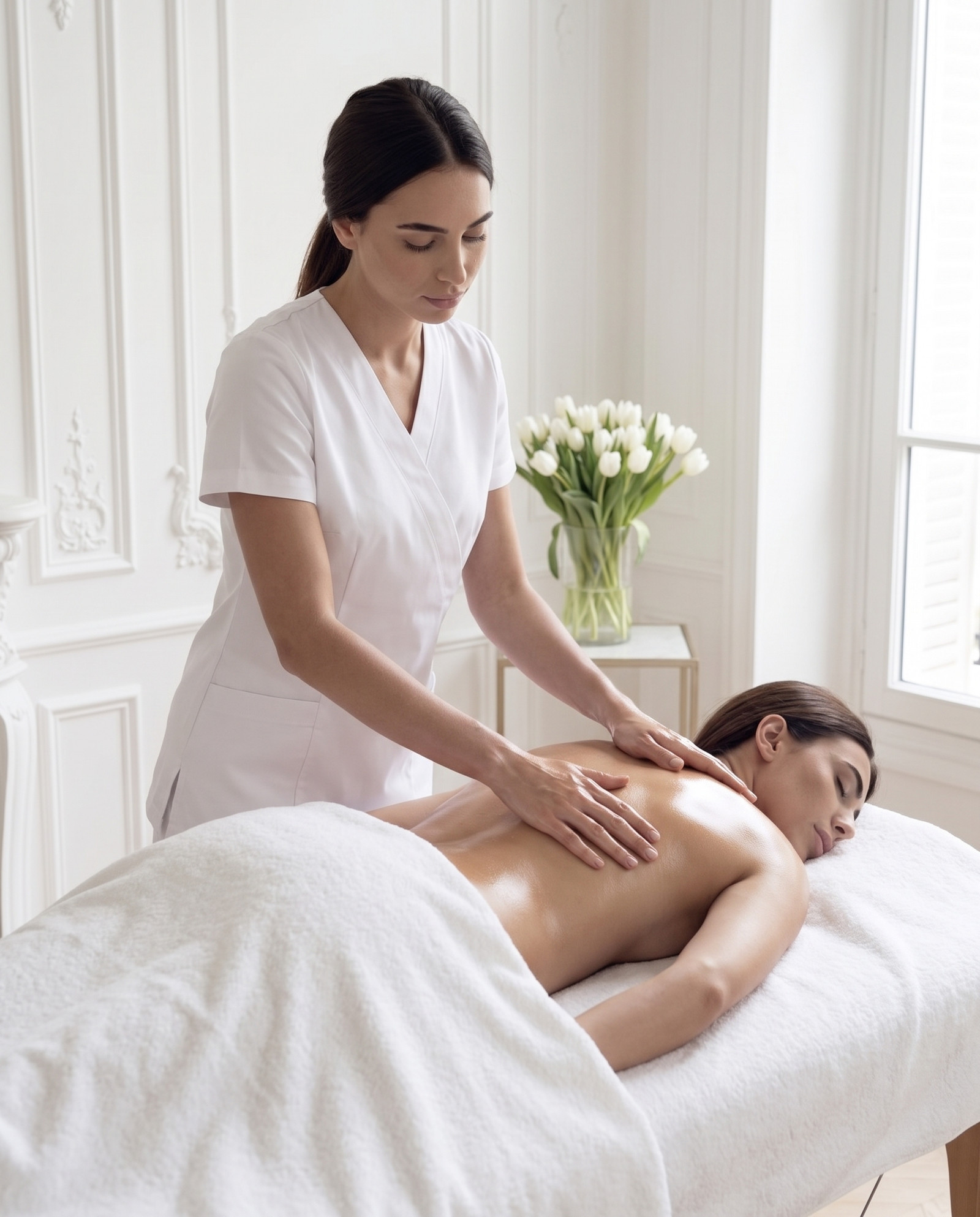
First, enter the event, then build a margin around it
Start planning with things you cannot move: the time of the ceremony, flight, presentation, or start. Then, mark the preparations that require energy and focus. Place the massage only in a free fragment after which you have a normal meal, a calm journey, and time to change clothes. If Lomi Lomi has to compete with a hair trial, packing a suitcase, or finishing a project, its relaxation goal loses to logistics from the start.
You do not need to set an identical buffer for everyone. Predictability is more important than an arbitrary number of hours. After a known, well-tolerated session, it is easier to decide if a free evening is enough. Before your first contact with the technique, it is wiser to leave a fuller gap, especially when the event requires a specific outfit, long periods of standing, or flawless-looking skin.
The first session is a reaction test, not a dress rehearsal for the ceremony
A new technique means several unknowns: tolerance to pressure, scent, the amount of product, and the way of draping. Even a mild product may not suit sensitive skin. Stronger work may leave tenderness, and deep relaxation may leave you needing a slower evening. For this reason, a debut just before a wedding, photoshoots, or an important appearance is an unnecessary experiment.
A wedding, a photoshoot, and a conference have different requirements
- Wedding. Before a wedding, the biggest opponent is the pressure of preparations. After Lomi Lomi, it is good to have the option to slow down, rather than discuss table settings and guest transport.
- Photoshoot. Before a photoshoot, there is the issue of the product on the skin, your hairstyle, and potential redness.
- Conference. Before a conference, however, it is important whether you have to drive a car, stand for a long time, or speak intensively after the massage.
Do not expect an aesthetic effect from the session that must be at its freshest on the day of the event. Lomi Lomi is primarily a relaxation experience. If it is meant to help you transition from the preparation period to a calmer stage, a date after finishing key tasks is often more useful than the last evening. The plan should protect your rest, not create another item to be perfectly executed.
What you do after the massage is part of the decision about the time
An afternoon booking sounds neutral until you write down the rest of the day. Dinner with alcohol, a heavy workout, hours of driving, and a formal meeting require a different state of readiness than a walk and a quiet evening at home. During your first session, do not assume that relaxation will automatically improve your concentration. Get to know your own way of reacting on a day without pressure.
After the visit, you do not need a cleansing ritual or a mandatory hydration programme. Drinking according to your thirst, a light meal, and comfortable clothing are enough, unless the practitioner advises otherwise. When oil remains on the skin, follow the information regarding the product used. Do not cover irritation with a perfumed cosmetic just because you are leaving soon.
Oil changes logistics more than the time of day
Your hairstyle is also important. When working around the neck, the product may touch the hairline, even with careful draping. Before a formal hairstyle, it is better to keep the order: first the massage with a safe margin, then grooming and styling. The reverse attempt usually ends with you worrying about your hair during the session, which is exactly what was meant to be avoided.
In summer, assess your skin; in winter, plan for a calm warm-up after leaving
In winter, prepare a layer of clothing that does not constrict and protects against sudden temperature changes. After a warm treatment room and lying down for a long time, a cold stop can be simply unpleasant. Dry, reactive skin also requires a conversation about the product. The season does not determine whether the massage will be effective; it only suggests what conditions need to be considered.
After travelling, first distinguish between ordinary stiffness and an alarm signal
When it comes to ordinary travel fatigue, give yourself time for a meal, sleep, and a return to normal hydration. A session the next day can be more pleasant than a visit between the airport and checking into your hotel. If the massage is meant to start your holiday, leave an empty fragment in your schedule afterwards. Sightseeing in a rush will shorten your rest regardless of the quality of the technique.
During a training week, look for a day without testing your limits
Lomi Lomi is not a sports treatment or an injury assessment. An active person can choose a calmer day when the body is not freshly after a competition and is not facing a heavy session a few hours later. After a new session, it is sensible to observe tenderness rather than testing it with maximum effort. A known massage can later be added to the plan based on your own response.
Acute pain, injury, increasing numbness, weakness, or swelling require a different path than relaxation. Do not try to choose a date so that the massage "fixes" the body before a start. If training systematically reproduces the same ailment, talk to an appropriate specialist. A wellness session can be an addition to rest, but it does not replace diagnostics or a rehabilitation plan.
A series should correspond to the rhythm of your needs, not the package calendar
A single visit may be enough if you are looking for one-off rest. Regular appointments make sense when similar overload repeats over weeks and you actually benefit from the planned break. There is no single number of sessions that is right for everyone. Frequency depends on the goal, reaction, budget, and the ability to leave space after the massage.
After the first visit, note three things: comfort during the session, how you feel in the evening, and your reaction the next day. If repeating it gives a similar, useful result without prolonged tenderness or irritation, you can consider a fixed rhythm. If every visit falls before your most difficult day and ends in a rush, the problem may be the plan, not an insufficient number of treatments.
A break does not require catching up. After an illness, trip, or schedule change, return to assessing your current state. A new medication, skin treatment, pregnancy, or injury can change the scope and qualification, even if the previous series went without a problem.
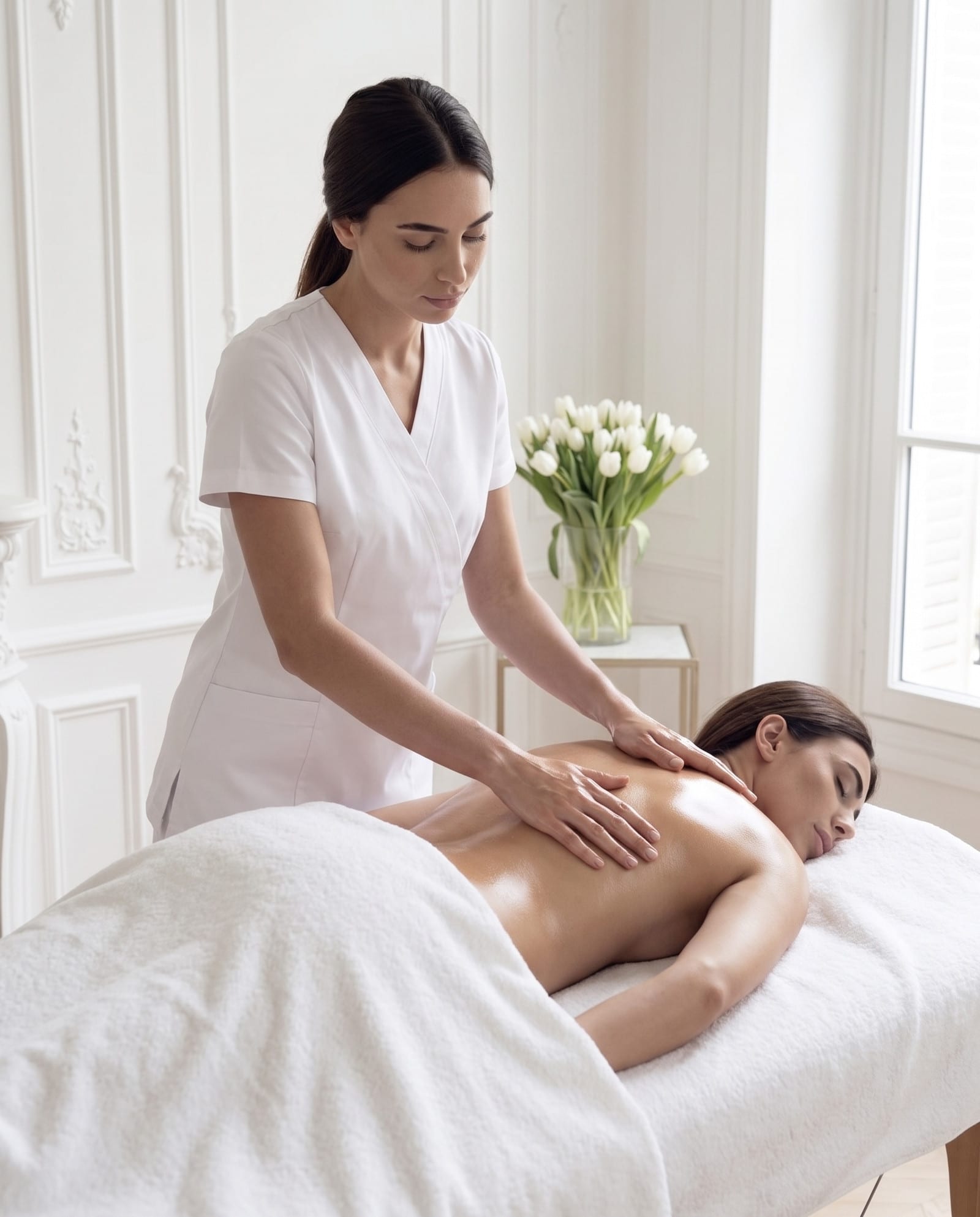
Sometimes the right decision is: postpone, even if the occasion is close
Fever, active infection, fresh injury, unexplained swelling, and painful skin lesions take priority over the event schedule. Equally important is an unusual reaction after a previous session: hives, strong burning, or tenderness lasting disproportionately long. A date does not become safe just because it is difficult to find another one.
Before booking, inform us about pregnancy, chronic illnesses, recent surgery, and medications affecting blood clotting if they could be relevant for manual work. The person qualifying you may change the scope, suggest a different technique, or ask for a consultation. Refusing to perform a massage on a given day is part of a responsible service, not a lack of flexibility.
Morning and evening appointments work for different people
A morning visit gives you more time to observe your skin and well-being, but requires a slower start to the day. If you lose concentration easily after a massage, do not plan work requiring quick decisions immediately after. Conversely, an evening session can naturally lead to rest, provided it does not end with packing, a late dinner in town, or travelling across half the city under time pressure.
Choose your first appointment at a time you can treat flexibly. Note whether you felt like moving, sleeping, eating, or having silence after leaving. This observation is more useful than general advice that a specific time always works better. For your next booking, recreate the conditions that actually served you, instead of fitting into a popular ritual.
Before booking, look at the whole week in four columns
Such a review takes a few minutes. Ask yourself four questions: what will strain the body before the visit, what requires full attention after it, will the skin be calm, and does the return journey create a rush? When you answer two questions uncertainly, look for another window. Planning Lomi Lomi is not about finding a free hour, but about protecting the conditions around it.
For a Warsaw appointment, also choose based on the return journey
You can find the current description and booking options on the Warsaw Lomi Lomi page. The clinic at Żelazna 59, 00-848 Warsaw is open Mon–Sat 8–21 and Sun 11–19. The second location is at Mińska 29A/46, 03-808 Warsaw and is open Mon–Sat 9–21.
After a series, the client describes their body more specifically than after the first visit
During the first Lomi Lomi, the client often simply says: "it was very pleasant, but I am sleepy" or "I didn't know so much oil would remain on the skin." After subsequent meetings, their account is more precise: they notice that the tension between the shoulder blades only released in the evening, that after working on their legs it was easier to climb stairs, or that the scent of the product used lingered too long. It is not about a better-or-worse assessment, but about naming one's own reaction.
A person returning after a series also plans their visit more often based on what they already know about themselves. Instead of asking if it is "possible to function normally" after a massage, they say: "after the last one, I slept best without any plans" or "in the morning I felt a pleasant lightness, so I prefer an evening appointment." It is these observations, rather than the mere fact of having had several sessions, that help arrange Lomi Lomi in your calendar without adding tension to your life.
A good plan ends with free space, not another reservation
Before an important day, first get to know your own reaction, then set the session with a margin. In a normal week, choose a date that does not border on your greatest burden. Build a series only when you can name its goal and see a repeatable benefit. The time of year provides questions about skin, temperature, and travel, but does not impose frequency.
The simplest calendar test is practical. When you leave, you have somewhere to return to, but you do not have to prove anything immediately. You can change your clothes, eat, rest and observe your body. Lomi Lomi planned in this way is not meant to fix your entire week. It is meant to be a consciously protected fragment of rest that does not vanish on the way to your next obligation.