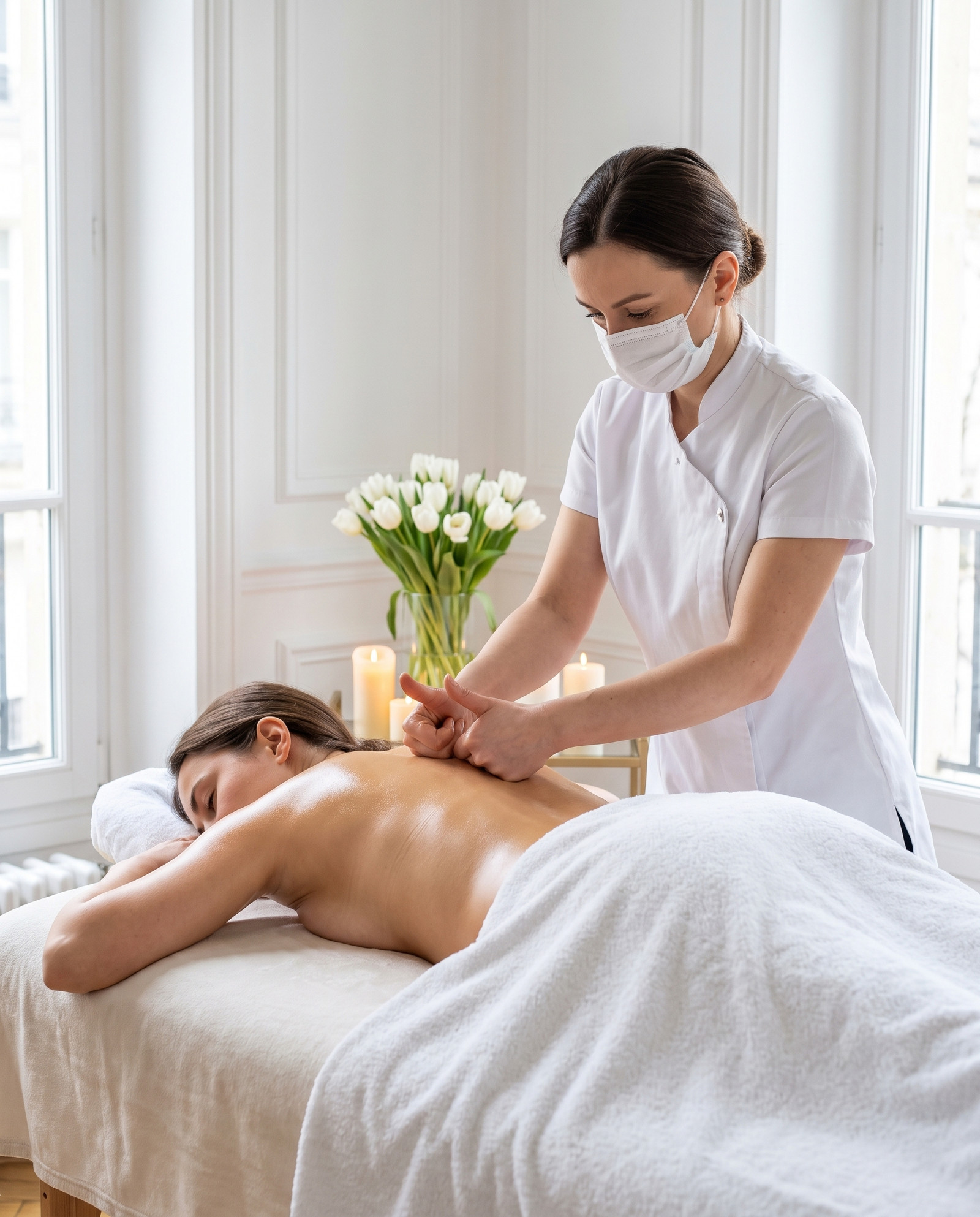
Two weeks before, establish why you are actually booking
A goal written in one sentence organises the conversation. "I want to rest without oil", "I prefer calm pressure over stretching" or "I want to see if this form of work suits me" are goals that can be discussed. The sentence "fix my spine" gives the wellness service a diagnostic and curative task that it should not promise.
If your ailment is fresh, clearly worsening, appeared after an injury or is accompanied by numbness, loss of strength, fever or swelling, choose the right consultation first. Do not try to prepare for Shiatsu in a way that avoids assessment. Information about an unclear symptom does not spoil the visit; it may prevent it from being performed at the wrong time.
Create a short timeline instead of a long medical autobiography
You do not need to know the names of all the muscles. A description like "it pulls on the outside of my thigh when I stand up" is more useful than guessing a diagnosis. Also, tell us if touch in a specific place causes fear, tickles or triggers a sensory reaction. Your comfort boundary is technical information, not a personal whim.
Take your medication as prescribed, not based on the massage
Do not stop or shift your medication to change how you feel or reduce the risk of marks. If you take preparations that affect clotting, sensation, blood pressure or your general well-being, inform us when booking and on-site. The person qualifying you will decide if a change in scope or an additional consultation is needed.
If your condition has changed after booking, call before you arrive
Do not judge for yourself that an event is "too small to mention". Say what has changed, when, and how you feel today. You do not need to demand a medical interpretation. It is enough to ask if the salon can safely perform the wellness service in the planned format given your new state. If the answer requires a doctor's approval, obtain it before your next appointment instead of hoping that very light pressure will resolve the doubt.
A one-minute description before the session can be simpler than a spontaneous conversation
People stressed by their first visit often remember the most important fact only after starting. Prepare a short sequence that you can read from your phone. Start with your wellness goal, then list current symptoms and recent events, then medication or limitations relevant to the pressure, and finally your touch boundaries. You do not need to talk about everything that has ever happened. What matters is what affects today's position, sensation and safety.
- today I am primarily looking for calm rest
- for a few days I have felt a new discomfort during a specific movement
- this area was recently operated on, but I have specific recommendations from my doctor
- I do not want pressure on my neck or my arm moved beyond comfort
- when I say "stop", I need an immediate break
Two days before, do not test your body with another strong stimulus
- Avoid extreme effort. A very heavy workout, a new exercise, a long mountain trail or intense manual work can leave tenderness that is difficult to distinguish from your current problem.
- Plan with caution. You do not need to give up your usual activity, but it is better to schedule your debut Shiatsu in a week when your body is not currently overloaded.
- Ensure assessment precision. It is then easier to evaluate the pressure and the body's subsequent reaction to the treatment performed.
The same applies to other massages and strong procedures performed on the same areas. Two visits one after another do not provide clear information about which one caused the tenderness or irritation. If your calendar is busy, provide the order of services when booking. Sometimes the most sensible preparation is to move one of them.
Try on your outfit in motion, not just in front of the mirror
Shiatsu is performed through clothing, so the material becomes a layer of contact. Choose a soft t-shirt with longer or shorter sleeves according to your comfort, and trousers that do not block your hips and knees. Do a squat in them, sit cross-legged and raise your arms. If a seam pulls tightly now, it will be more bothersome when changing positions.
- avoid hard belts, large buttons and zips in areas of pressure
- avoid very slippery fabric that makes stable contact difficult
- bring clean socks if you feel more comfortable in them
- on a cold day, prepare a layer that is easy to remove before the session
- do not choose compression clothing just because it looks sporty
Your skin should be calm, but it does not need a preparatory treatment
Peeling, dry brushing, strongly warming cosmetics or hair removal just before the visit do not improve the effect of Shiatsu. They can, however, leave irritation that will make pressure difficult even through clothing. Normal hygiene is enough. If your skin is damaged, infected, very itchy or a new rash has appeared, report this before your appointment.
Do not mask a painful area with a warming or anaesthetic preparation. Altered sensation makes it difficult to assess the force. If you use a product recommended by a doctor, do not stop using it on your own; simply inform us where and when it was applied. The therapist can avoid the area or suggest a different plan.
The day before, check for infection, sleep and the route to the salon
A bad night's sleep does not automatically cancel the visit, but clear malaise, fever, a severe infection or dizziness are reasons to contact the salon. Do not treat massage as a way to "sweat out" an illness. If your state has changed since booking, current information is more important than the plan written down earlier.
Check your route and plan a few minutes for a calm arrival. Arriving in a rush forces us to shorten the conversation or start on the mat with an accelerated breath. You do not need to show up very early. A margin for the toilet, changing clothes and providing information without constantly checking the clock is enough.
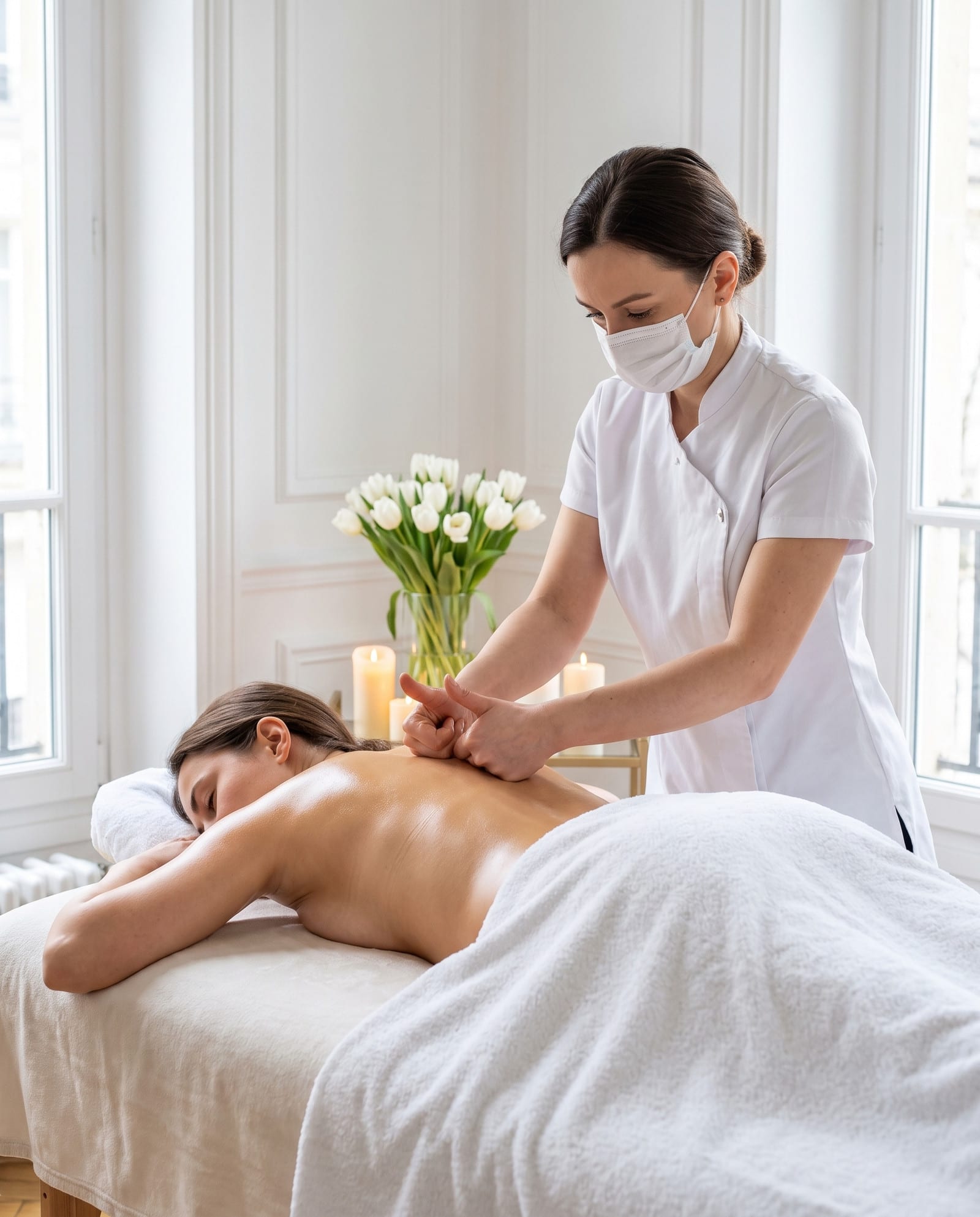
On the day of your visit, eat normally and do not come after alcohol
A heavy meal just before lying down can cause discomfort, but starving yourself is not the solution. Eat at your normal rhythm and leave time for calm digestion. Drink according to your thirst. Drinking a large amount of water just before entering mainly increases the need for a toilet break, not the quality of the massage.
Alcohol and substances that alter the assessment of stimuli make communicating about pressure difficult, so do not combine them with your visit. If you feel weak after a party or lack of sleep, call and discuss rescheduling. The goal of preparation is clear sensation and the ability to make decisions, not keeping the appointment at all costs.
Before the first pressure, establish areas and the language of boundaries
List the places you do not want touched, and positions that are difficult for your joints. You can ask for the abdomen, feet, neck or any other area to be omitted without justification. Say if you prefer to be warned before a change in position and how you understand moderate pressure. These arrangements should not be a subject of negotiation during the session.
Bring documents and results only if they clarify something
A full folder of tests is usually not needed for a relaxation service. However, if a doctor has specified a movement restriction, given approval after surgery or described a contraindicated area, have this information with you. The most important thing is the current conclusion and the scope of recommendations, not the mere fact of having many pages of documentation.
Do not expect the massage therapist to interpret an MRI scan or make a diagnosis. If the diagnosis is unclear, return to your attending specialist. The role of the conversation before Shiatsu is to establish a safe course within the limits of our competence, not to replace a medical consultation.
Start your Warsaw location choice with the logistics of your return
You can find the service description on the Shiatsu in Warsaw page. The location at Żelazna 59, 00-848 Warsaw is open Mon–Sat 8–21, Sun 11–19. The salon at Mińska 29A/46, 03-808 Warsaw is open Mon–Sat 9–21. Choose the place you can reach without sprinting from the other side of the city.
Do not plan an endurance test after your session
For your first appointment, leave your schedule clear of heavy training, long journeys, or another massage. This is not because Shiatsu requires recovery time. It is because you want to distinguish your body's reaction from the next strong stimulus. A quiet walk and daily chores provide a clearer backdrop than a competition or a night shift.
Note three observations in the evening: whether any tenderness remains, whether the sensation was symmetrical, and if any unusual symptoms appeared. Assess your movement normally the next day; do not try to prove the effect with extreme stretching. If pain increases, numbness persists, or weakness appears, contact the salon and the appropriate specialist.
After a series, your description becomes shorter but more grounded in the body
- General expectations. At the beginning, clients often describe their state with general tension, uncertainty about the session flow, or a request for lighter pressure.
- Specific sensations. After a few meetings, the relationship changes into precise information about how your body reacted to specific techniques, such as faster shoulder relaxation or the need for a longer hold in a given area.
- Tips for the therapist. Such comments are not an evaluation of the effect. They are valuable feedback on your body's reactions, which allows us to better tailor subsequent sessions.
The language of discomfort also changes. Instead of waiting out an awkward moment, a returning person can say: "the pressure here is fine, but I prefer less movement when rotating the hip" or "my feet get cold in this position." In Shiatsu performed through clothing, small adjustments matter: placing a bolster, changing knee alignment, covering with a blanket, or switching from stretching to calmer pressure can influence the perception of the entire session.
However, the cosmetologist does not assume the previous scheme should be repeated. We ask how your body reacted after the last meeting, whether any new injury, infection, or change in well-being has occurred since then, and then we observe tension during position changes and contact with pressure. A returning client does not have to prove they "already know Shiatsu." Your current information is the most useful: what gives you a sense of freedom today, and what requires us to stop or change.
Preparation ends with a short list, not a long ceremony
- the goal of your visit described in one realistic sentence
- the timeline of your current ailment and information about injuries
- medications taken as prescribed, without self-directed changes
- soft clothing without hard elements in areas of pressure
- a normal meal, no alcohol, and a calm journey
- agreed-upon excluded areas and a stop signal
- a slower plan after the first session
If these points are ready, you do not need anything else. Do not prepare your skin for oil, as Shiatsu does not require it. Do not construct an ideal story about your health; just provide the facts that influence pressure and positioning. Do not force yourself to use your booking if a new symptom has appeared. A responsible visit begins with the ability to say "not today."