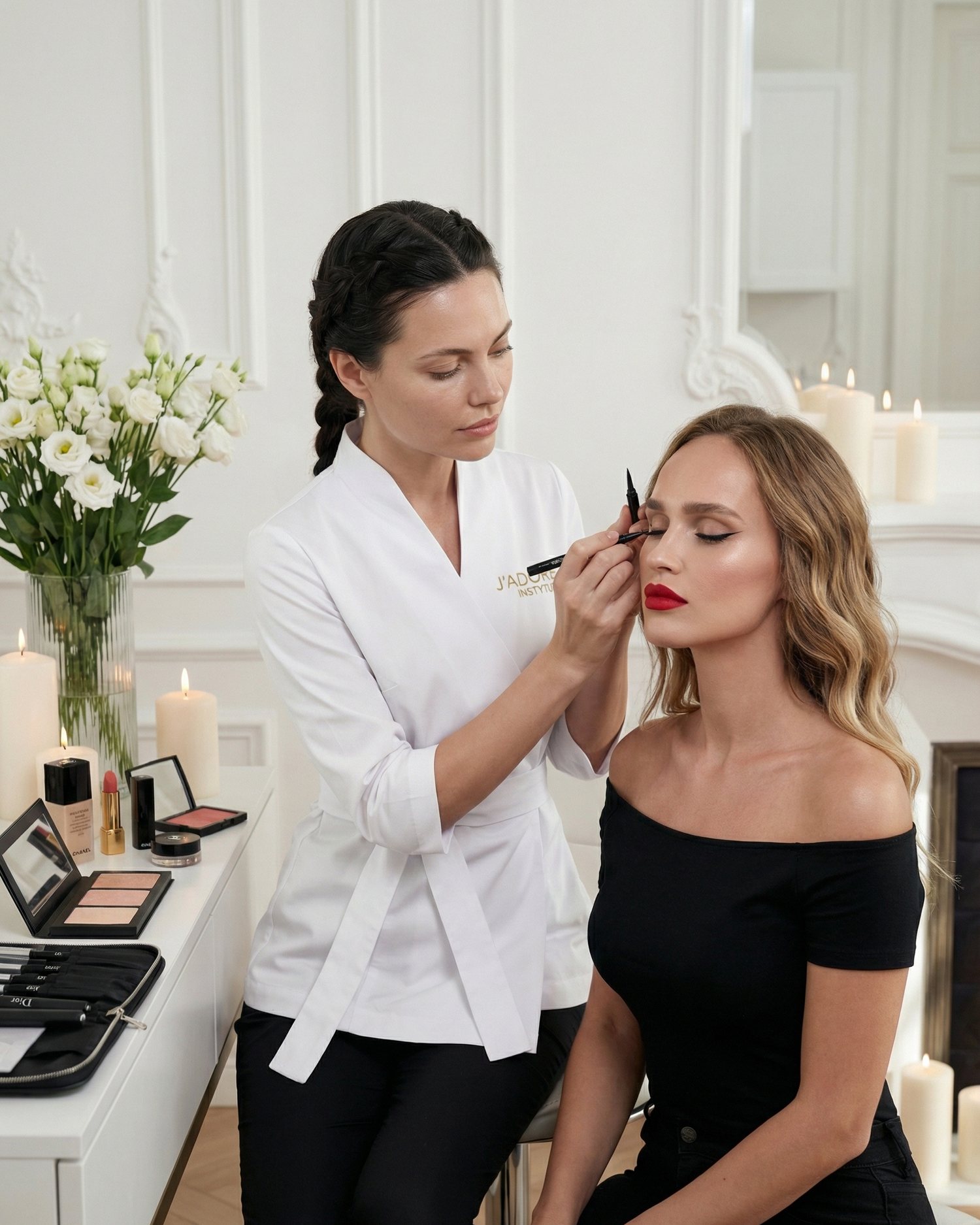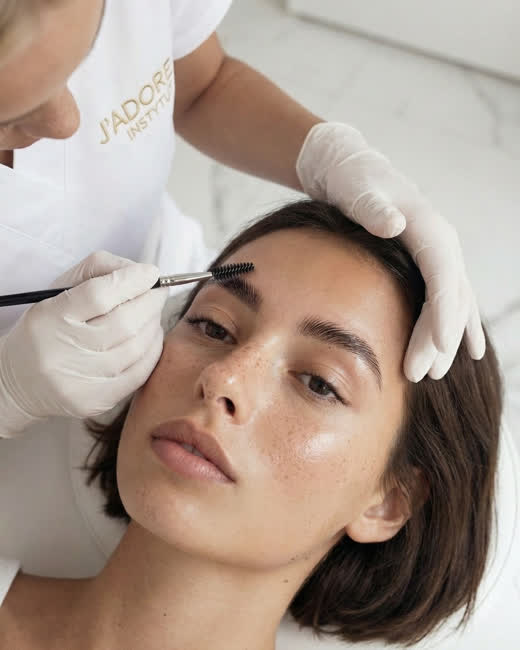
A few months in advance: book your time before choosing a lipstick shade.
Popular wedding Saturdays, proms, and ball seasons fill up faster than standard dates. When booking, provide the time you need to be ready, not just the ceremony start time. You must account for travel, dressing, hair styling, preparation photos, and a margin for delays.
A trial is meant to test decisions you do not want to make on the day of the event.
A trial is particularly useful for weddings, important photo shoots, allergies, unusual styling, or if you are unsure about coverage. It is not just about looking at the make-up for a few minutes. It should show how products behave after several hours, in photos, and with natural facial expressions.
A trial that provides data:
recreates the conditions
- uses similar skincare
- includes photos in various lighting
- tests wear time
- records the products used
- assesses comfort
A trial just for selfies:
ends at the mirror
- is one single frame
- uses phone filters
- lacks observation
- uses different hair and lighting
- does not record changes
After the trial, note when your skin starts to shine, when the foundation gathers, or if you experience tearing or discomfort. Do not change your entire skincare routine at once. On the day of the event, you will not know what improved or worsened the result.
Spring requires a plan for allergies, tearing, and sudden temperature changes.
Pollen season can mean tearing, rubbing your eyes, a runny nose, and swelling. Make-up can limit smudging, but it should not hinder allergy treatment or cover up severe irritation. If symptoms are active, inform your make-up artist before your visit, not after the product is applied near your eye.
- Do not test new mascara or eyelash glue right before the event.
- Bring your doctor-prescribed medication and do not change it for the sake of your make-up.
- Decide if false lashes are necessary if your eyes are prone to tearing.
- If you have active eyelid inflammation or an infection, postpone the eye make-up.
- Prepare a hygienic touch-up method instead of rubbing with your hand.
In summer, make-up usually fails due to layers, not the temperature itself.
SPF, skincare, primer, foundation, and powder form a system that must work together. A layer that is too heavy may shift when you sweat, while overly dry mattifying products may crack on dehydrated skin. Your plan depends on whether the event is in an air-conditioned room, a garden, outdoors, or multiple locations.
Make-up does not replace shade and sun protection. Adding foundation to sweaty skin usually ruins the texture. You must dry the surface first using a method agreed upon with your make-up artist.
Autumn is a good time for a trial, but a bad time for a series of random new products.
After summer, you may notice hyperpigmentation, dryness, and uneven skin tone. This is not a reason to start using several acids, retinoids, or intense treatments in the week before your event. Make-up settles more easily on stable skin than on skin that is being intensely exfoliated in the hope of quick smoothing.
- Stick to your known skincare instead of testing every seasonal trend.
- Plan treatments with a margin for reaction, not based on minimum healing time.
- Show your make-up artist your actual skin tone without a camera filter.
- Do not squeeze blemishes so the foundation has a smoother surface.
- If you have severe acne or inflammation, consult a dermatologist.
In winter, heating and wind reveal dry patches only after a few hours.
Your skin may look good when you leave, but start flaking after moving from the cold into a heated room. A trial should account for temperature changes, not just photos taken in the clinic. Do not try to solve dryness with a thick layer of heavy cream without checking how it sits under foundation.
Stable preparation
a known routine
- gentle cleansing
- a proven moisturiser
- no recent peel
- layering test
- a plan for temperature changes
Risky preparation
last-minute repairs
- a strong peel
- a new mask
- a very greasy layer
- scrubbing away flakes
- no foundation test
Do not remove skin flakes mechanically in the morning before makeup. Your makeup artist will assess what can be safely smoothed and what should not be covered with another layer.
One month before the event, finish intensive experiments and observe your skin.
There is no single safe timeframe for every peel, laser, injection or microneedling treatment. Healing depends on the procedure, the settings and the individual. If you are planning a treatment, tell the practitioner the date of your event and ask for a realistic margin, potential redness, swelling, bruising and discolouration.
One week before the event, do not treat your skin forcefully and do not change five products at once.
In the final week, predictability is most valuable. Continue your proven cleansing, moisturising and protection. Do not squeeze blemishes, do not wax your face using a method your skin does not know, and do not perform a home peel just because you want your foundation to look smoother.
- Seven days
Stable routine
No new active products or treatments with unknown healing times.
- Two days
Skin check
Report cold sores, infections, severe flaking or allergic reactions.
- Evening
Gentle preparation
Follow only the steps agreed with your makeup artist, without any surprise masks.
- Morning
Clean, calm surface
Do not add any product whose behaviour under makeup is unknown.
On the day of the event, your readiness time is more important than the ceremony time.
Makeup must be finished before dressing, photos and departure, but not so early that you wear it for an unnecessary length of time. The order of hair styling depends on the look, hair washing, the use of hairspray and the possibility of touching your face. Agree on this with your service providers in advance.
- Arrive on time with your face prepared according to the instructions.
- Bring contact lenses, medication and lip products if they were agreed upon.
- Wear clothing that does not require pulling a tight neckline over your face.
- Show your inspirations along with a photo of your dress, hairstyle and jewellery.
- Mention any irritation that has appeared since your trial.
- Leave a margin for corrections without shortening the disinfection of tools.
Do not hide cold sores, eye inflammation or weeping lesions. Your makeup artist may refuse to work in that area for safety and hygiene reasons.
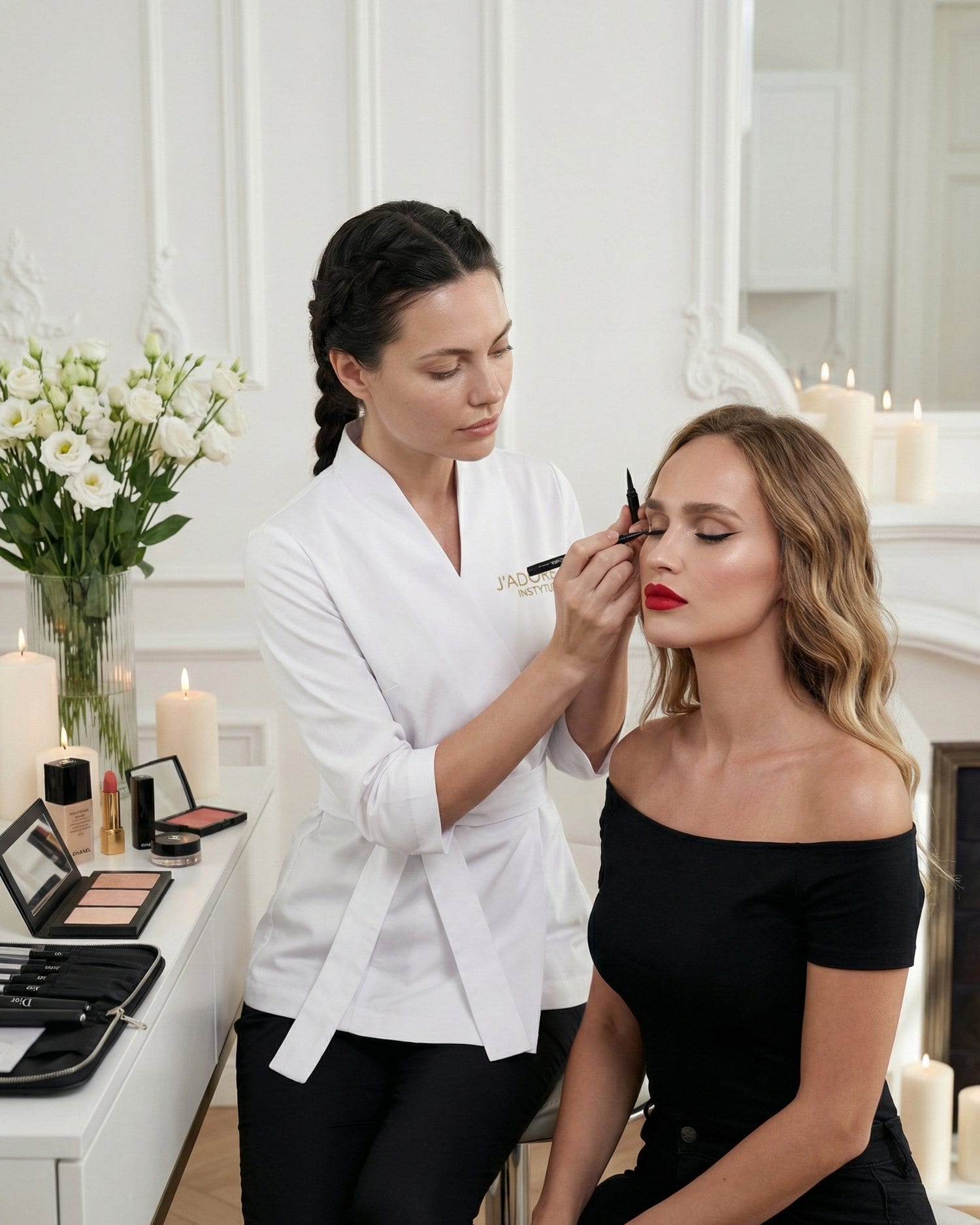
Your touch-up kit should fix three specific things, not contain your entire bathroom.
The kit is selected after the trial: a lip product, blotting paper or a drying method, a small amount of the indicated powder, a cotton bud and possibly eyelash glue if your makeup artist recommends it. Random foundation applied over full makeup after a few hours more often creates a heavy layer than restores freshness.
Cameras and phones perceive foundation differently than a mirror by a window.
Make-up viewed up close serves a different purpose than a face photographed from several metres away. A strong flash can highlight powder, a mismatch with the neck, and product texture, while side lighting can reveal skin texture. This does not mean you need heavier coverage. You must check the balance between the live look and the photograph.
Do not judge the result solely using a camera with an automatic beauty mode. Ask the photographer about their lighting style, but do not try to match your cosmetics to every possible lamp. Your make-up should remain credible in a real conversation, not just in a single frame.
Self-tanner and a fresh tan change the colour of your face, neck, and décolletage.
If you use self-tanner before an event, a trial performed on your winter skin tone may no longer be accurate. The product can also settle unevenly on dry areas. Do not apply it for the first time just before your make-up, and do not try to even out patches with a peel at the last minute.
- Tell your make-up artist about your planned self-tanner before choosing a shade.
- Test the product in advance along with your skincare routine.
- Do not mix several tanning methods in a short period.
- Check your face, neck, ears, and décolletage in the same light.
- If irritation occurs, stop the experiment and report the condition of your skin.
Establish a contingency plan for rain and heat before the last-minute forecast.
Weather changes faster than the ability to rebuild an entire schedule. Prepare an umbrella, a cool place, transport, and a touch-up plan regardless of the season. A waterproof product helps with humidity, but it does not protect your face from rubbing with a wet towel, rain, or standing in full sun for a long time.
A weather-resistant plan
limits exposure
- transport
- shade
- umbrella
- time for drying
- a tested touch-up
A plan based on product promises
ignores conditions
- no margin for error
- walking in the heat
- rubbing the face
- adding powder over sweat
- no make-up bag
Plan your make-up in Krakow together with your commute from Karmelicka.
The Krakow J'ADORE INSTYTUT is located at ul. Karmelicka 45/2B, 31-128 Krakow and is open from Monday to Saturday, 8:00–20:00. You can find the current range of services on our website: Occasional make-up in Krakow.
Provide your ready time, the event location, and your hair styling plan. For events outside the city centre, include realistic travel time, parking, and seasonal traffic instead of booking your make-up right before the ceremony. If several people are getting ready, a name-based schedule is required, not a general "we will manage in the morning."
The best time is when your skin and schedule are predictable.
In spring, consider allergies; in summer, layers and sweat; in autumn, the condition of your skin after the sun; and in winter, heating and dryness. No season is automatically the best or the worst. This event has a date; the goal of the plan is to limit things that can be predicted.
Book from your ready time, use the trial for observation, finish treatments with a margin of time, and leave the last week for stable skincare. If your skin is actively ill or damaged, the most mature decision may be to limit your make-up or opt out. A photo lasts a moment; comfort and safety throughout the entire event are more important.