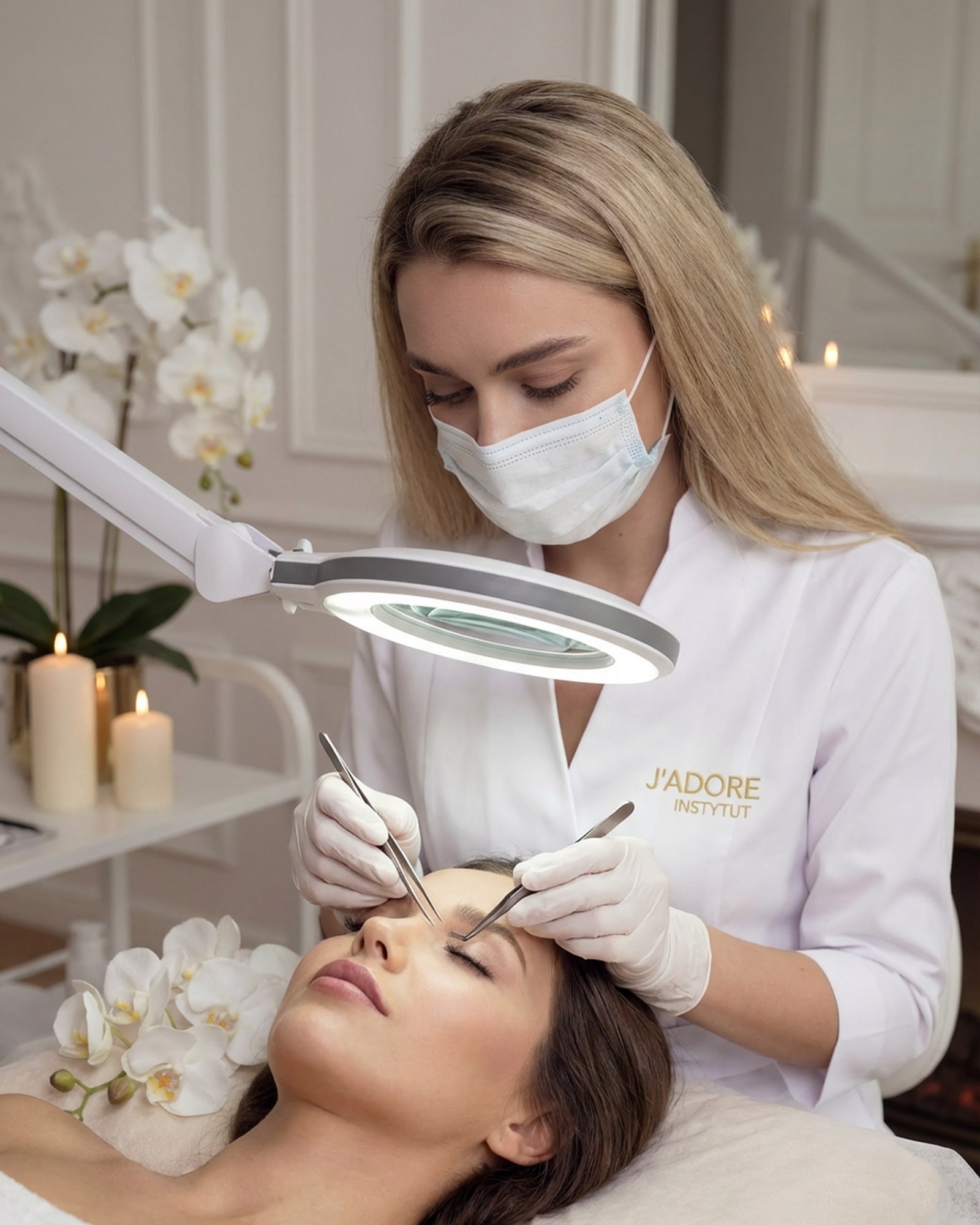
A mirror and a camera see two different things
A mirror is a symmetrical reflection in real time. You see yourself from half a metre away, in familiar lighting, with the neutral facial expression you choose. Your brain automatically fills in and “corrects” the image. It has seen this face for years and knows what to expect. It is a highly subjective experience.
A camera does something entirely different. It freezes a single moment, from a specific angle, in specific lighting, through a lens with a particular focal length. It has no memory or context, and it makes no corrections — it records what is there. This is why the two images so often do not match.
There is also the matter of depth and flatness. Human eyes see in three dimensions. They receive information from slightly different angles and create a spatial image of the face. A camera has one lens and records a flat image. Everything makeup created in three dimensions — contouring, highlighting, nose or jaw contouring — is flattened by the camera. Effects that looked subtle and natural in space can appear as heavy lines in a flat image.
Why flash ruins even the best foundation
Camera flash is brief, intense, direct light that hits the face straight on. It is entirely different from natural or studio lighting. It reacts with cosmetics differently from anything you have seen in the mirror.
- White cast (flashback). Many cosmetics contain ingredients with a high light-reflectance level — especially SPF (UV filters) and certain pearlescent pigments. Flash records these as glaring white patches: an illuminated face, a white nose, radiance where matte foundation was meant to be. Nothing appears wrong in the mirror because the human eye reacts to light differently from a camera sensor.
- Shadows and contouring “jump out”. Natural light at home is diffused. It falls from several directions at once and softly smooths darker areas of makeup. Flash comes from one direction and acts like a spotlight: it brightens highlights and deepens shadows. Bronzer applied for soft natural light suddenly looks like dirty shadows. Contour beneath the jaw looks like beard.
- Pigment colour changes with colour temperature. Flash has a particular colour temperature, which may differ from the light in which you chose your foundation shade. As a result, foundation may look darker, pinker or greyer in photographs than it does in reality. This happens most often with artificial incandescent bathroom lighting.
Techniques that look great in the mirror — and terrible in photographs
Some makeup techniques look harmonious in natural light and in the mirror, yet completely fall apart in photographs. This is not an application error. These techniques were designed for the human eye and three-dimensional perception, not for a lens.
Looks great in the mirror
the human eye, space, diffused radiance
- Strong contouring with a brown or dark product
- A high, sharp highlight on the cheekbone
- Dark liner on the waterline — visually “enlarges” the eye
- Intense bronzer on the temples and around the face
In a photograph with flash
lens, flat image, direct light
- Contour looks like dirty streaks or a beard shadow
- Highlight appears as glaring radiance or a bright patch
- Liner disappears or makes the eye look small and darkened
- Bronzer looks like uneven tan or dirt
Brows are a separate chapter. In the mirror, brows filled with a powder product or pomade look natural — because you see them with the rest of your face, in natural proportion. In photographs, brows are among the first features to “jump out”: edges that are too sharp, a transition between colour and skin that is too visible, or excessive symmetry against an asymmetrical face. This is why brow makeup for photographs is a separate discipline — softer transitions, less saturated colour and techniques that create the look of hairs rather than one solid block of colour.
What light does before it reaches the camera
Photography is essentially the science of light. Every light source does something different to makeup. This is why makeup applied under a bathroom bulb looks different by a window, under flash and beneath a studio softbox. It is one reason why many people look worse in their own selfies than in photographs taken by a photographer.
- 01
Incandescent light (warm, yellow)
It smooths the complexion, conceals imperfections and makes warm colours such as gold and peach look rich. Foundations appear perfectly matched. In photographs, the face may look yellowish or orange if the same lighting is not reproduced.
- 02
Natural light (window, shade)
The most honest light for skin — it shows texture, pores and every uneven area. Makeup for photographs looks best in this light: colours are true, transitions are soft, and there are no surprises. This is why professional shoots are often held by a large window.
- 03
Camera flash (harsh, direct)
The most unforgiving for makeup: it flattens faces, reveals UV filters and exaggerates every sharply defined product, including contour, eyeshadow and highlighter. Makeup created for flash usually looks surprisingly soft and “washed out” in the mirror — but works beautifully in photographs.
- 04
Studio softboxes (soft, side lighting)
Similar to window light, but controlled. Soft, diffused and often with a slight colour temperature. They allow contouring because shadow is created by light, not by product. This is why fashion shoots allow for more delicate makeup than a wedding with a photographer and flash.
Brows — why they most often “ruin” photographs
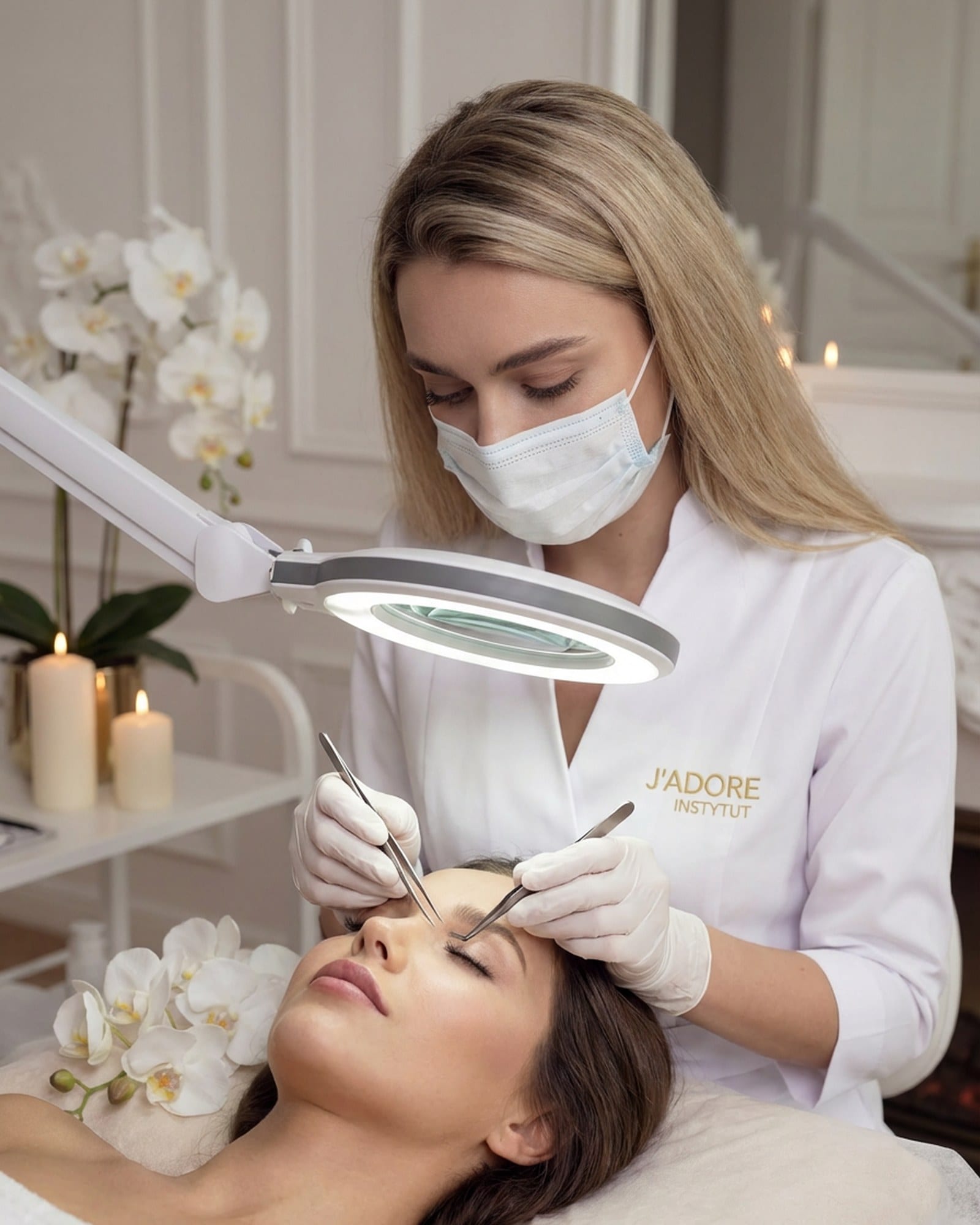
Brows are a makeup paradox. When done well, nobody notices them because the face simply “works”. When done poorly, they draw the eye like a magnet and spoil everything else. This effect is even stronger in photographs because a camera “looks” at the face differently from the human eye.
The human eye scans a face non-linearly. It looks at the eyes, lips and overall expression. It processes brows as context, not as an object. A camera has no such hierarchy — it records pixel by pixel, with equal attention across the whole frame. This is why a sharp brow edge, overly dense filling or artificial symmetry, which your eye does not register as a problem in the mirror, come to the foreground in photographs.
- An overly sharp lower edge. Brows drawn with a ruler-straight lower edge look separate in photographs, as though they have been “stuck” onto the face. Natural brows have a soft, feathered lower edge — and this is what determines whether they look real.
- Overly saturated, uniform colour. Pomade or eyeshadow applied evenly across the whole brow looks like a strip of colour. A natural brow is lighter at the front, darker in the middle and slightly lighter at the tail. This gradient makes all the difference in photographs.
- A mismatch with skin and hair colour. It is easy to assess a product shade in the mirror — but under flash, products can shift by several tones. A product that is too cool on warm skin may look good in the bathroom, but in a photograph it looks like a grey line.
- Asymmetry emphasised by overly strong filling. Natural brow asymmetry is normal, and nobody notices it day to day. But when both brows are heavily filled and have defined shapes, asymmetry becomes visible. It is also difficult to check in the mirror, because the mirror reverses it.
What really helps — how to create makeup for photography
There is no single formula. “For photography” means something different for an Instagram selfie, a wedding with a photographer or a photoshoot. However, some principles work in most scenarios. No filter app can replace them.
- Primers and foundations without flash-reflecting minerals. Avoid products with a high mineral SPF content as a base for flash photography. Formulas tested for photography, or without SPF, give a more consistent result. Apply a separate sunscreen beforehand and allow it to absorb.
- A matte finish instead of glow. Under flash, shimmer and highlighter can appear as a patch. A matte or satin finish is more predictable. If you want glow in photographs, apply a subtle cream highlighter only to the highest point of the cheekbone. Do not apply it across the centre of the face.
- Soft transitions wherever there is contour. Every hard edge will be visible. Blend products more than you feel is necessary — because a mirror “forgives” lines, while a camera does not.
- Product colour slightly more intense than “natural”. A camera often “eats” colour — especially on fair skin. What looks intense in the mirror may appear pale in a photograph. Makeup artists test products with a phone photograph in natural light, rather than judging them in the mirror.
- Soft, graduated brows, checked in a selfie. Before you leave, take one photograph by a window — without flash, in natural light. Your face will show you whether your brows work well in photographs.