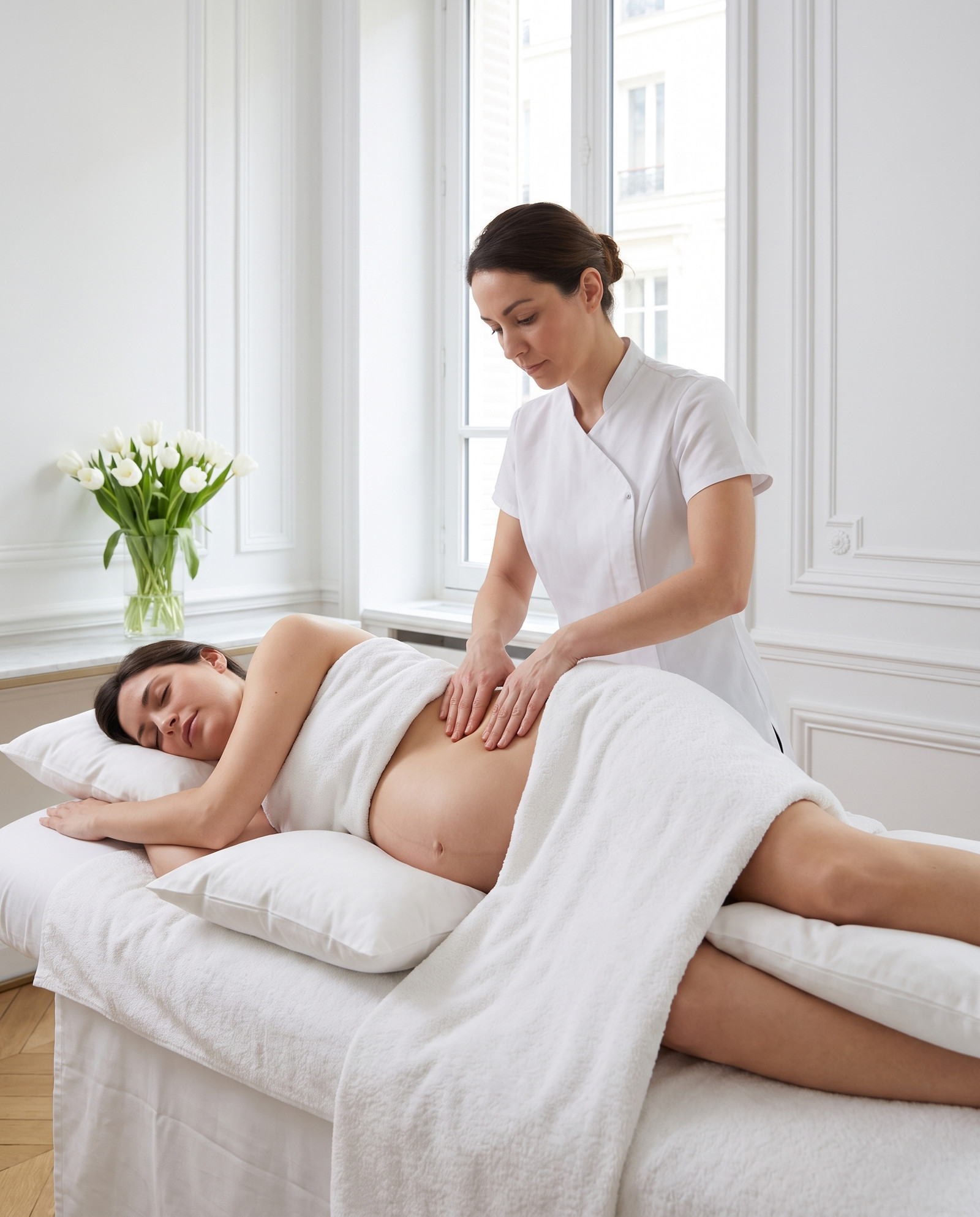
The first minutes: return to a vertical position in stages
After lying on your side for a long time, sit up first, rest your feet and give yourself a moment. Only then stand up. In pregnancy, changing position can increase dizziness, especially if you are tired, have not eaten much, or if the room was warm. Do not rush to the reception and do not put on your shoes while standing on one leg. If you feel weak, say so immediately. The practitioner should help you sit down safely, ventilate the room and assess whether your well-being is improving.
Short-lived sleepiness or a feeling of "soft legs" may result from relaxation and position, but it should not be ignored if it intensifies. Do not drive until you feel fully stable and your focus has returned. If you still have to lean against the wall after walking a few steps to the waiting room, go back to sitting and tell the staff instead of ordering a ride in a hurry. Sudden weakness, fainting, shortness of breath, chest pain or a severe headache require medical assessment, not waiting for water or a sweet snack to work. The first decision after a session is safety, not keeping to your daily schedule at all costs.
During the first few hours, compare your well-being with your own norm
Eat a normal meal or snack according to your plan and drink according to your thirst and the recommendations of your doctor. There is no need to force large amounts of water to "flush out toxins". Massage does not trigger a detox that needs to be handled with litres of fluids. If you have fluid intake restrictions, gestational diabetes, nausea or other specific needs, stick to your medically established plan. General advice from the salon should not replace it.
On the same day, choose gentle, normal movement instead of testing your limits
- Choose gentle, normal movement. If you feel well and have no other recommendations, a short walk and daily activities are usually more sensible than complete immobilisation. You do not need to "protect the effect" by lying down for the rest of the day.
- Do not test your body's limits. Intense training, a long sauna, a very hot bath or a busy schedule will make it harder to assess your body's reaction and may increase fatigue.
- Opt for predictability. Choose a day that is as predictable as possible, especially after the first session, when you do not yet know how you react to a massage.
Do not aggressively stretch areas that seem looser after the treatment. In pregnancy, range of motion and the sense of stability can change, and temporary relaxation is not an invitation to deepen every position. Perform movements that you know and that have been approved during your pregnancy. If pain, pulling in the abdomen, dizziness or unusual shortness of breath occurs, stop. Massage does not provide a special "window" in which the body must use greater flexibility.
Only leave the cosmetic on after the massage if your skin tolerates it well
Do not add a peel, dry brushing, essential oils or a new, intensely scented product that evening. The skin has already received friction, pressure and a cosmetic. Minimal care makes it easier to identify the cause if irritation appears. Widespread blisters, increasing swelling of the face, lips or tongue, shortness of breath or a sudden generalised reaction require urgent help. Do not try to cover them with another balm or wait until the next day.
In the evening, slight tenderness may occur, but severe pain is not the goal
Do not take a new painkiller on your own just to ignore a symptom. In pregnancy, the choice of preparation should be in accordance with the recommendation of a doctor or pharmacist who knows your situation. Write down where it hurts, since when, whether the pain is one-sided, what makes it worse and whether it is accompanied by swelling, redness or shortness of breath. These details help distinguish normal muscle tenderness from a situation that requires quick assessment.
Do not add obstetric symptoms to your list of reactions after a massage
Treat a severe headache, vision disturbances, sudden swelling of the face or hands, pain under the ribs, shortness of breath, chest pain and one-sided calf pain and swelling in the same way. This is not a list for self-diagnosing complications, but a signal that a cosmetological massage is not the right place for assessment. Follow the recommendations received from the person managing your pregnancy or seek urgent help, depending on the severity of the symptoms.
The first night: sleep in a position that is safe and familiar to you
If you wake up with pain in a pressure point, change position and check if the ailment subsides. In case of increasing pain, shortness of breath, bleeding, contractions or any other alarm symptom, do not wait until morning. Also, do not judge the quality of the massage by whether you slept exceptionally long or short. Sleep in pregnancy depends on many variables, and a single night does not prove that the treatment solves insomnia or causes it.
The next day, return to your routine if your body is behaving normally
If you feel stable, your skin is calm and mild tenderness is decreasing, you can go about your normal day within the limits of pregnancy recommendations. You do not need a cleansing diet, a "toxin removal" supplement or another massage to maintain the effect. Resting after a session is an experience, not homework. Briefly write down what was beneficial: easier lying on your side, less feeling of stiffness, calmer breathing. Also add how long the change lasted and in what situation it stopped being noticeable; such concrete data is more useful than a general assessment that "it helped".
If you feel worse the next day, describe the problem specifically. "The massage harmed me" does not provide enough data, nor does "it's definitely normal". Indicate the area, the type of pain, the severity over time, the presence of swelling and other symptoms. Contact the salon regarding the course of the treatment, but consult the medical team about symptoms concerning the pregnancy. These two contacts can complement each other, but they have different competencies.

Days two and three show whether the tenderness is actually subsiding
A normal reaction after pressure should move towards improvement. If it hurts more every day, a large bruise appears, movement is limited or one-sided swelling occurs, do not wait until the end of the week. Take a photo of the visible change in neutral light and note the date and time. Do not massage a painful area firmly on your own and do not heat it without establishing the cause. In pregnancy, it is especially important not to automatically attribute new symptoms to "muscle soreness".
If, however, the discomfort disappears, consider whether the pressure during the session was appropriate for you. At your next visit, you can ask for lighter work in a specific area or different support. This is not a failure of the treatment or "too little resistance". Adapting to your changing body is the basis of prenatal massage. Information after two days helps the practitioner more than a general assurance that everything was perfect.
By the end of the week, assess the usefulness of the treatment, not the durability of the promise
In the following days, the body returns to the burdens associated with pregnancy, sleep, work and daily movement. The feeling of lightness may last for a short or long time; there is no single correct time. Write down whether the massage made resting easier, whether the position was comfortable and whether any adverse effects appeared after the session. Do not measure the value of the treatment solely by whether the pain did not return for the whole week. Massage does not remove the source of every ailment.
If the main problem remained unchanged or is rapidly increasing, do not automatically increase the frequency. Pelvic pain, back pain, swelling or numbness may require a different type of assessment and management. In the case of a calm reaction, you can decide whether the benefit of relaxation and comfort justifies another visit. A series is not an obligation. Each appointment should be re-evaluated, because the course of pregnancy and well-being change from week to week.
Days four to seven do not require maintaining the effect with additional treatments
If you feel well, you do not need to plan baths, self-massage, brushing or another procedure so as not to "waste" the massage. The body does not lose the benefits because you returned to your usual care. During this period, it is better to observe daily situations: how long you can sit comfortably, whether it is easier to change sides in bed, at what point the feeling of heaviness returns. Such data helps to determine the real usefulness of the visit without creating a ritual that cannot then be distinguished from the massage itself.
Do not combine several new methods in the same week if a reaction requiring explanation appeared after the first session. A new cosmetic, intense rolling, a different massage and additional heating will make it difficult to determine what affected your skin or tenderness. When everything went calmly, normal activity remains the point of reference. If you need other therapy or treatment, ask your pregnancy manager about the correct order. The salon should not independently create a medical management plan based on well-being after a massage.
Contact with the salon should be based on facts from the specific session
Keep the date of the visit, the areas covered by the massage, the cosmetic used and information about the position. If you reported discomfort during the session, note whether the technique was changed. In the event of a skin reaction, take a photo before applying further preparations. In the event of pain, describe whether it is superficial, muscular, point-specific, one-sided and whether it changes with movement. Such communication allows the salon to reconstruct the situation and provide you with sensible information about the procedure applied.
The salon should not diagnose pregnancy complications over the phone. It can, however, say how the session went, what product was used and whether the reported symptom corresponds to the area of manual work. If the situation goes beyond a typical skin or muscle reaction, the correct response is a referral to medical care, not assuring you that "the body is cleansing itself". A clear division of responsibility reduces the risk of delaying a necessary consultation.
In Krakow, save the correct address and contact route after your visit
J'adore in Krakow is located at ul. Karmelicka 45/2B and is open from Monday to Saturday from 8:00 to 20:00. You can find the current description and availability on the prenatal massage in Krakow page. Before leaving, make sure you know who to contact regarding reactions after the massage. Keep the contact indicated by your pregnancy management team separately in case of obstetric symptoms or a sudden deterioration in well-being.
For your next visit, bring information on how the first hours, the night and the next day went. If your medications, recommendations, blood pressure, swelling have changed since the previous session, or if worrying symptoms have appeared, report this before the massage. Prenatal massage is usually planned after the first trimester and with the consent of the person managing your pregnancy; such consent is not a one-time stamp for the entire period. Your current well-being may justify changing the position, scope or postponing the date.
Before the next session, answer four questions for yourself
- Did I feel stable and safe immediately after the treatment?
- Was any tenderness mild and did it decrease over time?
- Did the practitioner respond to requests to change position or pressure?
- Was the goal of the visit — rest or greater comfort — achieved without worrying symptoms?
If the answers are positive and your doctor sees no contraindications, the next visit can remain an element of caring for your comfort. If the reaction was unclear, clarify it first. Do not book the next session to "reverse" the pain from the previous one. Before the next appointment, also check whether the support for your abdomen and legs was comfortable throughout the session, whether your arm went numb and whether you could change sides without difficulty. As pregnancy progresses, a setup that previously served you may cease to be comfortable. Tell us about this before starting, instead of waiting for the discomfort to pass on its own. The first week is not a time for special regeneration after the treatment. It is a period of gathering information about how your changing body tolerates pressure, position and the cosmetic. That is enough to make a sensible decision.