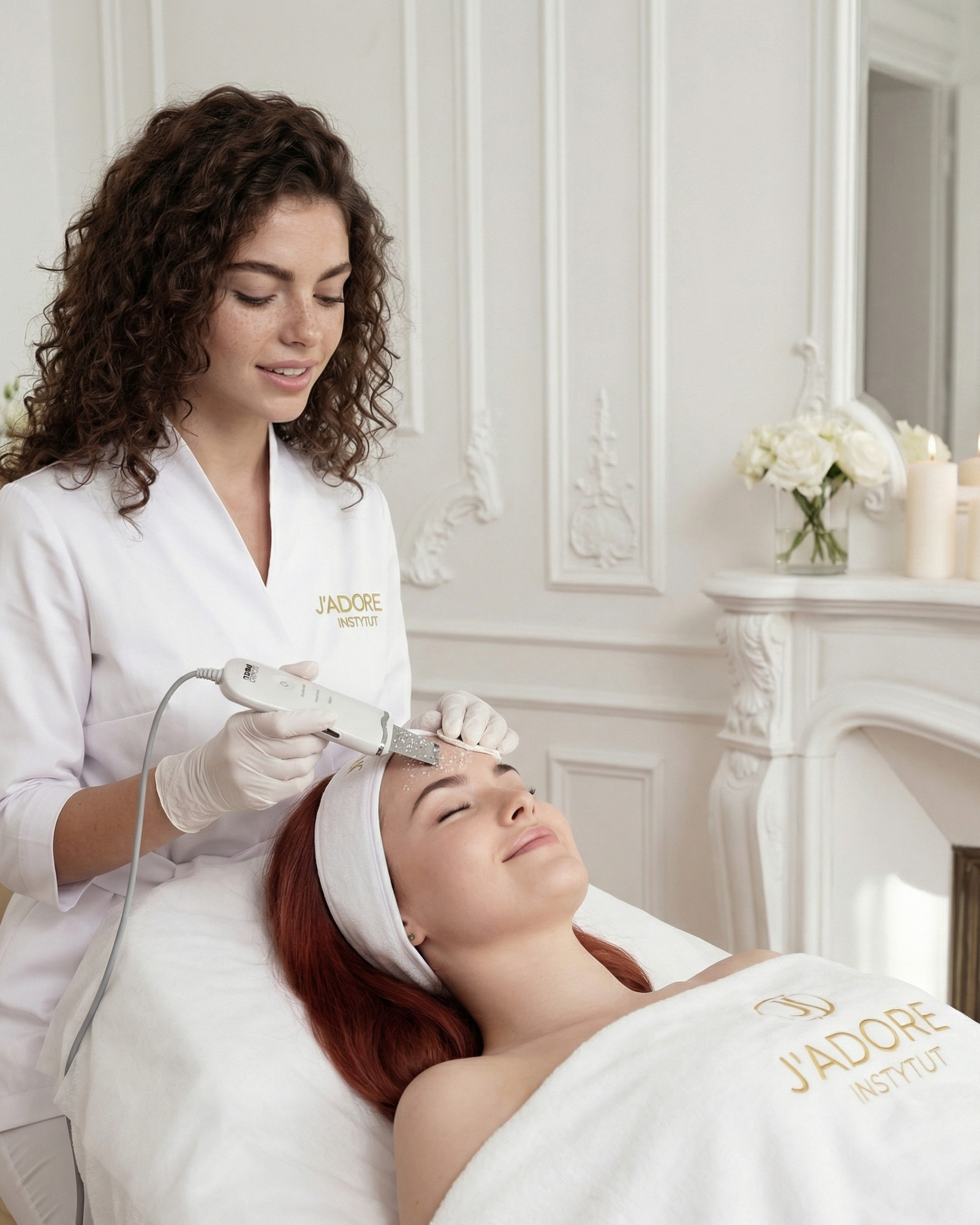
Start with a goal that can be seen under a lamp
Instead of saying "I want to clean my face," point out the area and the symptom: roughness near the jawline, superficial blackheads on the nose, a heavy film from a cream, or an uneven texture on the forehead. The cosmetologist will check if loose cells of the stratum corneum and shallow impurities dominate, or if there are painful nodules, milia, or deep lesions requiring a different approach. This distinction determines the scope more than the name of the booking.
Do not expect all pores to be removed, as they are part of the skin's structure. The spatula does not replace manual extraction of every lesion or dermatological care for active acne. Good preparation includes agreeing to a change of plan after your face is examined. If the method does not suit the problem, a reasonable outcome of the consultation may be a different procedure or a postponement.
List your skincare as you actually use it
- Product documentation. Take photos of the labels of your cleanser, serum, cream, SPF, and spot treatments.
- Usage details. For retinoids, acids, and anti-acne cosmetics, note the frequency and the date of the last application.
- Precision in naming. A brand name without a specific variant is often insufficient, as one line contains several formulas with different effects.
- Recording format. You do not need to rewrite the entire ingredient lists; just bring the packaging or clear photographs of the products.
The cosmetologist also asks about reactions. A serum may have been used for months but cause stinging near the nose for the past week. A cream may be well-tolerated on the cheeks but cause small bumps near the hairline. Such information helps distinguish a problem requiring a change in routine from one that can be reasonably addressed with cavitation.
A medication for the face is still a medication
- Topical medications. In the questionnaire, include prescription ointments and gels, such as retinoids, topical antibiotics, or anti-inflammatory preparations.
- Specialist therapies. Report current or past isotretinoin therapy and any medications affecting healing processes or blood clotting.
- Treatment decisions. Do not make independent decisions about pausing medication after reading a guide; every change must be consulted with your attending doctor.
Are you taking a new antibiotic, has a rash appeared, or has your doctor changed the dosage? Communicate this before your appointment, not after removing your makeup. Simply moving the visit does not resolve the conflict if no one has determined what the re-qualification depends on. Ask for a clear next step: a consultation, returning after the skin has calmed down, or presenting consent from the appropriate specialist.
Medical devices and metal in the area must be reported at the time of booking
Similarly, report pregnancy, suspected pregnancy, and breastfeeding. The decision is not based solely on the absence of acid. The equipment, preparations added to the treatment, the area, and your individual health status are what matter. In case of doubt, we do not test the procedure; we choose a solution consistent with the qualification.
Do not introduce a new serum before the first assessment
Before your first cavitation, maintain your known routine unless the salon advises otherwise. Do not buy a home spatula, clay, or a stronger toner to "open your pores." If your routine is already irritating, report the symptom and ask what to stop using. The difference is that the recommendation should take into account the specific product and your skin, not a general promise from the packaging.
A home peel before a professional peel removes a clear starting point
- Granular and enzymatic peels. They can smooth the skin surface for a few hours while leaving micro-irritations.
- Acid pads and brushes. They often cause redness or a feeling of tightness, which is not a neutral starting point before a treatment.
- Withdrawal time. There is no single universal number of days for all preparations; the interval should result from the strength of the specific product and individual recommendations from the salon.
If you have already performed a strong exfoliation, do not hide it in the hope that your face will look normal in time. State the day, the name of the cosmetic, the contact time, and the reaction. Your skin may not be intensely red but still sting when in contact with water. Comfort during simple washing often says more than the colour seen through a layer of cream.
Do not squeeze lesions so the cosmetologist has less work
On the evening before the visit, someone might press their nose with a metal loop or use their fingernails on their chin. In the morning, the blackhead is less visible, but an abrasion and a tender red spot have formed nearby. The spatula should not work on a fresh wound. One home correction can therefore limit the treatment area more than leaving the imperfections alone.
Also, do not apply patches to your nose or prick milia. The cosmetologist should see which pores are superficially burdened and which lesions lie deeper or are inflammatory. The goal of the consultation is not to assess whether you cleaned your face well. The goal is to select a method without working on a damaged surface.
Plan shaving and hair removal according to your skin's reaction
If you usually get micro-cuts or red bumps after shaving, do not move the blade just before entering the salon. Set an earlier time that allows your skin to recover. Do not test a new foam or razor on the eve of the procedure. Similar caution applies to waxing or sugaring in the area to be treated.
Under the lamp, the cosmetologist will check the jawline, the area around the mouth, and the neck. They look for fresh cuts, irritated follicles, flaking, and points to avoid. If you shaved on the same day and your face stings during makeup removal, do not assure us that "I always have this." A repetitive reaction is still a reaction relevant to the scope of work.
Sunburn, cold sores, and infection do not fit under makeup
Fresh sunburn, open wounds, active inflammation, and cold sores require reporting. In the case of recurring cold sores, also mention the characteristic tingling before a blister appears. Do not cover the lesion with concealer and do not count on the spatula avoiding it without affecting the rest of the plan. The decision may require postponing the entire procedure.
If you have a fever, a fresh infection, or a sudden rash, contact the salon before leaving. Do not take medication solely to hide how you feel for the duration of the visit. The qualification includes the person, not just the cheek. Sometimes it is more reasonable to determine the cause of the symptom and return after it has been clarified.
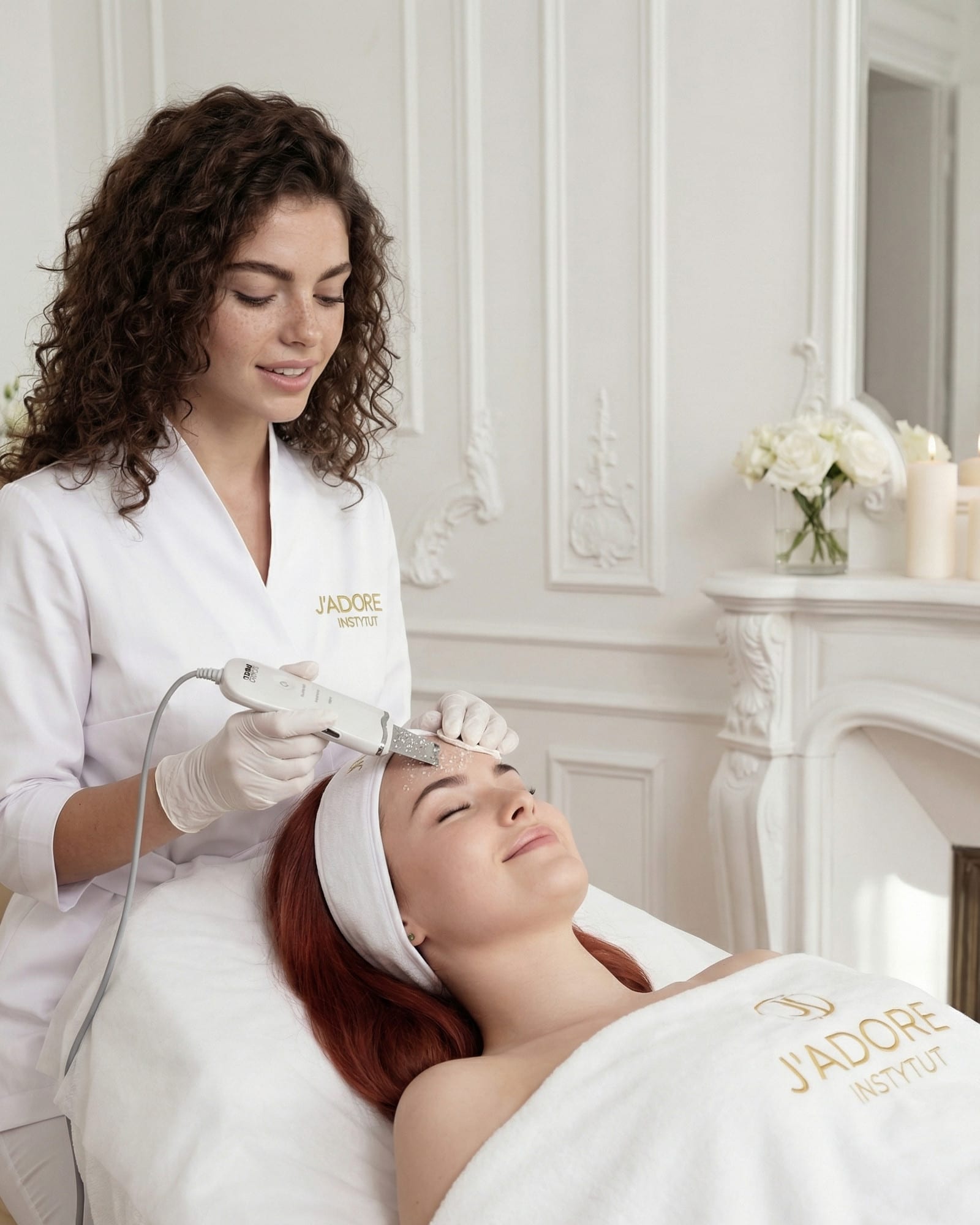
The day of the visit does not require a face scrubbed dry
Wash your face as usual, without repeated degreasing. You can arrive in makeup if the salon has not provided other instructions; proper makeup removal is part of the procedure. However, do not deliberately apply many long-lasting layers that require long dissolution. The cosmetologist needs to see the colour, texture, and active lesions without a film hindering the assessment.
Bring photos of your cosmetics, a list of medications, and a short note about reactions. Remove jewellery from the face and neck area if the salon advises, but do not make decisions regarding implants based on the fact that they are not visible. Arrive a few minutes early so the interview does not take place in a hurry after the treatment has begun.
The cosmetologist looks at the difference between shine and a damaged barrier
Before turning on the device, they assess whether the surface is evenly moisturised, where sebum accumulates, whether there are dry flakes, and whether redness has clear boundaries. They ask about stinging during washing and touch selected areas to check for tenderness. A greasy T-zone can simultaneously have dehydrated cheeks; in that case, an identical number of passes over the entire face makes no sense.
This is why you should not apply a mattifying base before the visit just to make your complexion look neat. Do not smear a thick layer of an occlusive preparation on a flaking area without informing us about it. The temporary appearance after a cosmetic should not replace a description of how your skin has behaved over the last few days.
The first and fifth visits require different types of attention
A person going for cavitation for the first time often prepares their face too intensely because they want a "good result." A client returning after several sessions does the opposite: they consider the procedure a routine and do not mention a change in medication or a new home device. The first one needs the pressure of perfect cleansing removed; the second needs to be reminded that the interview does not lose its validity with experience.
Bring observations from the previous visit: where the skin was tight, how it behaved after the ampoule, and whether new lesions appeared. Thanks to this, the cosmetologist does not have to recreate the entire history, but also does not assume that the current protocol should be a copy of the previous one. The method is repeated, not the exact state of the face.
Also prepare for the first evening after the treatment
If you are planning a sauna, intense training, many hours in the sun, or stage makeup after the visit, mention this during the qualification. The treatment may be superficial, but additional stages and the skin's reaction change the limitations. It is better to postpone the date than to adjust the instructions to a calendar that has no room for calm observation.
Have a mild cleanser, a known cream, and sun protection at home. Do not buy an entire "post-cavitation skincare" set on the day of the treatment. New products make it difficult to assess any itching or redness. Ask when to wash your face and whether the final preparation should remain on it for longer.
Three minutes of organising facts changes the course of the consultation
A second person comes after several successful treatments and says that nothing has changed. A short question about the last month, however, reveals an antibiotic, a trip into the sun, and a new razor leaving cuts on the neck. None of this information alone has to lead to a refusal, but together they create a different starting point than before. Preparation for the next session cannot be limited to the sentence "my skin already knows cavitation."
The third client brings a long list of products, but one daily habit proves most important: she cleans her nose with a metal loop after a hot shower. Under the lamp, we can see semi-circular abrasions that no cosmetic can explain. Such specific detail allows us to shift the conversation immediately from choosing an ampoule to soothing the skin and stopping home manipulation. The list should reflect your practice, not just the contents of your cabinet.
Warsaw: preparing for two locations using the same principles
You will find the treatment description and booking options on the cavitation peel in Warsaw page. The J’ADORE INSTYTUT salon at ul. Żelazna 59 is open from Monday to Saturday between 8:00 and 21:00, and on Sunday from 11:00 to 19:00. The location at ul. Mińska 29A/46 is open from Monday to Saturday between 9:00 and 21:00.
In both locations, bring the same key information: current preparations, medications, previous reactions, medical devices, and recent treatments. If you have developed a cold sore, fever, or extensive irritation this morning, please call before you travel. A photograph can assist our conversation, but it does not always replace an in-person skin assessment.
Good preparation allows the cosmetologist the right to change the plan
Once you are in the chair, it may turn out that instead of cavitation, you need barrier soothing, a dermatological consultation, or a different type of cleansing. Do not treat this as a wasted visit. A procedure performed despite wounds, active inflammation, or an unexplained contraindication does not become better just because it was planned.
The shortest preparation list is therefore: do not exfoliate in advance, do not squeeze, do not hide changes, bring the names of your products, and tell us what has changed since booking. The rest is determined after we examine your face. Your skin does not need to look perfect. It must be shown honestly.