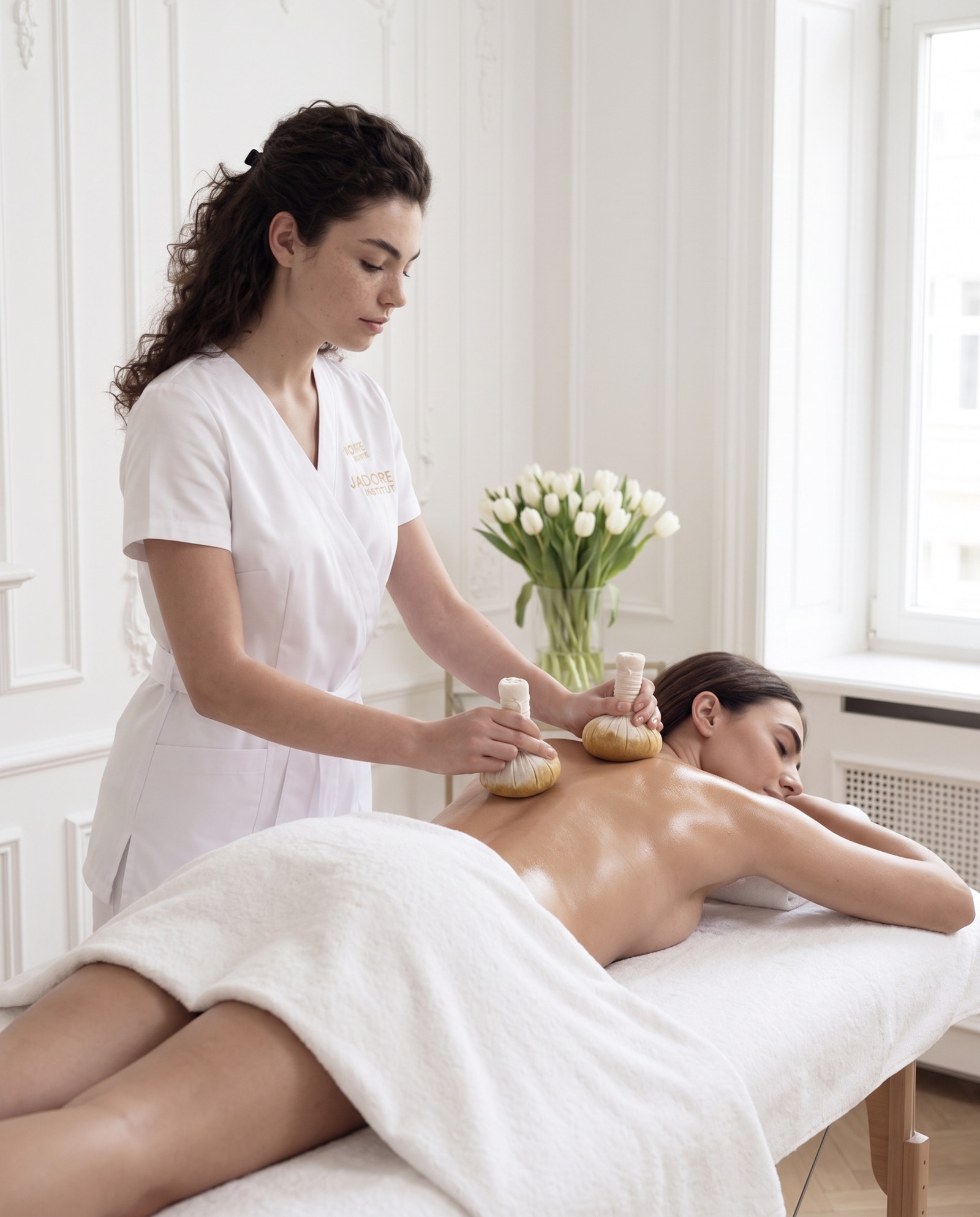
First, check if the author describes the stamps, not just the spa atmosphere.
A review full of information about lighting, music and tea may accurately reflect the atmosphere, but it says nothing about the performance. Look for details: a short interview before the session, questions about allergies and temperature sensitivity, a test of the first application, how non-massaged body parts are covered, and the reaction to a request for lighter pressure. The client does not need to know the names of techniques. It is enough that they describe the sequence and notice whether the stamp was applied, rolled, pressed or used more like a warm tool for a fluid massage.
If the treatment itself fits into one sentence and the rest concerns the decor, the review helps assess the comfort of the visit, not the quality of work. Do not discard it entirely, but do not add missing information. A photo of a steaming packet also does not confirm that the temperature at the skin was controlled. The best accounts contain small scenes: the practitioner touches the stamp with their own hand, starts with brief contact and only extends it as the packet cools.
Temperature must be described as a process, not a one-off impression.
Also, read whether the author distinguishes the stamp's warmth from the room temperature. You can feel cold when successive body areas remain uncovered for too long, even if the packet itself is correct. You can also feel overheated due to blankets, scent and lack of ventilation. A description that separates these elements says a lot about organisation. One general "it was perfectly warm" does not answer whether the practitioner was able to adapt subsequent applications to the reaction of different body parts.
The herbal composition matters when you can learn about it before contact with the skin.
A review about a beautiful aroma will not predict your tolerance. The same scent may be delicate for one person and overwhelming for another after a dozen minutes in a closed room. Pay attention to whether it was possible to ask for ventilation, a reduction in intensity or the end of the session. If several people describe headaches, nausea or itching, ask the salon about the specific blend. Do not assume a mistake immediately, but do not ignore a pattern just because the product sounds plant-based.
Moisture and the state of the material say more about the procedure than a decorative photo.
A heated stamp should be prepared so that it retains its shape and does not drip onto the skin. A useful review may describe whether the material was clean, the packet compact, and the contact controlled. Wet spots, spilling contents or an unpleasant, musty smell are not elements of authenticity. A photo of new stamps on a shelf does not show how those used during a specific session were prepared. Therefore, ask about the practice, not just the aesthetics of the tool.
Assess pressure together with temperature, because these stimuli add up.
A description of communication is valuable: the client said "too hard", and the technique was changed without trying to convince them that they need to endure it. However, the body does not have to be equally sensitive on the back, calves and arms, so one fixed force does not solve the matter. Bruises, point pain, numbness or limited movement after a session are not confirmation of effectiveness. If reviews romanticise such reactions, treat them as a warning, not a recommendation.
The promise of a cure lowers credibility even with many stars.
Stamp massage can be a pleasant thermal and manual ritual. It should not be sold as a treatment for injury, thrombosis, acute inflammation, infection or unexplained pain. If a review speaks of "drawing out toxins", burning fat tissue or permanently removing ailments, do not treat it as confirmation of the mechanism. The author may sincerely describe their own feeling, but it does not provide a basis for a promise to the next person.
A reliable salon is able to refuse to perform the treatment in case of fever, active infection, fresh injury, damaged skin or suspicion of a problem requiring diagnostics. The opinion of a client disappointed by the rescheduling of an appointment may paradoxically show the responsibility of the place. Read the justification and the salon's response. Fulfilling every request is not proof of care. Sometimes the best decision of the practitioner is not to apply heat and not to massage a painful area.
An account from the next day complements the delight recorded at the reception.
Right after the treatment, warmth, scent and a sense of rest dominate. Only later can you assess whether the skin remained calm, or if burning, a rash or point soreness appeared. Look for reviews updated after some time or comments that explicitly describe the next 24 hours. A lack of such information does not mean a bad service, but it limits what you can infer from the review about skin tolerance and the plant blend.
Heat and friction can cause temporary redness, so a photograph taken immediately after the session does not determine either a burn or quality. A description is needed: did the skin burn, how quickly did the colour fade, were there blisters or point pain, and what did the salon reply? Uniform light pinkness is a different situation than a clear mark in the shape of a stamp that grows after leaving. Without this data, a photo is easy to use both to scare and to praise intensity.
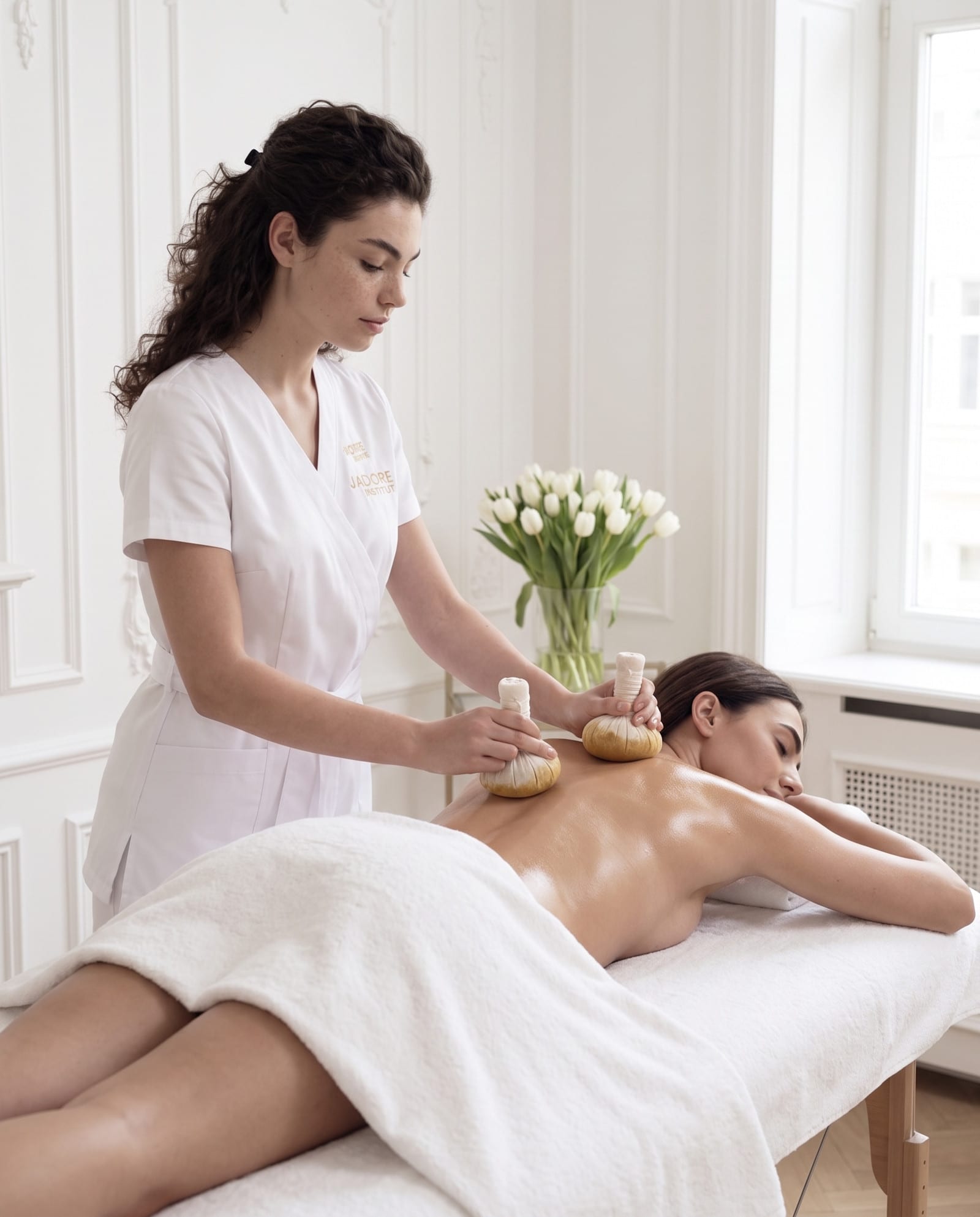
Similarly, a photograph of the stamps themselves does not say whether they were used during the visit in accordance with the procedure. Treat the image as a supplement to the account, not its substitute. In case of a worrying symptom after your own session, take a photo in neutral light, note the time and contact the salon. Blisters, severe pain or a rapidly worsening reaction require proper assessment, not comparison with someone else's photo in reviews.
Organise negative reviews according to the severity of the event.
Not every low rating speaks of the same thing. A delay, a scent not to one's taste, lack of information about composition, ignored burning and a burn have different weights. Treat events related to safety and communication during the session most seriously. One complaint does not have to determine the standard, but several descriptions of the same problem in different months create a pattern. Read the content, not just the average and the owner's response.
A good response does not reveal the client's health details and does not try to win a public discussion. It should propose contact, refer to the procedure and indicate what can be explained. The sentence "no one else complained" does not answer the reported burning. In turn, a calm admission that scent is subjective, combined with information about the possibility of choice, may be enough for a preference problem. The way of reacting shows whether the salon understands the difference between taste and safety.
In Krakow, check if the review concerns Karmelicka.
The Krakow J'adore salon is located at ul. Karmelicka 45/2B and is open from Monday to Saturday, 8:00–20:00. You will find the current description and availability on the herbal stamp massage in Krakow page. When reading comments, pay attention to the date, the indicated address and the practitioner. Shared profiles or general searches may mix entries concerning other services or even other cities. Local specifics are more important than the general popularity of the treatment name.
If the review does not provide the street, call Karmelicka and fill in the gaps: stamp composition, temperature control rules, qualification and procedure for scent hypersensitivity. Older reviews may concern a different product or schedule. You are not looking for a guarantee of an identical experience. You are checking whether the current team can clearly describe the procedure and whether they respond without promises that the treatment is suitable for everyone.
Five questions before booking fill the gaps in reviews.
- What is the composition of the blend in the stamps, and can I know it before the visit?
- How do you check the temperature during the first and subsequent applications?
- Are the packets prepared for a specific session, and what does work hygiene look like?
- How do you change pressure for sensitive skin or weaker temperature sensation?
- Who do I contact after the treatment if an unusual reaction appears?
Answers should be specific, not covered by a story about an exotic ritual. If the salon does not know the composition, ensures that natural herbs do not cause allergies, or considers burning to be part of the effect, reviews do not compensate for this lack. Also, tell them about medications, pregnancy, sensory disorders, active infection, skin condition and unexplained pain. Someone else's good tolerance is not a qualification for you.
Skin observation before stamp massage should influence the course of the session.
Before the first warm contact, the cosmetologist examines the exposed area of the skin, not just asks about well-being. They may notice a fresh scratch after depilation, small pimples, flaking epidermis on the shoulder blades, a bruised spot after an impact or uneven redness after the sun. It is not about making a diagnosis, but about catching places where a hot, damp stamp and pressure would be unpleasant.
A weak account sounds like: "she didn't look, but it was nice". A stronger one shows a scene: the client pointed to a burning strip of skin at the neck, the practitioner examined it in the salon light, covered it with a towel and led the stamps lower, along the non-irritated part of the back. Such a detail allows one to assess the attentiveness of the work much better than just an assurance of relaxation.
The best review describes decisions made during the process.
A reliable review of stamp massage does not need superlatives. It shows that temperature was controlled, composition available, pressure changed, and client messages immediately taken into account. It separates scent from skin reaction and atmosphere from technique. It also notices boundaries: a warm ritual can relax, but it does not replace diagnostics or treatment. Thanks to such details, the review helps assess the work culture, even if your feelings are different.
Read a few of the latest entries, look for repeatable specifics and only then call. You do not have to find a place without a single critical remark. You need a place that can explain composition, temperature, hygiene and qualification, and refuse when heat is not appropriate. Stars narrow the list. The choice is decided by the answer to the question of whether the procedure is transparent from the preparation of the stamp to the skin reaction the next day.