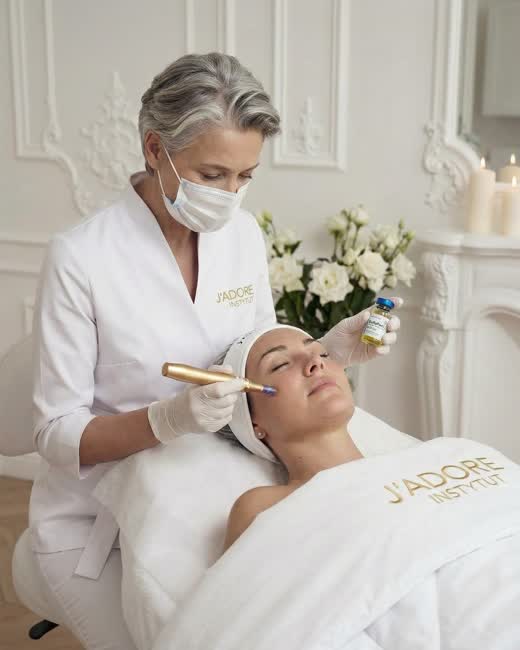
How the two methods differ — at a glance
In simple terms: needle mesotherapy goes into the skin, no-needle mesotherapy works through the skin. That distinction sounds technical, but it has very practical consequences — for how the treatment feels, how long you'll look "just treated" afterwards, and which concerns each method addresses.
Needle mesotherapy
precise, deep regeneration
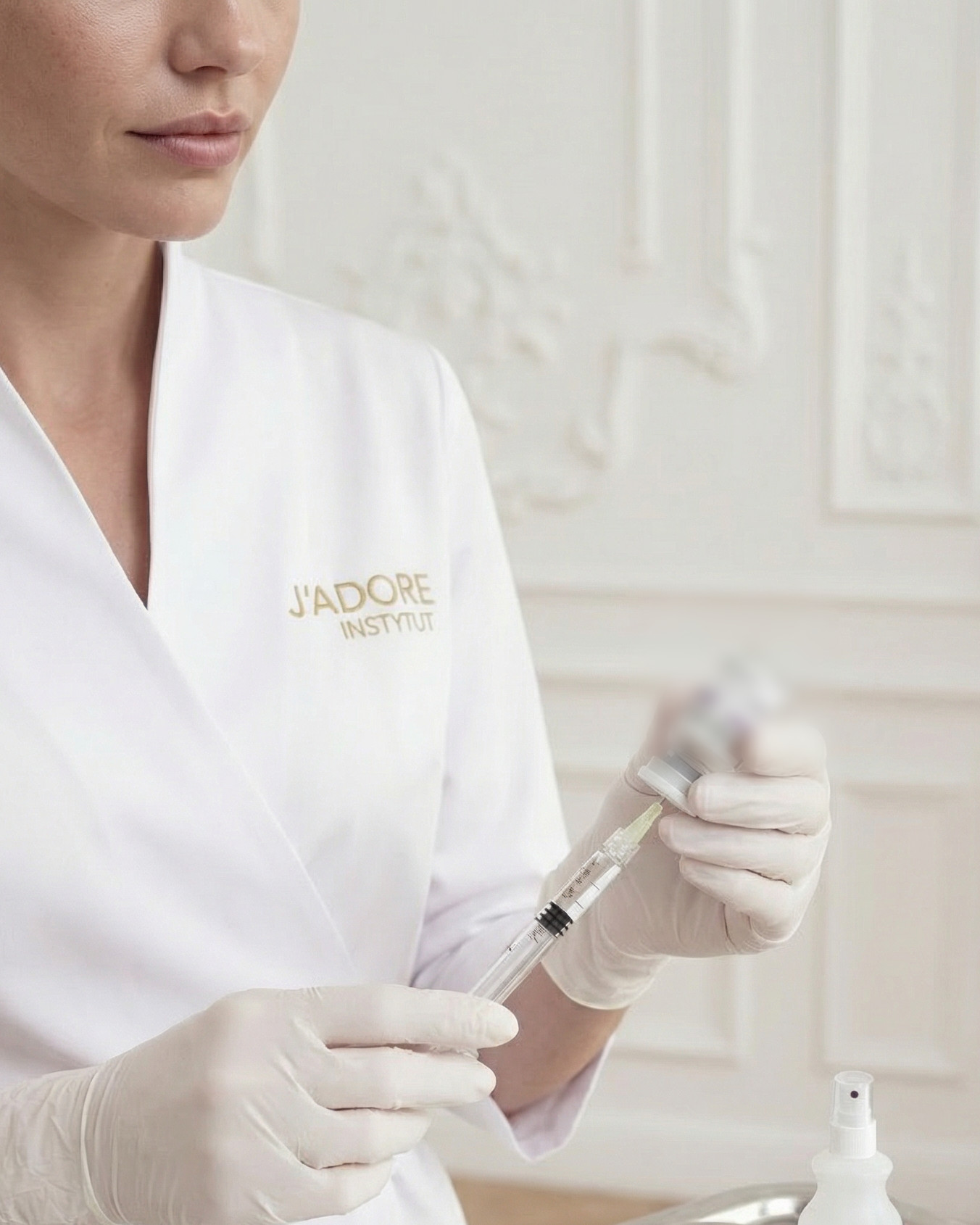
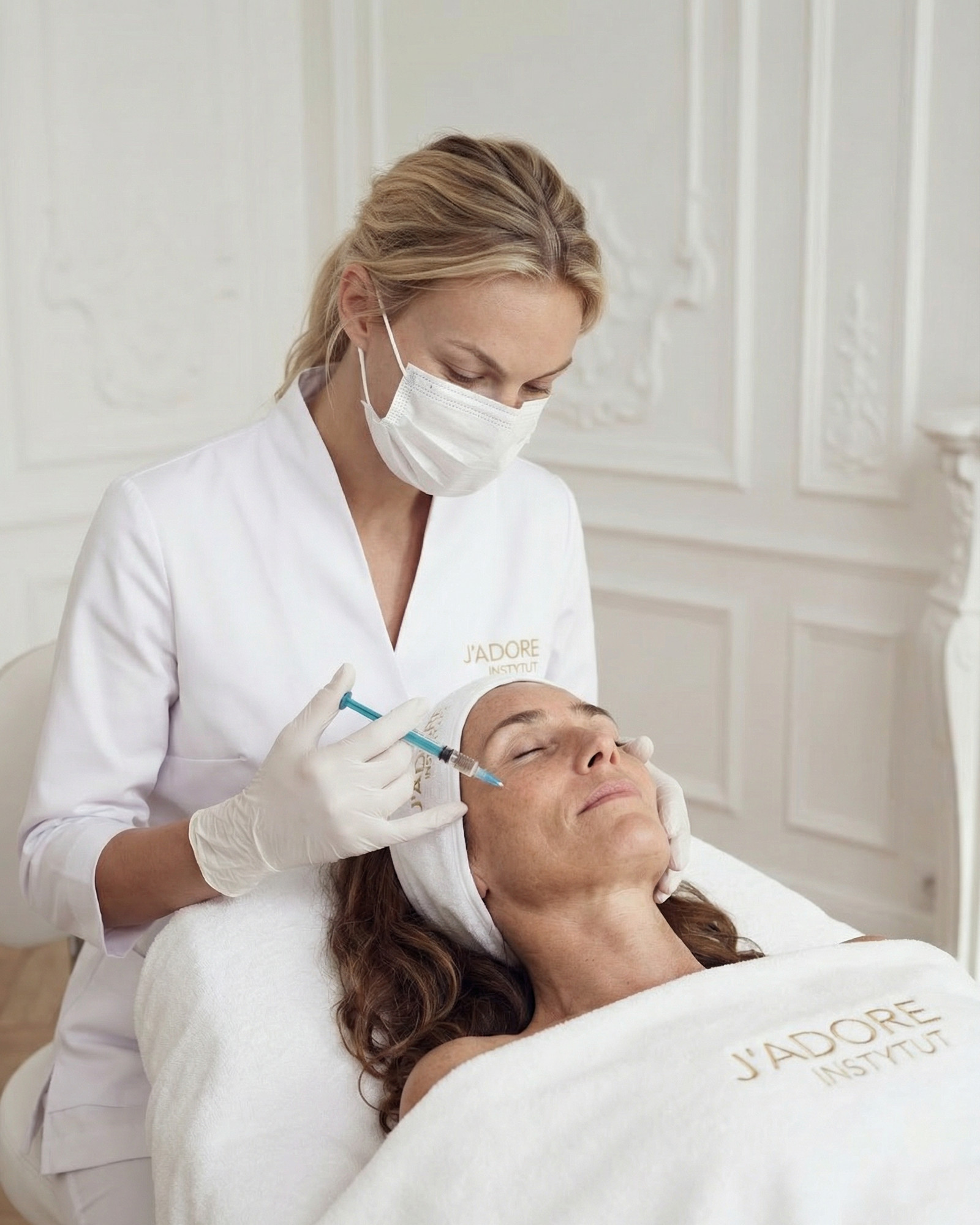
- delivers active ingredients directly into the dermis
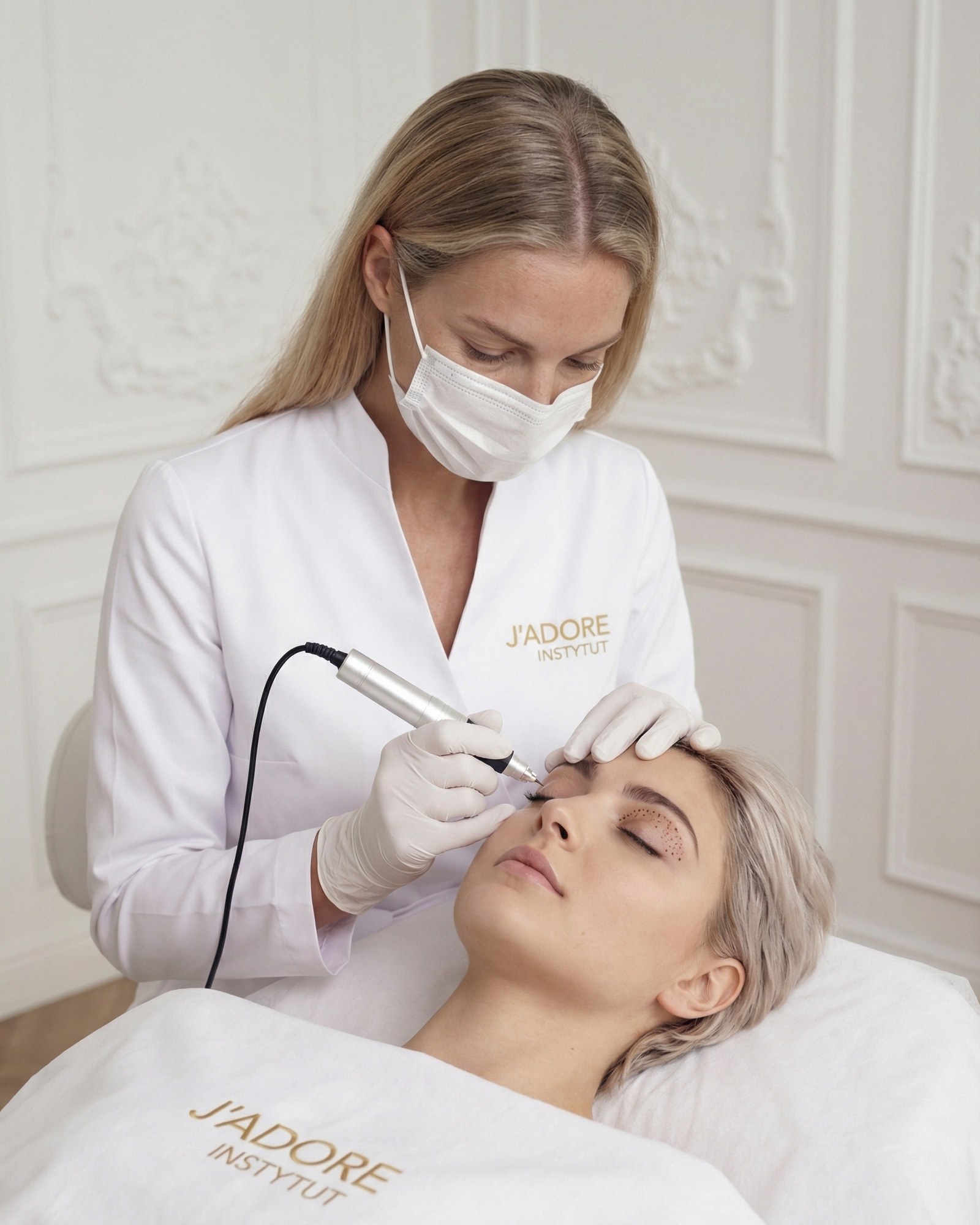
- recommended for loss of elasticity, hyperpigmentation, hair loss
- greater control over concentration and delivery point
- after the treatment: mild redness, occasionally micro-bruising — both fade quickly
No-needle mesotherapy
gentle hydration and nourishment
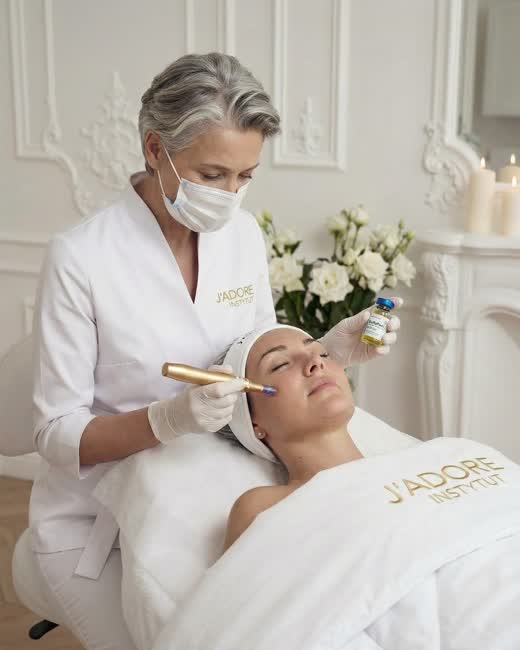
- ingredients penetrate the skin using ultrasound or electroporation
- recommended for dehydration, grey-looking skin, sensitivity, or as a complement to a course of treatment
- no punctures — suitable if you have low tolerance for needles
- after the treatment: skin is ready straight away — zero downtime
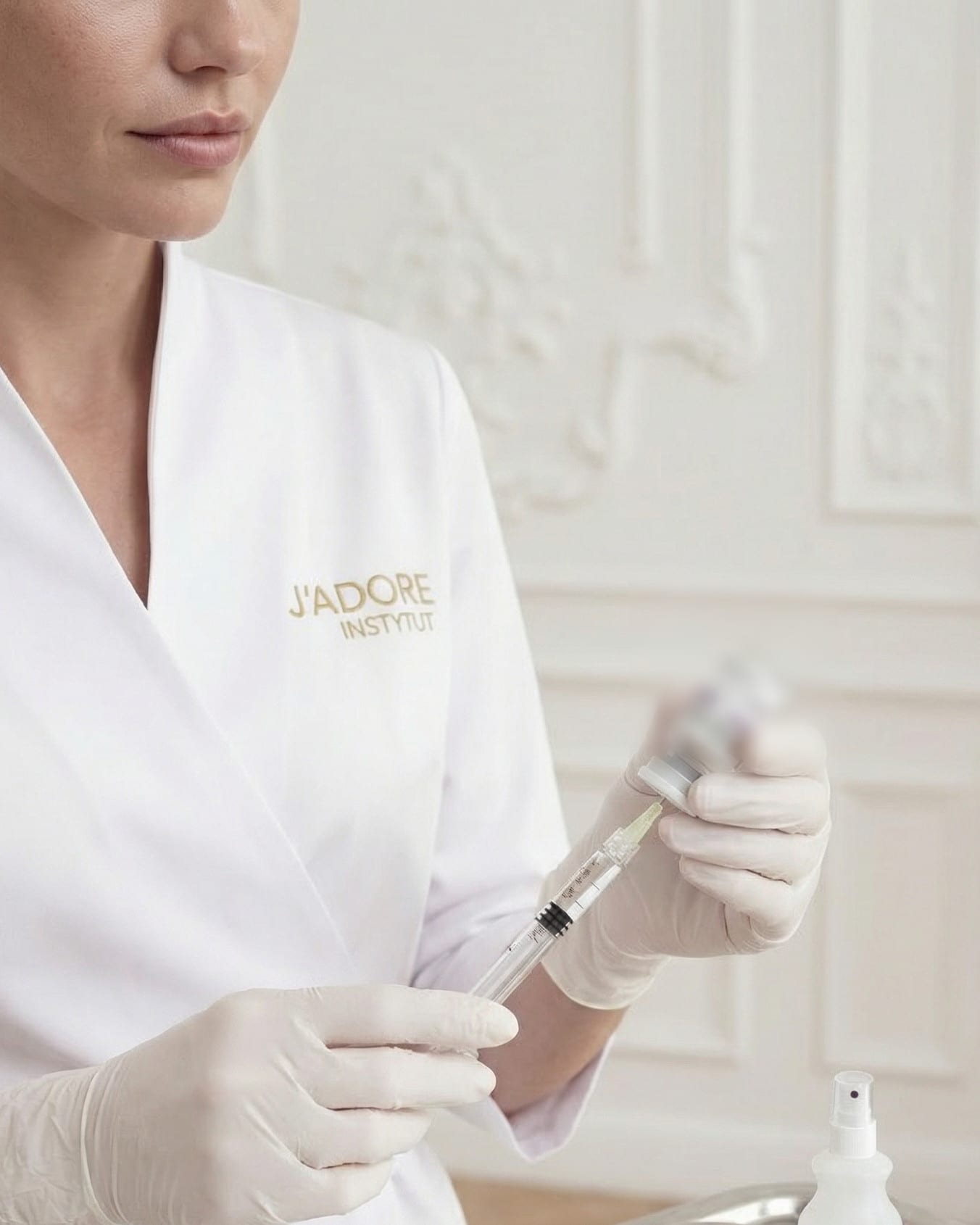
Does mesotherapy hurt? An honest answer
This is the question we hear most often — and it's good that you ask it before the treatment, not after. The honest answer is this: needle mesotherapy can be felt, no-needle mesotherapy practically can't. But "can be felt" doesn't mean painful in the everyday sense of the word.
- Needle mesotherapy — we apply numbing cream before the treatment as standard. The sensation feels like light pricking or warmth. Most people say "not as bad as I thought".
- No-needle mesotherapy — usually you feel nothing, or just a gentle warmth or vibration. People with sensitive skin often choose it for that reason.
- After a needle treatment — your skin may look slightly flushed for a few hours to a day. Small bruises occasionally appear and fade within a few days.
- After a no-needle treatment — your skin is ready straight away, with no need to "hide at home". A popular choice before an important event.
How to choose — a simple at-home test
Before you book a consultation, you can do a quick self-check. It takes two minutes and immediately sets the conversation on the right track:
- My skin is dehydrated, grey-looking and lacks radiance, but is generally healthy → no-needle mesotherapy is a great starting point — fast results, zero downtime, and ideal as a regular hydrating course.
- I'm noticing the first fine lines, my skin has lost firmness and feels a bit "looser" → this is where needle mesotherapy is worth considering — reaching deeper layers speeds up regeneration and improves skin structure.
- I have hyperpigmentation, uneven skin tone, acne scars → needle mesotherapy with the right cocktail works more effectively — active ingredients reach exactly where the problem is.
- I can't stand needles, have very sensitive skin, or have an important event coming up → no-needle mesotherapy, without hesitation — results are softer, but visible straight away.
- My hair is falling out, my scalp is in poor condition → needle mesotherapy for the scalp — a specialised version of the treatment that delivers ingredients directly into the hair follicles.
This is only guidance, of course, not a diagnosis. A good specialist will ask about your lifestyle, treatment history and expectations during your consultation — and only then recommend a specific cocktail and method.
When it's worth combining both methods
Needle mesotherapy and no-needle mesotherapy aren't competitors — they complement each other. In a well-designed plan, one prepares the ground and the other locks in the result. Here are the most common combinations that deliver the best results:
Needle mesotherapy + no-needle mesotherapy, in a series
needle mesotherapy every few weeks as an intensive course, no-needle mesotherapy between sessions to maintain the result. Your skin keeps working continuously.
Mesotherapy + exosomes
exosomes boost the cocktail — skin cells "pick up the signal" to regenerate more effectively.
Mesotherapy + biostimulators (e.g. hyaluronic acid, Sculptra)
mesotherapy improves quality and hydration at the level of the epidermis and dermis, while biostimulators build volume and density deeper down.
Mesotherapy + peel
a peel prepares the surface by removing dead skin cells, so mesotherapy then penetrates better.
Needle mesotherapy for the scalp + strengthening treatment (Bioxsine)
for hair loss, combining the treatment with dedicated preparations works synergistically.
Whichever you choose — and this holds true every time — the most important step is your consultation. Not because it's a procedural requirement, but because a cocktail matched to your skin — its pH, history, current condition — works differently to a ready-made, one-size-fits-all mix. That's the difference between a treatment and a course tailored to you.