SMP — scalp micropigmentation without surgery
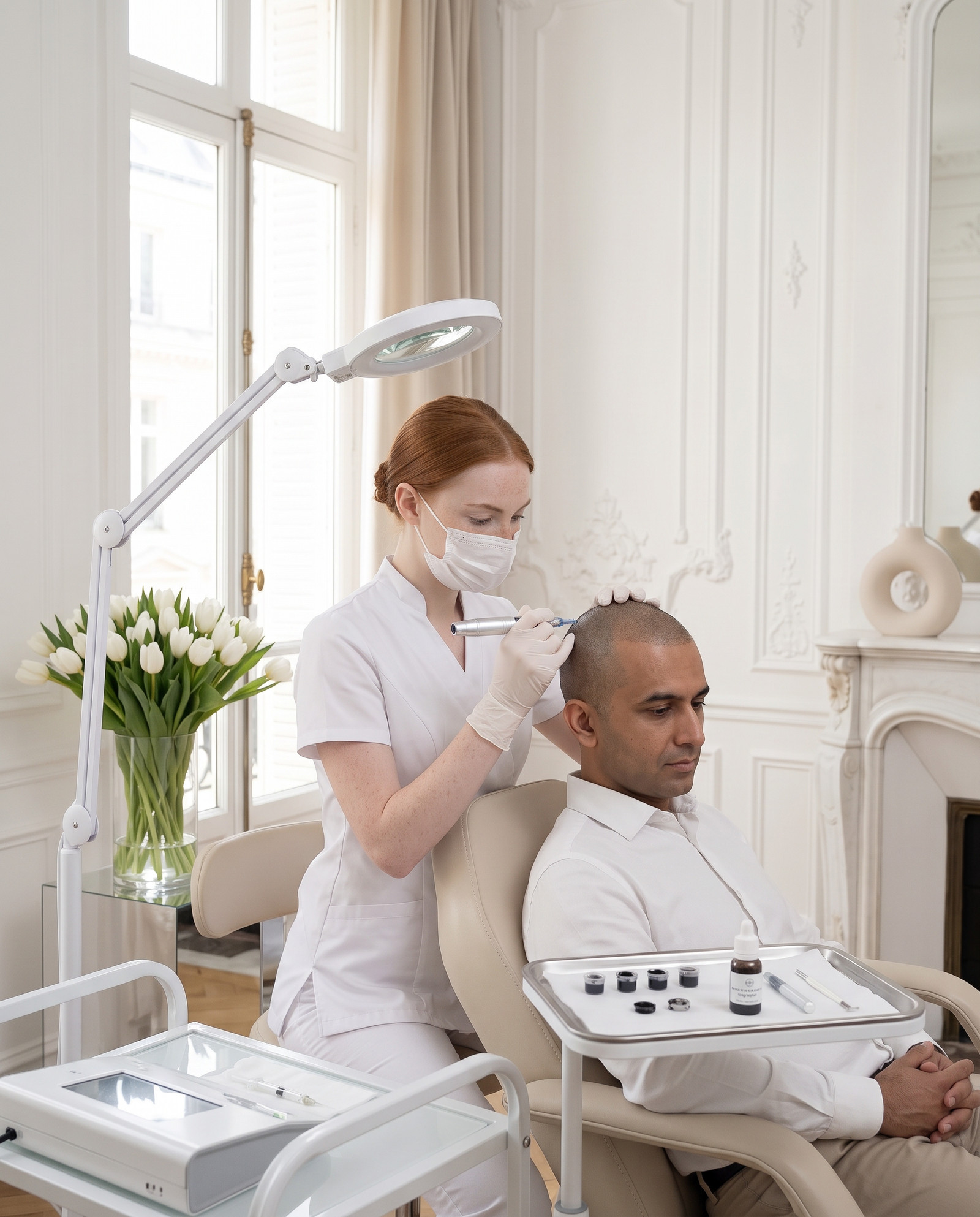
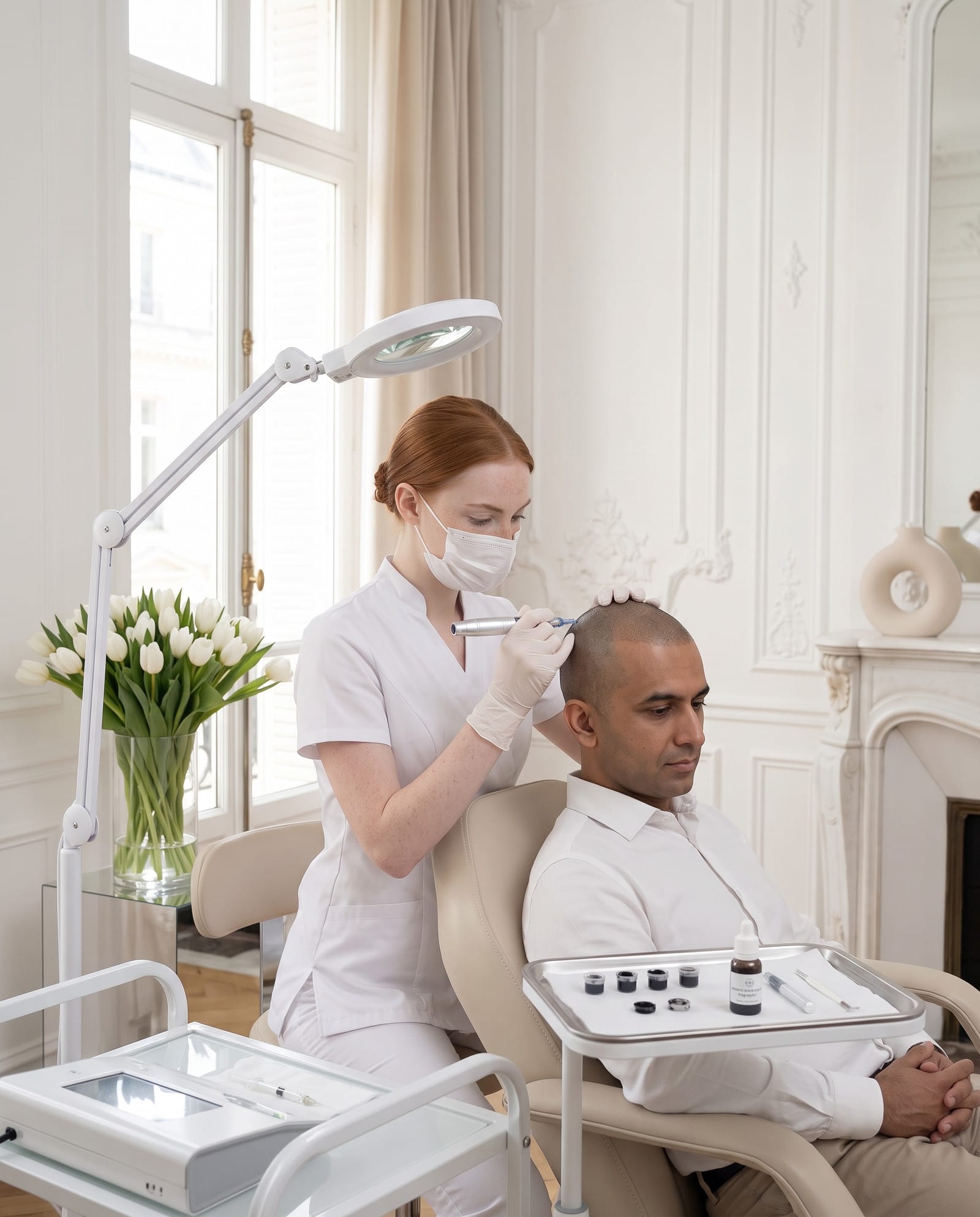
Scalp Micropigmentation — SMP — is a technique where a specialist applies microscopic pigment dots to the scalp, imitating shaved hair follicles. The result is the illusion of dense, closely-cropped hair — even where hair no longer naturally grows. It's used mainly for:
- Male pattern baldness — classic crown balding or a receding hairline
- Alopecia areata — localised hair loss across different areas of the scalp
- Transplant scars — camouflaging donor or recipient lines after a hair transplant
- Significant thinning — when hair is still there, but its density is visually noticeable
SMP doesn't stop hair loss and doesn't stimulate new growth — that's an honest starting point. It does something different: it changes contrast and perception, so balding stops being the first thing you see in the mirror. Results last several years, then may need a refresh — the pigment fades gradually, never abruptly.
Beard micropigmentation — density and shape, without guesswork
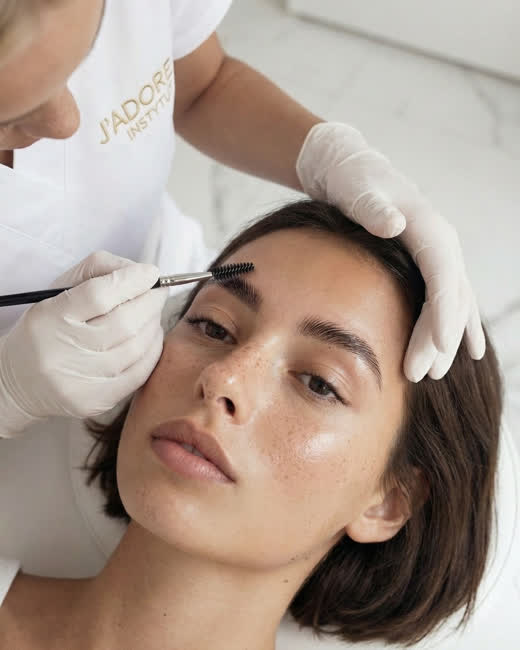
A beard is more than aesthetics — it's part of visual identity. But many men have uneven growth: sparse patches under the jaw, asymmetry, gaps in the moustache, or spots where follicles simply don't work. Beard micropigmentation — technically similar to SMP — involves applying individual, precise pigment dots that imitate natural hair in a closely-cropped state, or a "shadow" beard effect.
Beard micropigmentation
what it does
- fills sparse areas and gaps in growth
- evens out contour and symmetry
- creates a denser, more uniform beard effect
- lasting — doesn't disappear after shaving
Natural thickening
for comparison
- depends on genetics and hormones
- stimulating products work selectively and inconsistently
- beard transplant — a surgical, more invasive option
The treatment is also used to camouflage scars — from acne, injuries or surgery. Pigment worked into a scar won't produce an effect identical to healthy skin, but it can significantly reduce the contrast, so the scar stops drawing attention.
What the treatment looks like — session by session
Neither SMP nor beard micropigmentation happens in a single visit. Two to three sessions are standard, with breaks between them — this isn't an artistic requirement, it's a biological one. The skin needs to heal and show how the pigment settles into the tissue. After each session, the colour fades slightly — only then does it become clear what needs more density or correction.
- 01
Consultation
Assessment of hair loss or beard growth, pigment colour selection, and a session plan. The specialist examines your scalp or beard and proposes an approach suited to the stage and skin structure. This is where you define what you want to achieve.
- 02
First session
Application of the base pigment layer — building shape and direction. The result right after the session is usually more intense than the final look — pigment fades by roughly ten to several dozen percent during healing.
- 03
Break and healing
A few weeks between sessions — the skin regenerates and the pigment settles. For the first few days, avoid water and sweat on the scalp or beard area, don't scratch, and don't over-moisturise.
- 04
Density session
Density correction, colour balancing, and refining the contours. Most results need two sessions; larger areas or scar corrections need three.
- 05
Final assessment
Once healing is complete, you and your specialist review the result together. If anything needs finishing touches, a small correction session follows. After that, results last for years.
Who it's for — and when it makes sense
Not everyone is a good candidate, and it's worth saying so plainly. SMP works best with stable hair loss — if you're actively losing hair, the result will shift as the balding progresses, which may mean more frequent touch-ups. Before the treatment, it helps to know exactly what stage you're at.
- Ideal SMP candidate: a man with stable male pattern baldness who keeps his head shaved or closely cropped — the result blends most naturally with real hair growth
- Candidate with questions to discuss first: active, progressive hair loss — start with a consultation to assess timing and plan sessions around future changes
- Beard micropigmentation candidate: anyone with sparse patches, asymmetry or scars they want to minimise — regardless of age
- Who should speak to a dermatologist first: active scalp conditions (psoriasis, seborrhoea, alopecia areata during an active episode)
Results last — how long does it really hold up
This question always comes up, because men approach the decision practically: is it worth it or not. The answer is more nuanced than "X years":
The pigment used for SMP and beard PMU is specifically formulated to fade gradually and evenly, without turning green or showing unexpected undertones — a common problem with regular tattoos. It stays in the skin for several years, after which — depending on skin tone, sun exposure and care — it may need a refresh. A refresh is usually one session, not a whole new series.
Sun is the biggest enemy of pigment longevity. If you spend a lot of time outdoors bare-headed, the colour will fade faster. SPF for the scalp (available as a spray) is the one piece of aftercare that genuinely extends how long SMP lasts.
Two treatments in one visit — is it possible?
Some men ask whether they can combine a scalp SMP session with beard micropigmentation in a single visit. Technically, yes — the same specialist performs both, using similar techniques and pigments. In practice, it's a heavy load on the skin and on the specialist, so it's usually split into two visits close together, or into the first session of each treatment.
What does make a lot of sense is planning both series with the same specialist. Pigment choice needs to be consistent between beard and scalp. Someone who sees the full picture and knows the intended final result will choose colours so that both areas form one coherent whole — not two separate projects.
Trichology consultation
Before SMP, it's worth assessing scalp condition and the stage of hair loss — a trichologist can advise whether it makes sense to combine SMP with hair-loss-slowing methods, or whether the skin needs treatment first.
Scalp mesotherapy
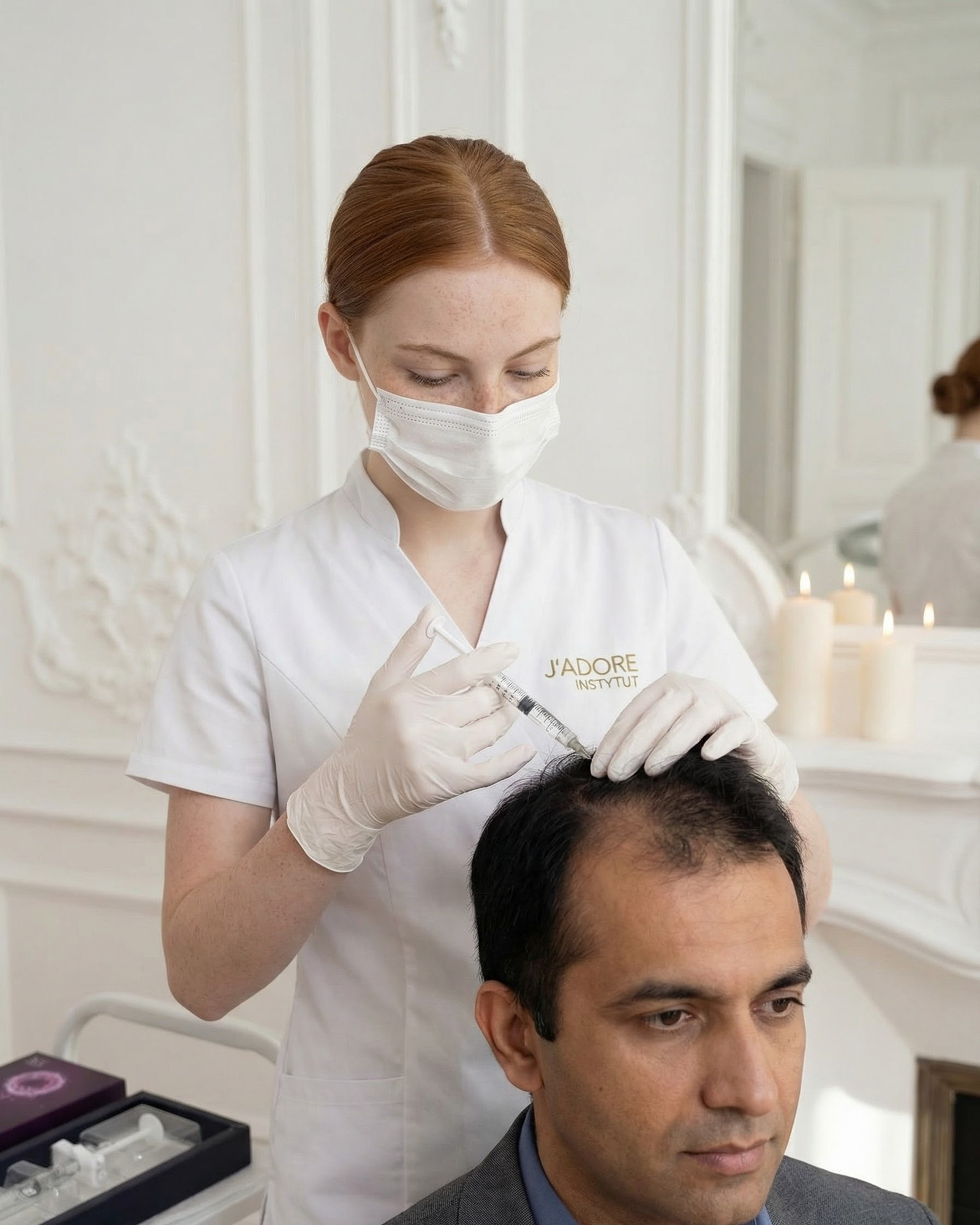
For men with active thinning, mesotherapy can support follicle health. It won't replace SMP for complete baldness, but for thinning it can be used alongside it as support.
Scar treatment (platelet-rich plasma, biostimulators)
If micropigmentation is meant to camouflage acne or injury scars, smoothing the scar texture beforehand gives a better base for the pigment work.