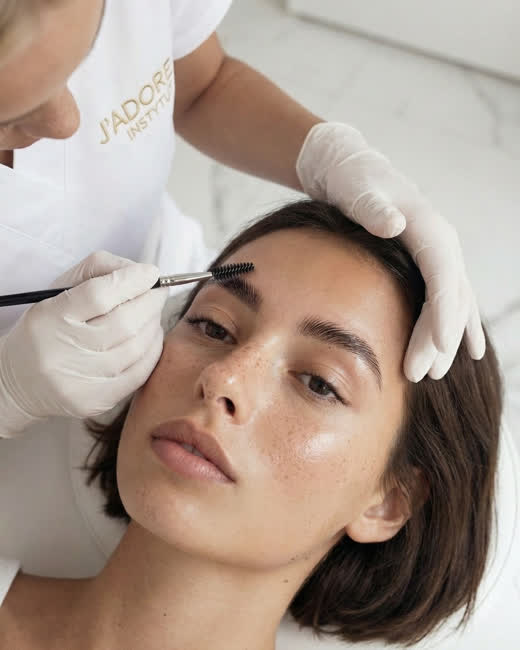
A treatment room at J'adore
SCALP & HAIR
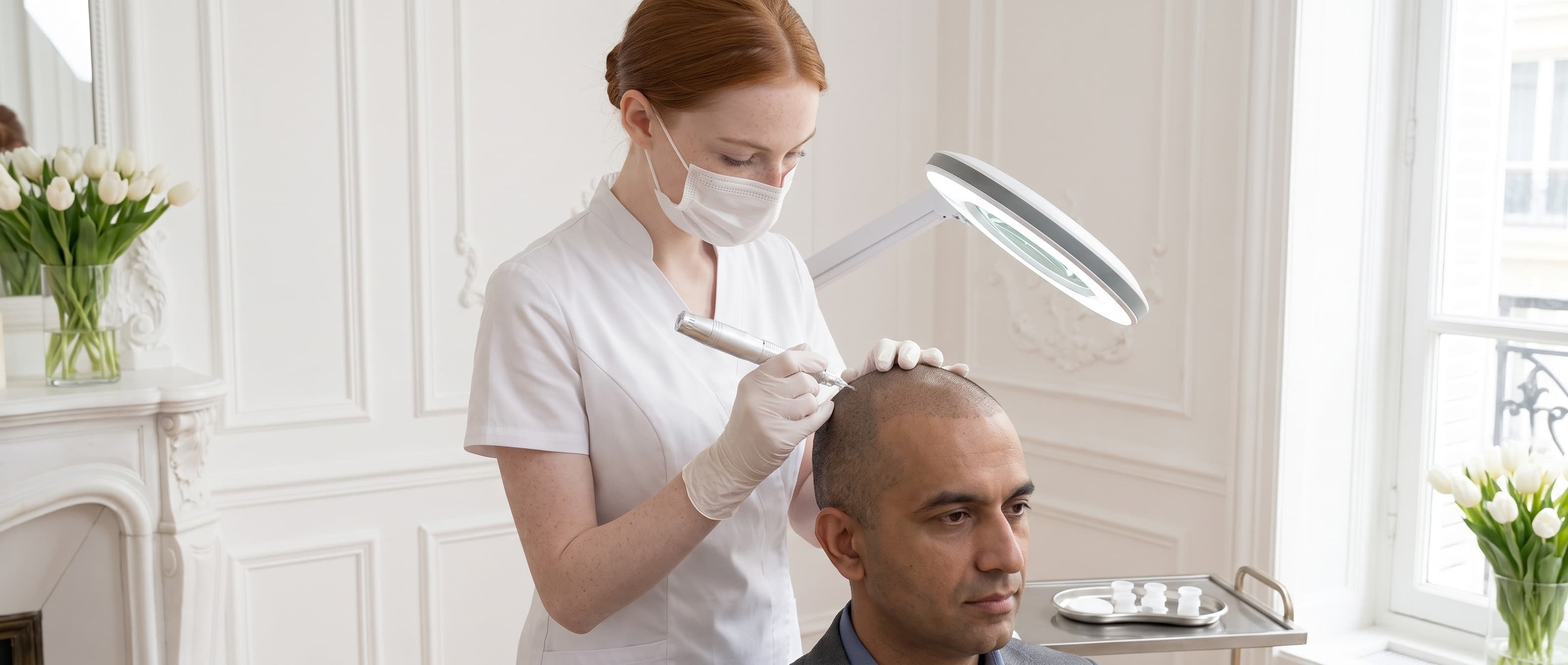
A thinning parting, scalp showing through at the crown, a receding hairline or a scar from a transplant — wherever hair is sparse, the scalp starts to "shine" through. Scalp micropigmentation (SMP) is a permanent visual camouflage: a qualified SMP artist deposits biocompatible pigment into the scalp using a micro-dot technique that mimics the shadow cast by closely cropped hair or by hair follicles. The result is an optical density boost or the impression of a "freshly shaved head" — but to be clear: SMP does not regrow hair and does not treat hair loss.
It's a purely aesthetic illusion of density, not regeneration. At J'adore Instytut, the treatment is performed by a qualified SMP artist (SMP specialist). Below you'll find everything worth knowing before you decide on this lasting camouflage.
series of sessions to build the effect + follow-ups at intervals
How it works
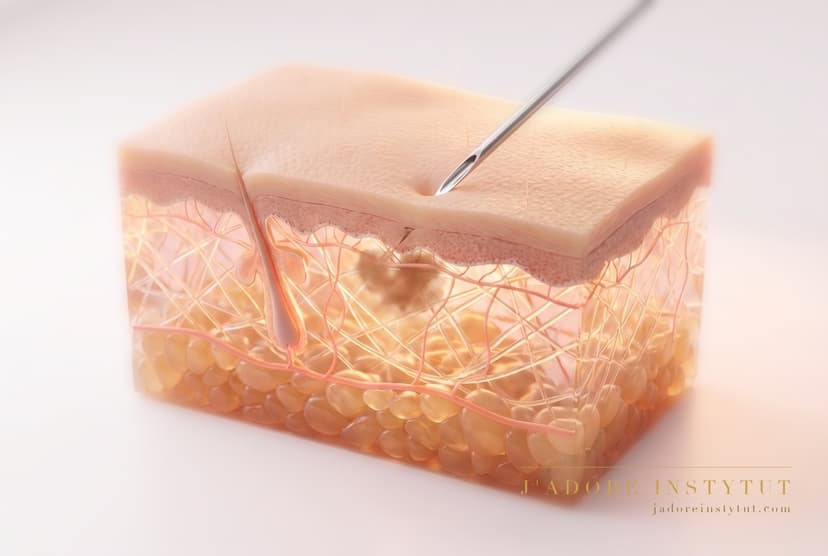
SMP (scalp micropigmentation) is the deposit of biocompatible pigment into the scalp using very precise micro-punctures. Each dot is a tiny "point" that, from a distance, mimics the shadow cast by a closely cropped hair or a hair follicle. Densely placed together, these dots create the illusion of a fuller hairstyle or an even, "freshly shaved" look on the scalp.
The key word is illusion. The pigment sits in the skin, not in the follicle — it doesn't change how much hair you actually have. SMP doesn't stimulate growth, doesn't reverse hair loss and doesn't replace trichological treatment. It's optical camouflage: instead of a thin, "shining" scalp, you see an even, darker background that balances the contrast between skin and hair.
Ideal for
Whether SMP is right for you now depends on how stable your situation is. If your hair is actively falling out, it's worth assessing your follicles during a consultation first — sometimes there's still something worth saving, and SMP can be added later as a complement, not a substitute.
Women's and men's approach
SMP for women rarely means a "shaved-head" effect. The goal is usually optical density at the parting and crown — pigment woven between existing hairs so the scalp stops showing through. The SMP artist works more delicately, softly grading the edges so the camouflage disappears into the natural hairline.
What we work with
SMP for men most often means the freshly shaved-head effect or rebuilding the hairline at receding areas. Men's scalp skin tends to be thicker and the contrast greater — the SMP artist rebuilds a natural, slightly irregular line (a perfectly straight one looks artificial) and adds density at receding areas and the crown.
What we work with
Fun fact: SMP looks convincing precisely because it doesn't imitate individual hairs, only their shadows. When the brain sees even, dark dots on the scalp, it fills in the impression of density itself — the same principle that makes short stubble on the head look fuller than bare skin.
What SMP does NOT do
Before we get into what the treatment involves, it's worth being upfront about what not to expect from SMP. This honesty saves you from disappointment:
Any promise that SMP will give you "hair", "regrowth" or "an effect for life with no touch-ups" is a warning sign. SMP is visual camouflage that fades and needs refreshing — a trustworthy salon will tell you this directly. Also watch out for pressure toward an immediate, very dark and sharp "off the shelf" line, and be aware that a distorted sense of your own appearance (body dysmorphia, BDD) can sometimes drive expectations that no treatment can satisfy. If in doubt, start with a consultation, not with a needle.
SCALP & HAIR
Contraindications
SMP breaks the skin barrier (micro-punctures with pigment), so some contraindications are permanent and others temporary — in the latter case, we simply postpone the treatment until the situation passes.
From the SMP artist's chair
The thing most often underestimated: herpes. "I've only got it on my lip, and we're treating the scalp" — but it's still an active virus, so it's still a risk, regardless of location. We postpone by a few days. The other thing I watch for is unrealistic expectations — if someone is looking for "hair" rather than the illusion of density, it's better to talk it through first than to start with a needle.
This isn't a complete list — we'll go through your medications, health conditions, scarring tendency and any previous scalp treatments individually during your consultation.

What to expect
Most important: the result after the first session will look darker and more "fresh" than the final effect. This is normal — the pigment partially fades during healing, so we only assess the full picture after healing and the next session.
The thing I hear most right after the first session is: "too dark!" That's actually a good sign — we deliberately start more cautiously, because some pigment will fade, and it's always easier to build up micro-dots than to remove excess. Patience until the second session is the key to a natural result.
Over time, the pigment fades and can shift in tone (e.g. warming slightly). That's why SMP is a relationship for years: the result is long-lasting, but not permanent — periodic refreshing keeps it looking dense and natural.
Portfolio
A record of the work in our salons — the place where we publish treatment frames and, after photo sessions, results.
A record of results — in preparation. We publish photographs of our clients only with their consent.
SMP and your lifestyle
Most questions aren't about the session itself, but about healing: sweat, sun, swimming pools, washing your hair. There's one rule — for the first few days, we don't want the skin to sweat, get wet, or tan before the micro-punctures close.
Sweat on freshly treated scalp skin encourages irritation and can disturb pigment settling. Skip intense training for the first few days of healing.
Chlorine, salt water and high temperatures are too much for healing skin. Wait until the micro-punctures have fully closed before returning.
Protect fresh pigment from the sun; long-term scalp tanning speeds up fading. Once healed — a hat or SPF on exposed scalp.
For the first few days, avoid heavy scrubbing and hot water. Use a gentle SLS-free shampoo, with light movements — as your SMP artist advises.
Light scabs clear on their own. Scratching them off risks pigment loss and small scars. Keep your hands off your head.
No bandages, no time off. You can return to work essentially straight away — with slight redness on day one.
Scalp micropigmentation (SMP)
These methods do completely different things and often complement each other rather than compete. In simple terms: one camouflages the lack of hair, the others try to save it, while there are still follicles to save.
optically camouflages
doesn't regrow hair, doesn't treat hair loss, doesn't stimulate follicles
stimulate follicles
won't camouflage the scalp "instantly" where follicles are already gone
relocates follicles
leaves a donor scar and requires density in the recipient area — this is where SMP can complement it
Combine with
SMP fits best into a broader scalp plan. The order and spacing are decided by your SMP artist together with a trichologist during a consultation, but the logic is consistent:
The rule I repeat most often: if there are still follicles — stimulate first, then (or alongside) camouflage. SMP works well to finish off the results of PRP or a transplant, but on its own it won't reverse what's happening to the hair. That's why, for some people, we start with a trichology consultation, not a pigment needle.
Pigments and variants
SMP isn't "one ink for everything". The naturalness of the result comes down to shade selection, dot technique and treatment variant — and that's decided by your SMP artist, not chosen off a shelf. Below are the most common variants, chosen together during a consultation.
Micro-dots placed between existing hairs so the scalp stops showing through; subtle shade grading.
Dla kogoA thinning parting and crown, mainly for women and with medium-length hair.
An even field of micro-dots mimicking fresh stubble after shaving "to zero"; recreating a natural hairline and receding areas.
Dla kogoMen wearing their hair very short or shaved, male pattern baldness.
Point-by-point filling of the scar with pigment matched to the surrounding area, so it blends with the density around it; a gentler technique, since scarred skin takes pigment differently.
Dla kogoScars from transplants (FUT/FUE), from injuries and scalp surgery.
Fact: What causes the difference between salons? The SMP artist's experience, the quality and longevity of the pigment, the precision of each individual dot, and the number of sessions needed for the result. The cheapest, fastest and darkest "instant" version is usually the one that's hardest to fix later — what matters is the specialist's skill, not the speed.
Price list
Checking free hours…
From the magazine
Editorial pieces on how this treatment works in practice — what happens during the session, how to prepare, where the limits are and what the first days after look like.
See also
The result lastsresults last for years, with periodic touch-upsJ’adore Instytut
Information. Scalp micropigmentation (SMP) is a permanent aesthetic treatment that deposits pigment into the epidermis/dermis. It gives a visual impression of density or stubble, but it does NOT regrow hair and does NOT treat hair loss. The result is long-lasting and requires periodic touch-ups. The treatment is performed by a qualified SMP artist/specialist following a consultation. The above text is for information purposes only.
Home care
Cosmetics matched to what your skin needs after a treatment — so the clinic effect lasts longer.
 hair lossDSD de LuxeVasogrotene GF Activator 011 50mlView in the shop(opens in a new tab)
 scalpSesdermaSEBOVALIS Medicinal Shampoo 200 mlView in the shop(opens in a new tab)
 hair lossDermoMedicaGrowth Hair Serum 60mlView in the shop(opens in a new tab)
 scalpestGenBalancing ShampooView in the shop(opens in a new tab)
 hair lossDSD de LuxeCrexepil Lotion Forte 3.4.1 100mlView in the shop(opens in a new tab)
 scalpKV-13.2 Oily Dandruff Lotion 100ml – Anti-Dandruff BalmView in the shop(opens in a new tab)
 hair lossDermoMedicaGrowth Factor Scalp Mask 200mlView in the shop(opens in a new tab)
 hair lossMesoesteticTricology ShampooView in the shop(opens in a new tab)